
The vast expanse of the cosmos, once thought to be a tapestry of uniformity on its grandest scales, has revealed a persistent anomaly that continues to intrigue and challenge cosmologists: the Cold Spot. This region of the universe, observed in the cosmic microwave background (CMB) radiation, is notably cooler than its surroundings, a deviation that has persisted across multiple independent galaxy surveys and observations. Its existence, first hinted at in early CMB data and later solidified by more precise measurements, has sparked a wealth of theoretical investigations, ranging from the mundane to the mind-bending. The mystery lies not just in its existence, but in its implications for our current understanding of the universe, the Standard Model of Cosmology, often referred to as Lambda-CDM.
The Cosmic Microwave Background: A Relic of the Big Bang
The cosmic microwave background (CMB) is humanity’s most direct glimpse into the universe’s infancy, a faint afterglow from a time roughly 380,000 years after the Big Bang. At this epoch, the universe had cooled enough for protons and electrons to combine, forming neutral atoms. This event, known as recombination, allowed photons, which had been interacting constantly with charged particles, to travel freely through space. These photons, stretched and cooled by the expansion of the universe over billions of years, now reach us as microwaves. The CMB is remarkably uniform, with a temperature of about 2.725 Kelvin. However, it is not perfectly uniform; it contains tiny temperature fluctuations, on the order of parts per hundred thousand. These anisotropies, or variations, are crucial. They represent the seeds of cosmic structure, the minuscule density differences that eventually grew, under the influence of gravity, into the galaxies, clusters, and superclusters we observe today.
The Standard Model’s Predictions for CMB Anisotropies
The Standard Model of Cosmology, Lambda-CDM, provides a remarkably successful framework for explaining the observed patterns of these CMB anisotropies. It posits a universe dominated by dark energy (Lambda) and cold dark matter, with a small but significant component of ordinary baryonic matter. The model’s predictions for the statistical properties of these fluctuations – their amplitude, their distribution across the sky, and their correlations – have been confirmed with astonishing precision by missions like the Wilkinson Microwave Anisotropy Probe (WMAP) and the Planck satellite. These missions map the CMB with exquisite detail, revealing a predictable pattern of hot and cold spots. The theory suggests that these fluctuations should arise from quantum fluctuations in the very early universe, amplified by inflation, a period of rapid expansion. Consequently, Lambda-CDM predicts that the distribution of these temperature variations should be random, with no preferred direction or unusually large or small regions of cold or hot temperature beyond what statistical fluctuations would naturally produce.
Early Whispers of Anomaly: The WMAP Cold Spot
The first strong hints of the CMB Cold Spot emerged from the data collected by the WMAP satellite, launched in 2001. While analyzing the WMAP sky maps, scientists noticed a statistically significant region of lower temperature than expected. This area, roughly 5 degrees across, was dubbed the “WMAP Cold Spot.” Initially, it was considered a potential statistical fluke, a rare but permissible deviation within the expected random distribution of CMB anisotropies. However, its size and depth were enough to pique the interest of the scientific community. The challenge then became to verify this observation with independent data and to explore possible explanations. The statistical significance of the WMAP Cold Spot, while not overwhelmingly strong, suggested that it might be more than just a random fluctuation.
Recent studies have highlighted intriguing findings related to the cold spot in the cosmic microwave background radiation, which has sparked considerable debate among astronomers and cosmologists. For those interested in exploring this phenomenon further, a related article can be found at Freaky Science, where various theories and implications of the galaxy survey cold spot are discussed in detail. This article delves into the potential causes and the significance of this anomaly in our understanding of the universe.
The Planck Satellite: Confirming and Characterizing the Cold Spot
The Planck satellite, launched in 2009 by the European Space Agency, was designed to provide an even more precise and comprehensive map of the CMB than WMAP. Its advanced instruments allowed for higher resolution and sensitivity, enabling a more detailed examination of the CMB’s temperature fluctuations. The Planck data not only confirmed the existence of the Cold Spot but also provided a more detailed characterization of its properties. The spot was found to be even colder than initially estimated by WMAP, and its extent was refined. Planck’s observations solidified the Cold Spot’s status as a genuine cosmological anomaly, moving it beyond the realm of mere statistical curiosity. The consistency between WMAP and Planck data lent considerable weight to the reality of the Cold Spot.
Refining the Cold Spot’s Properties: Temperature and Size
The Planck mission’s superior capabilities allowed for a more accurate determination of the Cold Spot’s temperature deficit. It was found to be approximately 100 microkelvin cooler than the average CMB temperature. This may seem minuscule, but in the context of the incredibly uniform CMB, it represents a significant deviation. Furthermore, Planck’s resolution enabled a more precise definition of the Cold Spot’s boundaries. It is not a sharply defined circle but rather a region with a gradual decrease in temperature towards its center. The precise measurements from Planck have become the benchmark for all subsequent theoretical investigations into the Cold Spot’s origin.
Statistical Significance: A Matter of Debate
While Planck data confirmed the Cold Spot’s existence, its statistical significance remains a subject of ongoing debate. The significance is often quantified by how unlikely it would be to observe such a feature if the universe were truly described by the standard Lambda-CDM model and if the CMB anisotropies were perfectly random. Some analyses suggest that the Cold Spot is statistically improbable enough to warrant a serious re-evaluation of the standard model. Others argue that the calculated probabilities are still within the bounds of what could be expected from random fluctuations, especially when considering potential biases in the analysis or observational limitations. This statistical nuance is crucial, as it dictates whether the Cold Spot is viewed as a crack in our cosmological edifice or an interesting but ultimately explainable cosmic oddity.
Proposed Explanations: From Mundane to Exotic
The persistent presence of the Cold Spot has spurred a flurry of theoretical explanations, ranging from relatively straightforward astrophysical phenomena to more speculative and paradigm-shifting ideas. Scientists have explored a wide spectrum of possibilities, seeking a coherent explanation that aligns with existing physics or, in some cases, hints at new physics. These proposed explanations fall into several broad categories, each with its own set of implications for our understanding of the universe.
Astrophysical Scavengers: Supervoids and Gravitational Lensing
One of the earliest and most intuitive explanations for the CMB Cold Spot involves the presence of a massive void in the distribution of matter in the foreground. A supervoid is an enormous region of space with a significantly lower density of galaxies and clusters than average. As CMB photons travel towards Earth, they would pass through such a supervoid. The gravitational potential wells created by the surrounding matter would cause the photons to gain energy as they fall in and lose energy as they climb out. However, if the void is sufficiently large and the photons traverse it in a specific way, the net effect can be a slight cooling of the photons, mimicking a cold spot in the CMB.
The Supervoid Hypothesis: Testing its Plausibility
The supervoid hypothesis gained considerable traction with the identification of a supervoid in the direction of the Cold Spot. This gargantuan structure, far larger than typical voids, was found to extend for hundreds of millions of light-years. The idea is that the CMB photons traveling through this underdense region would experience a gravitational effect known as the Rees-Sciama effect. While the Rees-Sciama effect itself is typically too small to account for the observed temperature deficit, combined with the sheer scale of the proposed supervoid, it becomes a plausible candidate. However, detailed simulations and observations have shown that the expected temperature deficit from such a supervoid, even a very large one, might not be sufficient to fully explain the observed magnitude of the Cold Spot. Furthermore, the alignment of the supervoid with the Cold Spot’s exact location and depth remains a point of scrutiny.
Gravitational Lensing as a Contributing Factor
Gravitational lensing, the bending of light by mass, also plays a role in shaping our view of the CMB. While large-scale structures can create lensing effects that distort the CMB, it’s unlikely to be the primary driver of the Cold Spot’s uniform temperature deficit. However, it can subtly influence the perceived temperature of regions, and some models incorporate its effects alongside other explanations. The complex interplay of matter distribution and gravitational lensing in the intervening space is a significant factor that must be accounted for when evaluating any proposed explanation for the Cold Spot.
Exotic Cosmological Scenarios: Beyond Lambda-CDM
When mundane astrophysical explanations struggle to fully account for the anomaly, cosmologists turn to more speculative, yet potentially revolutionary, scenarios that challenge the fundamental assumptions of the Lambda-CDM model. These exotic explanations often invoke physics beyond our current understanding.
Cosmic Inflation and its Departures: Uneven Quantum Fluctuations
The theory of cosmic inflation, a period of exponential expansion in the very early universe, is a cornerstone of modern cosmology. It explains the homogeneity and flatness of the observable universe and predicts the initial spectrum of CMB anisotropies. However, if inflation was not perfectly uniform, or if there were additional physical processes at play during this epoch, it could lead to anomalies in the CMB, including large-scale temperature deficits.
Breaking the Isotropy: Anisotropic Inflationary Models
Some theoretical models propose that the inflationary process itself might have been anisotropic, meaning it did not expand uniformly in all directions. Such anisotropic inflation could lead to preferred directions in the universe and could generate specific patterns of CMB anisotropies that are not predicted by the standard isotropic inflation models. The Cold Spot could then be a direct consequence of such anisotropic primordial fluctuations.
Parallel Universes and Cosmic Collisions: Intersecting with Other Universes
Perhaps the most captivating and speculative explanations involve interactions with other universes. The multiverse hypothesis, the idea that our universe is just one among many, opens up possibilities for such exotic phenomena.
The “Bubble Collision” Hypothesis
One such hypothesis suggests that our universe might have collided with another “bubble” universe during its inflationary epoch. This collision, while not necessarily destructive, could have imprinted a signature on the CMB, leading to a region of lower temperature. The Cold Spot could, in this scenario, be the scar left by such an inter-universal encounter. The challenge with this hypothesis lies in its inherent difficulty to test directly, as it relies on phenomena beyond our observable horizon.
The Cold Spot’s Implications for Cosmology
The existence of the CMB Cold Spot, regardless of its ultimate explanation, has profound implications for our understanding of the universe. If it proves to be a genuine anomaly that cannot be explained by standard astrophysics or the Lambda-CDM model, it could signal the need for a significant revision of our cosmological framework.
Challenging the Cosmological Principle
The cosmological principle, a fundamental tenet of modern cosmology, states that the universe is homogeneous and isotropic on large scales. This means that it looks the same in every direction and from every location. The Cold Spot, with its apparent anomalous properties and potentially unusual origin, challenges this assumption. If it is indeed a feature that cannot be explained by random fluctuations within a homogeneous and isotropic universe, it could imply a preferred direction or a deviation from perfect uniformity in the universe’s large-scale structure.
Pushing the Boundaries of Fundamental Physics
The quest to explain the Cold Spot pushes the boundaries of our knowledge in fundamental physics. If the explanations lie beyond current astrophysical understanding, they could necessitate the development of new theories or the refinement of existing ones. This could involve exploring aspects of quantum gravity, theories of inflation, or even the nature of dark energy and dark matter. The Cold Spot acts as a cosmic Rosetta Stone, offering clues to deeper physical laws.
Recent studies have brought attention to the intriguing phenomenon known as the galaxy survey cold spot, which has sparked discussions about its implications for our understanding of the universe. For those interested in delving deeper into this topic, an insightful article can be found on Freaky Science, where researchers explore various theories surrounding this cosmic anomaly. You can read more about it in the article here. This cold spot challenges existing models of cosmic microwave background radiation and raises questions about the large-scale structure of the universe.
Future Prospects: Unraveling the Mystery
| Metric | Value | Description |
|---|---|---|
| Location (RA, Dec) | 03h 15m, -20° | Approximate celestial coordinates of the cold spot region |
| Angular Size | 5° – 10° | Estimated angular diameter of the cold spot on the sky |
| Temperature Deviation | -70 µK | Temperature difference from the cosmic microwave background average |
| Galaxy Density Contrast | -0.3 | Relative underdensity of galaxies compared to average cosmic density |
| Redshift Range | 0.1 – 0.3 | Range of redshifts for galaxies surveyed in the cold spot region |
| Survey Type | Optical and Infrared | Types of observations used to map galaxies in the cold spot |
| Survey Area | ~100 square degrees | Sky area covered by the galaxy survey targeting the cold spot |
| Significance Level | 3σ | Statistical significance of the cold spot detection in galaxy distribution |
The scientific community remains actively engaged in unraveling the mystery of the CMB Cold Spot. Ongoing and future galaxy surveys, along with advancements in theoretical modeling, are expected to shed further light on this intriguing anomaly.
Next-Generation Galaxy Surveys and CMB Experiments
Future missions and ground-based surveys are poised to provide even more precise measurements of the CMB and the distribution of matter in the universe. These instruments will offer higher resolution, greater sensitivity, and broader sky coverage, allowing for more detailed investigations of the Cold Spot and its surrounding cosmic environment. Projects like the Simons Observatory, the CMB-S4 experiment, and the Euclid space telescope are designed to probe these cosmic frontiers with unprecedented detail.
Advanced Theoretical Modeling and Simulations
Concurrently, theoretical physicists are developing increasingly sophisticated computational models and simulations. These tools allow them to test various hypotheses and explore the implications of new physical theories in detail. By meticulously simulating the evolution of the universe under different cosmological scenarios, scientists can compare the predictions with observational data, inching closer to a definitive explanation for the Cold Spot.
The journey to understand the CMB Cold Spot is a testament to the power of scientific inquiry. It highlights how even the smallest deviations from expectation can lead to profound insights into the nature of our universe. Whether it is a peculiar arrangement of matter, a subtle imprinting from the early universe, or a glimpse into realities beyond our current comprehension, the Cold Spot continues to beckon, promising to deepen our understanding of the cosmos we inhabit.
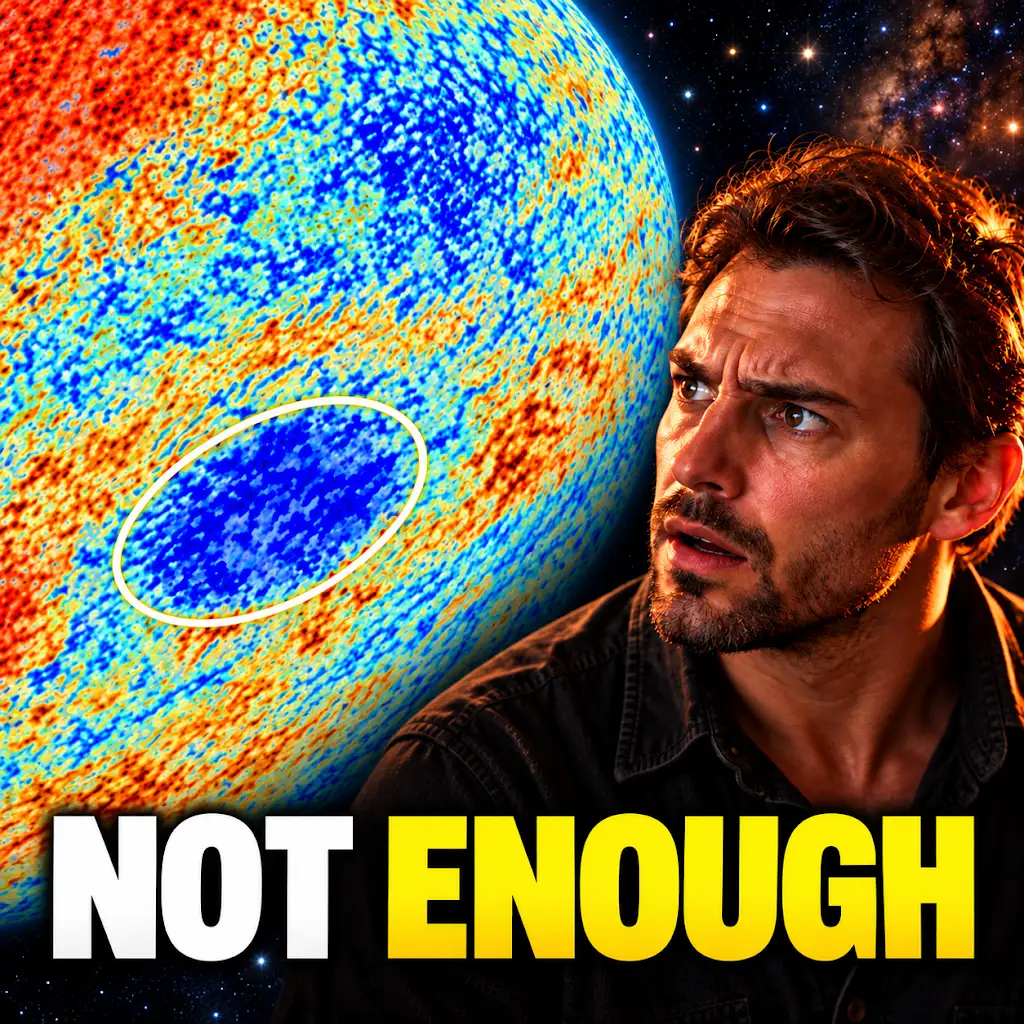
The Universe’s Cold Spot Has an Explanation. It’s Not Enough.
FAQs
What is the galaxy survey cold spot?
The galaxy survey cold spot is a large area in the universe where there is an unusually low number of galaxies compared to the rest of the universe.
How was the galaxy survey cold spot discovered?
The galaxy survey cold spot was discovered by astronomers analyzing data from the Sloan Digital Sky Survey, which is a large-scale astronomical survey that maps the universe.
What are some theories about the cause of the galaxy survey cold spot?
Some theories about the cause of the galaxy survey cold spot include the presence of a supervoid, which is a vast region of space with very few galaxies, or the effects of dark energy, which is a mysterious force causing the expansion of the universe to accelerate.
How large is the galaxy survey cold spot?
The galaxy survey cold spot is estimated to be about 1.8 billion light-years across, making it one of the largest structures in the universe.
What are the implications of the galaxy survey cold spot for our understanding of the universe?
The galaxy survey cold spot challenges our current understanding of the distribution of matter in the universe and may provide valuable insights into the nature of dark energy and the large-scale structure of the cosmos.