
The universe, a vast expanse of stars, galaxies, and nebulae, presents an enigma that has captivated scientists for decades: the profound dominance of constituents that remain invisible and elusive. Dark matter and dark energy, abstract concepts born from observational necessity, represent the vast majority of the universe’s mass-energy content, yet their true nature continues to be a subject of intense research and speculation. Unveiling the mysteries surrounding these cosmic components is crucial to understanding the evolution, structure, and ultimate fate of the cosmos.
The very existence of dark matter and dark energy is not a theoretical whim but a direct consequence of discrepancies between what can be observed and what the prevailing laws of physics predict. Astronomers, by meticulously observing the cosmos, have encountered phenomena that cannot be explained by the visible matter alone. These observations, spanning various scales from individual galaxies to the universe as a whole, provide compelling indirect evidence for the presence of unseen entities.
Galactic Rotation Curves: A Strained Analogy
One of the earliest and most robust pieces of evidence for dark matter emerged from the study of galactic rotation curves. Visible matter within a spiral galaxy, such as stars and gas, is expected to exert gravitational influence. Based on the visible mass distribution, stars farther from the galactic center should orbit at progressively slower speeds, akin to planets in our solar system where outer planets move slower than inner ones due to weaker gravitational pull. However, observations consistently reveal that stars in the outer regions of galaxies orbit much faster than predicted by the visible mass. This anomaly suggests that there is an unseen gravitational force at play, originating from a halo of invisible matter surrounding the visible galaxy. This hypothetical halo, dubbed the “dark matter halo,” extends far beyond the visible disk, providing the necessary extra gravitational pull to keep the outer stars in their rapid orbits.
The Keplerian Expectation vs. Observational Reality
In a gravitational system dominated by visible matter, the orbital velocity of an object is expected to decrease with distance from the central mass, following Kepler’s laws of planetary motion. This means that the farther a star is from the galactic center, the slower it should orbit. The mathematical framework of Newtonian gravity, applied to the distribution of stars and gas observed in galaxies, leads to this predictable decline in orbital velocities.
The Flatness Puzzle and its Implications
The persistent observation of “flat” rotation curves, where orbital velocities remain remarkably constant or even increase slightly at large radii, directly contradicts the Keplerian expectation. This persistent deviation from predicted behavior points to a significant deficit in accounted-for mass. The gravitational force required to maintain these high velocities necessitates a much larger mass than can be attributed to baryonic matter (protons, neutrons, electrons) and luminous objects like stars and gas clouds.
Gravitational Lensing: Warped Light, Unseen Mass
Gravitational lensing, a phenomenon predicted by Einstein’s theory of general relativity, provides another powerful tool for detecting and mapping the distribution of mass, irrespective of whether it emits light. Massive objects, by their gravitational pull, bend the path of light passing by them. This bending can distort, magnify, or even create multiple images of distant background galaxies. By analyzing the degree of distortion and the patterns of the lensed images, astronomers can infer the total mass present in the foreground object, whether it be a galaxy cluster or even a single galaxy.
The Cosmic Magnifying Glass
When light from a distant source traverses the gravitational field of a massive object, its trajectory is deflected. This deflection acts much like a lens, distorting the image of the background source. The degree of distortion provides a direct measure of the gravitational potential, and hence the mass, of the lensing object.
Mass-Energy Reconstruction from Lensed Images
The precise shape and arrangement of lensed images allow for detailed reconstruction of the mass distribution of the lensing object. By modeling these lensing effects, scientists can map out not only the distribution of visible matter but also regions dominated by unseen mass, confirming the presence of dark matter in galaxy clusters and other cosmological structures.
Cosmic Microwave Background Radiation: Echoes of the Early Universe
The cosmic microwave background (CMB) radiation, the afterglow of the Big Bang, carries invaluable information about the early universe. Tiny temperature fluctuations in the CMB, observed by missions like COBE, WMAP, and Planck, reveal the seeds of structure formation. The pattern and amplitude of these fluctuations are exquisitely sensitive to the composition of the universe at the time of recombination, approximately 380,000 years after the Big Bang.
Anisotropies as Cosmological Fingerprints
The CMB is not perfectly uniform; it exhibits subtle variations in temperature across the sky, known as anisotropies. These anisotropies represent regions of slightly higher or lower density in the early universe, which eventually evolved into the large-scale structures we observe today, such as galaxies and galaxy clusters.
The Baryon-Photon Plasma and its Influence
In the early universe, matter and radiation were tightly coupled in a hot, dense plasma. The acoustic oscillations within this plasma, driven by the interplay of pressure from photons and gravity from matter, left an imprint on the CMB anisotropies. The observed pattern of these oscillations is highly sensitive to the relative proportions of baryonic matter and dark matter.
Dark Matter’s Role in Structure Formation
The CMB data strongly suggests that the observed anisotropies can only be explained if dark matter comprises a significant fraction of the universe’s matter content. Without the gravitational influence of dark matter, baryonic matter alone would not have clumped together sufficiently to form the structures observed today within the age of the universe.
For those curious about the mysteries of the universe, understanding dark matter and dark energy can be quite fascinating yet complex. A great starting point for beginners is the article available at Freaky Science, which breaks down these concepts into easily digestible explanations. Dark matter is thought to make up a significant portion of the universe’s mass, while dark energy is believed to be responsible for the accelerated expansion of the universe. Exploring these topics can provide valuable insights into the fundamental workings of our cosmos.
The Elusive Nature of Dark Matter: What Could it Be?
The overwhelming evidence for dark matter’s existence notwithstanding, its fundamental identity remains unknown. Scientists have proposed various candidates, each with its own theoretical motivations and experimental challenges. The search for dark matter particles is a multifaceted endeavor, spanning particle physics laboratories and astronomical observatories.
Baryonic Dark Matter: A Diminished Possibility
Initially, scientists considered the possibility that dark matter could be composed of ordinary baryonic matter that is simply too faint to detect, such as brown dwarfs, cold gas clouds, or black holes. However, observational constraints and cosmological models have largely ruled out this hypothesis.
MACHOs: The Faint End of the Baryonic Spectrum
Massive Astrophysical Compact Halo Objects (MACHOs) were considered as potential candidates for baryonic dark matter. These would be stellar remnants like brown dwarfs, neutron stars, or stellar-mass black holes residing in galactic halos. Their gravitational effects could be detected through microlensing events.
Microlensing Surveys and Their Disappointments
Extensive microlensing surveys, designed to detect the transient brightening of background stars caused by the gravitational passage of MACHOs, have yielded results that indicate MACHOs constitute only a small fraction, if any, of the total dark matter population. The observed rate of microlensing events is far too low to account for the missing mass.
The Big Bang Nucleosynthesis Constraint
Another crucial constraint comes from Big Bang Nucleosynthesis (BBN). BBN calculations accurately predict the abundance of light elements (hydrogen, helium, lithium) forged in the early universe. These predictions are highly sensitive to the total amount of baryonic matter present. The observed abundances are consistent with a baryonic matter density that is far less than the total matter density inferred from CMB and large-scale structure observations, strongly suggesting that most of the matter in the universe is non-baryonic.
Non-Baryonic Dark Matter: The Leading Contenders
The prevailing theoretical framework favors non-baryonic dark matter, meaning it is composed of particles not made of protons and neutrons. Among these, weakly interacting massive particles (WIMPs) and axions are the most prominent candidates.
WIMPs: A Synergy of Theory and Experiment
Weeky Interacting Massive Particles (WIMPs) are hypothetical particles predicted by various extensions of the Standard Model of particle physics, such as supersymmetry. These particles would interact only through the weak nuclear force and gravity, making them difficult to detect directly. The “WIMP miracle” refers to the remarkable coincidence that if WIMPs exist with masses and interaction strengths predicted by some theories, their relic abundance from the early universe would naturally match the observed abundance of dark matter.
Direct Detection Experiments: Listening for the Whisper
Direct detection experiments aim to observe the faint recoil of an atomic nucleus when a WIMP bumps into it. These experiments are typically located deep underground to shield them from cosmic rays. Detectors employ various technologies, including noble liquids (xenon, argon) and cryogenic crystals, to sense these rare interactions.
Indirect Detection: Looking for the Byproducts
Indirect detection experiments search for the products of WIMP annihilation or decay. When two WIMPs meet, they can annihilate, producing detectable particles like gamma rays, neutrinos, or antimatter. Telescopes like the Fermi Gamma-ray Space Telescope and neutrino observatories like IceCube are employed in this search.
The LHC and the Search for Supersymmetry
The Large Hadron Collider (LHC) at CERN searches for evidence of new particles, including those predicted by theories like supersymmetry that could be WIMPs. If WIMPs are produced at the LHC, they would escape detection directly, but their presence could be inferred from missing energy and momentum in the collision events.
Axions: Lightweights with a Cosmic Impact
Axions are another class of hypothetical particles proposed to solve a problem in quantum chromodynamics (QCD), known as the strong CP problem. They are predicted to be very light and weakly interacting. While initially proposed for a different reason, their properties could also make them a viable dark matter candidate.
Axion Dark Matter Experiments: Tuning into Frequencies
Experiments searching for axions typically involve using strong magnetic fields to convert axions into detectable photons. These experiments often employ resonant cavities that are tuned to specific frequencies, corresponding to the expected mass of the axion.
Cosmological Production of Axions
Axions could have been produced in the early universe through various mechanisms, including topological defect decay or thermal production. Their abundance would depend on their mass and the physics governing their production.
Sterile Neutrinos: A Familiar Yet Different Particle
Sterile neutrinos are hypothetical extensions of the known neutrinos. Unlike active neutrinos, which interact via the weak force, sterile neutrinos would only interact gravitationally. If they exist with the right mass, they could constitute a component of dark matter.
Observational Signatures of Sterile Neutrinos
The detection of peculiar X-ray signals from galaxy clusters has been tentatively interpreted as a possible signature of sterile neutrino decay. However, these signals are not conclusive and are subject to ongoing debate and further investigation.
Dark Energy: The Accelerating Universe’s Driving Force
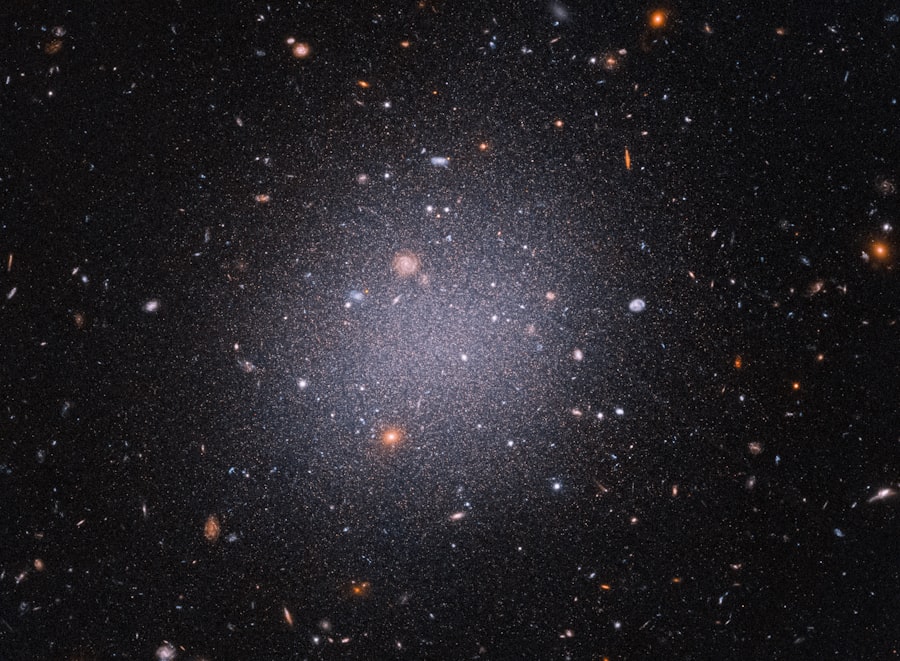
While dark matter provides the gravitational scaffolding for cosmic structures, dark energy is responsible for the observed acceleration of the universe’s expansion. This phenomenon, first inferred from observations of distant supernovae, represents a far more enigmatic component of the cosmos.
The Discovery of Cosmic Acceleration: A Shocking Revelation
In the late 1990s, two independent research teams studying Type Ia supernovae, which serve as standard candles due to their consistent intrinsic brightness, made a groundbreaking discovery. These supernovae, located at various distances, appeared dimmer than expected, implying that they are farther away than they should be if the universe’s expansion were slowing down or constant. This observation indicated that the expansion of the universe is not only continuing but is actively accelerating.
Type Ia Supernovae: Cosmic Beacons of Distance
Type Ia supernovae are cataclysmic explosions of white dwarf stars in binary systems. Their consistent peak luminosity allows astronomers to accurately estimate their distance. By comparing the apparent brightness of these supernovae to their known intrinsic brightness, scientists can determine how far away they are.
The Redshift-Distance Relation and its Deviation
The redshift of light from distant objects is a measure of their recession velocity due to the expansion of the universe. By plotting redshift against distance for a sample of supernovae, astronomers can determine the expansion history of the universe. The observed deviation from expected trends, with distant supernovae appearing dimmer, pointed to an accelerating expansion.
The Cosmological Constant: Einstein’s “Biggest Blunder” Revisited
One of the leading explanations for dark energy is the cosmological constant, often denoted by the Greek letter lambda ($\Lambda$). Originally introduced by Albert Einstein to achieve a static universe, it was later dismissed by him as his “biggest blunder” after the discovery of the universe’s expansion. However, the accelerating expansion has resurrected this concept. The cosmological constant represents a constant energy density inherent to spacetime itself.
Vacuum Energy: A Theoretical Predicament
The cosmological constant can be interpreted as a manifestation of vacuum energy, the energy of empty space. Quantum field theory predicts that empty space is filled with virtual particles constantly popping in and out of existence, contributing to a non-zero energy density.
The Fine-Tuning Problem: A Discrepancy of Orders of Magnitude
The magnitude of vacuum energy predicted by quantum field theory is staggeringly larger than the observed value of dark energy, by a factor of about 10^120. This immense discrepancy, known as the fine-tuning problem, highlights a profound disconnect between theoretical expectations and observational reality, suggesting a fundamental misunderstanding of gravity or quantum vacuum.
Equation of State: Measuring Dark Energy’s Behavior
The equation of state parameter, denoted by ‘w’, describes the relationship between the pressure and energy density of a substance. For normal matter and radiation, ‘w’ is non-negative. For dark energy to drive accelerated expansion, its pressure must be negative and at least as large in magnitude as its energy density, implying $w < -1/3$. The cosmological constant has $w = -1$, meaning its energy density remains constant as the universe expands.
Alternative Explanations: Beyond the Cosmological Constant
While the cosmological constant provides a simple explanation, its theoretical challenges have led to the investigation of alternative models for dark energy. These models propose dynamic entities whose energy density can change over time.
Quintessence: A Dynamic Scalar Field
Quintessence models propose that dark energy is a dynamic scalar field that permeates the universe. Unlike the cosmological constant, the energy density of a quintessence field can vary with time and space. This variability could potentially alleviate some of the fine-tuning problems associated with the cosmological constant.
The Role of the Scalar Field in Cosmic Evolution
The dynamics of a quintessence field would influence the rate of cosmic acceleration. Depending on its properties, it could lead to different expansion histories and potentially even a future collapse of the universe.
Experimental Constraints on Quintessence Models
Observational data, particularly from supernovae and the CMB, are used to constrain the possible behavior of quintessence fields. The more uniform the dark energy density appears across cosmic time and space, the closer it resembles a cosmological constant.
Modified Gravity Theories: Rethinking Gravity Itself
Another class of explanations involves modifying Einstein’s theory of general relativity on large cosmological scales. These theories suggest that gravity might behave differently at vast distances, leading to an apparent acceleration without the need for a separate dark energy component.
f(R) Gravity: Altering the Einstein-Hilbert Action
One example is f(R) gravity, where the standard Einstein-Hilbert action, which describes gravity, is replaced by a more general function of the Ricci scalar (R). These modifications can introduce terms that mimic the effects of dark energy.
Tensor-Vector-Scalar Gravity (TeVeS): A Relativistic Approach
TeVeS is a relativistic alternative to dark matter and dark energy that modifies general relativity while remaining consistent with observed gravitational phenomena. It proposes that the gravitational field is described by a combination of a metric tensor, a vector field, and a scalar field.
The Interplay of Dark Matter and Dark Energy: A Cosmic Dance

The relationship between dark matter and dark energy is not merely a matter of their respective abundances; their interplay is fundamental to the large-scale structure and evolution of the universe. The presence of dark matter fuels the formation of galaxies and clusters, while dark energy drives their eventual separation.
Structure Formation Under Dark Matter Domination
In the early universe, gravitational instabilities in the distribution of dark matter began to grow. Because dark matter does not interact with light, it could begin to clump together gravitationally much earlier than baryonic matter, which was coupled to photons and resisted collapse.
Gravitational Collapse and Halo Formation
Over time, these overdense regions of dark matter attracted more matter, forming extended structures known as dark matter halos. These halos acted as gravitational wells, accreting baryonic matter from the surrounding cosmic web.
Baryons Follow Dark Matter: The Genesis of Galaxies
The infalling baryonic matter cooled and condensed within these dark matter halos, eventually forming stars, galaxies, and larger structures. The observed distribution of galaxies and galaxy clusters strongly aligns with predictions based on simulations that include a dominant dark matter component.
The Growing Influence of Dark Energy: A Cosmic Decoupling
As the universe expanded, the density of dark matter decreased. However, if dark energy is indeed a cosmological constant, its energy density remains constant. This means that as the universe grows larger, dark energy becomes increasingly dominant over dark matter and baryonic matter.
Overcoming Gravity: A Force of Repulsion
The negative pressure associated with dark energy exerts a repulsive force that counteracts gravity on cosmic scales. This repulsive force is responsible for the accelerating expansion of the universe.
The Future of the Cosmos: A Lonely Expansion?
If dark energy continues to dominate, the universe will likely continue to expand at an accelerating rate. Galaxies will move farther apart, and eventually, they will become so distant that they will recede from each other faster than the speed of light, rendering them invisible to one another. This scenario paints a picture of a future where the cosmic web unravels, and galaxies become isolated islands in an ever-expanding void.
Dark matter and dark energy are two of the most intriguing concepts in modern astrophysics, yet they remain elusive to many beginners. If you’re looking to deepen your understanding of these mysterious components of the universe, you might find it helpful to explore a related article that breaks down these complex topics in an accessible way. For a clearer explanation, check out this informative piece on dark matter and dark energy, which provides a great starting point for anyone curious about the cosmos.
The Quest for Unification: A Grand Challenge
| Concept | Dark Matter | Dark Energy |
|---|---|---|
| Definition | A type of matter that does not emit, absorb, or reflect light, making it invisible and detectable only through its gravitational effects. | An unknown form of energy that is hypothesized to permeate all of space, causing the universe to expand at an accelerating rate. |
| Composition | Believed to be made up of particles that do not interact with electromagnetic forces, such as WIMPs (Weakly Interacting Massive Particles). | Not composed of particles, but rather a property of space itself, causing it to exert a repulsive force on the universe. |
| Discovery | First proposed by astronomer Fritz Zwicky in the 1930s to explain the discrepancy between the observed and calculated mass of galaxy clusters. | Discovered in the late 1990s through observations of distant supernovae, which revealed the unexpected acceleration of the universe’s expansion. |
| Role | Accounts for approximately 27% of the total mass-energy content of the universe and plays a crucial role in the formation and structure of galaxies and galaxy clusters. | Contributes to about 68% of the total mass-energy content of the universe and drives the current accelerated expansion of the universe. |
The existence of dark matter and dark energy presents one of the most significant challenges in modern physics and cosmology. The quest to understand their fundamental nature and their relationship to the known laws of physics is a driving force behind current scientific endeavors.
Bridging Particle Physics and Cosmology: The Standard Model’s Limitations
The Standard Model of particle physics, which describes the known fundamental particles and forces, does not include any candidates for dark matter. Similarly, it does not inherently explain the existence or magnitude of dark energy. This indicates that a more comprehensive theory is required, one that unifies these disparate phenomena.
Beyond the Standard Model: New Particles and Forces
The search for physics beyond the Standard Model is intimately linked to the dark matter problem. Theoretical frameworks like string theory and loop quantum gravity offer potential avenues for introducing new particles and interactions that could account for dark matter.
The Higgs Field and Beyond: A Universal Connection?
The Higgs field, responsible for giving mass to elementary particles, might play a role in the origin of dark matter or dark energy. Exploring the properties of the Higgs boson and its interactions could provide clues to these cosmic mysteries.
The Future of Observational and Theoretical Cosmology
The ongoing and upcoming astronomical surveys, such as the Vera C. Rubin Observatory and the Nancy Grace Roman Space Telescope, are designed to precisely map the distribution of galaxies and the large-scale structure of the universe with unprecedented detail. These observations will provide crucial data to constrain dark energy models and refine our understanding of dark matter’s distribution.
Precision Cosmology: Sharpening the Measurements
Future cosmological experiments will aim for higher precision in measuring the expansion rate of the universe, the growth of structures, and the properties of dark energy. These measurements will help distinguish between different theoretical models and potentially reveal new physics.
The Gravitational Wave Revolution: A New Window on the Universe
The advent of gravitational wave astronomy offers a novel way to probe the universe. By detecting gravitational waves from cosmic events like black hole mergers, scientists can glean information about the distribution of mass and the expansion history of the universe, complementing existing observational techniques. The ongoing pursuit of understanding dark matter and dark energy represents a grand challenge, pushing the boundaries of human knowledge and offering a profound glimpse into the fundamental workings of the cosmos.
FAQs
What is dark matter?
Dark matter is a mysterious substance that makes up about 27% of the universe. It does not emit, absorb, or reflect light, making it invisible and undetectable by current scientific instruments. Its presence is inferred from its gravitational effects on visible matter and light.
What is dark energy?
Dark energy is a hypothetical form of energy that is thought to make up about 68% of the universe. It is believed to be responsible for the accelerating expansion of the universe. Unlike dark matter, dark energy is not a substance and its nature is not well understood.
How are dark matter and dark energy different?
Dark matter and dark energy are different in nature and their effects on the universe. Dark matter is a form of matter that exerts gravitational pull on visible matter, while dark energy is a mysterious force that is causing the expansion of the universe to accelerate.
Why are dark matter and dark energy important in cosmology?
Dark matter and dark energy are important in cosmology because they are believed to play a crucial role in the structure and evolution of the universe. Understanding their nature and effects is essential for developing a comprehensive theory of the universe’s composition and dynamics.
How are scientists studying dark matter and dark energy?
Scientists are studying dark matter and dark energy through a variety of methods, including astronomical observations, computer simulations, and particle physics experiments. Efforts are ongoing to detect and understand these elusive components of the universe.