The universe, a tapestry woven with the threads of cosmic evolution, holds secrets that have captivated humanity for millennia. Among the most profound of these are the cosmic microwave background (CMB) radiation and the enigmatic force known as dark energy. These two cosmic cornerstones, seemingly disparate, are intricately linked, offering a window into the universe’s infancy and its ultimate fate. Unraveling their mysteries promises to revolutionize our understanding of cosmology.
The Echo of Creation: Decoding the Cosmic Microwave Background
The cosmic microwave background (CMB) is more than just faint radiation; it is the oldest light in the universe, a relic from a time when the cosmos was a mere infant, a hot, dense plasma. Approximately 380,000 years after the Big Bang, the universe had cooled enough for protons and electrons to combine, forming neutral atoms. This event, known as recombination, allowed photons, which had been constantly scattering off free electrons, to travel freely through space. These photons, stretched and cooled by the expansion of the universe over billions of years, are what we observe today as the CMB. Its discovery in 1964 by Arno Penzias and Robert Wilson was a watershed moment, providing powerful evidence for the Big Bang theory.
The CMB’s Uniformity and Subtle Fluctuations
At first glance, the CMB appears remarkably uniform, with a temperature of about 2.7 Kelvin across the entire sky. This uniformity is a testament to the incredible homogeneity of the early universe. However, upon closer inspection, the CMB reveals subtle temperature fluctuations – tiny variations of a few parts in 100,000. These anisotropies, as they are called, are not random noise; they are the seeds of all the structure we see in the universe today, from the smallest galaxies to the largest cosmic filaments. These minuscule temperature differences represent regions of slightly higher or lower density in the primordial plasma. Gravity then amplified these overdense regions, drawing in more matter and eventually leading to the formation of stars, galaxies, and galaxy clusters.
CMB Observatories: Eyes on the Early Universe
Understanding these primordial fluctuations requires highly sensitive instruments. Various space-based missions, such as the Cosmic Background Explorer (COBE), the Wilkinson Microwave Anisotropy Probe (WMAP), and the Planck satellite, have been instrumental in mapping the CMB with unprecedented precision. These observatories employ sophisticated detectors capable of measuring minute variations in the CMB’s temperature and polarization. COBE provided the first detailed map of the CMB, confirming its blackbody spectrum and detecting the crucial anisotropies. WMAP built upon COBE’s legacy, providing more accurate measurements of the CMB’s properties and refining our estimates of the universe’s age and composition. Planck, the most recent and powerful mission, delivered the highest-resolution map of the CMB to date, revealing an astonishing level of detail and offering crucial insights into the universe’s fundamental parameters.
What the CMB Tells Us About Our Universe
The analysis of CMB data has yielded a wealth of information about our universe. It has allowed cosmologists to determine the proportions of baryonic matter (ordinary matter made of protons and neutrons), dark matter (an invisible form of matter that interacts gravitationally), and dark energy (the mysterious force driving cosmic expansion). The CMB data strongly supports a Lambda-CDM model of cosmology, which posits a universe dominated by dark energy and dark matter, with ordinary matter playing a comparatively minor role. Furthermore, the patterns of fluctuations in the CMB provide insights into the inflationary epoch, a hypothetical period of rapid expansion in the very early universe, and the physical processes that governed the universe during its first moments.
Recent discussions in cosmology have increasingly focused on the roles of cosmic microwave background (CMB) radiation and dark energy in shaping our understanding of the universe. For a deeper dive into these fascinating topics, you can explore an insightful article on Freaky Science that delves into the implications of CMB observations and the mysteries surrounding dark energy. To read more, visit Freaky Science.
The Accelerating Expansion: Unveiling the Nature of Dark Energy
For much of the 20th century, cosmologists believed that the universe’s expansion, initiated by the Big Bang, was either slowing down due to gravity or, at best, expanding at a constant rate. However, in the late 1990s, two independent research teams studying distant supernovae made a startling discovery: the universe’s expansion is not only continuing but is actually accelerating. This discovery was so unexpected that it earned the Nobel Prize in Physics in 2011. The force responsible for this acceleration was dubbed “dark energy.”
Evidence for Cosmic Acceleration
The primary evidence for dark energy comes from the observation of Type Ia supernovae. These are a specific class of exploding stars that have a consistent intrinsic brightness, making them excellent “standard candles” for measuring cosmic distances. By observing the redshift of these supernovae (a measure of how much their light has been stretched by the expansion of the universe) and their apparent brightness, astronomers can determine how far away they are and how fast they are receding from us. The supernovae observed in distant galaxies appeared fainter than expected if the expansion were decelerating or constant, indicating that they were farther away. This implies that the expansion rate of the universe has increased over time.
Theoretical Candidates for Dark Energy
The exact nature of dark energy remains one of the biggest mysteries in physics. Several theoretical models have been proposed to explain its existence and properties. The simplest and most widely accepted explanation is the cosmological constant, often represented by the Greek letter Lambda ($\Lambda$). Introduced by Albert Einstein in his theory of general relativity, the cosmological constant was initially conceived as a way to create a static universe, a notion he later abandoned. In the context of dark energy, the cosmological constant represents a constant energy density inherent to the vacuum of space itself. As the universe expands, the volume of space increases, and thus the total amount of dark energy in the universe also increases, driving further acceleration.
Another prominent candidate is “quintessence,” a hypothetical dynamic energy field that permeates spacetime. Unlike the cosmological constant, the energy density of quintessence can vary over time and space. This flexibility allows for more complex expansion histories and could potentially resolve some of the theoretical challenges associated with the cosmological constant. Other exotic theories involve modifications to Einstein’s theory of gravity itself, suggesting that the observed acceleration might not be due to a new form of energy but rather to a fundamental alteration in how gravity operates on cosmic scales.
The Role of Dark Energy in Cosmic Evolution
Dark energy plays a crucial role in shaping the large-scale structure and ultimate fate of the universe. In the early universe, matter and radiation dominated, and gravity was the primary force dictating cosmic evolution, leading to the formation of structures. As the universe expanded, the density of matter and radiation decreased. However, if dark energy has a constant or slowly changing energy density, its influence becomes increasingly dominant over time. This dominance is what drives the observed accelerated expansion.
The implications for the universe’s future are profound. If dark energy continues to dominate, the universe will likely enter a state of perpetual expansion, known as the “Big Freeze” or “heat death.” Galaxies will move farther and farther apart, eventually becoming invisible to one another. Star formation will cease as the gas needed to form new stars is exhausted. The universe will become cold, dark, and empty. Alternatively, if dark energy’s properties change, the future could be more dramatic, potentially leading to a “Big Rip” where the expansion becomes so violent that it tears apart galaxies, stars, planets, and even atoms.
The Interplay: CMB, Dark Energy, and the Expanding Universe

The cosmic microwave background and dark energy, while probing different epochs of cosmic history, are deeply interconnected and provide complementary evidence for our current cosmological model. The CMB offers a snapshot of the early universe, while observations of distant objects, like supernovae, reveal the universe’s expansion history over billions of years. Bringing these two pieces of information together has been crucial for solidifying our understanding of the cosmos.
Measuring Dark Energy from the CMB
The CMB anisotropies, while originating from the early universe, carry imprints of the expansion history that occurred after recombination. The characteristic scale of these anisotropies is determined by the “sound horizon” at the time of recombination – the maximum distance that a sound wave could have traveled in the primordial plasma. As the universe expands, this sound horizon is projected onto the sky, creating a characteristic pattern in the CMB. By measuring the angular size of this pattern, cosmologists can infer the distance to the surface of last scattering.
Crucially, the expansion history of the universe affects how this projected size changes. If the universe’s expansion has been accelerating, as suggested by supernovae, this will alter the perceived size of the sound horizon on the sky. By precisely measuring the CMB anisotropies, particularly the peaks and troughs in its power spectrum, scientists can constrain the parameters that describe the expansion history, including the amount and nature of dark energy. This method provides an independent confirmation of the supernova results and has been instrumental in refining our measurements of dark energy’s influence.
The Concordance Model: Lambda-CDM
The remarkable agreement between the CMB data and the observations of distant supernovae has led to the widespread acceptance of the Lambda-CDM model. This model proposes a universe composed of approximately 5% baryonic matter, 25% dark matter, and 70% dark energy. The CMB data provides strong evidence for the existence and relative abundance of these components, while the expansion history, as revealed by supernovae and other probes like baryon acoustic oscillations (BAO), strongly supports the dominance of dark energy in driving cosmic acceleration. BAO, in particular, are relics of sound waves in the early universe that imprinted a characteristic scale on the distribution of matter. Measuring this scale at different cosmic epochs provides another powerful way to probe the expansion history.
Unresolved Puzzles and Future Directions
Despite the success of the Lambda-CDM model, significant questions remain. The fundamental nature of dark energy is still unknown. Is it truly the cosmological constant, or is it something more complex like quintessence? What is the precise nature of dark matter? Furthermore, there are ongoing tensions between different cosmological measurements, such as the Hubble constant tension, which refers to a persistent discrepancy between the expansion rate measured from the local universe and that inferred from the CMB. These discrepancies suggest that our current understanding might be incomplete, and new physics may be required. Future missions and observatories, both ground-based and space-based, are being designed to address these puzzles. Experiments like the Vera C. Rubin Observatory, the Nancy Grace Roman Space Telescope, and the Square Kilometre Array aim to map the large-scale structure of the universe with unprecedented precision, providing more detailed insights into dark energy and dark matter.
The Quest for Understanding: Implications for Physics and Cosmology
The pursuit of understanding the CMB and dark energy is not merely an academic exercise; it has profound implications for our fundamental understanding of physics and the universe itself. These cosmic enigmas push the boundaries of our current theories and challenge us to develop new frameworks to explain observed phenomena.
Beyond the Standard Model of Particle Physics
The existence of dark matter and dark energy points towards physics beyond the Standard Model of particle physics, our current best description of fundamental particles and forces. The Standard Model does not contain any particles with the properties required for dark matter, nor does it offer a natural explanation for a pervasive energy field like dark energy. The discovery and characterization of these cosmic components necessitate extensions or entirely new theories, potentially involving new fundamental particles, forces, or even dimensions. Unraveling these mysteries could lead to a more unified and comprehensive understanding of the fundamental constituents of reality.
Gravity’s Cosmic Role
Dark energy’s influence is intimately tied to the nature of gravity. The cosmological constant is a feature that can be incorporated into Einstein’s theory of general relativity, but its origin and magnitude remain unexplained by fundamental theory. Alternative theories of gravity that propose modifications to general relativity on large scales are also being explored as potential explanations for the accelerated expansion. Understanding dark energy might therefore reveal new insights into the fundamental laws that govern gravity, potentially shedding light on long-standing problems like the unification of gravity with quantum mechanics.
The Ultimate Fate of the Cosmos
The ongoing expansion of the universe, driven by dark energy, has profound implications for its ultimate fate. The data from the CMB and studies of cosmic acceleration paint a picture of a universe that will continue to expand, potentially forever. This leads to scenarios like the Big Freeze, where the universe becomes increasingly cold and dilute, or, in more speculative scenarios, a Big Rip. These predictions challenge our anthropocentric view of the universe and offer a humbling perspective on our place in the vast cosmic timeline. The study of dark energy is thus not only about understanding the present but also about forecasting the distant future of everything we know.
Recent studies on the cosmic microwave background (CMB) have shed light on the mysterious nature of dark energy, which is believed to be driving the accelerated expansion of the universe. For a deeper understanding of this intriguing relationship, you can explore a related article that discusses the implications of CMB observations on our comprehension of dark energy. This article provides valuable insights into how these cosmic phenomena interact and shape our universe. To read more about it, visit this link.
The Future of Cosmic Exploration: New Frontiers and Instruments
| Metric | Description | Value / Range | Source / Experiment |
|---|---|---|---|
| Dark Energy Density (Ω_Λ) | Fraction of the total energy density of the universe attributed to dark energy | ~0.68 | Planck 2018 CMB Data |
| Dark Matter Density (Ω_c) | Fraction of the total energy density of the universe attributed to cold dark matter | ~0.27 | Planck 2018 CMB Data |
| Hubble Constant (H₀) | Current expansion rate of the universe | 67.4 km/s/Mpc | Planck 2018 CMB Data |
| Equation of State Parameter (w) | Ratio of dark energy pressure to its energy density | −1 (consistent with cosmological constant) | Planck 2018 + BAO |
| Acoustic Scale (l_A) | Angular scale of the sound horizon at recombination | ~301 | Planck 2018 CMB Data |
| Sound Horizon at Recombination (r_s) | Comoving size of the sound horizon at the surface of last scattering | ~147 Mpc | Planck 2018 CMB Data |
| Redshift of Matter-Dark Energy Equality (z_eq) | Redshift when matter and dark energy densities were equal | ~0.3 | Derived from Planck 2018 Data |
The journey to unravel the mysteries of the CMB and dark energy is far from over. Scientists are continuously developing new instruments and innovative observational techniques to probe these cosmic phenomena with even greater precision and to explore new avenues of inquiry. The future of cosmic exploration promises exciting breakthroughs that could revolutionize our understanding of the universe.
Next-Generation Observatories and Experiments
The next decade will witness the deployment of several powerful new telescopes and observatories specifically designed to enhance our understanding of dark energy and the CMB. The Nancy Grace Roman Space Telescope, with its wide field of view and sensitive infrared instruments, will conduct large-scale surveys to map the distribution of galaxies and the expansion history of the universe with unprecedented accuracy. The Vera C. Rubin Observatory’s Legacy Survey of Space and Time (LSST) will provide a comprehensive and deep view of the night sky, enabling the detection of millions of supernovae and the precise measurement of large-scale structure, both crucial for studying dark energy. Ground-based experiments like the Dark Energy Spectroscopic Instrument (DESI) are already actively collecting data to map the three-dimensional distribution of galaxies and quasars, providing further constraints on dark energy.
Advanced Data Analysis and Theoretical Modeling
The vast amounts of data generated by these new instruments will require sophisticated data analysis techniques and advanced theoretical modeling. Cosmologists are developing new algorithms and computational tools to extract maximum information from these datasets. Furthermore, theoretical physicists are actively working on developing new models of dark energy, exploring alternative theories of gravity, and seeking ways to reconcile the CMB observations with local measurements. The interplay between theoretical predictions and observational data will be crucial in advancing our knowledge.
The Search for Exotic Phenomena
Beyond the standard cosmological models, future research will also continue to probe for more exotic phenomena that could shed light on dark energy and dark matter. This includes the search for direct or indirect detection of dark matter particles, investigations into the possibility of extra dimensions, and the exploration of more complex dark energy models. The unexpected nature of dark energy suggests that the universe may hold surprises far beyond our current imagination, and future research will be geared towards uncovering these profound truths. The ongoing exploration of the CMB and dark energy represents a monumental scientific endeavor, one that continues to push the boundaries of human knowledge and inspire awe at the vastness and complexity of the cosmos.
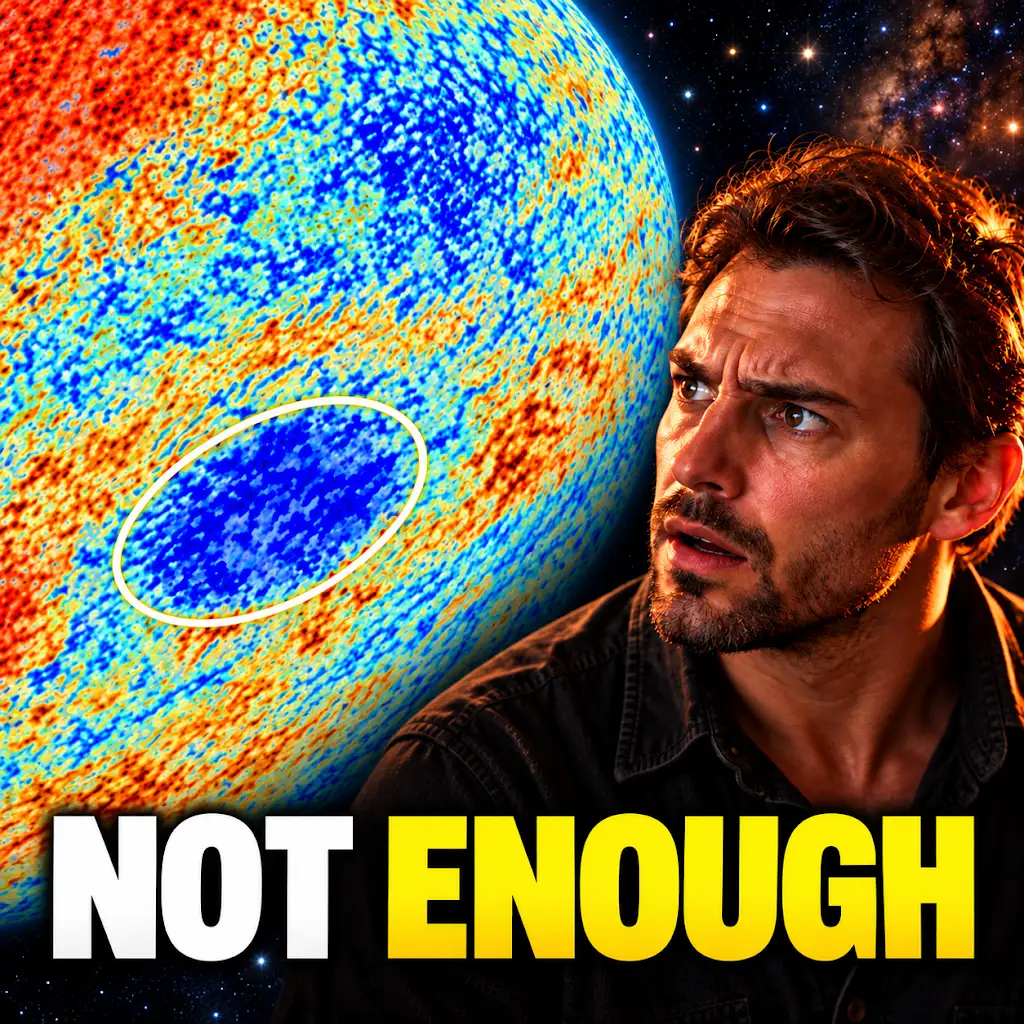
The Universe’s Cold Spot Has an Explanation. It’s Not Enough.
FAQs
What is CMB?
CMB stands for Cosmic Microwave Background, which is the afterglow of the Big Bang and is the oldest light in the universe.
What is dark energy?
Dark energy is a mysterious force that is causing the expansion of the universe to accelerate. It makes up about 68% of the total energy content of the universe.
How are CMB and dark energy related?
CMB provides important clues about the early universe and the distribution of matter, which in turn helps scientists understand the effects of dark energy on the expansion of the universe.
How does CMB help us study dark energy?
By analyzing the patterns and fluctuations in the CMB, scientists can gain insights into the composition of the universe, including the influence of dark energy on the evolution of cosmic structures.
What are some current research efforts related to CMB and dark energy?
Scientists are using advanced telescopes and satellites to study the CMB in more detail, in order to better understand the nature of dark energy and its impact on the universe’s expansion.