You hold it in your hand, a smooth rectangle of glass and metal, a portal to a world of information and connection. But have you ever stopped to wonder, as you scroll through social media, stream your favorite song, or make a call across continents, how your phone actually pulls off this seemingly effortless feat? It’s not magic, though it certainly feels like it sometimes. Instead, it’s a sophisticated dance of physics and engineering, a constant hum of invisible waves carrying your digital life through the air. You’re about to unveil the magic: how your phone transmits radio signals.
Before we delve into the mechanics of your phone, it’s crucial to understand what a radio signal truly is. Think of it as a wave, not unlike the ripples you see when you toss a pebble into a pond, but on a much grander, invisible scale. These are electromagnetic waves, a fundamental part of the universe’s energy spectrum. They consist of oscillating electric and magnetic fields propagating through space at the speed of light. Your phone, and indeed the entire modern world of wireless communication, relies on a specific band of these waves – radio waves.
The Electromagnetic Spectrum: A Vast Highway of Waves
Imagine the entire electromagnetic spectrum as a massive, multi-lane highway. On this highway, you have everything from the incredibly short, high-energy waves of gamma rays and X-rays, used in medical imaging, to the much longer, lower-energy waves of infrared, which you feel as heat, and visible light, which allows you to see. Radio waves occupy a particular stretch of this highway, characterized by their longer wavelengths and lower frequencies compared to visible light. This specific range is ideal for carrying information over distances without requiring a physical connection.
Wavelength and Frequency: The Two Sides of the Same Wave
These two terms are intrinsically linked and define a radio wave’s identity. Wavelength refers to the distance between two consecutive crests or troughs of the wave. Frequency, on the other hand, is the number of complete wave cycles that pass a fixed point in one second. They have an inverse relationship: longer wavelengths correspond to lower frequencies, and shorter wavelengths correspond to higher frequencies. Different frequencies within the radio spectrum are used for different purposes – your Wi-Fi uses one range, your mobile data another, and your FM radio yet another.
Encoding Information: Turning Bits into Waves
Your phone doesn’t just blast out raw, unadulterated radio waves. The information you send – your voice, a text message, a picture – needs to be converted into a format that can be carried by these waves. This process is called modulation, and it’s the ingenious way we imbue radio waves with meaning. Think of it like this: if radio waves are the delivery trucks, modulation is how you put the packages (your data) inside them.
Amplitude Modulation (AM): Varying the Strength
One of the earliest and simplest forms of modulation is Amplitude Modulation (AM). In AM, the amplitude, or the strength or height, of the radio wave is varied in accordance with the information signal. Imagine the radio wave as a steady sine wave. With AM, you’re essentially making that wave taller or shorter, mimicking the ups and downs of your audio signal. This is akin to changing the volume of a constant tone.
Frequency Modulation (FM): Shifting the Pitch
Frequency Modulation (FM) is another common technique. Here, the frequency of the radio wave is varied, while its amplitude remains constant. Think of it like changing the pitch of a constant-volume tone. Higher frequencies correspond to certain parts of your information signal, and lower frequencies to others. FM is generally less susceptible to interference than AM, which is why it’s often preferred for broadcasting music and high-fidelity audio.
Digital Modulation: The Language of Today
Modern phones, however, go beyond simple AM and FM. They employ sophisticated digital modulation schemes. These techniques encode digital data (the 0s and 1s that computers understand) onto radio waves in highly efficient ways. Techniques like Quadrature Amplitude Modulation (QAM) and Phase-Shift Keying (PSK) are used, which manipulate both the amplitude and phase of the radio wave to represent complex digital information. This allows for much higher data transfer rates, essential for everything from high-definition video streaming to faster internet browsing.
Understanding how phones transmit radio signals is crucial for grasping the fundamentals of modern communication technology. For a deeper dive into this topic, you can explore the article on Freaky Science, which provides an insightful overview of the principles behind radio wave transmission and reception in mobile devices. This resource can enhance your knowledge of the intricate processes that allow our phones to connect seamlessly to networks. To read more, visit Freaky Science.
The Heart of the Matter: Your Phone’s Radio Transmitter
Inside your sleek device, hidden beneath the screen and battery, lies the engine of its wireless communication: the radio transmitter. This is the component responsible for taking the digital information you generate and converting it into radio waves that can be broadcast into the ether. It’s a complex piece of miniaturized technology, a testament to decades of innovation.
The Transceiver: A Two-Way Street
Most modern phones don’t just have a transmitter; they have a transceiver. As the name suggests, this is a combined unit that can both transmit and receive radio signals. This is what allows your phone to have a two-way conversation with the world. When you’re speaking on the phone, the transceiver’s transmitter is busy converting your voice into radio waves. When the other person speaks, the transceiver’s receiver is busy capturing their voice, converting it back into a format you can hear.
The Antenna: The Bridge to the Airwaves
The antenna is the crucial outward-facing component of your phone’s radio system. It’s the physical element that radiates the radio waves generated by the transmitter into the surrounding environment and, conversely, captures incoming radio waves. Antennas come in various shapes and sizes, but their fundamental purpose is to act as a transducer – converting electrical signals into electromagnetic waves and vice versa. In your phone, antennas are often ingeniously integrated into the device’s frame or casing to save space.
The Power Amplifier: Boosting the Signal
To ensure your signal can travel the necessary distances, it needs a bit of a push. That’s where the power amplifier comes in. This component takes the modulated radio signal and amplifies its power, giving it the strength to overcome distance and environmental obstacles. The strength of this amplification is carefully controlled to comply with regulatory limits and to conserve battery life.
Frequency Synthesis: Dialing in the Right Channel
Your phone needs to operate on specific radio frequencies allocated for mobile communication. The frequency synthesizer is responsible for generating these precise frequencies. It takes a stable reference frequency and multiplies or divides it to produce the exact carrier frequencies needed for transmission and reception. This ensures your phone is tuned to the correct “channel” to communicate with cellular towers.
The Journey of a Signal: From Your Phone to the World
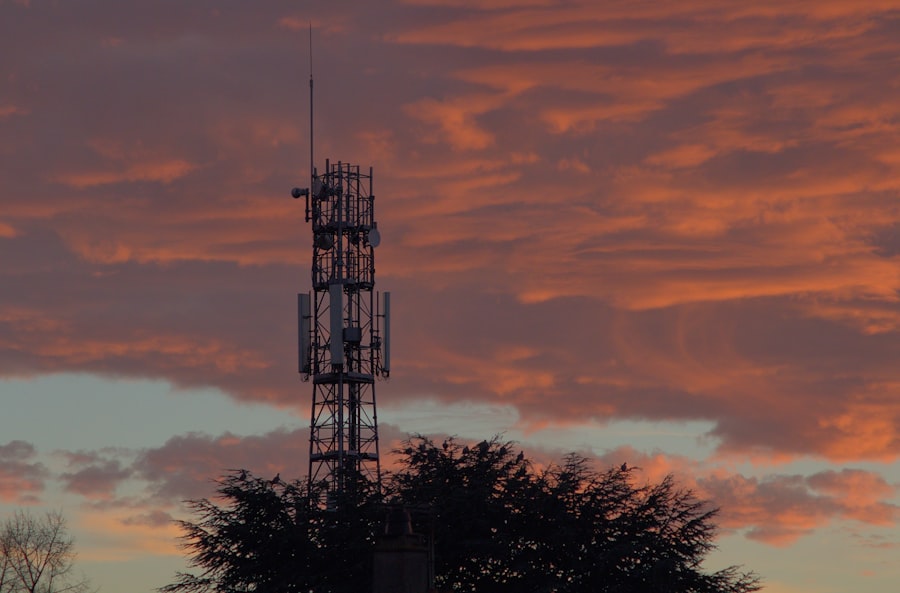
Once your phone has generated and amplified its radio signal, it’s ready to embark on its journey. This journey isn’t a direct hop to its destination but rather a carefully orchestrated process involving the cellular network infrastructure.
The Cellular Network: A Web of Towers
The world of mobile communication is built upon a vast, interconnected network of cellular towers. These towers are strategically placed to provide coverage over a geographical area, often referred to as a “cell.” When your phone transmits a signal, it’s not sent directly to the person you’re calling. Instead, it’s transmitted to the nearest cellular tower.
Hand-off: Staying Connected as You Move
As you move around, your phone is constantly communicating with multiple towers. The network is designed to seamlessly transfer your connection from one tower to another as you move between cells. This “hand-off” process is typically imperceptible to you, ensuring you don’t lose your call or data connection. Your phone communicates with the tower that has the strongest signal, and the network manages the transition.
Base Stations and Switching Centers: The Network’s Brains
Cellular towers are more than just antennas. They are connected to sophisticated equipment called base stations, which manage the communication within a cell. These base stations, in turn, are linked to switching centers, which act as the central nervous system of the cellular network. They route your calls and data to their intended destinations, whether it’s another phone in the same network, a landline, or the internet.
Modulation and Demodulation at the Tower: A Universal Language
When your signal reaches the cellular tower, it’s still in its modulated radio wave form. The base station at the tower then demodulates this signal, converting the radio waves back into digital data. This data is then processed and routed through the network. Similarly, when a signal arrives at the tower intended for your phone, it’s modulated onto a radio wave and transmitted to your device.
Receiving the Message: The Other Side of the Coin
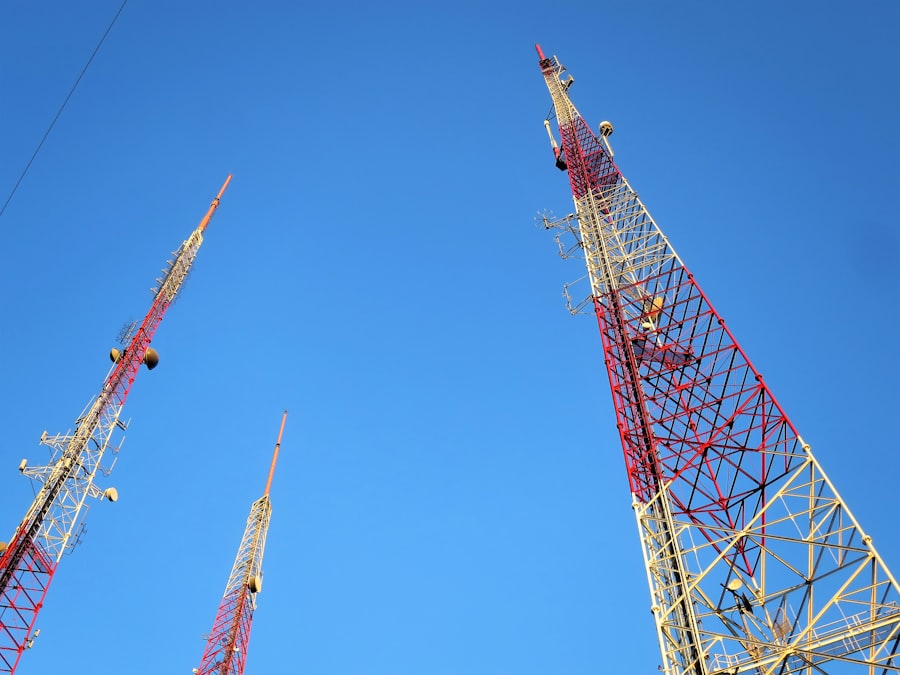
While transmitting is a marvel, receiving is equally impressive. Your phone isn’t just a broadcaster; it’s a highly sensitive receiver, capable of capturing faint radio signals from distant sources and translating them back into meaningful information.
The Antenna’s Second Role: Capturing the Waves
The same antenna that radiates your outgoing signal is also adept at capturing incoming radio waves. When a radio signal from a cellular tower or a Wi-Fi access point encounters your phone’s antenna, it induces a small electrical current within it. This current is a replica of the incoming radio wave.
Tuning In: Selecting the Right Frequency
Your phone’s receiver circuitry is designed to “tune in” to specific frequencies. This means it can filter out all the other radio waves bombarding your device from various sources (other phones, radio stations, Wi-Fi routers) and focus only on the signals it needs to process. This selective filtering is crucial for clear communication.
The Demodulator: Unlocking the Information
Once the antenna has captured a radio wave and the receiver has tuned to the correct frequency, the demodulator takes over. Its job is to extract the original information that was encoded onto the carrier wave. This involves reversing the modulation process that occurred at the transmitter.
Amplification and Filtering: Cleaning Up the Signal
The incoming radio signals are often very weak. Therefore, the receiver includes amplification stages to boost the signal strength. Additionally, filters are used to remove any unwanted noise or interference that might have been picked up during transmission. This ensures that the demodulated signal is as clear and accurate as possible.
Analog-to-Digital Conversion (ADC): The Digital Bridge
For modern digital communication, the demodulated signal, which might still be in an analog form, needs to be converted into digital data (0s and 1s). This is the role of the Analog-to-Digital Converter (ADC). It samples the analog signal at regular intervals and converts each sample into a corresponding digital value. This digital data is then processed by your phone’s main processor.
Understanding how phones transmit radio signals is crucial for grasping the technology behind modern communication. For a deeper dive into this fascinating topic, you can explore an insightful article that explains the principles of radio wave transmission and reception. This resource provides a comprehensive overview of the science involved and its applications in everyday devices. To read more about it, check out this related article that sheds light on the intricacies of radio signals in mobile technology.
Beyond the Call: Wi-Fi, Bluetooth, and GPS
| Aspect | Details |
|---|---|
| Frequency | Phones transmit radio signals using specific frequency bands allocated by regulatory authorities. |
| Modulation | Radio signals are modulated to carry information such as voice, data, or multimedia content. |
| Antenna | Phones have built-in antennas to transmit and receive radio signals. |
| Transmitter Power | Phones adjust their transmitter power based on the network conditions to optimize signal transmission. |
| Network Protocols | Phones use various network protocols such as GSM, CDMA, LTE, and 5G to transmit radio signals. |
Your phone’s radio transmission capabilities extend far beyond making traditional voice calls. It’s a multi-talented device, utilizing radio waves for a variety of essential functions, each with its own unique set of radio frequencies and modulation techniques.
Wi-Fi: Your Personal Wireless Network
When you connect to a Wi-Fi network, your phone is using its Wi-Fi radio to communicate with a nearby router. Wi-Fi operates on specific radio frequency bands (typically 2.4 GHz and 5 GHz) and uses digital modulation techniques to achieve high data transfer rates. This allows you to browse the internet, stream videos, and download files without using your cellular data.
Bluetooth: Short-Range, Low-Power Communication
Bluetooth is another vital wireless technology integrated into your phone. It’s designed for short-range, low-power communication, ideal for connecting devices like headphones, smartwatches, and speakers. Bluetooth operates in the 2.4 GHz ISM band and uses frequency hopping spread spectrum techniques to ensure reliable communication even in crowded radio environments.
GPS: Navigating the World with Satellites
The Global Positioning System (GPS) is a marvel of modern engineering that relies on radio signals from a constellation of satellites orbiting the Earth. Your phone’s GPS receiver listens for signals from multiple satellites, and by calculating the time it takes for these signals to arrive, it can triangulate your precise location on the planet. The radio frequencies used by GPS are carefully chosen to minimize interference and maximize signal penetration.
The Power of Radio Waves: A Constant Connection
From the moment you power on your phone, it’s engaged in a silent, continuous conversation with the world around it. Radio waves are the invisible threads that weave together your digital life, enabling instant connection and access to information. The next time you send a text, make a call, or check the weather, take a moment to appreciate the incredible journey those radio signals undertake, a testament to human ingenuity and the unseen symphony that connects us all. It’s not magic, but it’s certainly wonderful.

Your Phone Can Still Know Where You Are in Airplane Mode
FAQs
What are radio signals and how do phones transmit them?
Radio signals are electromagnetic waves that carry information. Phones transmit radio signals through their antennas, which convert electrical signals into radio waves and vice versa.
What frequency bands do phones use to transmit radio signals?
Phones use various frequency bands to transmit radio signals, including the cellular bands (e.g., 700 MHz, 850 MHz, 1900 MHz), Wi-Fi bands (e.g., 2.4 GHz, 5 GHz), and Bluetooth bands (e.g., 2.4 GHz).
How do phones receive radio signals from cellular towers?
Phones receive radio signals from cellular towers through their antennas, which capture the radio waves and convert them into electrical signals that can be processed by the phone’s internal components.
What factors can affect the transmission of radio signals by phones?
Factors such as distance from the cellular tower, physical obstacles, electromagnetic interference, and atmospheric conditions can affect the transmission of radio signals by phones.
Are there any health concerns related to the transmission of radio signals by phones?
The World Health Organization (WHO) states that there is no convincing scientific evidence that the radio signals from phones cause adverse health effects when used within the established safety guidelines.