You think you see the world as it truly is. You believe your eyes, your ears, your touch – they all present you with an objective, unvarnished truth. But what if I told you that the reality you experience is a meticulously crafted illusion, a sophisticated simulation run by your own mind? Prepare to have your perceived reality gently, and perhaps startlingly, dismantled.
Your brain, that three-pound marvel nestled within your skull, isn’t merely a passive receiver of external stimuli. It’s an active participant, a tireless architect constantly building and rebuilding your world. Every sensation you register – the warmth of the sun on your skin, the taste of your favorite meal, the melody of a song – is not a direct import from the external world. Instead, it’s a complex interpretation, a reconstruction based on a lifetime of experiences, ingrained biases, and biological imperatives.
The Sensory Symphony: More Than Just Input
Think about your senses. They are your gateways to the world, or so you’ve always been told. But they are far from perfect lenses. They are highly selective, filtering out vast amounts of information to present you with a manageable, digestible version of reality.
Vision: A Painted Canvas, Not a Window
Your eyes, those seemingly transparent windows to the soul, are actually highly sophisticated biological cameras. Yet, they don’t capture reality as a digital sensor might. Instead, they transmit raw electrical signals to your brain, which then has to make sense of them. This is where the magic, and the manipulation, truly begins.
The Blind Spot: A Constant Reminder of Imperfection
You have a blind spot in each eye, a physical void where your optic nerve leaves the retina. Yet, you don’t perceive a gaping hole in your vision. Why? Because your brain, in its infinite wisdom, fills in the missing information. It extrapolates from the surrounding visual data, creating a seamless illusion of continuous sight. This is a fundamental demonstration that what you see is not what is truly there, but what your brain wants you to see. It’s a testament to your brain’s proactive, rather than reactive, approach to perception.
Color Perception: A Subjective Spectrum
The vibrant reds, blues, and greens you perceive are not inherent properties of objects. They are the brain’s interpretation of different wavelengths of light. Different individuals can perceive the same wavelengths slightly differently due to variations in their retinal cones and neural pathways. Color blindness is an extreme example, but even among those with “normal” vision, subtle differences exist. What you call “red” might be perceived as a slightly different hue by someone else. The objective reality of light waves is transformed into a subjective, internalized experience of color.
Optical Illusions: The Brain’s Glitches Revealed
Optical illusions are not mere tricks; they are windows into the very mechanisms of your perceptual system. They exploit the shortcuts and assumptions your brain makes to process visual information efficiently. From the Müller-Lyer illusion, where lines of equal length appear different due to the direction of arrowheads, to the ambiguous figures that can be perceived in multiple ways, these illusions reveal that your brain is not a neutral observer but an active constructor, prone to certain biases and patterns of interpretation.
Hearing: The Art of Auditory Reconstruction
Your ears, too, are not mere microphones. They convert sound waves into electrical signals, which are then interpreted by your auditory cortex. This interpretation is influenced by context, expectation, and even your mood.
The Cocktail Party Effect: Filtering the Chaos
At a noisy party, you can focus on a single conversation amidst a cacophony of sounds. This is the cocktail party effect, a remarkable feat of selective attention. Your brain prioritizes certain auditory streams while suppressing others. This isn’t simply about volume; it’s about your brain’s ability to identify and extract meaningful information from a complex acoustic environment. It highlights how your focus shapes what you hear, making the auditory world a dynamic, personalized landscape.
Auditory Illusions: The Unseen Resonances
Just as with vision, auditory illusions demonstrate the brain’s interpretive nature. The Shepard tone, which seemingly rises or falls in pitch indefinitely, is a fascinating example. It plays on the brain’s assumptions about how pitch should behave, creating a perpetual illusion of motion. These illusions reveal that your brain is actively constructing the perceived soundscape, rather than passively receiving it.
The Language of Sensation: Translating Raw Data
The raw data arriving from your sensory organs is not directly understandable. It needs to be translated, categorized, and contextualized. This translation process is where your past experiences and existing knowledge play a crucial role.
Neuroplasticity: The Ever-Evolving Perceptual Map
Your brain is not a static entity. It’s remarkably adaptable, a phenomenon known as neuroplasticity. As you learn and experience new things, your neural pathways are rewired. This means that your perception of the world can actually change over time. A musician’s auditory cortex is wired differently than a non-musician’s, allowing them to perceive nuances in sound that others might miss. Your entire perceptual apparatus is in a constant state of flux, shaped by your interactions with the world.
Memory and Expectation: The Ghosts in the Machine
Your memories are not just passive storage. They actively influence what you perceive. If you have a negative experience associated with a particular food, you might perceive its smell or taste as unpleasant, even if objectively it hasn’t changed. Conversely, positive memories can enhance your enjoyment of experiences. Your expectations also play a powerful role. If you anticipate a certain outcome, you are more likely to perceive evidence that supports that expectation, a phenomenon known as confirmation bias. This means you are not just observing the world; you are actively co-creating it through the lens of your past.
In exploring the intriguing concept of hidden realities and human perception, one can gain deeper insights by reading the article titled “The Nature of Perception: How Our Minds Shape Reality.” This article delves into the complexities of how our senses interpret the world around us and the ways in which our perceptions can be influenced by various factors. To learn more about this fascinating topic, you can visit the article here: The Nature of Perception: How Our Minds Shape Reality.
The Unseen Biases: The Subtle Architects of Your Reality
Beyond the fundamental mechanisms of sensory processing, a host of subtle biases color and shape your perception. These unconscious filters can lead you to interpret situations, people, and events in ways that are not entirely objective.
Confirmation Bias: Seeking Validation, Not Truth
You have a natural tendency to seek out information that confirms your existing beliefs and to disregard information that contradicts them. This is confirmation bias, and it’s a powerful force in shaping your understanding of the world. If you believe a certain political candidate is untrustworthy, you will be more likely to notice and remember instances of their perceived misbehavior, while overlooking their positive actions. This creates a self-reinforcing loop, solidifying your initial perception, even if it’s flawed.
Availability Heuristic: The Power of the Vivid and Recent
You tend to overestimate the likelihood of events that are easily recalled from memory, often because they are vivid or recent. This is the availability heuristic. After seeing numerous news reports about a plane crash, you might feel more anxious about flying, even though statistically, driving is far more dangerous. The dramatic nature of the plane crash makes it readily available in your mind, disproportionately influencing your perceived risk.
Framing Effects: The Power of Presentation
How information is presented, or “framed,” can profoundly influence your perception and subsequent decisions. If a medical procedure is presented as having a “90% survival rate,” you are more likely to agree to it than if it’s presented as having a “10% mortality rate,” even though the statistical information is identical. The framing shifts your emotional response and, consequently, your interpretation of the risk involved.
Anchoring Bias: The First Impression That Sticks
You tend to rely too heavily on the first piece of information offered (the “anchor”) when making decisions. This anchoring bias can affect everything from salary negotiations to product pricing. If the first price you see for a car is very high, a subsequent, slightly lower price might seem like a great deal, even if it’s still objectively overpriced. Your initial anchor sets the standard against which all subsequent information is judged.
The Social Construction of Reality: Weaving a Collective Tapestry

Your perception isn’t solely an individual endeavor. It’s deeply intertwined with the social world you inhabit. The beliefs, values, and norms of your culture and social groups significantly influence how you interpret experiences.
Cultural Lenses: Different Worlds Through Different Eyes
Cultures provide us with frameworks for understanding the world. What is considered polite or rude, normal or abnormal, can vary drastically across different societies. Your perception of social interactions, for instance, is heavily shaped by your cultural upbringing. A direct gaze that is seen as confident in one culture might be perceived as aggressive in another. This highlights how much of what you perceive as objective reality is, in fact, a learned cultural construct.
Language: The Blueprint of Thought
The language you speak is not merely a tool for communication; it can actively shape your thought processes and, consequently, your perception. The Sapir-Whorf hypothesis suggests that the structure of a language influences a speaker’s worldview and cognition. For example, languages with different ways of categorizing colors might lead their speakers to perceive color boundaries differently. The words you have available influence the concepts you can easily form and the distinctions you are predisposed to make.
Social Norms: The Invisible Hand of Consensus
Social norms act as invisible guidelines, dictating acceptable behavior and influencing how you perceive the actions of others. When someone deviates from a social norm, you might perceive their behavior as strange or even threatening, not because it’s inherently wrong, but because it clashes with the established consensus. This collective agreement creates a shared, albeit often unconscious, framework for interpreting the social world.
The Illusion of Self: Perception and Identity
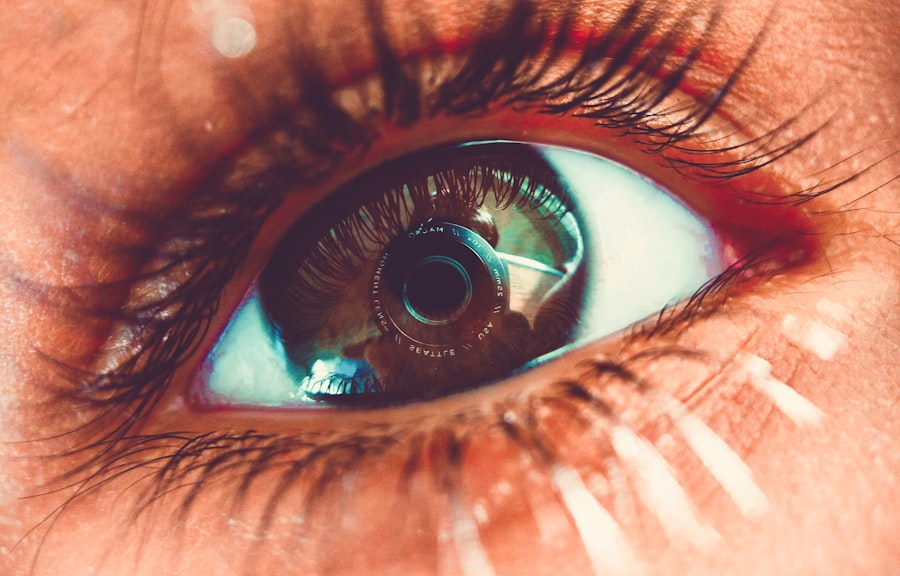
Your perception of yourself is as much a construction as your perception of the external world. The way you see yourself is influenced by how others see you, your past experiences, and your own internal narratives.
The Spotlight Effect: Overestimating Your Visibility
You often overestimate how much others notice your appearance and behavior. This is the spotlight effect. That embarrassing moment you’re convinced everyone noticed? They probably didn’t. Your brain tends to place you at the center of the universe, leading you to believe your actions are more scrutinized than they actually are. This inflated sense of being observed impacts how you present yourself and, consequently, how you perceive yourself.
The Narratives We Tell Ourselves: Shaping Your Story
You are the author of your own life story, and the narratives you construct about yourself profoundly shape your identity and how you perceive your own capabilities and worth. If you consistently tell yourself you are not good at something, you are likely to perceive instances of failure as further proof, while overlooking any small successes. Conversely, a narrative of resilience can help you frame challenges as opportunities for growth. These internal stories are not passive reflections of reality; they actively shape it.
The Extended Self: Our Digital Projections
In the modern age, your digital footprint has become an extension of yourself. The profiles you curate, the posts you share, and the interactions you have online all contribute to a digital self. How you perceive your online persona and how you believe others perceive it can significantly impact your offline self-perception. The curated highlight reels of others’ lives on social media can also influence your own sense of inadequacy, highlighting the constructed nature of online reality.
Exploring the intricacies of human perception can lead to fascinating insights about our hidden realities. A related article that delves into the complexities of how we interpret the world around us can be found at Freaky Science. This resource offers a deeper understanding of the cognitive processes that shape our experiences, revealing how our senses and brain work together to create the reality we perceive.
Embracing the Unseen: A Path to Deeper Understanding
| Aspect | Measurement |
|---|---|
| Sensory Limitations | Visible light spectrum: 390-700 nm |
| Attention Span | Estimated 8 seconds |
| Memory Capacity | Short-term: 7 items (Miller’s Law) |
| Perceptual Biases | Confirmation bias, selective attention |
The realization that your perception is a constructed reality can be unsettling. It can feel like the ground beneath your feet is shifting. However, understanding these mechanisms is not about surrendering to illusion; it’s about gaining a deeper, more nuanced understanding of your own mind and the world around you.
Cultivating Mindfulness: Anchoring in the Present
Practicing mindfulness can help you become more aware of your perceptual processes. By observing your thoughts, feelings, and sensory experiences without judgment, you can begin to recognize the filters and biases that are at play. This allows you to detach from automatic interpretations and to engage with reality more consciously. Mindfulness is not about emptying your mind, but about becoming a more attentive observer of its operations.
Seeking Diverse Perspectives: Broadening Your Horizons
Actively seeking out perspectives that differ from your own is crucial for challenging your ingrained biases. Engaging with people from different backgrounds, reading diverse literature, and being open to new ideas can help you see the world through a wider lens. This exposure to alternative interpretations can reveal the limitations of your own perceptual framework and foster greater empathy and understanding.
Critical Thinking: Questioning Your Own Assumptions
The most powerful tool you possess is your ability to think critically. Regularly questioning your own assumptions, the information you encounter, and the conclusions you draw is essential. Ask yourself: “Why do I believe this?” “What evidence supports this?” “Could there be another explanation?” This intellectual rigor is your defense against passively accepting constructed realities.
Embracing Uncertainty: The Beauty of the Unknown
Ultimately, recognizing the constructed nature of your reality invites a certain degree of humility. It acknowledges that your understanding is always incomplete and that there will always be more to learn and perceive. Embracing this uncertainty can lead to a more open, curious, and less dogmatic approach to life. You begin to appreciate that the world is not a fixed entity to be understood, but a dynamic, ever-unfolding experience to be explored. Your perception is a journey, not a destination, and the true marvel lies in the ongoing process of unveiling.

You’re Emitting Light Right Now—So Why Can’t You See It?
FAQs
What is human perception?
Human perception refers to the way in which individuals interpret and make sense of the sensory information they receive from the environment. This includes the processing of visual, auditory, tactile, olfactory, and gustatory stimuli.
What is the hidden reality of human perception?
The hidden reality of human perception refers to the idea that our perception of the world is not always an accurate representation of reality. Our brains often fill in gaps, make assumptions, and rely on past experiences to interpret sensory information, leading to potential distortions in our perception of the world.
How does human perception impact our daily lives?
Human perception plays a crucial role in how we navigate and interact with the world around us. It influences our decision-making, problem-solving, and social interactions. Our perception also shapes our beliefs, attitudes, and behaviors.
What are some factors that can influence human perception?
Several factors can influence human perception, including cultural background, personal experiences, emotions, cognitive biases, and physiological factors such as fatigue or stress. These factors can shape how we interpret and respond to sensory information.
Can human perception be altered or manipulated?
Yes, human perception can be altered or manipulated through various means, such as optical illusions, sensory deprivation, psychoactive substances, and psychological techniques. Additionally, advancements in technology have allowed for the creation of virtual and augmented reality experiences that can manipulate human perception.