The shimmering veil of the night sky has captivated humanity for millennia. From ancient stargazers charting constellations to modern astronomers peering into the universe’s furthest reaches, our fascination with the cosmos is an enduring testament to our innate curiosity. In this grand endeavor, NASA, the National Aeronautics and Space Administration, stands as a preeminent force, not only in its scientific exploration of space but also in its extraordinary ability to translate the abstract language of celestial phenomena into breathtaking visual narratives. NASA’s space image creation is far more than mere photography; it is a sophisticated alchemy of scientific data, artistic interpretation, and technological prowess, serving to inform, inspire, and connect us to the vastness beyond our planet.
The genesis of NASA’s iconic space imagery lies in the meticulous capture of light. From the earliest days of space exploration, instruments were designed to detect and record the electromagnetic radiation emitted by celestial bodies. This fundamental act of observation forms the bedrock upon which all subsequent image creation processes are built.
Telescopes as the Eyes of Humanity
Early Explorations and Terrestrial Observatories
Long before humanity ventured beyond Earth’s atmosphere, ground-based telescopes served as our primary windows to the universe. Observatories like Palomar and Mount Wilson, equipped with increasingly powerful mirrors, began to resolve nebulae, galaxies, and planetary surfaces with unprecedented detail. These early instruments, while limited by atmospheric distortion, laid the groundwork for understanding the universe’s scale and complexity. NASA’s early missions often leveraged existing terrestrial observational data, integrating it with their nascent spaceborne capabilities.
The Dawn of Spaceborne Observatories
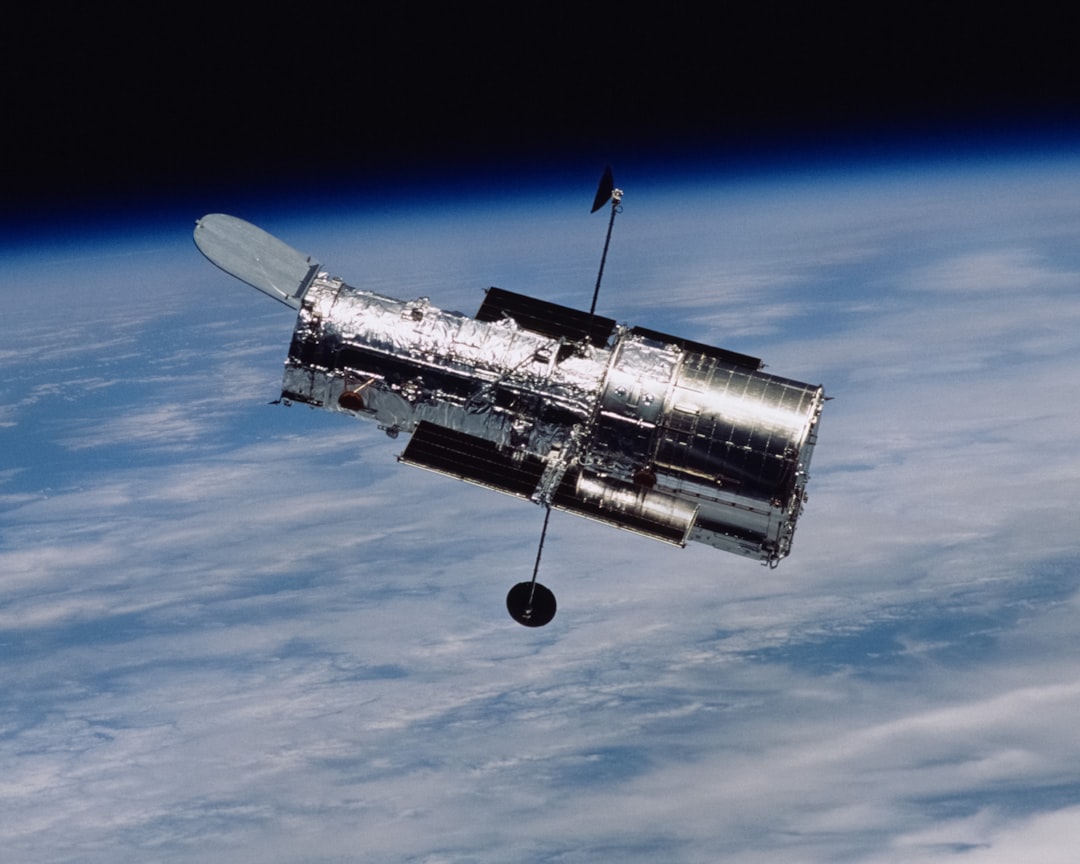
The advent of space telescopes revolutionized astronomical observation. Free from the obscuring effects of Earth’s atmosphere, instruments like the Hubble Space Telescope (HST) and later the James Webb Space Telescope (JWST) have delivered images of unparalleled clarity and depth. These platforms are equipped with a suite of specialized cameras and sensors, each designed to detect different wavelengths of light, from visible and ultraviolet to infrared and X-rays. The raw data collected by these instruments is a treasure trove of scientific information, waiting to be transformed.
Advanced Sensor Technology and Data Acquisition
Modern space telescopes employ highly sophisticated sensors, such as Charge-Coupled Devices (CCDs) and Infrared Arrays. These detectors are capable of capturing faint signals from distant objects, enabling astronomers to study phenomena that were previously invisible. The sheer volume of data generated by these missions is immense, requiring advanced data acquisition systems and robust storage solutions. The process of image creation begins with the careful calibration and processing of this raw, often grayscale, data.
NASA’s process of creating stunning space images involves a combination of advanced technology, artistic interpretation, and scientific data analysis. For a deeper understanding of how these breathtaking visuals are produced, you can explore the article on Freaky Science that delves into the techniques and tools used by NASA to transform raw data into captivating images of the cosmos. To read more about this fascinating topic, visit Freaky Science.
From Data to the Visible Spectrum: The Art of Processing
The light captured by space telescopes is not always directly visible to the human eye. Much of the universe emits radiation in wavelengths beyond our perception, such as infrared, ultraviolet, and X-rays. NASA’s image creation process involves the complex task of translating this invisible information into visually comprehensible forms. This is where the artistic and scientific converge, transforming scientific data into stunning visual representations.
Translating Invisible Light into Visible Colors
False-Color Imaging: Revealing Hidden Structures
The most common technique employed is false-color imaging. In this method, different wavelengths of light are assigned specific colors that are within the visible spectrum. For instance, infrared light, which can reveal the presence of dust and gas, might be assigned red, while visible light might be depicted as blue and green. This allows scientists to highlight specific features and chemical compositions that would otherwise be hidden. This process is not arbitrary; it is guided by scientific understanding of the objects being studied.
Enhancing Detail and Contrast
Beyond color assignment, image processing techniques are used to enhance details, adjust contrast, and sharpen features. Astronomers use algorithms to reduce noise, correct for instrument artifacts, and bring out subtle textures and structures within the celestial objects. This meticulous refinement process ensures that the final image accurately represents the scientific information while also being visually compelling.
Compositing Multiple Exposures and Wavelengths
Often, a single celestial object is observed across multiple wavelengths and with different exposure times. NASA’s image creators then meticulously combine these individual exposures into a single, comprehensive image. This composite approach allows for a richer and more nuanced representation of the object, showcasing phenomena that might only be detectable in specific light bands. The skilled hands of image processors carefully blend these elements, ensuring a seamless and scientifically accurate depiction.
The Human Element: Interpretation and Aesthetic Choices
While driven by scientific data, the creation of NASA’s space images is undeniably influenced by human interpretation and aesthetic sensibilities. The goal is not simply to reproduce raw data but to convey the wonder and complexity of the universe in a way that resonates with a broad audience. This involves a delicate balance between scientific accuracy and artistic expression.
Beyond Raw Data: The Artist’s Touch
The Role of Image Scientists and Visualizers
NASA employs a dedicated team of image scientists, visualizers, and artists who work collaboratively to transform scientific data into visually stunning images. These individuals possess a deep understanding of both astronomy and visual design. They interpret the scientific findings, make informed decisions about color palettes and rendering techniques, and ultimately craft images that are both informative and awe-inspiring. Their expertise ensures that the scientific integrity of the image is maintained while its aesthetic appeal is maximized.
Communicating Complex Science Through Visuals
The primary purpose of many of NASA’s images is scientific communication. By presenting complex astronomical phenomena in a visually accessible format, these images can demystify science and make it relatable to the public. A striking image of a distant galaxy or a colorful nebula can spark curiosity, inspire further learning, and foster a greater appreciation for the scientific endeavors undertaken by NASA. The visual narrative often simplifies complex concepts, making them understandable to a wider audience.
Balancing Scientific Accuracy and Artistic License
The line between scientific accuracy and artistic license is a critical consideration. While creative choices are made in the processing and presentation of images, the fundamental scientific data must remain paramount. NASA’s image creation guidelines emphasize transparency and often provide explanations of the processing techniques used, allowing viewers to understand how the image was generated. This commitment to accuracy builds trust and ensures that the images are seen as valid scientific representations.
The Power of Perspective: Inspiring and Educating the World
NASA’s space images have transcended their scientific origins to become cultural icons, shaping our understanding of the cosmos and our place within it. Their impact extends far beyond the scientific community, reaching into classrooms, museums, and the collective consciousness of humanity.
A Window into the Universe for All
Inspiring Future Generations of Scientists and Explorers
The breathtaking images produced by NASA have a profound inspirational effect on young minds. They ignite a passion for science, technology, engineering, and mathematics (STEM) fields, encouraging students to pursue careers in space exploration and scientific research. These visuals serve as a constant reminder of the boundless possibilities that lie within the universe and the human capacity to explore them. The iconic imagery can be found in educational materials, fueling young imaginations.
Fostering Public Engagement and Support
Public engagement is crucial for the continued success of space exploration. NASA’s captivating imagery plays a vital role in fostering public interest and support for its missions. By sharing visually stunning glimpses of the universe, NASA can effectively communicate the importance of its work and garner the necessary resources to continue its ambitious endeavors. The images act as a powerful advocacy tool.
Shaping Our Cosmic Consciousness
These images have fundamentally shaped our collective understanding of the universe. They provide us with a tangible connection to distant galaxies, nebulae, and planets, making the abstract concepts of cosmology more concrete and relatable. The “Pale Blue Dot” image, for instance, profoundly shifted our perspective on Earth’s place in the vastness of space, underscoring the fragility and preciousness of our home planet. They have become a shared visual language for our understanding of the cosmos.
NASA’s innovative techniques for creating stunning space images have captivated the world, showcasing the beauty of the cosmos in unprecedented detail. By utilizing advanced imaging technology and data processing methods, the agency transforms raw data collected from telescopes and spacecraft into breathtaking visuals. For a deeper understanding of these processes, you can explore a related article that delves into the intricacies of how these images are crafted. This insightful piece can be found here, providing a fascinating look at the science behind the stunning visuals we see from space.
The Future of Cosmic Vision: Evolving Technologies and New Discoveries
| Process | Details |
|---|---|
| Data Collection | NASA collects data from space telescopes, satellites, and rovers. |
| Image Processing | Raw data is processed using specialized software to create visual images. |
| Enhancement | Images are enhanced to bring out details and improve clarity. |
| Colorization | Color is added to represent different wavelengths or to enhance visual appeal. |
| Public Release | Images are released to the public through NASA’s website and social media. |
As technology continues to advance, so too will NASA’s capabilities in creating and disseminating breathtaking space imagery. The ongoing development of new telescopes, sophisticated processing techniques, and innovative storytelling methods promises an even more profound and immersive exploration of the cosmos.
The Next Generation of Observatories and Imaging
The James Webb Space Telescope and Beyond
The James Webb Space Telescope (JWST) represents a monumental leap forward in our ability to observe the universe. Its infrared capabilities allow it to peer through dust clouds and witness the universe’s earliest moments, producing images of unprecedented detail and scientific significance. Future missions, building upon the successes of JWST, will push the boundaries even further, exploring exoplanet atmospheres, studying the formation of stars and galaxies in even greater detail, and potentially even searching for signs of life beyond Earth.
Virtual and Augmented Reality in Cosmic Exploration
The integration of virtual reality (VR) and augmented reality (AR) technologies holds immense potential for the future of cosmic image creation and dissemination. These immersive platforms can allow audiences to virtually “walk” among the stars, explore alien landscapes, and interact with celestial objects in ways never before possible. This will further democratize access to space exploration and deepen our understanding and appreciation of the universe. Imagine exploring the surface of Mars through VR, guided by actual rover data.
AI and Machine Learning in Image Enhancement and Discovery
Artificial intelligence (AI) and machine learning are increasingly being employed in image processing and data analysis. These technologies can automate repetitive tasks, identify subtle patterns in vast datasets, and even predict the properties of celestial objects. AI-powered tools can enhance the clarity of images, identify previously unseen features, and accelerate the pace of scientific discovery, ultimately leading to even more remarkable cosmic visions. The potential for AI to assist in the identification of exoplanets and the analysis of their atmospheres is particularly exciting.
In conclusion, NASA’s space image creation is a multifaceted endeavor that seamlessly blends scientific rigor with artistic vision. It is a testament to human ingenuity, our insatiable desire to understand the universe, and our ability to translate complex data into compelling visual narratives. These images are not merely pictures; they are windows into the cosmos, inspiring wonder, fostering knowledge, and reminding us of our profound connection to the vast and awe-inspiring universe we inhabit. As technology continues to evolve, the cosmic vistas that NASA unveils will undoubtedly become even more breathtaking, continuing to expand our horizons and deepen our understanding of the grand tapestry of existence.

The Space Photos Are Real—But Your Eyes Would See This
FAQs
1. How does NASA capture space images?
NASA captures space images using a variety of telescopes and spacecraft, such as the Hubble Space Telescope and the Mars Reconnaissance Orbiter. These instruments are equipped with advanced cameras and sensors that can capture high-resolution images of celestial bodies and phenomena.
2. What is the process of creating space images at NASA?
The process of creating space images at NASA involves capturing raw data from telescopes and spacecraft, processing the data to enhance details and remove noise, and then creating composite images using specialized software. NASA scientists and engineers work together to ensure the accuracy and clarity of the final images.
3. How does NASA enhance the quality of space images?
NASA enhances the quality of space images through a process called image processing. This involves techniques such as noise reduction, sharpening, and color correction to bring out the details and improve the overall clarity of the images. Additionally, NASA may combine multiple images to create composite images that reveal more information about the subject.
4. What are some of the most famous space images created by NASA?
Some of the most famous space images created by NASA include the “Pillars of Creation” captured by the Hubble Space Telescope, the “Pale Blue Dot” image of Earth taken by the Voyager 1 spacecraft, and the “Blue Marble” image of Earth from the Apollo 17 mission. These images have become iconic representations of our universe.
5. How are NASA’s space images used for scientific research and public outreach?
NASA’s space images are used for scientific research to study celestial objects, phenomena, and the universe as a whole. These images provide valuable data for astronomers, astrophysicists, and planetary scientists. Additionally, NASA shares its space images with the public to inspire curiosity and awe about the cosmos and to educate people about the wonders of space.