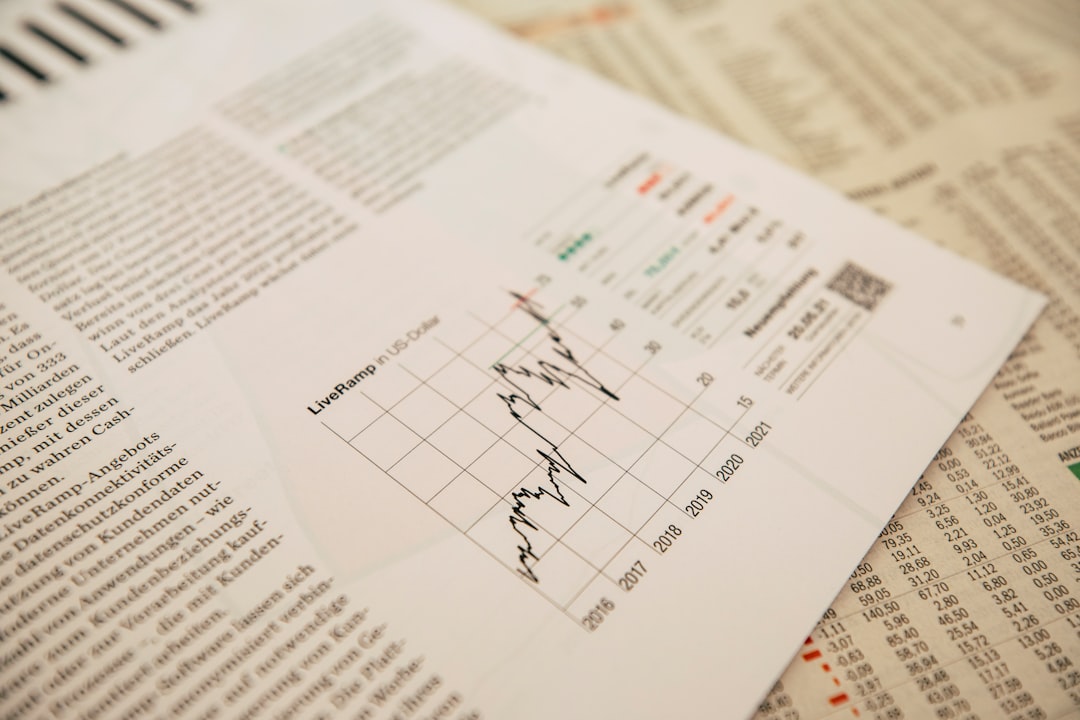
Stock market fractals are mathematical patterns that appear in financial price data, characterized by self-similarity across multiple time scales. These patterns manifest in price charts where similar formations occur whether examining minute-by-minute, daily, or monthly data. A market fractal represents a geometric structure where smaller components mirror the characteristics of the larger whole, based on fractal geometry principles developed by mathematician Benoit Mandelbrot.
Market fractals serve as technical analysis tools that help identify potential support and resistance levels, trend continuations, and reversal points in price movements. Technical analysts use fractal indicators to locate local highs and lows in price series, which can signal entry and exit points for trades. The fractal dimension of market data provides quantitative measures of price volatility and market complexity, offering insights into market efficiency and behavioral patterns.
Research in econophysics has demonstrated that financial markets exhibit fractal properties including long-range dependence, heavy-tailed distributions, and scaling laws.
Key Takeaways
- Stock market fractals reveal repeating patterns that help analyze market behavior.
- Fractal analysis has evolved over decades, integrating mathematical principles with financial data.
- Investors use fractals to identify potential market trends and improve prediction accuracy.
- Technology advancements enhance the detection and application of fractal patterns in trading.
- Despite benefits, fractal analysis has limitations and is subject to debate among experts.
The history of fractal analysis in the stock market
The application of fractal analysis in the stock market can be traced back to the work of mathematician Benoit Mandelbrot, who introduced the concept of fractals in the 1960s. Mandelbrot’s groundbreaking research challenged conventional views of market behavior, which often relied on linear models and assumptions of normality. He argued that financial markets are inherently chaotic and unpredictable, characterized by irregularities and patterns that could be better understood through fractal geometry.
In the decades following Mandelbrot’s initial findings, the use of fractal analysis gained traction among traders and financial analysts. The 1990s saw a surge in interest as more practitioners began to explore the implications of fractal theory for market forecasting. Books and research papers emerged, detailing how fractal patterns could be identified in historical price data and used to inform trading strategies.
This period marked a significant shift in how market participants approached technical analysis, moving away from traditional methods toward a more nuanced understanding of price behavior.
How fractals can be used to predict market trends

Fractals can serve as powerful tools for predicting market trends by providing insights into potential price movements based on historical patterns. Traders often look for specific fractal formations, such as bullish or bearish patterns, which can indicate possible reversals or continuations in price trends. By analyzing these formations, investors can make educated predictions about future market behavior, allowing them to enter or exit positions at opportune moments.
Moreover, fractal analysis can enhance risk management strategies. By identifying key support and resistance levels derived from fractal patterns, traders can set stop-loss orders and profit targets more effectively. This approach not only helps in maximizing potential gains but also minimizes losses by providing a clearer framework for decision-making.
As a result, incorporating fractal analysis into trading strategies can lead to more disciplined and systematic approaches to investing.
The mathematical principles behind stock market fractals
The mathematical foundation of stock market fractals is rooted in the concept of self-similarity and scaling. A fractal is defined by its ability to exhibit similar patterns at different levels of magnification. In the context of financial markets, this means that price movements can be analyzed across various time frames—daily, weekly, monthly—and still reveal similar characteristics.
This property allows traders to apply the same analytical techniques regardless of the time scale they are examining. Another key principle is the idea of non-linearity in financial markets. Traditional models often assume a linear relationship between variables, which can lead to oversimplified conclusions.
Fractal analysis acknowledges the complexity and unpredictability inherent in market behavior, recognizing that small changes can lead to significant outcomes. This non-linear perspective enables traders to better understand the dynamics at play and adapt their strategies accordingly.
Examples of stock market fractals in historical data
| Metric | Description | Typical Value Range | Significance in Fractal Analysis |
|---|---|---|---|
| Hurst Exponent (H) | Measures long-term memory of time series | 0 to 1 (0.5 = random walk) | Values >0.5 indicate persistence; <0.5 indicate mean reversion |
| Fractal Dimension (D) | Quantifies complexity of price movements | 1 to 2 | Higher values indicate more complex, rougher price paths |
| Scaling Exponent | Describes how statistical properties scale with time | Varies by dataset | Helps identify self-similarity and scaling laws in price data |
| Box-Counting Dimension | Estimates fractal dimension using box-counting method | 1 to 2 | Used to analyze geometric complexity of price charts |
| Multifractal Spectrum Width | Range of fractal exponents in multifractal analysis | 0.1 to 1.0+ | Wider spectrum indicates more multifractality and market complexity |
| Rescaled Range (R/S) Statistic | Used to estimate Hurst exponent | Varies | Helps detect persistence or anti-persistence in price series |
Historical data provides numerous examples of stock market fractals that have been identified and analyzed by traders and researchers alike. One notable instance is the “Mandelbrot set,” which illustrates how price movements can create intricate patterns over time. Traders have observed that certain formations, such as double tops or bottoms, often recur across different stocks and indices, reinforcing the idea that these patterns are not merely coincidental but rather indicative of underlying market psychology.
Another example is the use of Fibonacci retracement levels, which are derived from the Fibonacci sequence—a mathematical series closely related to fractal geometry. Traders often apply these levels to identify potential reversal points in price movements based on historical data. The consistent appearance of these retracement levels across various time frames further supports the notion that fractal patterns play a significant role in shaping market behavior.
The impact of fractal analysis on investment strategies

The integration of fractal analysis into investment strategies has transformed how traders approach the markets. By recognizing and utilizing fractal patterns, investors can develop more sophisticated trading systems that account for the complexities of price movements. This shift has led to a greater emphasis on technical analysis and pattern recognition, allowing traders to make decisions based on empirical evidence rather than relying solely on intuition or fundamental analysis.
Furthermore, the adoption of fractal analysis has encouraged a more disciplined approach to trading. Investors who incorporate these principles into their strategies often find themselves adhering to predefined rules based on identified patterns, reducing emotional decision-making and enhancing overall performance. As a result, many traders have reported improved consistency in their results when employing fractal analysis as part of their investment toolkit.
Common misconceptions about stock market fractals
Despite the growing interest in stock market fractals, several misconceptions persist regarding their application and effectiveness. One common belief is that fractals provide guaranteed predictions about future price movements. In reality, while fractal analysis can offer valuable insights into potential trends, it does not eliminate uncertainty or risk associated with trading.
Market conditions can change rapidly, and external factors may influence price movements in ways that are not captured by historical patterns. Another misconception is that fractal analysis is overly complex and only accessible to advanced mathematicians or quantitative analysts. While it is true that a solid understanding of mathematical principles can enhance one’s ability to analyze fractals effectively, many practical applications exist that do not require extensive mathematical knowledge.
Numerous software tools and resources are available to help traders identify and interpret fractal patterns without needing a deep mathematical background.
The role of technology in detecting stock market fractals
Advancements in technology have significantly enhanced the ability to detect and analyze stock market fractals. Sophisticated software programs and algorithms can now process vast amounts of historical price data quickly and efficiently, identifying potential fractal patterns that may not be immediately visible to human analysts. This technological evolution has democratized access to fractal analysis, allowing traders at all levels to incorporate these insights into their decision-making processes.
Moreover, machine learning and artificial intelligence have begun to play a role in refining fractal analysis techniques. By leveraging vast datasets and advanced computational power, these technologies can uncover complex relationships within price movements that traditional methods may overlook. As a result, traders are increasingly able to develop more accurate predictive models based on fractal patterns, further enhancing their ability to navigate the complexities of financial markets.
The potential limitations of using fractal analysis in the stock market
While fractal analysis offers valuable insights into market behavior, it is not without its limitations. One significant challenge is the inherent unpredictability of financial markets. Even with a solid understanding of fractal patterns, external factors such as economic events or geopolitical developments can disrupt established trends and render predictions inaccurate.
As such, traders must remain vigilant and adaptable, recognizing that no analytical method can guarantee success. Additionally, reliance on fractal analysis alone may lead to an incomplete understanding of market dynamics. While identifying patterns is essential, it is equally important for traders to consider other factors such as fundamental analysis and macroeconomic indicators when making investment decisions.
A holistic approach that combines multiple analytical methods will likely yield better results than relying solely on one technique.
Expert opinions on the relevance of stock market fractals
Experts in finance and mathematics have varying opinions on the relevance of stock market fractals in contemporary trading practices. Some proponents argue that understanding fractal patterns provides a unique perspective on market behavior that traditional models fail to capture. They emphasize that recognizing these self-similar structures allows traders to anticipate potential price movements more effectively than relying solely on linear models.
Conversely, some skeptics caution against over-reliance on fractal analysis as a standalone strategy. They argue that while it can provide valuable insights, it should be used in conjunction with other analytical methods for a more comprehensive understanding of market dynamics. These experts advocate for a balanced approach that incorporates both technical and fundamental analysis to navigate the complexities of financial markets successfully.
The future of stock market fractal analysis
The future of stock market fractal analysis appears promising as technology continues to evolve and reshape trading practices. With advancements in machine learning and artificial intelligence, traders will likely gain access to even more sophisticated tools for detecting and analyzing fractal patterns within price data. This evolution could lead to enhanced predictive capabilities and improved decision-making processes for investors.
Moreover, as financial markets become increasingly interconnected and influenced by global events, the need for innovative analytical approaches will only grow. Fractal analysis may play a crucial role in helping traders navigate this complexity by providing insights into underlying patterns that transcend individual stocks or sectors. As awareness of these concepts continues to spread within the investment community, it is likely that more traders will incorporate fractal analysis into their strategies, further solidifying its place within modern trading practices.
In conclusion, stock market fractals represent a fascinating intersection between mathematics and finance, offering valuable insights into price behavior and potential trends. While challenges remain in their application, ongoing advancements in technology and a growing understanding of these concepts suggest a bright future for fractal analysis in the world of investing.
For those interested in exploring the intricacies of stock market fractal analysis, a related article can be found on Freaky Science. This resource delves into the mathematical principles behind fractals and their application in financial markets, providing valuable insights for traders and analysts alike. You can read more about it in the article [here](https://www.freakyscience.com/).
WATCH THIS! 🌌 Is Reality Just a Loop of Code? The Fractal Universe Explained
FAQs
What is stock market fractal analysis?
Stock market fractal analysis is a method of examining price movements in financial markets using fractal geometry principles. It identifies repeating patterns at different scales to predict future market behavior.
Who developed the concept of fractals in financial markets?
The concept of fractals in financial markets was popularized by mathematician Benoit Mandelbrot, who applied fractal geometry to model market price fluctuations.
How do fractals help in analyzing stock market trends?
Fractals help by revealing self-similar patterns in price charts across various time frames, allowing traders to identify potential support and resistance levels and forecast market trends.
What are the common fractal indicators used in stock market analysis?
Common fractal indicators include the Fractal Indicator developed by Bill Williams, which identifies local highs and lows, and other tools that detect repeating price patterns.
Can fractal analysis predict stock market crashes?
While fractal analysis can highlight patterns that may precede significant market moves, it cannot predict crashes with certainty. It is one of several tools used to assess market risk.
Is fractal analysis suitable for all types of markets?
Fractal analysis can be applied to various markets, including stocks, forex, and commodities, as price movements in these markets often exhibit fractal characteristics.
What are the limitations of stock market fractal analysis?
Limitations include the complexity of accurately identifying fractal patterns, the influence of external factors not captured by fractals, and the risk of false signals in volatile markets.
How does fractal analysis differ from traditional technical analysis?
Fractal analysis focuses on self-similar patterns across multiple time scales, whereas traditional technical analysis often relies on fixed time frames and standard indicators like moving averages and oscillators.
Can beginners use fractal analysis effectively?
Beginners can learn fractal analysis, but it requires understanding fractal geometry concepts and practice in pattern recognition. Combining it with other analysis methods is recommended.
Are there software tools available for fractal analysis?
Yes, many trading platforms and charting software offer fractal indicators and tools that assist traders in applying fractal analysis to market data.