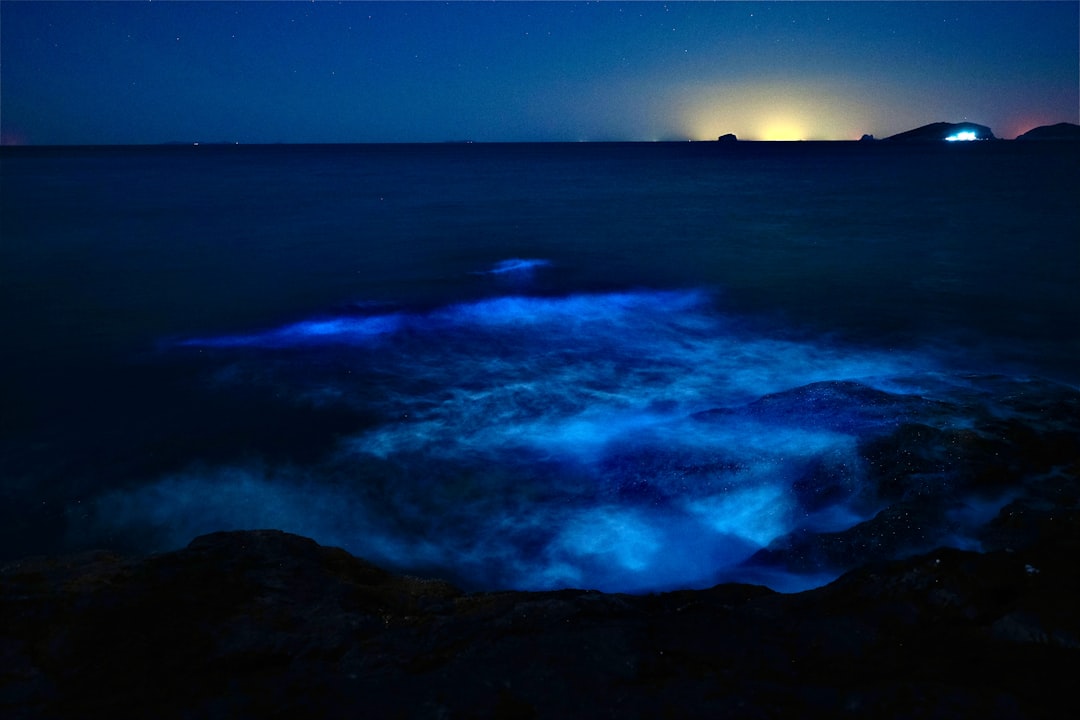
You’ve probably marveled at fireflies on a summer evening, their intermittent flashes painting streaks of emerald against the deepening twilight. Perhaps you’ve witnessed the ethereal glow of deep-sea creatures, a silent symphony of light in the crushing darkness. These are instances of bioluminescence, a captivating biological phenomenon. But have you ever stopped to wonder if you possess a similar, albeit far subtler, inner light? The science behind human bioluminescence is a journey into the microscopic, a dance of molecules within your very cells, revealing a faint, persistent luminescence that has captivated scientists for decades. You’re not a glowing beacon in the dark, not by a long shot, but the truth of your own inherent glow is far more profound than you might imagine.
The concept of human bioluminescence often conjures images of superheroes or fantastical beings. However, the reality is far more grounded in biochemistry, and considerably less dramatic. You, as a human, do indeed emit light. This isn’t a conscious emission, nor is it a glow visible to the naked eye under normal conditions. Instead, it’s a phenomenon known as biophotons, which are ultra-weak photons of light emitted by biological systems. Think of it as a whisper of light rather than a shout. This dim, constant emission arises from the metabolic processes within your body, particularly those involving reactive oxygen species (ROS). While these photons are far too weak to be seen without highly sensitive equipment, their presence is a testament to the intricate and energetic life unfolding within your cells.
Defining Biophotons: The Unseen Light
Biophotons are essentially the byproducts of cellular respiration and other metabolic activities. When molecules within your cells undergo oxidation, particularly the creation and breakdown of ROS, they can enter an excited state. As these excited molecules return to their ground state, they release energy in the form of photons. These photons, though incredibly faint, are measurable and carry information about the physiological state of the cells and tissues from which they originate. You can’t see them, but they are there, a constant hum of energetic activity within your biological framework.
The Scale of Human Bioluminescence: Beyond the Visible Spectrum
It’s crucial to understand that human bioluminescence operates on a scale entirely different from the bright flashes of fireflies or the dazzling displays of deep-sea organisms. The intensity of biophotons emitted by human skin, for instance, is millions to billions of times weaker than the light needed to be perceived by the human eye. This means that while you are technically glowing, you’ll never illuminate a room or even cast a discernible shadow. The science is concerned with the detection and analysis of this faint light, not with its visual impact.
Human bioluminescence is a fascinating topic that explores the possibility of humans emitting light through biochemical reactions. For a deeper understanding of this phenomenon, you can refer to a related article that delves into the science behind bioluminescence in various organisms and its potential implications for humans. To learn more, visit Freaky Science.
The Chemistry of Your Glow: Molecules in Motion
The light you emit doesn’t just spontaneously appear. It’s the result of complex chemical reactions happening at the molecular level within your cells. These reactions, primarily involving oxidation, generate excited molecules that then shed their excess energy as light. Understanding these molecular players is key to unraveling the mystery of your inner glow.
Reactive Oxygen Species (ROS): The Energetic Byproducts
At the heart of biophoton emission lies the fascinating and often misunderstood world of Reactive Oxygen Species (ROS). These are highly reactive molecules containing oxygen, such as superoxide radicals and hydrogen peroxide. While often associated with cellular damage, ROS are also essential participants in various cellular processes, including signal transduction, immune responses, and energy production. During their formation and metabolism, some ROS can lead to the excitation of other molecules, setting the stage for photon emission. You can think of ROS as tiny sparks generated by the engine of your cellular machinery, and some of these sparks produce light.
Excited Molecules: The Light-Emitting Intermediaries
When ROS interact with other molecules in your cells, they can transfer energy, pushing those molecules into an “excited” electronic state. This is akin to striking a tuning fork; it vibrates with energy. However, these excited states are inherently unstable. To return to their normal, lower-energy state, these molecules must release the excess energy. In the case of biophoton emission, this energy is released as a photon of light. The specific type of molecule that becomes excited and the energy level it reaches determine the wavelength, or color, of the emitted light, though in humans, this is primarily in the ultraviolet and visible spectrum, and very faintly at that.
The Role of Antioxidants: Modulating the Glow
Antioxidants, those health-conscious molecules you hear so much about, play a significant role in regulating ROS production and their subsequent impact. By neutralizing excess ROS, antioxidants can directly influence the number of excited molecules and, consequently, the intensity of biophoton emission. Studies have shown that increased antioxidant activity can lead to a reduction in biophoton emission, suggesting that your internal antioxidant defenses are actively managing your body’s light output.
Where Does the Light Come From? Tissues and Organs

Your entire body is a source of biophotons, though certain tissues and organs exhibit higher emission levels than others. The skin, being the outermost layer and constantly exposed to metabolic processes, is a primary subject of research. However, the investigation extends to internal organs and even cellular components.
Skin: The Outwardly Faint Glow
Your skin, the largest organ in your body, is a significant source of biophotons. The constant turnover of skin cells, the presence of melanin (a pigment involved in light absorption and generation), and the metabolic activity within dermal tissues all contribute to the faint luminescence observed. Researchers have used sensitive cameras to map the distribution of biophoton emission across the skin, finding variations that correlate with factors like skin health and age.
Internal Organs: The Hidden Luminescence
While less studied due to the challenges of direct measurement, internal organs are also presumed to emit biophotons. The same biochemical processes that generate light in the skin are at play throughout your body. The liver, with its extensive metabolic functions, and the brain, with its high energy demands, are areas of particular scientific interest. The ability to non-invasively detect biophotons from internal organs could offer revolutionary diagnostic capabilities.
Cellular Level Emissions: The Microscopic Light Show
At the most fundamental level, biophotons originate from within individual cells. Mitochondria, the powerhouses of your cells, are prime suspects due to their central role in energy metabolism and ROS production. Even the DNA within your cells can be a source of biophoton emission through various photochemical reactions. This microscopic light show is happening continuously, powering your very existence.
Scientific Applications: Beyond Curiosity

The study of human bioluminescence is not merely an academic pursuit; it holds immense potential for practical applications in medicine and beyond. The ability to non-invasively monitor cellular activity and detect subtle changes in physiological states could revolutionize diagnostics and treatments.
Diagnostic Potential: A Window into Your Health
The intensity and spectral characteristics of biophoton emission can change in response to disease states. For instance, altered metabolic activity in cancerous tissues can lead to a different biophoton signature compared to healthy tissues. Researchers are developing biophoton imaging techniques that could detect early signs of cancer, inflammation, or oxidative stress long before they manifest as visible symptoms. Imagine a future where a simple scan of your skin could reveal underlying health issues.
Monitoring Physiological States: Stress, Sleep, and Well-being
Your physiological state influences your biophoton emission. Studies have indicated that stress, sleep deprivation, and even emotional states can alter the pattern of light emitted by your body. By analyzing these changes, scientists hope to develop tools for monitoring stress levels, assessing sleep quality, and even providing insights into your overall well-being. This opens up possibilities for personalized health management and proactive interventions.
Research into Aging and Disease: Unraveling the Mysteries
The accumulation of oxidative damage is a hallmark of aging and many chronic diseases. Biophoton emission, being closely linked to ROS activity, serves as a valuable biomarker for these processes. By studying how biophoton emission changes with age and in various disease models, researchers are gaining a deeper understanding of the underlying mechanisms and potentially identifying new therapeutic targets.
Human bioluminescence is a fascinating topic that explores the potential for humans to emit light through biochemical processes. This phenomenon, while not as pronounced as in some other species, raises intriguing questions about our biology and evolution. For those interested in delving deeper into this subject, a related article can be found at Freaky Science, which provides insights into the science behind bioluminescence and its implications for our understanding of human capabilities.
The Future of Your Glow: Innovations and Possibilities
| Aspect | Explanation |
|---|---|
| Definition | Bioluminescence is the production and emission of light by a living organism. |
| Human Bioluminescence | There is evidence to suggest that humans may produce a small amount of bioluminescent light, but it is not visible to the naked eye. |
| Scientific Studies | Research is ongoing to understand the mechanisms and potential functions of human bioluminescence. |
| Potential Applications | If human bioluminescence is confirmed and understood, it could have implications for medical diagnostics and scientific research. |
The field of human bioluminescence is still in its nascent stages, but the rapid advancements in imaging technology and analytical techniques are paving the way for exciting future developments. You are at the cusp of a revolution where your own subtle light could become a powerful tool for understanding and improving human health.
Advanced Imaging Technologies: Seeing the Unseen
The development of increasingly sensitive cameras and photon-counting devices is crucial for capturing and analyzing the faint biophotons emitted by your body. Future technologies will likely enable higher resolution imaging, faster data acquisition, and the ability to differentiate between various types of biophoton emissions, providing a more nuanced understanding of your biological processes.
Computational Analysis and AI: Deciphering the Light Signals
The vast amount of data generated by biophoton imaging requires sophisticated analytical tools. Artificial intelligence and machine learning algorithms are becoming indispensable in identifying patterns, classifying disease states, and predicting health outcomes based on biophoton signatures. You can expect AI to play a significant role in translating the subtle language of your glow into actionable health insights.
Personalized Medicine and Proactive Healthcare: Your Glow, Your Health
As our understanding of human bioluminescence deepens, its application in personalized medicine will become increasingly significant. Imagine treatments tailored to your specific biophoton profile, or early interventions based on subtle shifts in your emitted light, preventing diseases before they take hold. Your inner glow has the potential to usher in an era of truly proactive and individualized healthcare. The faint, almost imperceptible light emanating from your cells is not just a scientific curiosity; it’s a testament to the intricate, energetic, and dynamic nature of life itself, and it promises to illuminate the path towards a healthier future for you.

You’re Emitting Light Right Now—So Why Can’t You See It?
FAQs
What is human bioluminescence?
Human bioluminescence is the phenomenon where the human body emits visible light. This light emission is extremely faint and is not visible to the naked eye under normal conditions.
Is human bioluminescence a common occurrence?
While human bioluminescence has been observed in scientific studies, it is not a common occurrence and is not visible to the naked eye in everyday situations. It typically requires specialized equipment to detect and measure.
What causes human bioluminescence?
The exact cause of human bioluminescence is still not fully understood. Some studies suggest that it may be related to the production of reactive oxygen species in the body, while others propose that it could be linked to the presence of certain biochemical reactions.
Can human bioluminescence be harnessed for practical applications?
While the study of human bioluminescence is still in its early stages, researchers are exploring potential practical applications for this phenomenon. Some potential uses include non-invasive medical imaging and monitoring of metabolic processes within the body.
Are there any health implications associated with human bioluminescence?
As of now, there is no evidence to suggest that human bioluminescence has any direct health implications. However, further research is needed to fully understand the biological mechanisms behind this phenomenon and its potential impact on human health.