Radio astronomy offers a unique lens through which to observe the universe, revealing celestial objects that are invisible to optical telescopes. When you look at the night sky with your own eyes, or through a traditional optical telescope, you are primarily seeing the light emitted by stars and other luminous objects within certain wavelengths. However, a vast portion of the cosmos operates in a different spectrum entirely. Radio astronomy allows us to tune into these cosmic whispers, to hear the universe speak in a language of radio waves, a language that tells stories of stellar birth, galactic evolution, and the very fabric of spacetime. This field is not merely an alternative way of seeing; it is a fundamental expansion of our universe-viewing capabilities.
The electromagnetic spectrum is a vast highway of energy, and visible light is but a small, albeit beautiful, section of this road. Radio waves occupy the longest wavelengths and lowest frequencies on this spectrum. These waves are generated by a variety of cosmic phenomena, from the placid orbiting of electrons around atoms to the violent collisions of massive objects. They can traverse vast interstellar and intergalactic distances unimpeded by dust and gas that would block visible light, making them indispensable tools for peering into regions of space that would otherwise remain shrouded in darkness. Imagine trying to understand a bustling city by only being able to see the streetlights; you would miss the inner workings of buildings, the hum of activity within closed doors, and the vast network of underground utilities. Radio astronomy is akin to having the blueprints to that city, along with the ability to hear the electricity flowing through its wires and the conversations happening behind those closed doors.
What Are Radio Waves?
Radio waves are a form of electromagnetic radiation, just like visible light, X-rays, and gamma rays. The key difference lies in their wavelength and frequency. Radio waves have long wavelengths, typically ranging from about one millimeter to over a kilometer, and correspondingly low frequencies. These waves are produced by the acceleration of charged particles. For example, electrons moving back and forth within an antenna generate radio waves. In the cosmos, similar processes occur. Electrons spiraling in magnetic fields (synchrotron radiation), the rotation of pulsars, and the cold gas clouds within galaxies all emit radio waves.
Why Are They Important for Astronomy?
The primary advantage of radio waves in astronomy is their ability to penetrate cosmic dust and gas clouds that absorb or scatter visible light. These clouds are common in regions where stars are born and galaxies are actively forming. Without radio telescopes, much of the crucial evidence for these processes would be hidden from us. Furthermore, radio waves can reveal information about phenomena that do not emit much visible light, such as the distribution of neutral hydrogen gas, which is the most abundant element in the universe and a key ingredient for star formation. By detecting the radio waves emitted by this gas, astronomers can map out the structure of galaxies and understand how they evolve over cosmic timescales.
Radio astronomy has opened new avenues for exploring the cosmos, particularly in the search for hidden galaxies that are often obscured by dust and gas. A fascinating article that delves into this topic can be found at Freaky Science, where researchers discuss the latest advancements in radio telescopes and their ability to detect these elusive celestial objects. By utilizing radio waves, astronomers can uncover galaxies that would otherwise remain invisible to optical telescopes, shedding light on the formation and evolution of the universe.
The Instruments of Cosmic Listening: Radio Telescopes
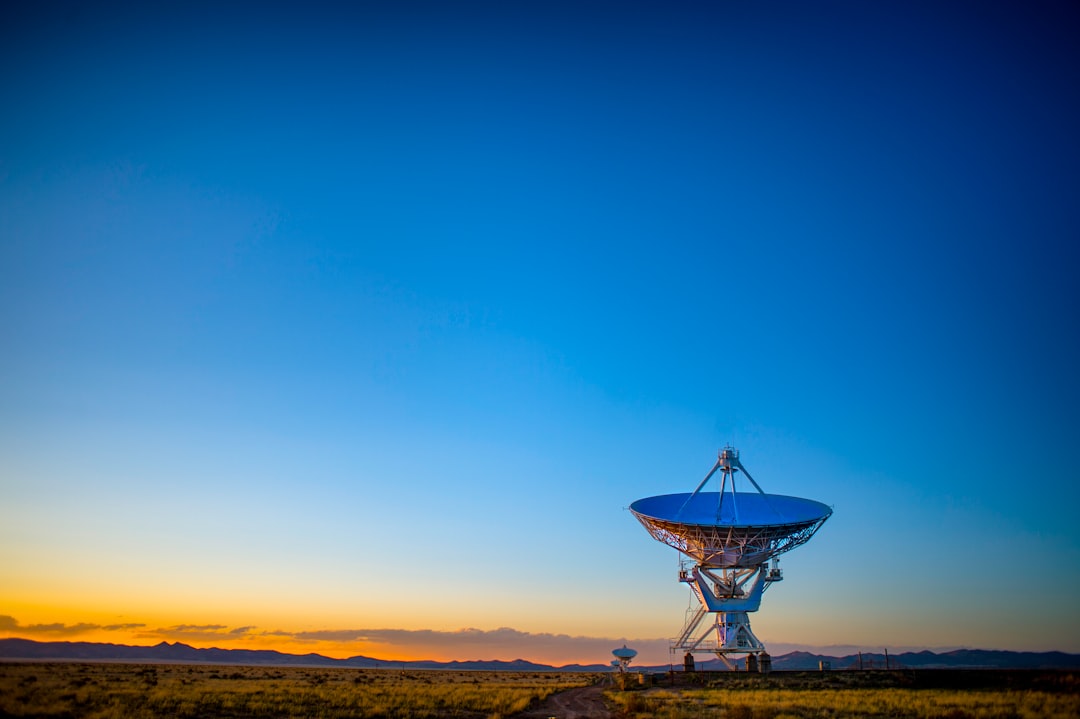
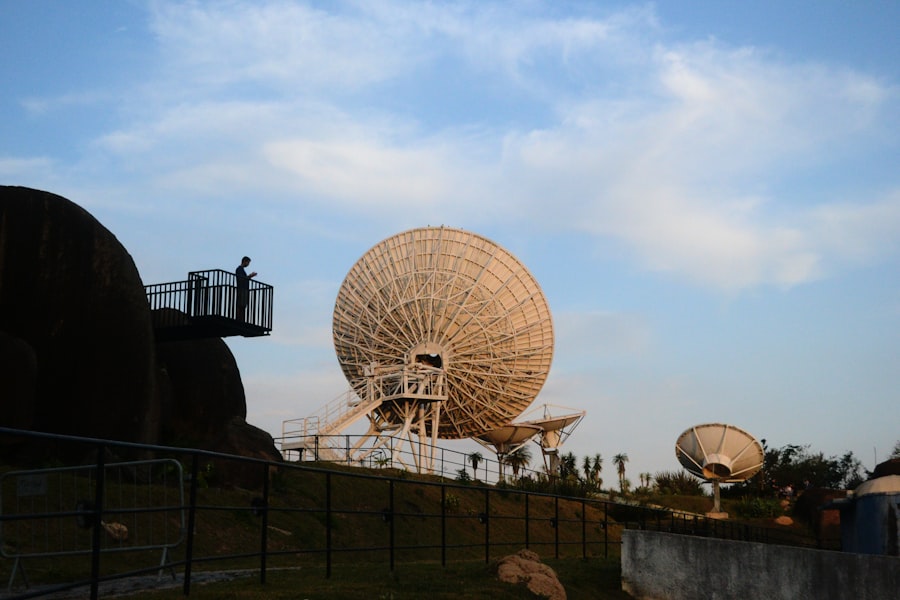
Radio telescopes are the ears of our astronomical endeavor, designed to capture these faint radio signals from distant celestial sources. They are typically large dish-shaped structures, often hundreds of meters in diameter, or arrays of smaller dishes working in unison. These instruments are not designed for visual observation but rather for the precise detection and measurement of radio waves. The size and sensitivity of these telescopes are paramount, as the radio signals from space are incredibly weak, often buried beneath terrestrial radio interference.
Anatomy of a Radio Telescope
At its core, a radio telescope consists of a large parabolic reflector, or dish. This dish acts like a giant magnifying glass for radio waves, collecting them and focusing them onto a receiver located at the focal point. The dish is made of a metallic surface, often a mesh rather than a solid sheet, designed to reflect radio waves efficiently without being excessively heavy. The receiver then amplifies these weak signals and converts them into data that can be analyzed. Modern radio telescopes incorporate sophisticated electronics and computing power to process these signals and to mitigate interference from Earth-based sources.
Interferometry: Combining Telescopes for Greater Power
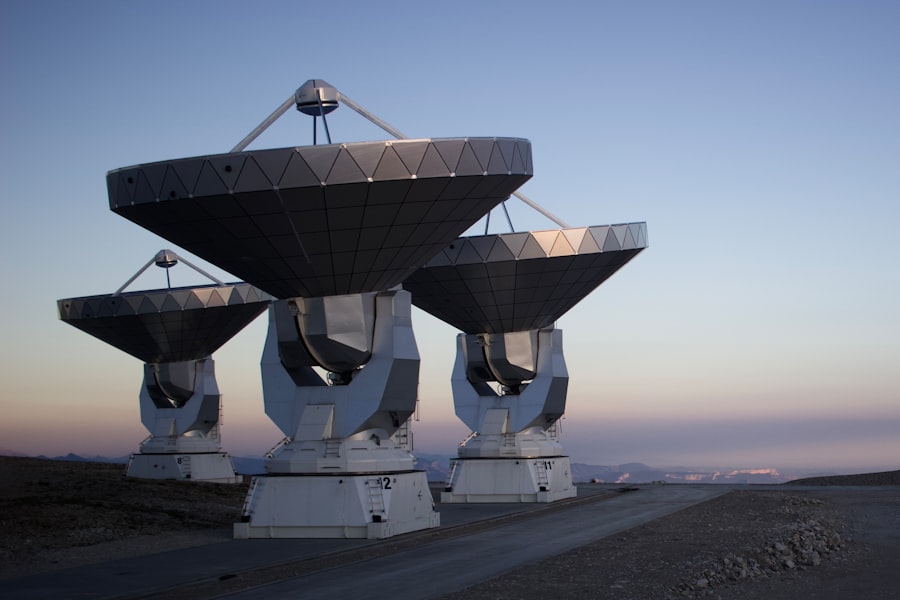
One of the most powerful techniques in radio astronomy is interferometry. This involves linking multiple radio telescopes together, often separated by vast distances, to simulate a single telescope with a much larger effective aperture. By combining the data from these individual telescopes, astronomers can achieve much higher resolution, allowing them to discern finer details in celestial objects. Imagine trying to see a tiny detail on a distant mountain. If you have one blurry eye, your view is limited. But if you have two eyes, and can somehow combine their views with great precision, you can achieve a much sharper and more detailed image. This is the essence of radio interferometry. The resolution of an interferometer is determined by the distance between its constituent telescopes, not by the size of each individual dish. This allows astronomers to achieve resolutions far exceeding what is possible with any single radio dish, no matter how large.
Examples of Radio Interferometer Arrays
Prominent radio interferometer arrays include the Karl G. Jansky Very Large Array (VLA) in New Mexico, the Atacama Large Millimeter/submillimeter Array (ALMA) in Chile, and the Square Kilometre Array (SKA) which is under construction in both Australia and South Africa. These arrays, with their numerous antennas spread across hundreds or even thousands of kilometers, are capable of producing images with unprecedented detail, allowing astronomers to map the fine structure of galaxies, the disks of material around young stars, and the faint radio emissions from distant quasars.
Unveiling Cosmic Phenomena: What Radio Astronomy Reveals
The insights gained from radio astronomy are profound and far-reaching. From the birthplaces of stars to the enigmatic nature of black holes, radio waves provide the key to understanding some of the most fundamental processes in the universe. They paint a picture of a dynamic and evolving cosmos, one that is vastly more complex and intriguing than what is visible to our naked eyes.
The Cold Universe: Molecular Clouds and Star Formation
One of the cornerstone contributions of radio astronomy is the study of cold molecular clouds. These vast, dark regions of gas and dust in interstellar space are the nurseries of stars and planets. While invisible to optical telescopes, they are rich in molecules like carbon monoxide, which emit radio waves at specific frequencies. By detecting these emissions, radio astronomers can map the distribution, density, and temperature of these clouds, providing crucial data on the conditions necessary for star formation. They can observe the gravitational collapse of gas within these clouds, the formation of protostars, and the subsequent outflows of material, all vital steps in the cosmic cycle of star birth.
Mapping the Milky Way’s Structure
Radio observations, particularly of the 21-centimeter line of neutral hydrogen, have been instrumental in mapping the structure of our own Milky Way galaxy. Because this hydrogen gas is ubiquitous throughout the galaxy and detectable in radio wavelengths, astronomers can use it as a tracer to chart the spiral arms, study the distribution of matter, and understand the overall dynamics of our galactic home. This allows us to build a three-dimensional map of our galaxy, a feat impossible with optical observations alone due to the obscuring effect of interstellar dust.
Energetic Phenomena: Pulsars and Supernova Remnants
Radio telescopes are also crucial for studying some of the most energetic events in the universe. Pulsars, rapidly rotating neutron stars that emit beams of radio waves, are often detected through their regular pulses. These celestial lighthouses are incredibly dense objects, the remnants of massive stars that have exploded as supernovae. Radio observations allow astronomers to study their rotation rates, magnetic fields, and even detect the subtle timing variations that can reveal the presence of orbiting exoplanets.
The Aftermath of Stellar Explosions
Supernova remnants, the expanding shells of gas and dust left behind after a star explodes, are also prominent radio sources. These remnants are heated by the shockwaves from the explosion and by the magnetic fields within them, emitting synchrotron radiation across a wide range of radio frequencies. Studying these remnants provides insights into the life cycles of stars, the creation of heavy elements, and the enrichment of the interstellar medium, which in turn seeds future generations of stars and planets.
Cosmology and the Early Universe: The Cosmic Microwave Background
Perhaps one of the most significant discoveries made possible by radio astronomy is the detection of the Cosmic Microwave Background (CMB) radiation. This faint, uniform glow of microwave radiation permeating the entire sky is considered the afterglow of the Big Bang. Radio telescopes, specifically designed to detect these incredibly weak signals, have allowed astronomers to map the tiny temperature fluctuations in the CMB. These fluctuations are the imprints of primordial density variations that eventually grew into the large-scale structures of the universe we observe today, such as galaxies and galaxy clusters. The CMB acts as a Rosetta Stone for cosmology, providing a snapshot of the universe as it was just a few hundred thousand years after its birth, allowing us to test and refine our models of cosmic evolution.
Beyond Observation: Radio Astronomy’s Impact
The impact of radio astronomy extends far beyond the cataloging of celestial objects. It has revolutionized our understanding of fundamental physics, challenged existing theories, and pushed the boundaries of technological innovation. The quest to listen to the universe has led to remarkable scientific breakthroughs and has inspired generations of scientists and engineers.
Testing Fundamental Physics
Radio astronomy plays a critical role in testing fundamental theories of physics, such as Einstein’s theory of general relativity. Observations of pulsars in binary systems, for example, have provided some of the most precise tests of gravitational theories, showing that gravity behaves as predicted even in extreme conditions. The accurate measurement of the bending of radio waves by massive objects, such as the Sun, has also been a key confirmation of general relativity. Furthermore, radio telescopes are used to search for gravitational waves, ripples in spacetime predicted by Einstein’s theory, with the hope of understanding cataclysmic events like black hole mergers.
The Search for Extraterrestrial Intelligence (SETI)
The very act of listening to the universe has also fueled the search for extraterrestrial intelligence. The SETI program utilizes radio telescopes to scan the skies for artificial radio signals that might indicate the presence of advanced civilizations. While no definitive signals have been detected to date, the ongoing search represents a profound quest to answer one of humanity’s oldest questions: “Are we alone?” The sensitivity of radio telescopes and the vastness of the observable universe mean that this search continues to be a compelling endeavor.
Technological Innovation: Pushing the Boundaries
The development of radio astronomy has been a relentless pursuit of greater sensitivity and resolution, driving significant technological innovation. The need to detect incredibly faint signals from space has led to advancements in areas such as low-noise amplifiers, digital signal processing, and sophisticated antenna design. Many of these technologies have found applications beyond astronomy, benefiting fields such as telecommunications, medical imaging, and even portable electronics. The challenges posed by radio astronomy have acted as a crucible for innovation, forging tools and techniques that have reshaped our technological landscape.
Recent advancements in radio astronomy have unveiled the existence of hidden galaxies that were previously obscured from our view. These discoveries shed light on the complex structures of the universe and challenge our understanding of galaxy formation. For those interested in exploring this fascinating topic further, you can read an insightful article on this subject at Freaky Science, which delves into the techniques used to uncover these elusive celestial bodies.
The Future of Radio Astronomy: New Horizons
| Metric | Description | Value / Range | Unit |
|---|---|---|---|
| Number of Hidden Galaxies Detected | Galaxies discovered through radio astronomy that are obscured in optical wavelengths | 100+ | Count |
| Typical Redshift Range | Range of redshift values for hidden galaxies detected via radio surveys | 0.01 – 0.3 | z (dimensionless) |
| HI 21-cm Line Flux | Flux density of neutral hydrogen emission line used to detect hidden galaxies | 0.1 – 10 | Jy km/s |
| Radio Frequency Range | Frequency band used to observe hidden galaxies in radio astronomy | 1.4 GHz (HI line) | GHz |
| Typical Galaxy Mass | Estimated mass of hidden galaxies detected via radio observations | 10^8 – 10^10 | Solar Masses |
| Survey Instruments | Major radio telescopes used for detecting hidden galaxies | Arecibo, VLA, ASKAP, MeerKAT | N/A |
| Detection Sensitivity | Minimum detectable HI mass in typical radio surveys | 10^7 | Solar Masses |
The field of radio astronomy is not static; it is constantly evolving, with new telescopes and techniques promising to unlock even deeper secrets of the cosmos. The ambition of radio astronomers is to push the frontiers of observation further, to explore the universe with unprecedented detail and sensitivity.
The Square Kilometre Array (SKA)
One of the most exciting future developments is the Square Kilometre Array (SKA). This monumental project, under construction in Australia and South Africa, will be the world’s largest radio telescope. Its vast collecting area, composed of millions of antennas, will have a sensitivity and resolution far exceeding any existing instrument. The SKA is designed to answer some of the most fundamental questions in modern astrophysics and cosmology, including the formation of the first stars and galaxies after the Big Bang, the nature of dark matter and dark energy, and the search for life beyond Earth. It represents a giant leap forward, a new generation of cosmic ears designed to hear the faintest whispers from the dawn of time.
Exploring the Epoch of Reionization
The SKA and other next-generation radio telescopes will be crucial for studying the Epoch of Reionization. This was a pivotal period in the early universe when the first stars and galaxies formed, emitting ultraviolet radiation that gradually stripped electrons from the neutral hydrogen atoms that filled the cosmos. Understanding this transition is key to understanding how the universe evolved from a dark, neutral state to the luminous, structured cosmos we see today. Radio observations of the 21-centimeter line of neutral hydrogen at specific redshifts will allow astronomers to map this process in detail.
Advancements in Data Analysis and Artificial Intelligence
As radio telescopes become more powerful, they generate enormous amounts of data. The analysis of this data is becoming increasingly complex, and artificial intelligence (AI) and machine learning are emerging as essential tools. AI algorithms can help astronomers sift through vast datasets, identify subtle patterns, and classify celestial objects more efficiently. This is particularly important for projects like the SKA, which will produce exabytes of data, far more than human researchers can process manually. The synergy between advanced instrumentation and sophisticated data analysis techniques will undoubtedly lead to new discoveries.
The Ongoing Quest for Knowledge
In conclusion, radio astronomy has transformed our understanding of the universe, revealing phenomena that would otherwise remain hidden. From the cold cradles of star formation to the energetic remnants of dying stars and the faint echoes of the Big Bang, radio waves offer a unique and indispensable window into the cosmos. As new instruments and techniques emerge, the future of radio astronomy promises even more profound discoveries, pushing the boundaries of human knowledge and our place within the grand cosmic tapestry. The universe, it seems, has many more stories to tell, and radio telescopes are our chosen instruments to listen.

WATCH NOW ▶️ Our Galaxy Is Sliding Toward a Cosmic Drain
FAQs
What is radio astronomy?
Radio astronomy is the study of celestial objects that emit radio waves. Unlike optical astronomy, which observes light in the visible spectrum, radio astronomy detects radio frequency signals from space, allowing scientists to explore phenomena that are invisible to traditional telescopes.
What are hidden galaxies in the context of radio astronomy?
Hidden galaxies refer to galaxies that are not easily observed using optical telescopes because they are obscured by dust or are very faint in visible light. Radio astronomy can detect these galaxies by observing the radio waves they emit, revealing structures and objects that would otherwise remain unseen.
How does radio astronomy help in discovering hidden galaxies?
Radio astronomy uses large radio telescopes to detect emissions such as the 21-centimeter hydrogen line, which penetrates dust clouds that block visible light. This allows astronomers to map the distribution of hydrogen gas in galaxies, uncovering hidden or obscured galaxies that are not detectable through optical methods.
Why are hidden galaxies important to study?
Studying hidden galaxies helps astronomers understand the full diversity and distribution of galaxies in the universe. It provides insights into galaxy formation and evolution, the role of dark matter, and the large-scale structure of the cosmos, which are essential for a comprehensive picture of the universe.
What are some challenges faced in radio astronomy when detecting hidden galaxies?
Challenges include interference from human-made radio signals, the need for large and sensitive radio telescopes, and the complexity of interpreting radio data. Additionally, distinguishing between signals from hidden galaxies and other cosmic sources requires sophisticated data analysis techniques.