
For millennia, humanity has gazed at the stars, driven by an insatiable curiosity to understand the cosmos. Yet, beneath our very feet lies a realm of equal mystery, a vast and dynamic interior that shapes our planet’s every facet. The Earth’s mantle, a colossal layer of rock that extends thousands of kilometers from the crust to the outer core, remains largely uncharted territory. While seismic waves offer tantalizing glimpses and indirect evidence, the true nature of this infernal domain has eluded direct observation. However, a new era of scientific endeavor is dawning, one where advanced technology and audacious ambition are pushing the boundaries of what’s possible, aiming to pierce the Earth’s protective crust and delve into the secrets held within its searing depths. The quest to drill into the mantle is not merely a scientific pursuit; it is a profound exploration of our planet’s origins, its ongoing evolution, and potentially, the very mechanisms that sustain life on its surface.
The Earth’s mantle is a colossal entity, comprising approximately 84% of our planet’s volume and extending down to a depth of about 2,900 kilometers. It is a layer of immense pressure and extreme heat, where rocks behave not as rigid solids, but as viscous fluids over geological timescales. This sluggish, yet powerful, movement drives plate tectonics, fuels volcanic activity, and influences the planet’s magnetic field – processes fundamental to Earth’s habitability. Despite its profound importance, our understanding of the mantle is largely inferred, a mosaic pieced together from indirect observations.
What Do We Know? Indirect Evidence and Deductions
Seismic Tomography: Mapping the Unseen Depths
One of the primary tools for probing the mantle is seismic tomography. This technique utilizes seismic waves generated by earthquakes. As these waves travel through the Earth, their speed and direction are affected by the density and temperature of the materials they encounter. By analyzing the arrival times and paths of these waves at seismograph stations around the globe, scientists can construct three-dimensional models of the Earth’s interior. These models reveal regions of hotter, less dense material rising (mantle plumes) and cooler, denser material sinking (subducting slabs), painting a dynamic picture of convection currents within the mantle. However, tomography offers a blurry image, like a medical scan with limited resolution.
Geochemical Signatures: Clues from the Surface
The composition of the mantle can also be inferred from the rocks that erupt at the Earth’s surface, primarily through volcanic activity. Basalts and kimberlites, for instance, are known to carry xenoliths – fragments of mantle rock that have been brought to the surface by magma. Analyzing the chemical and isotopic composition of these xenoliths provides crucial insights into the various mineral phases, temperatures, and pressures that characterize different parts of the mantle. Yet, these samples represent only the uppermost reaches of the mantle, leaving the vast majority unexplored.
Mineral Physics: Recreating Mantle Conditions in the Lab
Laboratory experiments play a vital role in understanding mantle composition and behavior. High-pressure, high-temperature apparatus, such as diamond anvil cells and multi-anvil presses, can recreate the extreme conditions found deep within the Earth. By subjecting minerals to these simulated environments, scientists can study their phase transitions, melting points, and mechanical properties, providing essential data to interpret seismic and geochemical observations. Nevertheless, these experiments are limited by the scale and duration achievable, and cannot fully replicate the complex, long-term processes occurring in the Earth’s interior.
The intriguing question of whether we could ever drill into Earth’s mantle has captivated scientists and researchers for decades. A related article that delves deeper into this topic can be found on Freaky Science, which discusses the challenges and technological advancements needed to reach such extreme depths. For more insights, you can read the article here: Freaky Science.
The Grand Challenge: Reaching the Mantle
The immense depths of the mantle present an unparalleled engineering and scientific challenge. The Earth’s crust, though relatively thin compared to the mantle, is a formidable barrier. Drilling projects have historically focused on the crust, reaching depths that are mere pinpricks on the scale of the Earth’s interior. The goal of reaching the mantle requires overcoming immense obstacles, pushing the limits of existing technology and demanding innovative solutions.
Historical Forays: Pushing the Crustal Frontier
The Kola Superdeep Borehole: A Record-Breaking Endeavor
The most famous and ambitious drilling project to date was the Kola Superdeep Borehole in Russia, initiated in 1970. The primary objective was to explore the Earth’s crust and upper mantle. After years of relentless effort, the borehole reached a depth of 12,262 meters (approximately 7.6 miles) in 1989. While an extraordinary achievement, this depth is still a fraction of the distance to the mantle’s boundary, which lies thousands of kilometers below. The Kola borehole provided invaluable data about the composition and physical properties of the continental crust, revealing unexpected findings like the presence of water and organic molecules at great depths. However, the project was eventually abandoned due to escalating costs and technical difficulties, including the extreme temperatures and pressures encountered.
Other Deep Drilling Projects: Expanding Our Knowledge
Beyond Kola, numerous other deep drilling projects have been undertaken globally, often in pursuit of geothermal energy or scientific understanding. The KTB (Königlich-Bayerische Technische) borehole in Germany and the San Andreas Fault Observatory Deep Drilling Program (SAFOD) in California are examples that have significantly contributed to our understanding of crustal structure, seismicity, and fluid flow. While these projects have extended our knowledge of the upper layers, the mantle remains an elusive frontier.
Overcoming the Extremes: Temperature, Pressure, and Material Properties
The Tyranny of Heat: Temperatures Beyond Imagination
As drill bits descend into the Earth, temperatures rise dramatically. At the crust-mantle boundary (the Mohorovičić discontinuity, or Moho), temperatures can reach several hundred degrees Celsius. As one progresses deeper into the mantle, these temperatures escalate to thousands of degrees Celsius, exceeding the melting points of many common metals and alloys used in drill bits and drilling equipment. Managing and dissipating this intense heat is a monumental challenge.
Crushing Forces: The Immensity of Pressure
The pressure at the Moho is already substantial, measured in gigapascals. Deeper within the mantle, these pressures become so immense that they can crush conventional drilling equipment and deform rock formations in unpredictable ways. Developing materials and techniques capable of withstanding and operating under such crushing forces is a prerequisite for any successful mantle drilling mission.
The Challenge of Rock Mechanics: Behavior Under Extreme Conditions
Mantle rocks, particularly in the lower mantle, exhibit complex rheological behavior. They are not simply brittle solids but behave as viscous fluids on geological timescales. This means that as a borehole penetrates these depths, the surrounding rock can flow and close in, potentially sealing off the borehole or causing catastrophic collapse. Understanding and predicting these complex rock mechanics is crucial for maintaining borehole stability.
The Technological Frontier: Innovations for Mantle Exploration
The dream of drilling into the mantle necessitates a paradigm shift in drilling technology. Existing methods, honed for crustal exploration, are inadequate for the extreme conditions of the Earth’s interior. Scientists and engineers are actively developing and refining a suite of advanced technologies to overcome these formidable challenges.
Advanced Drilling Techniques: Beyond the Conventional
Rotary Percussive Drilling with Enhanced Cooling and Lubrication
Modern drill bits and drilling systems are being designed with materials and configurations that can withstand higher temperatures and pressures. Advanced cooling and lubrication systems are essential to dissipate heat and reduce friction, preventing equipment failure. This might involve closed-loop drilling fluids with enhanced thermal conductivity or even novel cooling mechanisms integrated directly into the drill string.
Laser and Plasma Drilling: Future Possibilities
Emerging technologies like laser and plasma drilling hold promise for future mantle exploration. These methods could potentially vaporize or melt rock, offering a less physically demanding approach than conventional mechanical drilling. However, these technologies are still in their nascent stages of development and face significant challenges in terms of energy efficiency, depth penetration, and scaling for deep Earth applications.
Enhanced Borehole Stabilization: Preventing Collapse
Casing and Cementing Innovations: Withstanding the Pressure
The integrity of the borehole is paramount. New materials and techniques for casing and cementing are being developed to withstand the immense pressures and high temperatures. This could involve ultra-high-strength alloys, advanced cementitious materials that cure under extreme conditions, and novel casing designs that can adapt to the deforming rock.
In-Situ Rock Strengthening: A Proactive Approach
Research is also exploring methods to temporarily strengthen the rock surrounding the borehole, preventing it from flowing into the opening. This could involve injecting stabilizing agents or utilizing some form of in-situ material modification to create a more robust borehole wall.
Advanced Measurement and Sensing Technologies: Real-Time Data Acquisition
Downhole Instruments for Extreme Environments: Withstanding the Heat and Pressure
To gather meaningful data from the mantle, highly robust and miniaturized sensor systems are required. These instruments must be able to operate reliably in extreme temperatures, pressures, and potentially corrosive environments. This includes sophisticated thermometers, pressure sensors, accelerometers, and chemical analyzers, all designed to withstand the punishing conditions.
Real-Time Data Transmission: Bridging the Communication Gap
Transmitting data from thousands of kilometers below the surface presents a significant communication challenge. Traditional wired connections are prone to failure. Novel methods for wireless data transmission through dense rock formations, or advanced fiber-optic cables capable of withstanding the extreme conditions, are under development.
Scientific Objectives: Unlocking Earth’s Deepest Secrets
The motivation for such an ambitious endeavor extends far beyond technological prowess. The scientific rewards of successfully drilling into the mantle are immense, promising to revolutionize our understanding of fundamental geological processes and Earth’s evolution.
The Composition and Evolution of the Mantle: A Direct Window
Unraveling the Earth’s Initial Homogenization: The Primordial Mantle
One of the most profound questions in planetary science is how Earth differentiated into its distinct layers: core, mantle, and crust. Direct sampling of the mantle could provide definitive answers about its initial chemical composition, how it has evolved over billions of years through processes like magma ocean solidification and recycling of crustal material, and whether the Earth’s mantle is truly homogeneous.
The Nature of Mantle Plumes and Deep Earth Processes
Evidence for Deep Mantle Reservoirs: Where Did the Material Come From?
Seismic anomalies suggest the presence of distinct, deep mantle reservoirs, potentially remnants of the early Earth or material that has been sequestered for eons. Drilling could allow for direct sampling of these regions, providing crucial clues about their origin, composition, and role in driving plate tectonics and volcanic activity.
The Dynamics of Mantle Convection: Driving Plate Tectonics
Understanding the Engine of Plate Tectonics: How Does the Mantle Flow?
The slow, viscous flow of the mantle is the primary engine driving plate tectonics, the process responsible for earthquakes, volcanoes, and the formation of mountains. Direct access to mantle material would allow for unprecedented studies of its viscosity, thermal conductivity, and the forces that govern its convective currents, leading to more accurate models of plate movement.
The Earth’s Magnetic Field: A Shield Against Solar Radiation
The Dynamo Effect: The Source of Our Protective Field
The Earth’s magnetic field, essential for shielding life from harmful solar radiation, is generated by the motion of molten iron in the outer core, a process known as the geodynamo. While the core is beyond the reach of even the most ambitious drilling, the mantle plays a crucial role in insulating and influencing the thermal regime of the core. Understanding mantle convection could indirectly shed light on the long-term stability and behavior of the geodynamo.
Astrobiology and the Search for Life: Beyond Earth
Potential for Subsurface Life: Analogues for Extraterrestrial Environments
While the extreme conditions of the mantle might seem inimical to life, scientific discoveries have repeatedly shown that life can exist in the most unexpected environments. The deep biosphere on Earth, extending kilometers into the crust and sediment, harbors diverse microbial communities. Studying the potential for life in even more extreme mantle environments could provide analogues for the search for life on other planets and moons, particularly in subsurface ocean worlds.
The prospect of drilling into Earth’s mantle has fascinated scientists for decades, as it could unlock secrets about our planet’s formation and geological processes. A related article discusses the challenges and advancements in drilling technology that could make this ambitious goal a reality. For those interested in exploring this topic further, you can read more about it in this insightful article. Understanding the mantle could not only enhance our knowledge of Earth but also provide valuable information about natural resources and tectonic activity.
The Future of Deep Earth Exploration: A Bold New Horizon
| Metric | Value/Description |
|---|---|
| Depth to Mantle | Approximately 5 to 70 kilometers beneath Earth’s surface (varies by location) |
| Deepest Drill Hole | Kola Superdeep Borehole, 12.3 kilometers |
| Temperature at Mantle Boundary | Approximately 400°C to 1,000°C |
| Pressure at Mantle Boundary | Up to 1.4 GPa (about 14,000 atmospheres) |
| Challenges | Extreme heat, high pressure, hard rock, equipment durability |
| Current Technology Limit | Drilling depth limited to about 12 km due to heat and pressure |
| Scientific Importance | Understanding Earth’s composition, plate tectonics, and geothermal energy |
| Future Prospects | Advanced materials and drilling techniques may enable deeper drilling |
The prospect of drilling into the Earth’s mantle represents a monumental leap in scientific exploration, akin to the early voyages that mapped our oceans or the space missions that ventured beyond our atmosphere. It is a testament to human ingenuity and our persistent drive to understand the universe around us, and indeed, the planet we call home.
The International Collaboration Required: A Global Effort
Pooling Resources and Expertise: The Magnitude of the Task
The sheer scale, cost, and complexity of a mantle drilling project necessitate international collaboration. No single nation or institution can realistically undertake such an endeavor alone. Pooling financial resources, scientific expertise, and technological capabilities from across the globe will be essential to achieve this ambitious goal.
The Ethical and Environmental Considerations: Responsible Exploration
Minimizing Environmental Impact: Protecting Our Planet
As with any large-scale industrial or scientific undertaking, careful consideration must be given to the potential environmental impacts. Rigorous environmental assessments and mitigation strategies will be crucial to ensure that drilling operations do not unduly harm delicate subsurface ecosystems or contaminate groundwater reserves.
Long-Term Vision and Legacy: A Scientific Milestone
The quest to drill into the mantle is not a short-term project. It will require decades of dedicated research, development, and sustained funding. However, the potential scientific returns are immeasurable. Such a feat would not only unlock a wealth of knowledge about our planet’s inner workings but would also serve as a powerful inspiration for future generations of scientists and explorers, solidifying humanity’s place as a species that dares to probe the deepest mysteries of its own world. The Earth’s mantle, a silent, unseen engine of our planet, awaits its unveiling.
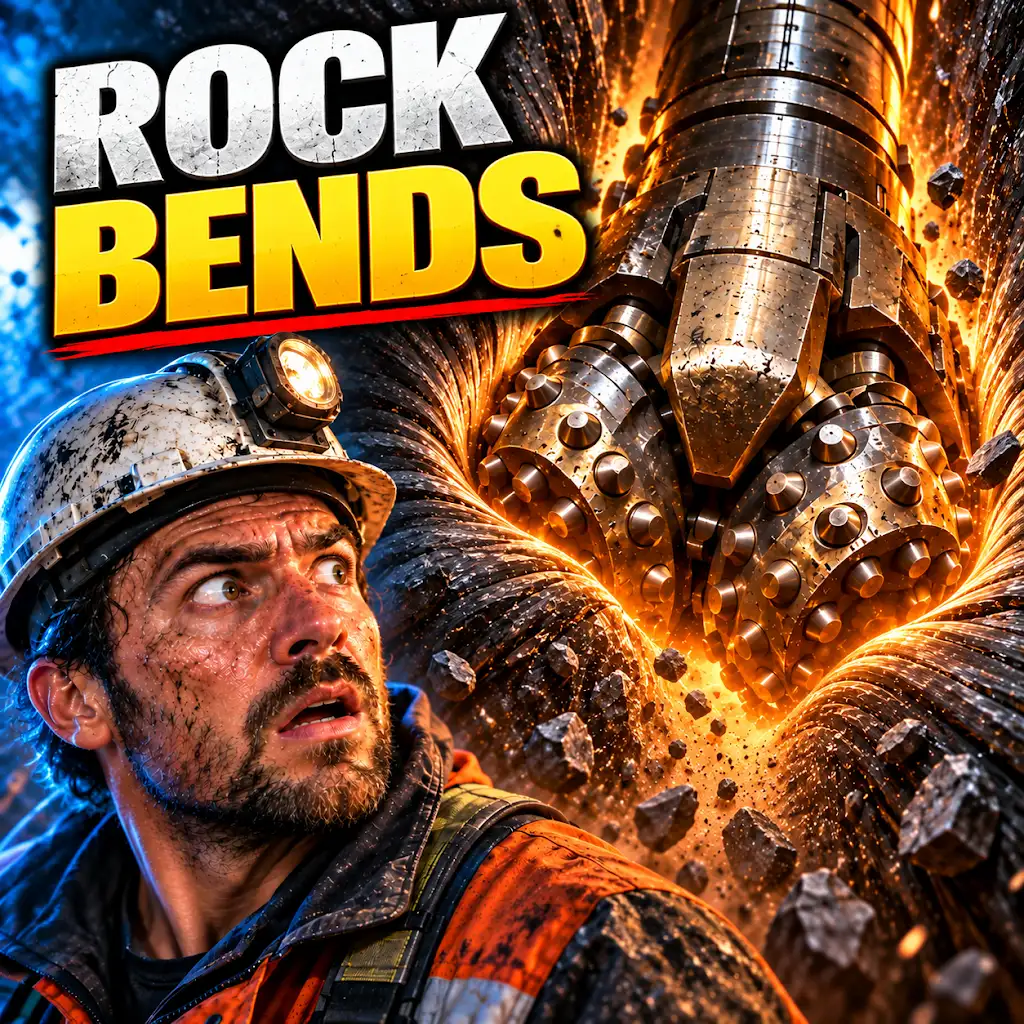
We Drilled 12 KM Into Earth—Then the Rock Started Bending
FAQs
What is the Earth’s mantle?
The Earth’s mantle is the layer of the Earth located between the crust and the core. It is composed of solid rock that is capable of flowing over long periods of time.
How deep is the Earth’s mantle?
The Earth’s mantle extends from about 30 kilometers below the Earth’s surface to a depth of about 2,900 kilometers.
Why is it difficult to drill into the Earth’s mantle?
Drilling into the Earth’s mantle is difficult due to the extreme heat and pressure at such depths. The temperatures can reach up to 1,000 degrees Celsius, and the pressure can be over 1 million times that of the surface.
Has anyone ever attempted to drill into the Earth’s mantle?
No, no one has ever attempted to drill into the Earth’s mantle. The deepest hole ever drilled, the Kola Superdeep Borehole in Russia, only reached a depth of about 12 kilometers, which is still far from the mantle.
Is it possible to drill into the Earth’s mantle in the future?
While current technology does not allow for drilling into the Earth’s mantle, scientists are constantly researching and developing new technologies that may one day make it possible. However, the challenges of extreme heat, pressure, and cost make drilling into the mantle a daunting task for the foreseeable future.