
The flickering lights of the cinema screen cast an ethereal glow on the faces of the audience, a hushed anticipation filling the air. Tonight, they were about to embark on a journey, not across continents or through the stars, but into the very heart of our own planet. “Unveiling Earth’s Hidden Depths: A Science Documentary” promised a groundbreaking exploration of the subterranean world, a realm largely unseen and largely unknown to humanity. This film, the culmination of years of research and technological innovation, aimed to peel back the layers of the Earth’s crust, mantle, and core, revealing the dynamic processes that shape our world from within. It was a testament to human curiosity and our relentless drive to understand the complex systems that govern our existence.
The documentary began with a sweeping aerial view of diverse landscapes – towering mountain ranges, vast ocean trenches, and sprawling continents. Narrated by a calm, authoritative voice, the film immediately established the Earth’s crust as the outermost, solid shell, the very ground beneath our feet. However, it quickly dispelled the notion of a uniform, static surface. Instead, it presented the crust as a dynamic entity, constantly being formed, broken, and reformed.
Plate Tectonics: The Grand Architect
The segment dedicated to plate tectonics was particularly illuminating. Viewers were treated to stunning CGI animations depicting the colossal plates of the Earth’s lithosphere grinding against each other. The documentary meticulously explained the driving forces behind this movement, delving into the concept of convection currents within the Earth’s mantle. These slow, powerful currents, akin to a boiling pot of water, were shown to be the engine that pushed and pulled the tectonic plates, leading to the creation of mountains, the opening of oceans, and the triggering of seismic events.
Convergent Boundaries: Where Continents Collide
The film showcased dramatic examples of convergent boundaries, where plates collide. The majestic Himalayas, the documentary explained, were the result of the Indian plate crashing into the Eurasian plate. Viewers witnessed simulations of this immense geological pressure, illustrating how rock layers buckle and fold, thrusting upwards to form these formidable peaks. The sheer scale of these forces, operating over millions of years, was rendered in a way that inspired awe and a profound appreciation for the planet’s geological history.
Divergent Boundaries: The Birth of New Ocean Floors
Conversely, the documentary explored divergent boundaries, where plates move apart. The Mid-Atlantic Ridge, a vast underwater mountain range, was presented as a prime example. Here, magma from the mantle wells up to fill the gap, creating new oceanic crust. The visual representations of this seafloor spreading were captivating, revealing the continuous renewal of the Earth’s surface and the slow but inexorable expansion of ocean basins. The impact of this process on global climate and sea levels was also touched upon, highlighting the interconnectedness of Earth’s systems.
Transform Boundaries: The Earth’s Silent Scars
The segment on transform boundaries, where plates slide past each other horizontally, focused on the San Andreas Fault in California. The documentary explained how this movement, though seemingly smoother, is responsible for powerful earthquakes. The visual effects depicted the immense stress building up along the fault line, followed by a sudden, violent release of energy. The human cost of these geological events was subtly acknowledged, underscoring the importance of understanding these processes for hazard mitigation.
The Crust’s Diverse Composition: From Granite to Basalt
Beyond the plate movements, the documentary delved into the varied composition of the Earth’s crust. It distinguished between the continental crust, thicker and primarily composed of granite, and the oceanic crust, thinner and made of denser basalt. Through microscopic imagery and expert interviews, viewers gained an understanding of the mineralogy and chemical makeup of these distinct crustal types. The formation of different rock types, from igneous to sedimentary and metamorphic, was explained in a clear and accessible manner, illustrating the long and complex journey of rock formation.
The Water Cycle’s Influence: Erosion and Sedimentation
The profound influence of the water cycle on the crust was another key theme. The film showcased how rivers carve canyons, glaciers sculpt valleys, and waves relentlessly reshape coastlines. The processes of erosion and sedimentation were illustrated with time-lapse photography and detailed geological diagrams, demonstrating how surface features are constantly being sculpted and transformed by the movement of water. This highlighted the interplay between geological forces and the atmospheric and hydrospheric systems.
For those interested in exploring the mysteries of Earth’s interior, a fascinating article can be found on Freaky Science, which delves into the various layers of our planet and the geological processes that shape them. This resource complements the science documentary by providing additional insights and visuals that enhance our understanding of the Earth’s structure. You can read more about it in the article here: Freaky Science.
The Mantle: A World of Slow-Motion Fury
Moving deeper, the documentary transitioned into the Earth’s mantle, a vast, semi-fluid layer that constitutes the bulk of our planet’s volume. Here, the pace of geological processes slowed dramatically, but the power remained immense. The concept of the asthenosphere, the partially molten upper layer of the mantle, was introduced as the crucial lubricant for plate tectonics.
Convection Currents: The Unseen Engine
The heart of the mantle segment was its exploration of convection currents. Using sophisticated computer modeling and animations, the documentary vividly illustrated the slow, churning motion of rock within the mantle. Hotter, less dense material rose from the deeper mantle, while cooler, denser material sank. This perpetual cycle, operating over millions of years, was presented as the fundamental driver of plate tectonics, a constant, unseen force shaping the Earth’s surface. The sheer scale of these currents, spanning thousands of kilometers, was emphasized, underscoring the immense energy contained within the Earth.
The Geodynamo: Earth’s Magnetic Shield
While not strictly part of the mantle’s convection currents, the documentary also touched upon the geodynamo, the process occurring in the Earth’s liquid outer core that generates our planet’s magnetic field. Though a separate region, the influence of the mantle’s heat transfer is indirectly linked to the core’s dynamics. The importance of this magnetic field, which shields us from harmful solar radiation, was highlighted, presenting it as another vital, invisible protective layer of our planet.
Mantle Plumes: Upwellings of Fire
The film also explored the phenomenon of mantle plumes, vast columns of exceptionally hot rock that rise from the deep mantle. The creation of volcanic hot spots, such as Hawaii and Yellowstone, was explained through the lens of these plumes. Viewers saw animations of these fiery upwellings breaching the crust, leading to intense volcanic activity and the formation of unique geological features. The immense heat and pressure required to generate these plumes were communicated through striking visual effects.
The Supercontinent Cycle: A Planetary Dance
The documentary linked the processes within the mantle to the supercontinent cycle. It explained how the breakup and reassembly of supercontinents, like Pangaea, are driven by the slow, cyclical nature of mantle convection. The film presented a mesmerizing visual of continents drifting and coalescing over hundreds of millions of years, illustrating the planet’s long-term geological rhythm. This concept provided a grand, overarching narrative to the seemingly disparate geological events.
The Core: The Fiery Heart of the Planet
The final, and perhaps most awe-inspiring, segment of the documentary ventured into the Earth’s core. This infernal region, hotter than the surface of the sun, was presented as the planet’s ultimate power source. The distinction between the solid inner core and the liquid outer core was made clear.
The Outer Core: The Forge of Magnetism
The liquid outer core, composed primarily of iron and nickel, was depicted as a churning sea of molten metal. The documentary explained how the movement of this electrically conductive fluid generates the Earth’s magnetic field, the geodynamo. Stunning visualizations showed the swirling currents within the outer core, a mesmerizing dance of metallic plasma that protects life on Earth from the harshness of space. The importance of this invisible shield was emphasized, as without it, the atmosphere would be stripped away by the solar wind.
Magnetic Field Reversals: An Ancient Mystery
The film also delved into the phenomenon of magnetic field reversals, where the Earth’s north and south magnetic poles swap places. Through paleomagnetic data, viewers were shown evidence of these ancient reversals, a reminder that our planet’s magnetic shield is not constant. The documentary discussed the scientific theories attempting to explain these flips and the potential implications for life on Earth.
The Inner Core: A Solid Mystery
The solid inner core, under immense pressure, was described as a ball of iron and nickel, hotter than the surface of the sun. Despite its extreme temperature, the intense pressure keeps it in a solid state. The documentary highlighted the challenges of directly studying the inner core, relying on seismic wave data and theoretical models. It presented the inner core as a fundamental component of the Earth’s structure, a vast, inert furnace at the planet’s heart, yet crucial for its overall dynamics.
The Early Earth and Core Formation: A Violent Beginning
The documentary offered insights into the formation of the Earth’s core during the planet’s early history. It explained how, in the molten early Earth, denser materials like iron and nickel sank to the center, separating from the lighter silicate rocks that would eventually form the mantle and crust. This process, known as planetary differentiation, was depicted as a chaotic and violent period in Earth’s formation.
Unveiling the Unknown: The Future of Subterranean Exploration
“Unveiling Earth’s Hidden Depths” concluded by looking towards the future of subterranean exploration. The documentary showcased the cutting-edge technologies being developed to probe deeper into the Earth, from advanced seismic imaging techniques to ambitious drilling projects. The scientists featured in the film spoke with palpable excitement about the potential for new discoveries, the possibility of finding new resources, and a deeper understanding of the Earth’s internal workings.
Seismic Tomography: Peering Through the Planet
The film highlighted the power of seismic tomography, a technique that uses earthquake waves to create 3D images of the Earth’s interior. Viewers saw how scientists can map variations in temperature and density deep within the mantle and core by analyzing the subtle changes in seismic wave travel times. This powerful tool, akin to a medical CT scan for the planet, was presented as a key to unlocking the secrets of the Earth’s inner structure.
Gravitational and Magnetic Field Anomalies: Clues from Above
The documentary also discussed how scientists study gravitational and magnetic field anomalies from satellites to infer information about the Earth’s subsurface. These subtle variations in gravity and magnetism can reveal the presence of dense mineral deposits or areas of unusual geological activity, providing indirect clues about what lies beneath the surface.
The Search for Extremophiles: Life in the Deep
A particularly fascinating aspect of the documentary was its exploration of extremophiles – life forms that thrive in extreme environments. The film presented evidence of microbial life found in deep-sea hydrothermal vents and even within the Earth’s crust. This raised profound questions about the potential for life to exist in even more inhospitable subterranean environments, perhaps even on other planets.
Astrobiological Implications: Earth as a Template
The discovery of extremophiles within Earth’s own depths has significant implications for astrobiology. The documentary suggested that if life can exist in such harsh conditions on Earth, it could potentially exist in similar environments on other celestial bodies. This broadened the scope of the film, linking the study of our planet’s interior to the search for extraterrestrial life.
In exploring the mysteries of Earth’s interior, one can gain deeper insights by watching a captivating science documentary that delves into the layers beneath our feet. This documentary not only highlights the composition and dynamics of the Earth’s mantle and core but also discusses the latest research findings that challenge our understanding of geological processes. For those interested in further reading, a related article can be found at Freaky Science, which provides additional context and fascinating details about the planet’s inner workings.
A Call to Stewardship: Understanding Our Dynamic Home
| Metric | Value | Description |
|---|---|---|
| Title | Journey to the Center of the Earth | Name of the science documentary |
| Duration | 90 minutes | Total length of the documentary |
| Release Year | 2022 | Year the documentary was released |
| Viewership | 3 million | Number of viewers worldwide |
| Scientific Topics Covered | Earth’s core, mantle convection, seismic waves, plate tectonics | Main scientific concepts explained |
| Expert Interviews | 5 | Number of geologists and scientists interviewed |
| Animation Sequences | 12 | Number of animated segments illustrating Earth’s interior |
| IMDB Rating | 8.2/10 | Audience rating on IMDB |
| Production Company | Earth Science Media | Company that produced the documentary |
The final moments of “Unveiling Earth’s Hidden Depths” offered a powerful call to stewardship. The documentary emphasized that understanding the Earth’s internal processes is not just an academic pursuit but a necessity for our survival. The intricate dance of plate tectonics, the generation of our magnetic field, and the heat radiating from the core all play crucial roles in maintaining the habitable conditions on our planet.
Climate Change and Earth’s Systems: An Interconnected Web
The film subtly wove in the interconnectedness of Earth’s systems, highlighting how human activities, particularly climate change, can have far-reaching consequences. While not the primary focus, the documentary underscored that a deeper understanding of our planet’s interior is essential for comprehending the complex feedback loops that govern our climate and environment. The energy flowing from the Earth’s core influences long-term geological cycles, and understanding these interactions is vital for predicting future changes.
Sustainable Resource Management: Learning from the Depths
The exploration of mineral resources within the Earth’s crust was also touched upon. The documentary implied that a more informed approach to resource extraction, guided by a deeper geological understanding, is crucial for sustainable development. Learning about the formation and distribution of these resources from the Earth’s depths can lead to more responsible and efficient utilization.
The Enduring Mystery: A Lifetime of Discovery
As the credits rolled, a sense of wonder and a profound appreciation for our planet remained. “Unveiling Earth’s Hidden Depths: A Science Documentary” had succeeded in its ambitious goal, taking viewers on an unforgettable journey into the unseen world beneath their feet. It demonstrated that even on our familiar planet, vast realms of mystery and discovery await, a testament to the enduring power of scientific inquiry and the captivating secrets held within the very heart of Earth. The documentary served as a potent reminder that the ground we walk on is not static, but a vibrant, dynamic entity, a complex engine constantly at work, shaping our past, present, and future. The journey into Earth’s hidden depths had only just begun.
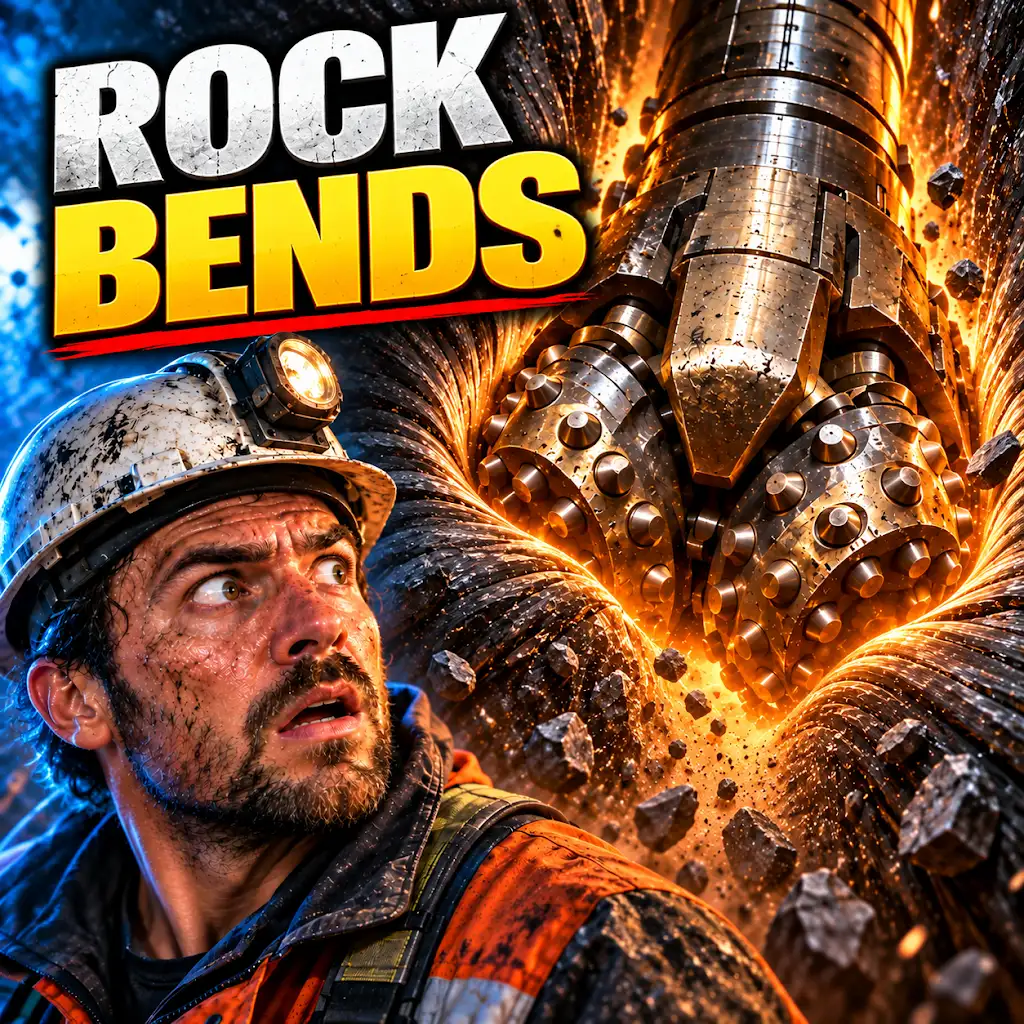
We Drilled 12 KM Into Earth—Then the Rock Started Bending
FAQs
What is the focus of the science documentary about Earth’s interior?
The science documentary delves into the exploration and understanding of the Earth’s interior, including its composition, structure, and processes.
Who are the experts featured in the science documentary about Earth’s interior?
The documentary features renowned geologists, seismologists, and other experts in the field of Earth sciences who share their knowledge and insights about the Earth’s interior.
What are some of the key discoveries or findings discussed in the science documentary?
The documentary highlights key discoveries such as the different layers of the Earth’s interior (crust, mantle, outer core, inner core), plate tectonics, seismic activity, and the role of the Earth’s interior in shaping the planet’s surface.
How is the information presented in the science documentary about Earth’s interior communicated to the audience?
The information is presented through a combination of stunning visuals, computer simulations, animations, interviews with experts, and real-life footage of geological phenomena to engage and educate the audience.
What is the significance of understanding the Earth’s interior as discussed in the science documentary?
Understanding the Earth’s interior is crucial for gaining insights into the planet’s past, present, and future geological processes, as well as for predicting natural disasters such as earthquakes and volcanic eruptions.