The universe, a vast expanse that has captivated humanity since the dawn of consciousness, continues to reveal its profound mysteries. For millennia, our understanding has been built upon observations of stars, galaxies, and the grand cosmic ballet they perform. Yet, beneath the visible surface lies a deeper, more intricate reality, a foundational structure that governs the very essence of existence. This is the realm explored by Cosmic Texture Theory, a burgeoning paradigm that proposes the universe is not merely a collection of discrete objects, but a dynamic, interwoven fabric, possessing a complex and measurable texture.
The Genesis of Cosmic Texture Theory
The impetus behind Cosmic Texture Theory arises from the persistent anomalies and unanswered questions in contemporary cosmology. While the Standard Model of particle physics and the Lambda-CDM model of cosmology have achieved remarkable success in describing a vast array of phenomena, they struggle to fully explain certain observations. The nature of dark matter and dark energy, the flatness problem, the horizon problem, and the apparent fine-tuning of fundamental constants all point towards a more fundamental understanding of the universe’s underlying architecture. Cosmic Texture Theory seeks to address these challenges by positing that the universe’s fundamental nature is characterized by a pervasive, intricate texture, akin to the weave of a cosmic tapestry. This texture, it is theorized, is not a passive backdrop but an active participant in the universe’s evolution and the behavior of its constituents.
Early Conceptual Frameworks
The roots of the idea of an underlying cosmic structure can be traced back to ancient philosophical concepts, such as the ether or the cosmic web. However, in modern physics, the notion began to gain traction with theoretical explorations into quantum gravity and string theory. These frameworks, aiming to unify the fundamental forces and particles, often suggest that spacetime itself is not a smooth, continuous entity at the Planck scale but possesses a granular or foamy structure. Cosmic Texture Theory builds upon these ideas, proposing that this fundamental texture has observable consequences on macroscopic scales, influencing the distribution of matter, the propagation of light, and even the very passage of time. Early proponents suggested that this texture could be a manifestation of quantum fluctuations frozen into the fabric of spacetime during the early universe, or perhaps a consequence of higher dimensional physics.
Bridging the Gaps in Standard Models
The Standard Model of cosmology, while successful, relies on the existence of hypothetical entities like dark matter and dark energy to explain observed gravitational effects and the accelerating expansion of the universe. Cosmic Texture Theory offers a potential alternative or complementary explanation. It suggests that the perceived effects of dark matter might be a consequence of gravitational interactions occurring within the complex texture of spacetime, rather than the presence of unseen particles. Similarly, the accelerating expansion could be driven by the inherent properties of this cosmic fabric, perhaps a form of intrinsic tension or elasticity. By re-examining the fundamental nature of spacetime, this theory aims to provide a more unified and elegant description of cosmic phenomena, potentially reducing the need for speculative dark components.
Cosmic texture theory offers intriguing insights into the structure of the universe, suggesting that the cosmos may be composed of intricate textures that influence the formation of galaxies and cosmic phenomena. For a deeper understanding of this concept and its implications, you can explore a related article that delves into the nuances of cosmic textures and their potential impact on our understanding of the universe. To read more, visit this article.
The Multidimensional Weave of Spacetime
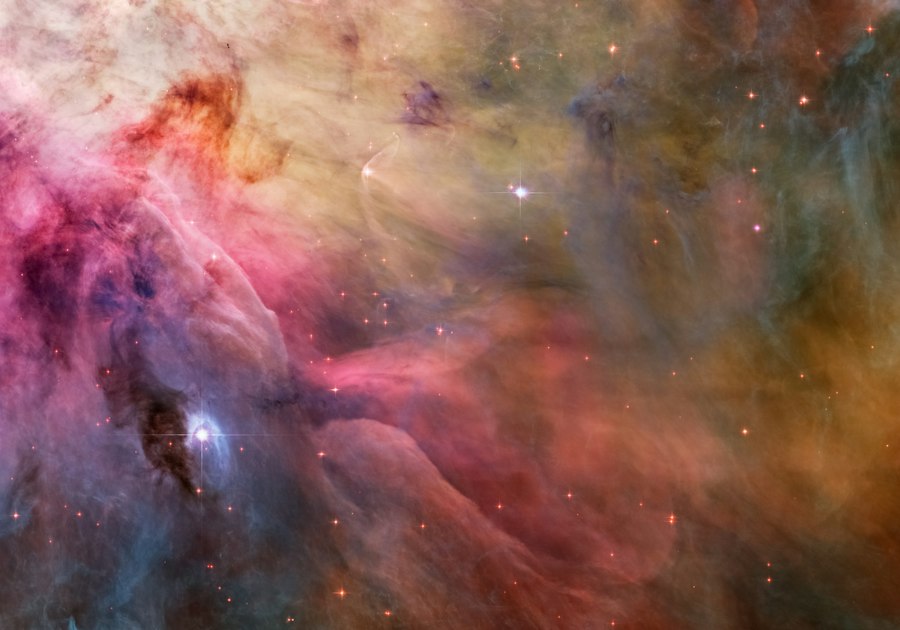
At the heart of Cosmic Texture Theory lies the radical idea that spacetime is not a simple, four-dimensional manifold but possesses a more complex, interwoven structure. This texture is not merely a metaphor; it is proposed to be a physical reality with quantifiable properties. The theory suggests that the universe’s fundamental fabric is composed of interconnected nodes and filaments, reminiscent of a vast, three-dimensional lattice or a complex neural network. These elements, operating at scales far beyond our current observational limits, are thought to dictate the rules of gravity, electromagnetism, and perhaps even the other fundamental forces. The very dimensionality of spacetime might not be fixed but could fluctuate or manifest differently depending on the local density and configuration of this texture.
The Role of Higher Dimensions
Many theoretical frameworks exploring quantum gravity and unified theories of everything posit the existence of extra spatial dimensions beyond the familiar three. Cosmic Texture Theory integrates this concept by suggesting that these higher dimensions are not merely abstract mathematical constructs but play a crucial role in shaping the universe’s texture. These extra dimensions could be curled up at incredibly small scales, influencing the way our four-dimensional spacetime is woven, or they could be more extended, allowing for interactions and phenomena that are not directly observable in our perceived reality. The interplay between our four dimensions and these extra dimensions would create the intricate patterns and textures that characterize the universe, influencing everything from the quantum vacuum to the large-scale structure of galaxies.
Quantum Foam and Cosmic Filaments
The concept of quantum foam, first proposed by John Wheeler, describes spacetime at the Planck scale as a chaotic, fluctuating sea of virtual particles and spacetime distortions. Cosmic Texture Theory takes this idea and suggests that these fluctuations, under certain conditions, could have been “frozen” or stabilized during the universe’s earliest moments, forming a persistent, underlying texture. This texture would not be uniformly smooth but would exhibit complex patterns, akin to the delicate threads of a spiderweb or the intricate veins of a leaf. These “cosmic filaments” would represent regions of varying energy density and spacetime curvature, dictating the gravitational interactions and the distribution of matter. The universe’s large-scale structure, the cosmic web of galaxies and voids, might then be seen as a macroscopic manifestation of this underlying quantum texture.
Observable Signatures of Cosmic Texture
The true power of any scientific theory lies in its ability to make testable predictions. Cosmic Texture Theory is no exception, and proponents are actively exploring potential observational signatures that could validate or refute its claims. These signatures are expected to manifest in subtle but measurable deviations from the predictions of standard cosmological models, particularly in areas where those models struggle. The challenge lies in detecting these effects, which often occur at the very limits of our current technological capabilities. Nevertheless, the pursuit of these signatures offers exciting new avenues for astronomical observation and experimental physics.
Gravitational Lensing Anomalies
One of the most promising avenues for testing Cosmic Texture Theory lies in the study of gravitational lensing. The bending of light by mass is a well-established phenomenon, and the intricate texture of spacetime could introduce subtle variations in how light is deflected. If spacetime possesses a complex weave, then the path of photons passing through it might not be as straightforward as predicted by smooth spacetime models. This could lead to observable anomalies in the patterns of gravitational lensing around massive objects, such as galaxy clusters. Detecting these anomalies would provide strong evidence for a textured spacetime. Furthermore, the theory suggests that the distribution of dark matter, if it is indeed an illusion of spacetime texture, would exhibit patterns consistent with the underlying weave, rather than the clumpy, discrete distribution predicted by particle dark matter models.
Anomalies in Cosmic Microwave Background Radiation
The Cosmic Microwave Background (CMB) radiation, the afterglow of the Big Bang, is a treasure trove of information about the early universe. Cosmic Texture Theory predicts that the texture of spacetime during the epoch of CMB formation could have left its imprint on this ancient light. Subtle anisotropies, or temperature variations, in the CMB, beyond those explained by standard inflation, might be evidence of the underlying cosmic weave. These anisotropies could arise from gravitational waves propagating through the textured spacetime, or from the interaction of primordial plasma with the intricate fabric. Precise measurements of these subtle patterns in the CMB, particularly with advanced telescopes like the Planck satellite and future observatories, could reveal the signature of cosmic texture.
The Nature of Dark Energy and Cosmic Expansion
The accelerating expansion of the universe, attributed to dark energy, is one of the most profound mysteries in modern cosmology. Cosmic Texture Theory offers a novel perspective on this phenomenon. It proposes that the intrinsic properties of the cosmic fabric itself, its inherent elasticity or tension, could be the driving force behind this acceleration. Instead of a mysterious energy field, the expansion could be a natural consequence of spacetime’s texture settling into a lower energy state. The theory suggests that the rate of expansion, and the way it has changed over cosmic history, might be directly linked to the evolution and configuration of this texture. Therefore, precise measurements of the expansion history of the universe, through techniques like observing Type Ia supernovae and baryon acoustic oscillations, could reveal deviations from standard dark energy models that are consistent with the predictions of Cosmic Texture Theory.
Implications for Fundamental Physics and Beyond
The acceptance of Cosmic Texture Theory would necessitate a profound shift in our understanding of the universe, impacting not only cosmology but also the foundations of physics. If spacetime is indeed a textured entity, then our current models of gravity, quantum mechanics, and even the very nature of reality would need to be re-evaluated and potentially revised. This new paradigm opens up avenues for entirely new avenues of research and could lead to breakthroughs in our quest for a unified theory of everything.
Revisiting Gravity and Spacetime
The theory of General Relativity describes gravity as the curvature of a smooth, continuous spacetime. If spacetime has a texture, then gravity might be a more emergent phenomenon, arising from the collective behavior of this textured fabric. The subtle variations in the weave could lead to deviations from predicted gravitational forces, especially in extreme environments like black holes or at very early cosmic times. This could offer new insights into the singularities predicted by General Relativity, suggesting that they might not be points of infinite density but rather regions where the cosmic texture is highly distorted or knotted. Understanding the gravitational implications of a textured spacetime would require a significant reformulation of our current theories.
Quantum Mechanics and the Information Paradox
The intersection of quantum mechanics and gravity is a major frontier in theoretical physics. Cosmic Texture Theory could offer a new lens through which to view this intersection. The quantum fluctuations that are theorized to form the texture might provide a mechanism for resolving some of the long-standing paradoxes in quantum mechanics, such as the information paradox associated with black holes. If information is encoded not just in the quantum states of particles but also in the structure of spacetime itself, then its loss might not be absolute. The textured fabric of the universe could act as a cosmic repository, preserving information in ways we are only beginning to comprehend.
Towards a Unified Theory of Everything
The ultimate goal of physics is to develop a single, coherent framework that explains all fundamental forces and particles. Cosmic Texture Theory, with its potential to unify gravity with quantum mechanics and explain phenomena currently attributed to dark matter and dark energy, could be a significant step towards this grand unified theory. By providing a more fundamental description of spacetime itself, it offers a potential bridge between the very large and the very small, the macroscopic and the microscopic. The intricate mathematical descriptions of this textured fabric could reveal underlying symmetries and relationships that have eluded physicists for decades, paving the way for a truly comprehensive understanding of the universe.
Cosmic texture theory offers intriguing insights into the structure of the universe, suggesting that the cosmos may be composed of intricate patterns that influence cosmic evolution. For those interested in exploring this concept further, a related article can be found on Freaky Science, which delves into the implications of cosmic textures on the formation of galaxies and dark matter. You can read more about it in this fascinating article.
The Future of Cosmic Texture Exploration
| Metric | Description | Value / Range | Unit | Notes |
|---|---|---|---|---|
| Texture Energy Scale (η) | Energy scale at which cosmic textures form | ~10^16 | GeV | Comparable to Grand Unified Theory scale |
| Correlation Length | Typical size of texture defects at formation | ~1 | Hubble radius at formation | Determines scale of induced anisotropies |
| Temperature Fluctuation Amplitude (ΔT/T) | Magnitude of CMB temperature fluctuations caused by textures | ~10^-5 | Dimensionless | Comparable to observed CMB anisotropies |
| Defect Density | Number density of cosmic textures per Hubble volume | ~1 | per Hubble volume | Order unity at formation epoch |
| Angular Scale of Texture Signatures | Typical angular size of texture-induced spots in CMB | ~1-10 | Degrees | Matches large-scale CMB anomalies |
| Redshift of Texture Decay | Epoch when textures unwind and decay | z ~ 10^3 | Dimensionless | Near recombination era |
The exploration of Cosmic Texture Theory is still in its nascent stages, but its potential impact on our understanding of the cosmos is immense. As observational technologies advance and theoretical frameworks become more sophisticated, the scientific community will be better equipped to test the predictions of this intriguing theory. The journey to unravel the fabric of the universe is ongoing, and Cosmic Texture Theory offers a compelling new narrative, one that promises to redefine our perception of reality itself. The coming years will undoubtedly witness exciting developments as physicists and astronomers work collaboratively to probe the intricate weave of existence.
Advancements in Observational Astronomy
The continued development of cutting-edge telescopes, both ground-based and space-borne, will be crucial for testing Cosmic Texture Theory. Instruments capable of unprecedented resolution and sensitivity will be required to detect the subtle gravitational lensing anomalies, the fine-grained anisotropies in the CMB, and the precise measurements of cosmic expansion history. Future observatories, such as the Square Kilometer Array (SKA) for radio astronomy and next-generation space telescopes, could provide the data necessary to confirm or refute the existence of cosmic texture. The ability to observe fainter, more distant objects and to resolve finer details will be paramount in this endeavor.
Theoretical Refinements and Computational Modeling
Simultaneously, theoretical physicists will continue to refine the mathematical underpinnings of Cosmic Texture Theory. Developing more precise models for the formation and evolution of this textured spacetime, and deriving more specific, falsifiable predictions, will be essential. Furthermore, advanced computational modeling techniques will play a vital role in simulating the behavior of a textured universe. These simulations will allow researchers to explore the consequences of different texture configurations and to compare their predicted observational signatures with real-world data, accelerating the process of theory validation. The synergy between theoretical advancements and computational power will be key to unlocking the secrets of cosmic texture.
Interdisciplinary Collaboration and Public Engagement
The exploration of Cosmic Texture Theory is not solely the domain of theoretical physicists and astronomers. It requires a multidisciplinary approach, drawing on insights from mathematics, computer science, and even philosophy. Encouraging collaboration across these fields will foster new perspectives and accelerate progress. Moreover, engaging the public in these complex ideas is essential. By communicating the excitement and significance of this research, scientists can inspire the next generation of thinkers and foster a broader appreciation for the ongoing quest to understand our universe. The unraveling of cosmic texture is a journey for all of humanity.
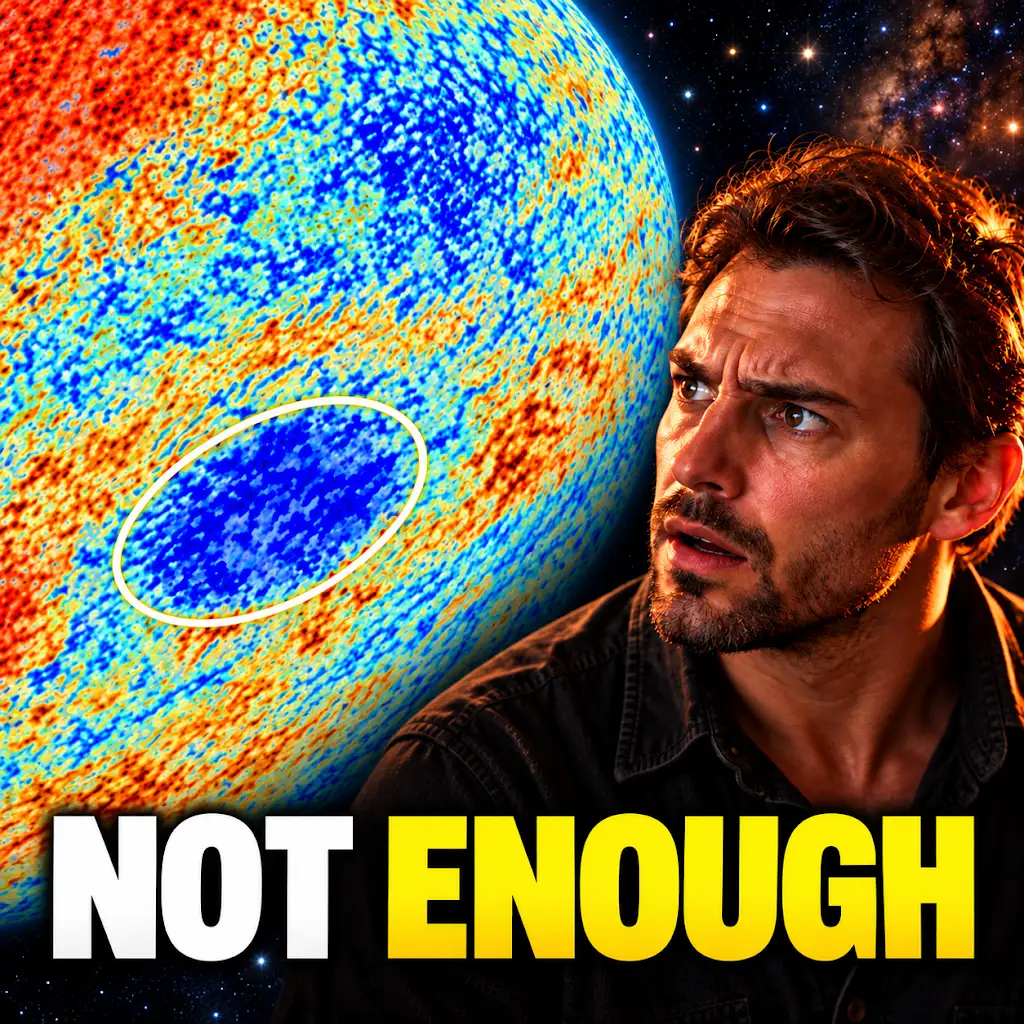
The Universe’s Cold Spot Has an Explanation. It’s Not Enough.
FAQs
What is cosmic texture theory?
Cosmic texture theory is a hypothesis in cosmology that suggests the presence of large-scale structures in the universe known as cosmic textures. These textures are believed to be remnants from the early universe and could provide insights into the formation and evolution of the cosmos.
How are cosmic textures formed?
According to cosmic texture theory, cosmic textures are formed during phase transitions in the early universe. These transitions occur when the universe cools down and undergoes changes in its fundamental properties, leading to the creation of these unique structures.
What are the characteristics of cosmic textures?
Cosmic textures are predicted to have a non-uniform distribution in the universe, with a distinct pattern of energy density fluctuations. They are also expected to exhibit topological defects, such as knots and cusps, which can influence the surrounding cosmic environment.
How can cosmic textures be detected?
Detecting cosmic textures is a challenging task due to their theoretical nature and potential rarity in the universe. Scientists use advanced observational techniques, such as analyzing cosmic microwave background radiation and large-scale structure surveys, to search for signatures of cosmic textures.
What implications does cosmic texture theory have for our understanding of the universe?
Studying cosmic texture theory can provide valuable insights into the early universe, the formation of cosmic structures, and the overall evolution of the cosmos. By exploring the presence and properties of cosmic textures, scientists aim to deepen our understanding of the fundamental forces and processes that govern the universe.