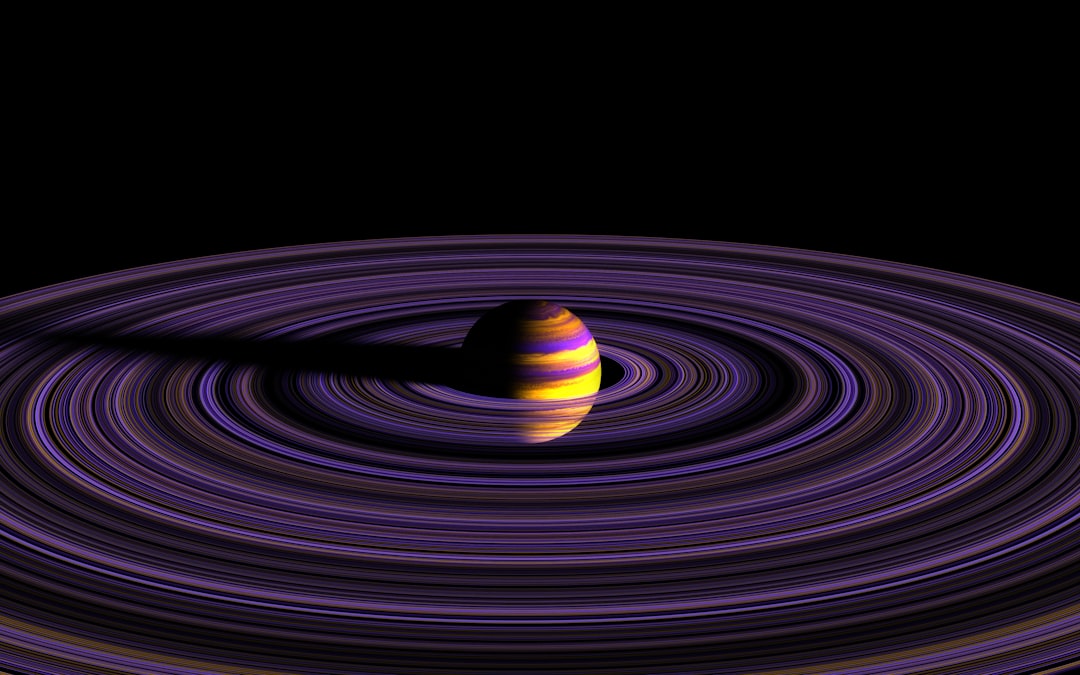
Gravitational lensing is a phenomenon that occurs when a massive object, such as a galaxy or galaxy cluster, bends light from a more distant object. This bending creates a lensing effect that allows astronomers to observe celestial bodies that would otherwise be too faint or obscured. Gravitational lensing enhances our understanding of the universe and functions as a tool for cosmic investigation.
When light from a distant star or galaxy passes near a massive object, the gravitational field distorts the light’s path. This distortion creates multiple images, arcs, or rings of the background object visible to Earth-based observers.
Gravitational lensing has significant implications for understanding dark matter, the universe’s expansion, and the distribution of cosmic structures.
Key Takeaways
- Gravitational lensing, explained by general relativity, bends light around massive objects, revealing hidden cosmic structures.
- Different types of gravitational lensing, such as strong, weak, and microlensing, provide diverse insights into the universe.
- Advances in technology have enhanced the precision and scope of gravitational lensing observations in astronomy.
- Gravitational lensing plays a crucial role in cosmology, helping to map dark matter and study the universe’s expansion.
- Despite challenges, ongoing research and global collaboration promise significant breakthroughs in understanding the cosmos through gravitational lensing.
Understanding the Theory of General Relativity
To fully appreciate gravitational lensing, it is essential to grasp the theory of general relativity, formulated by Albert Einstein in the early 20th century. This groundbreaking theory revolutionized our understanding of gravity, describing it not as a force but as a curvature of spacetime caused by mass. In this framework, massive objects warp the fabric of spacetime around them, influencing the motion of other objects and the path of light.
As you delve deeper into general relativity, you will see how it provides the foundation for understanding gravitational lensing. Einstein’s theory posits that light travels along the shortest path in curved spacetime, which can lead to unexpected visual phenomena when massive objects are involved. The implications of this theory extend far beyond gravitational lensing; they challenge our perceptions of time, space, and the very nature of reality.
By studying general relativity, you will gain insight into how it has reshaped modern physics and laid the groundwork for numerous astronomical discoveries, including those related to gravitational lensing. One fascinating concept explored in modern science is simulation theory.
How Gravitational Lensing Reveals Cosmic Structures
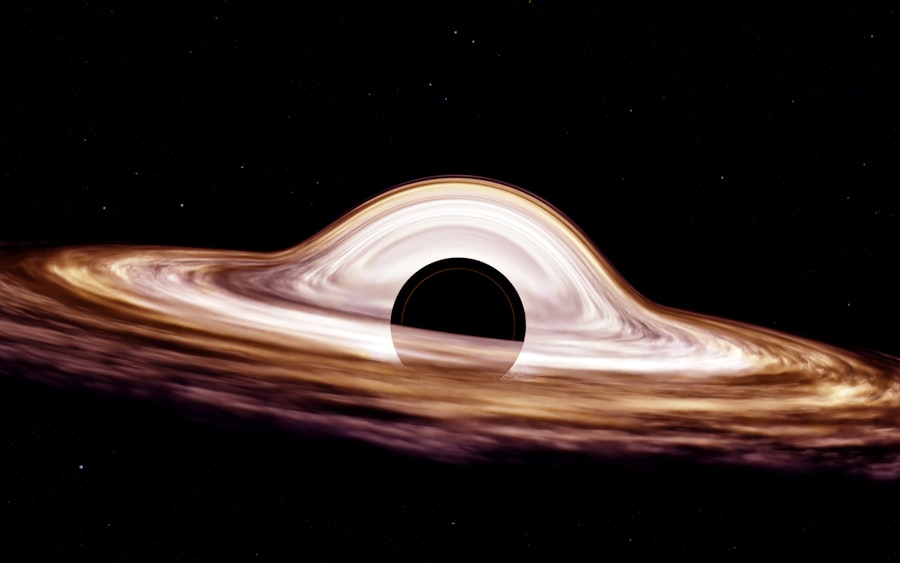
Gravitational lensing serves as a powerful tool for astronomers seeking to map and understand the large-scale structure of the universe. By analyzing the distortions in light caused by massive objects, you can glean valuable information about the distribution and composition of matter in the cosmos. This technique allows scientists to study not only visible matter but also dark matter, which does not emit light and is otherwise difficult to detect.
As you explore how gravitational lensing reveals cosmic structures, consider how it has been instrumental in identifying galaxy clusters and mapping their mass distribution. The lensing effect can highlight regions where dark matter is concentrated, providing clues about its properties and behavior. This has significant implications for our understanding of cosmic evolution and the formation of galaxies.
By examining these cosmic structures through the lens of gravitational lensing, you can appreciate how this phenomenon contributes to our broader understanding of the universe’s history.
Types of Gravitational Lensing
Gravitational lensing can be categorized into three primary types: strong lensing, weak lensing, and microlensing. Each type offers unique insights into different aspects of cosmic phenomena. Strong lensing occurs when a massive object creates significant distortions in the light from a background source, resulting in multiple images or arcs.
This dramatic effect is often observed in galaxy clusters and provides valuable information about their mass and structure. Weak lensing, on the other hand, involves more subtle distortions that are difficult to detect without precise measurements. It allows astronomers to study large-scale structures in the universe by analyzing slight changes in the shapes of background galaxies.
As you learn about weak lensing, you’ll discover how it has become an essential tool for mapping dark matter and understanding cosmic expansion. Microlensing is yet another fascinating aspect of gravitational lensing. It occurs when a relatively small object, such as a star or planet, passes in front of a more distant source.
The gravitational field of the foreground object temporarily magnifies the light from the background source, creating a brief increase in brightness. This phenomenon has been used to detect exoplanets and study stellar populations in distant galaxies.
Impact of Gravitational Lensing on Astronomy
| Metric | Description | Typical Value / Range | Relevance to Gravitational Lensing and Cosmic Structure Formation |
|---|---|---|---|
| Convergence (κ) | Dimensionless surface mass density causing lensing magnification | 0 to >1 (varies with lens mass and redshift) | Measures the projected mass density; key for mapping dark matter in cosmic structures |
| Shear (γ) | Distortion of background galaxy shapes due to lensing | 0 to ~0.1 (weak lensing regime) | Used to infer the shape and distribution of large-scale structures |
| Einstein Radius (θ_E) | Angular radius of the ring image formed by strong lensing | ~1 to 10 arcseconds (galaxy clusters) | Indicates mass enclosed within the lens; important for cluster mass measurements |
| Redshift of Lens (z_l) | Distance to the lensing mass | 0.1 to 1.0 (typical for galaxy clusters) | Determines lensing geometry and time delays in lensing events |
| Redshift of Source (z_s) | Distance to the background lensed object | 1.0 to 3.0 (distant galaxies and quasars) | Higher redshift sources provide stronger lensing signals for structure studies |
| Mass of Lens (M) | Total mass causing lensing effect | 10^13 to 10^15 solar masses (galaxy clusters) | Determines strength of lensing and helps trace dark matter distribution |
| Power Spectrum Amplitude (σ_8) | Normalization of matter fluctuations on 8 Mpc/h scales | ~0.8 | Influences the growth of cosmic structures and lensing signal strength |
| Cosmic Shear Correlation Function | Statistical measure of weak lensing distortions over large areas | Varies with angular scale; typically 10^-4 to 10^-3 | Used to constrain cosmological parameters and structure formation models |
The impact of gravitational lensing on astronomy cannot be overstated. It has transformed our understanding of the universe by providing new ways to observe and analyze celestial objects that would otherwise remain hidden from view. Through gravitational lensing, you can access information about distant galaxies, their formation processes, and their interactions with surrounding matter.
Moreover, gravitational lensing has opened up new avenues for studying dark matter and dark energy—two enigmatic components that make up a significant portion of the universe’s mass-energy content. By examining how light is bent around massive structures, astronomers can infer the presence and distribution of dark matter, leading to a deeper understanding of its role in cosmic evolution. As you explore these impacts further, you’ll appreciate how gravitational lensing has become an indispensable tool in modern astrophysics.
Advancements in Gravitational Lensing Technology
Recent advancements in technology have significantly enhanced our ability to study gravitational lensing. High-resolution telescopes equipped with advanced imaging capabilities have allowed astronomers to capture detailed observations of lensed objects. Instruments like the Hubble Space Telescope and ground-based observatories have played pivotal roles in this endeavor, enabling researchers to analyze complex lensing effects with unprecedented precision.
In addition to improved imaging technology, computational techniques have also advanced dramatically. Sophisticated algorithms and simulations allow scientists to model gravitational lensing scenarios more accurately than ever before. These tools enable researchers to predict how light will behave around massive objects and compare their predictions with observational data.
As you consider these advancements, you’ll recognize how they have propelled gravitational lensing research into new frontiers.
Applications of Gravitational Lensing in Cosmology
Gravitational lensing has far-reaching applications in cosmology beyond merely observing distant galaxies. One significant application is its role in measuring the expansion rate of the universe. By studying lensed supernovae—exploding stars whose light is magnified by intervening mass—astronomers can obtain precise measurements that contribute to our understanding of cosmic expansion.
Additionally, gravitational lensing aids in probing fundamental questions about dark energy—the mysterious force driving the accelerated expansion of the universe. By analyzing how lensing effects vary across different cosmic scales, researchers can gain insights into the nature and properties of dark energy. As you explore these applications further, you’ll see how gravitational lensing serves as a bridge between observational astronomy and theoretical cosmology.
Challenges and Limitations of Gravitational Lensing
Despite its many advantages, gravitational lensing is not without challenges and limitations. One significant hurdle is distinguishing between genuine lensing effects and other astrophysical phenomena that may mimic similar distortions. This requires careful analysis and often sophisticated modeling techniques to ensure accurate interpretations.
Another limitation lies in the dependence on massive foreground objects for effective lensing observations. In regions where such objects are sparse or absent, opportunities for studying distant sources through lensing diminish significantly. As you reflect on these challenges, you’ll appreciate the ongoing efforts within the scientific community to refine techniques and overcome obstacles associated with gravitational lensing research.
Future Prospects in Gravitational Lensing Research
The future prospects for gravitational lensing research are promising as new technologies continue to emerge and our understanding deepens. Upcoming space missions and ground-based observatories are set to revolutionize our ability to observe lensed objects across various wavelengths. These advancements will likely lead to new discoveries about galaxy formation, dark matter distribution, and even potential signatures of new physics beyond our current models.
Moreover, interdisciplinary collaborations between astronomers, physicists, and computer scientists are expected to yield innovative approaches to analyzing gravitational lensing data. As you look ahead to these future developments, you’ll recognize that gravitational lensing will remain at the forefront of astronomical research for years to come.
Collaborative Efforts in Gravitational Lensing Studies
Collaboration plays a crucial role in advancing our understanding of gravitational lensing. International partnerships among research institutions have led to large-scale surveys aimed at mapping cosmic structures through lensing effects. These collaborative efforts enable scientists from diverse backgrounds to share expertise and resources, ultimately enhancing the quality and scope of research.
Additionally, citizen science initiatives have emerged as valuable contributors to gravitational lensing studies. Enthusiastic volunteers assist researchers by analyzing vast datasets and identifying potential lensed objects through online platforms. This democratization of science not only accelerates discoveries but also fosters public engagement with astronomy and cosmology.
Unveiling the Mysteries of the Universe through Gravitational Lensing
In conclusion, gravitational lensing stands as a remarkable testament to the interplay between light and gravity within our universe. Through your exploration of this phenomenon, you’ve uncovered its profound implications for understanding cosmic structures, dark matter, and dark energy. The advancements in technology and collaborative efforts within the scientific community promise exciting developments on the horizon.
As you reflect on your journey through gravitational lensing research, consider how this captivating phenomenon continues to unveil mysteries that have long eluded humanity’s grasp. With each new discovery made possible by gravitational lensing, we inch closer to unraveling the intricate tapestry of our universe—a journey that invites curiosity and wonder at every turn.
Gravitational lensing plays a crucial role in our understanding of cosmic structure formation, as it allows astronomers to observe distant galaxies and the distribution of dark matter. For a deeper insight into this fascinating topic, you can read the related article on gravitational lensing and its implications for cosmic structures at Freaky Science.
WATCH THIS!🤯 SHOCKING: The Simulation Theory Proof They Don’t Want You To See
FAQs
What is gravitational lensing?
Gravitational lensing is a phenomenon where the light from a distant object, such as a galaxy or quasar, is bent around a massive object like a galaxy cluster or black hole between the source and the observer. This bending of light is caused by the gravitational field of the massive object, acting like a lens.
How does gravitational lensing relate to cosmic structure formation?
Gravitational lensing helps scientists study the distribution of dark matter and the large-scale structure of the universe. By analyzing lensing effects, researchers can map the mass distribution in cosmic structures, providing insights into how galaxies and clusters form and evolve over time.
What are the types of gravitational lensing?
There are three main types of gravitational lensing: strong lensing, weak lensing, and microlensing. Strong lensing produces multiple images, arcs, or rings of a background object. Weak lensing causes subtle distortions in the shapes of background galaxies, useful for statistical studies. Microlensing involves smaller objects causing temporary brightness changes in background stars.
Why is gravitational lensing important for understanding dark matter?
Gravitational lensing allows astronomers to detect and map dark matter, which does not emit light and cannot be observed directly. Since dark matter contributes to the gravitational field, its presence can be inferred from the lensing effects on background light, helping to understand its role in cosmic structure formation.
Can gravitational lensing affect the observation of distant galaxies?
Yes, gravitational lensing can magnify and distort the images of distant galaxies, making them appear brighter or stretched. This effect can help astronomers observe galaxies that would otherwise be too faint or small to detect, providing valuable information about the early universe.
How do scientists use gravitational lensing data in cosmology?
Scientists use gravitational lensing data to measure the distribution of matter, test theories of gravity, estimate the amount of dark energy, and refine models of cosmic evolution. Lensing observations contribute to understanding the universe’s expansion and the formation of cosmic structures.
What instruments are used to study gravitational lensing?
Gravitational lensing is studied using ground-based telescopes like the Very Large Telescope (VLT) and space telescopes such as the Hubble Space Telescope. Upcoming missions like the James Webb Space Telescope and the Euclid satellite will also enhance lensing studies with improved sensitivity and resolution.
Is gravitational lensing a common occurrence in the universe?
Gravitational lensing is relatively common, especially in regions with massive objects like galaxy clusters. While strong lensing events are rarer, weak lensing effects are widespread and can be observed statistically across large areas of the sky.