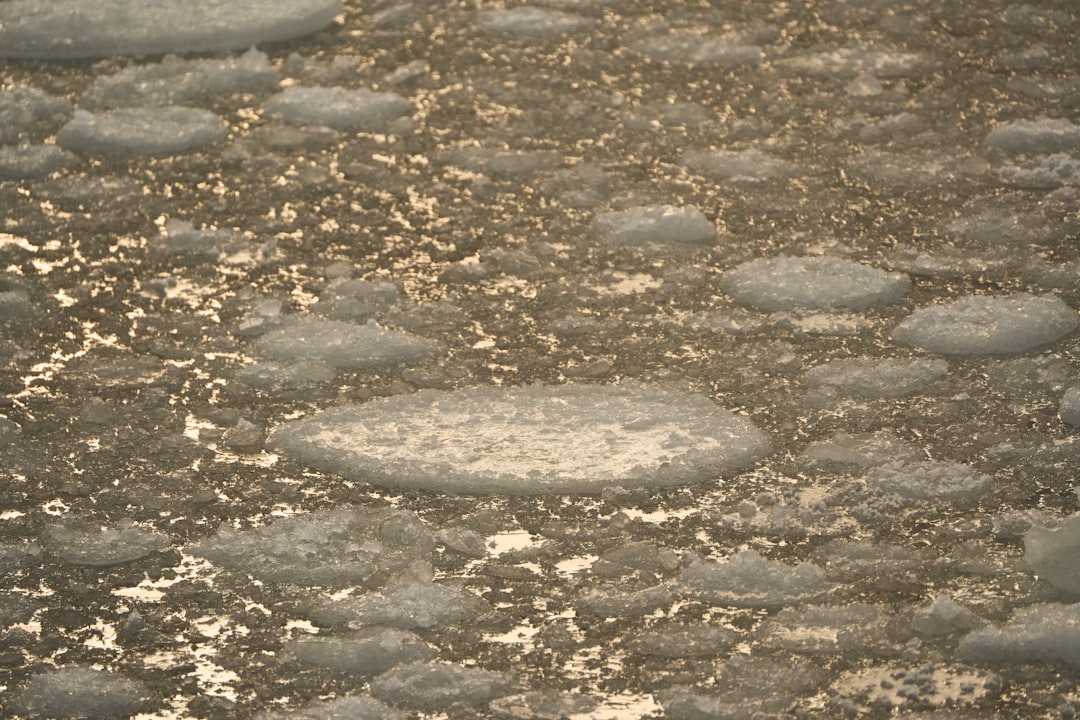
The world of ice, often perceived as a uniform, frozen substance, harbors a surprising diversity of surface properties that challenge common assumptions. Beyond its familiar crystalline structure and chilling touch, ice can exhibit an astonishing array of textures, behaviors, and interactions with its environment. These unusual surface characteristics are not merely aesthetic curiosities; they play crucial roles in geological processes, atmospheric phenomena, biological adaptations, and even technological applications. Understanding these less-explored facets of ice offers a deeper appreciation for the complex and dynamic nature of this ubiquitous material.
The seemingly simple act of ice sliding, fundamental to activities like skiing and skating, is underpinned by a complex interplay of friction and adhesion. While intuition might suggest that ice, being inherently slippery, would offer minimal resistance, the reality is far more nuanced. The surface of ice, far from being uniformly slick, can exhibit anomalous friction properties that depend on a variety of factors, including temperature, pressure, and the presence of impurities.
The Mystery of Low Friction: Meltwater and Boundary Lubrication
One of the primary explanations for ice’s slipperiness lies in the formation of a thin layer of liquid water at its surface. This phenomenon is not solely due to ambient temperature exceeding the freezing point; rather, it is influenced by pressure and the inherent molecular structure of water. When pressure is applied to ice, its melting point decreases. In activities like skating, the weight of the skater creates pressure on the ice, initiating a localized melting process. This thin film of water acts as a lubricant, drastically reducing friction between the skate blade and the ice.
Beyond pressure-induced melting, other mechanisms contribute to this meltwater layer. Vibrations and friction from movement can also generate heat, further promoting melting. The resulting thin water film is incredibly effective at reducing the macroscopic friction. However, the exact thickness and behavior of this boundary lubricant layer are still subjects of active research. Understanding its dynamics could lead to advancements in sports equipment and industrial applications where low-friction surfaces are desired.
The Unexpected Grip: Adhesion and Interfacial Forces
Despite its reputation for slipperiness, ice can also demonstrate significant adhesive properties. This apparent contradiction arises from the nature of the forces at the ice-solid interface. While the meltwater layer lubricates for sliding, the same molecular interactions can lead to adhesion when there is no significant relative motion.
The interaction between the ice surface and another material is governed by van der Waals forces, hydrogen bonding, and sometimes even chemical bonding if the surfaces are reactive. These forces can create a strong grip, making it difficult to separate bonded objects. This adhesive quality is evident in various natural phenomena, such as ice adhering to rock faces in glaciers or the way frost can firmly attach to surfaces.
In certain conditions, particularly at very low temperatures where meltwater formation is minimal, the intrinsic adhesion of the ice itself becomes more prominent. The crystalline structure of ice, with its polar water molecules, can form strong intermolecular bonds with polar surfaces. This can lead to significant challenges in de-icing aircraft wings or maintaining the integrity of structures exposed to extreme cold.
The Role of Surface Roughness: From Smoothness to Grit
The microscopic texture of an ice surface plays a pivotal role in its frictional behavior. While perfectly smooth ice might seem ideal for sliding, a certain degree of surface roughness can, paradoxically, lead to increased friction. This is because rough surfaces create more points of contact, and the irregular topography can hinder the formation and maintenance of a stable meltwater layer.
In natural ice formations, such as glaciers, the surface is rarely smooth. It can be sculpted by wind, melting, and refreezing cycles, resulting in a varied landscape of bumps, cracks, and even crevasses. These irregularities influence how water flows over the ice, how wind interacts with it, and how objects move across it.
Conversely, in highly controlled environments, such as ice rinks, the ice is meticulously maintained to be as smooth as possible. This smoothness minimizes friction, allowing for optimal performance in ice sports. The process of “zamboning” involves scraping and resurfacing the ice to remove imperfections and maintain a consistent, low-friction layer.
Recent studies have revealed some fascinating and strange properties of ice surfaces that challenge our conventional understanding of this common substance. For a deeper dive into these intriguing characteristics, you can explore the article titled “The Enigmatic Nature of Ice: Unveiling Its Surprising Properties” available at Freaky Science. This article discusses how the unique molecular structure of ice leads to unexpected behaviors, such as its ability to remain slippery even at temperatures below freezing, and the implications of these properties in various scientific fields.
The Shimmering Veil: Optical Properties and Light Interaction
The way ice interacts with light is far from monotonous. While bulk ice appears translucent or opaque depending on its purity and density, its surface can exhibit a remarkable range of optical phenomena, from dazzling iridescence to subtle distortions of light. These optical properties are crucial in shaping our perception of icy landscapes and influence processes in the atmosphere.
Frost Flowers and Intricate Surface Patterns
One of the most visually striking examples of unusual ice surface properties is the formation of “frost flowers.” These delicate, often ribbon-like ice structures grow on the surface of freshwater ice, typically in calm conditions and when the air temperature is significantly colder than the ice. The growth mechanism is not fully understood but is believed to involve the sublimation of ice from the surface and subsequent refreezing of water vapor from the air.
These structures can be incredibly intricate, resembling petals or ribbons, and their formation is highly dependent on the specific atmospheric conditions and the underlying ice surface. The way light reflects and refracts off these crystalline formations can create a mesmerizing, almost ethereal appearance. They are often found on newly formed ice on lakes and ponds, offering a fleeting glimpse of nature’s artistry.
The Illusion of Color: Refraction and Scattering in Ice
While pure ice is colorless, impurities and the specific structure of ice surfaces can lead to the perception of color. In glaciers and icebergs, trapped air bubbles and mineral inclusions can scatter sunlight in ways that produce dazzling blue hues. The deeper and more compressed the ice, the more effectively it scatters red light, allowing blue light to penetrate and be reflected back, creating the characteristic blue color of ancient glacial ice.
On a smaller scale, frost on surfaces can create iridescent effects. The microscopic ridges and structures of frost crystals can act as diffraction gratings, splitting white light into its constituent colors. This can result in shimmering rainbow-like patterns, especially when viewed from specific angles. The precise arrangement of ice crystals on the surface dictates the intensity and range of colors observed.
Halos and Sun Dogs: Atmospheric Optics of Ice Crystals
While not strictly a surface property of bulk ice, the formation of ice crystals in the atmosphere is intimately linked to the behavior of ice and its interaction with light. The hexagonal structure of ice crystals, when suspended in the air as ice clouds or fog, can refract and reflect sunlight to create spectacular atmospheric optical phenomena like halos and sun dogs.
Halos are luminous rings that appear around the sun or moon, caused by the refraction of light through hexagonal ice crystals. Sun dogs, also known as parhelia, are bright spots of light that appear on either side of the sun, formed by the same refractive process. These phenomena are a testament to the precise geometrical properties of ice crystals and their ability to manipulate light in predictable ways. The shape and orientation of the ice crystals in the atmosphere determine the specific optical effects observed.
The Textured Terrain: Microscopic and Macroscopic Irregularities
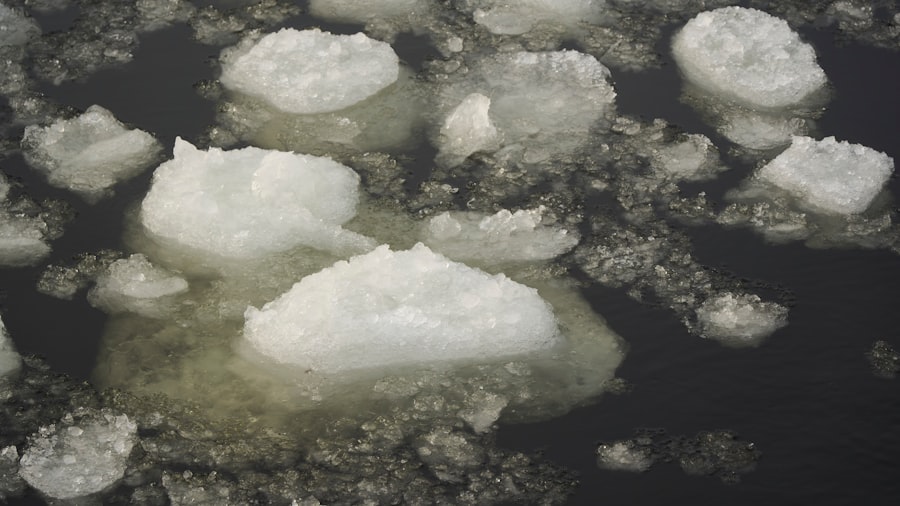
The surface of ice is rarely a featureless expanse. It is a dynamic terrain shaped by a multitude of forces, resulting in a fascinating array of textures ranging from the microscopic roughness of individual crystals to the macroscopic sculpted forms of glaciers. These variations in topography have profound implications for how ice interacts with its surroundings.
Crystal Habit and Surface Morphology
The fundamental building blocks of ice are water molecules arranged in a hexagonal crystalline lattice. However, the way these molecules assemble and grow into macroscopic ice crystals, known as crystal habit, can vary significantly. Factors such as temperature, humidity, and the presence of impurities influence the shape and growth direction of ice crystals, leading to diverse surface morphologies.
Common crystal habits include hexagonal plates, prisms, and dendrites (tree-like structures). Each habit results in a distinct surface texture. For instance, a surface composed of numerous hexagonal plates will have a different frictional and optical behavior compared to a surface dominated by needle-like prisms. Understanding these crystal habits is crucial in fields like meteorology and materials science, where the properties of ice crystals are of paramount importance.
Wind-Sculpted Surfaces: Sastrugi and Snow Drifts
In polar regions and other windy environments, ice surfaces, particularly those covered in snow, are actively shaped by the wind. “Sastrugi” are hard, rippled ridges formed by wind erosion and deposition on snow and ice. These formations can be a few centimeters to several meters high and create a challenging and uneven terrain for travel. The direction and strength of the wind dictate the orientation and size of sastrugi.
Snowdrifts are another common feature of wind-sculpted ice surfaces. These accumulations of snow can vary in size and shape, creating undulating landscapes. The way snow drifts accumulate and erode is a direct consequence of the interaction between wind and the underlying icy surface, influencing water flow, heat transfer, and the distribution of snow cover.
Glacial Features: Seracs, Crevasses, and Moraines
On a grander scale, glaciers exhibit some of the most dramatic and complex ice surface features. Seracs are steep, often jagged blocks of ice that form when a glacier is broken up by fissures or crevasses. They create a highly unstable and treacherous surface. Crevasses themselves are deep fissures in the ice, a direct result of the immense stresses within a moving glacier. Their depth and width are influenced by the glacier’s flow dynamics and underlying topography.
Moraines are ridges of unsorted rock and debris that have been carried and deposited by a glacier. These features, often covered in a layer of ice and snow, contribute to the diverse and irregular topography of glacial landscapes. The interaction between the ice and the deposited debris creates unique surface properties, influencing melt rates and the stability of the ice.
The Unseen Realm: Surface Chemistry and Interactions
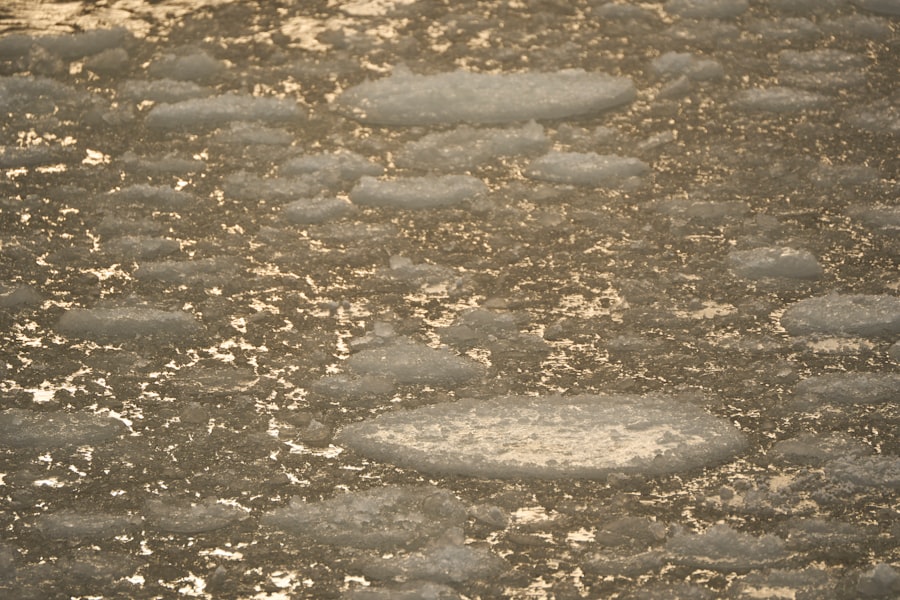
Beneath the frozen exterior, the ice surface is a dynamic chemical environment where molecular interactions and the presence of impurities play a critical role. These chemical properties influence everything from how ice melts to how it interacts with atmospheric pollutants.
The Electrical Nature of Ice Surfaces: Surface Charge and Conductivity
The surface of ice is not electrically neutral. Due to the asymmetry of water molecules and the formation of hydrogen bond defects at the surface, ice can develop a net electrical charge. This surface charge can influence the adhesion of particles, the behavior of water droplets on ice, and even atmospheric electrical phenomena.
Studies have shown that ice surfaces can exhibit both positive and negative charges, depending on factors like temperature and the presence of impurities. This electrical activity can be significant in processes like the electrification of thunderstorms and the attachment of aerosols to ice crystals in the atmosphere.
Impurities and Their Impact: Dissolved Substances and Biological Films
Pure ice is a rarity in nature. Most ice surfaces are contaminated with dissolved substances from the surrounding environment. These impurities, such as salts, minerals, and organic matter, can significantly alter the properties of ice. For instance, dissolved salts lower the freezing point of water, leading to the formation of brines within sea ice and affecting its structural integrity and melt behavior.
Furthermore, ice surfaces can be colonized by microorganisms, forming biofilms. These thin layers of bacteria, algae, and fungi can alter the surface chemistry and physics of the ice, influencing its albedo (reflectivity), heat transfer, and even its susceptibility to melting. In polar regions, microbial activity on sea ice plays a vital role in the polar ecosystem.
Reactivity at the Interface: Chemical Transformations on Ice Surfaces
The surface of ice is not chemically inert. It can act as a reaction medium for various chemical transformations, particularly for gases and aerosols present in the atmosphere. For example, ozone and nitrogen dioxide can react with ice surfaces, leading to the depletion of these atmospheric species.
These surface reactions are crucial for understanding atmospheric chemistry and the transport of pollutants. The large surface area of ice crystals in clouds and snowpack provides ample opportunity for such reactions to occur. The study of these interfacial reactions is a rapidly growing field, with implications for climate modeling and environmental science.
Recent research has unveiled some fascinating insights into the strange properties of ice surfaces, shedding light on their unique behavior and interactions with the environment. For those interested in delving deeper into this topic, an informative article can be found at Freaky Science, which explores the unusual characteristics of ice and how they impact various scientific fields. This exploration not only enhances our understanding of ice but also opens up new avenues for research in climate science and material properties.
Beyond the Ordinary: Specialized Ice Surfaces and Their Applications
| Property | Description |
|---|---|
| Superhydrophobicity | The ability of ice to repel water, causing it to bead up and roll off the surface. |
| Ice friction | The low friction coefficient of ice, making it slippery and causing objects to slide easily on its surface. |
| Ice nucleation | The process by which ice crystals form on the surface of an object, often influenced by temperature and humidity. |
| Ice adhesion | The strong bond between ice and a surface, making it difficult to remove ice once it has formed. |
The unusual surface properties of ice are not just confined to natural phenomena. Scientists and engineers are actively exploring and harnessing these characteristics for a wide range of innovative applications, from advanced materials to novel technologies.
Superhydrophobic Ice: Repelling Water with Frozen Surfaces
While water typically freezes onto surfaces, researchers have developed methods to create “superhydrophobic ice.” These surfaces exhibit remarkable water-repelling properties, causing water droplets to bead up and roll off with minimal contact. This is achieved by creating a nanoscale texture on the ice surface, often by etching or by coating it with hydrophobic materials before freezing.
Superhydrophobic ice has potential applications in anti-icing coatings for aircraft and infrastructure, self-cleaning surfaces, and even in microfluidic devices. The ability to repel water from a frozen surface opens up new avenues for managing ice formation in critical applications.
Ice as a Structural Material: Building with Frozen Water
The structural integrity and unique properties of ice have led to its consideration as a temporary building material. Ice hotels, ice sculptures, and even experimental ice structures have demonstrated the potential for utilizing frozen water as a construction medium. The surface properties of these structures, such as their smoothness, reflectivity, and susceptibility to melting, are carefully managed to achieve the desired aesthetic and functional outcomes.
The ability to sculpt and shape ice, combined with its strength under compression, makes it an intriguing material for temporary constructions, particularly in cold climates. Understanding how to control its surface properties, such as its resistance to erosion and its ability to bond with other materials, is key to expanding its use.
Ice Surfaces in Scientific Research: Cryogenics and Material Science
The study of ice surfaces is fundamental to various scientific disciplines. In cryogenics, understanding the surface properties of ice is crucial for handling and storing extremely cold materials. In material science, ice serves as a model system for studying phase transitions, crystal growth, and interfacial phenomena.
The controlled creation and manipulation of ice surfaces in laboratory settings allow researchers to investigate fundamental physical and chemical processes. This research contributes to a deeper understanding of the behavior of water and ice in diverse environments, from the human body to extraterrestrial ice formations. The ability to precisely control surface features and chemical composition is vital for these investigations.
In conclusion, the seemingly simple substance of ice reveals itself to be a complex material with an extraordinary range of surface properties. From the subtle interplay of friction and adhesion to the dazzling optical displays and the intricate chemical interactions, the surface of ice is a frontier of scientific discovery. As research continues to delve into these unusual characteristics, our understanding of the natural world, and our ability to innovate, will undoubtedly be further enriched. The frozen realm, far from being static, is a testament to the dynamic and surprising nature of matter.

Why Ice Is Slippery Is Stranger Than You Think
FAQs
What are some strange properties of ice surface?
Some strange properties of ice surface include its ability to repel certain substances, such as oils and fats, and its tendency to form a thin layer of liquid water on its surface even at temperatures below freezing.
How does ice surface repel certain substances?
Ice surface repels certain substances due to its unique crystalline structure, which causes the surface to be hydrophobic. This means that it repels water and other polar molecules, such as oils and fats.
Why does ice form a thin layer of liquid water on its surface even at temperatures below freezing?
Ice forms a thin layer of liquid water on its surface even at temperatures below freezing due to a phenomenon called surface melting. This occurs because the molecules at the surface of the ice have more energy than those in the bulk of the ice, allowing them to break free from the solid lattice and form a liquid layer.
What are some potential applications of the strange properties of ice surface?
The strange properties of ice surface have potential applications in various fields, such as anti-icing coatings, drag reduction in fluid dynamics, and the development of new materials with unique surface properties.
How do scientists study the strange properties of ice surface?
Scientists study the strange properties of ice surface using techniques such as atomic force microscopy, X-ray diffraction, and molecular dynamics simulations to understand the molecular structure and behavior of ice at the surface level.