
The vastness of space has long been a stage for human ambition, progress, and profound existential questions. While the genre of space documentaries often leans towards awe-inspiring vistas and tales of scientific triumph, a darker, more disquieting undercurrent exists. For the adult viewer seeking a more mature and perhaps unsettling contemplation of our place in the cosmos, certain documentaries delve into the complexities, dangers, and philosophical quandaries that transcend simple wonder. These films act as unflinching mirrors, reflecting not just the beauty of distant nebulae, but also the fragility of human endeavors and the deeply ingrained anxieties that accompany our outward gaze.
The sheer scale of the universe, when truly contemplated, can be a source of profound unease. Documentaries that explore the immense distances, the fleeting nature of stars, and the very real possibility of cosmic indifference can trigger a deep-seated existential dread. These films don’t offer comforting platitudes; instead, they present the universe as it is – immense, ancient, and largely unconcerned with human affairs.
The Tyranny of Distance
The concept of light-years, often presented as a marvel of scientific measurement, can also be a stark reminder of our isolation. Documentaries that emphasize the vast gulfs between celestial bodies highlight the immense challenges of interstellar travel, not just in terms of technological hurdles, but also in the psychological toll of such journeys. The thought of years, decades, or even millennia spent in transit, with Earth as a distant, fading speck, is a potent source of unease. These films may explore the hypothetical scenarios of generational ships, where the original crew will never reach their destination, fostering a somber reflection on legacy and the meaning of a life lived in pursuit of a distant goal. The concept of time dilation, a consequence of relativistic physics, further complicates this, meaning that those who travel might return to a vastly changed, or perhaps entirely gone, home.
The Cosmic Lottery and the Fermi Paradox
The apparent emptiness of the universe, juxtaposed with the sheer number of potential habitable worlds, leads to the chilling enigma of the Fermi Paradox. Documentaries that grapple with this question – “Where is everybody?” – can be deeply unsettling. They force viewers to confront the possibility that advanced civilizations are either nonexistent, have self-destructed, or are deliberately concealing themselves. This silence, when considered against the backdrop of billions of galaxies, can feel like a cosmic indictment, suggesting a fundamental flaw in the very trajectory of intelligent life, or perhaps a brutal, unseen filter that prevents civilizations from reaching a certain stage of development. The very scientific rigor that leads to these hypotheses can be profoundly disquieting, as it strips away romantic notions of alien encounters and replaces them with cold, statistical probabilities.
The Inevitable End: Cosmic Cataclysms and Universal Entropy
While our personal mortality is a constant, acknowledged source of anxiety, space documentaries often broaden this perspective to the ultimate demise of stars, galaxies, and the universe itself. Films that detail the explosive deaths of supernovas, the slow decay of white dwarfs, or the theoretical heat death of the universe can cast a long shadow. They present a grander, more inescapable narrative of cosmic decay, where even the most enduring celestial structures are destined to fade. This contemplation of universal entropy, the ultimate unwinding of order into chaos, can be a profoundly unsettling realization, reminding viewers that all existence, on every scale, is transient.
If you’re intrigued by unsettling space documentaries for adults, you might find the article on Freaky Science particularly captivating. It delves into the eerie and thought-provoking aspects of the universe, exploring themes that challenge our understanding of existence and the cosmos. To read more about these fascinating yet unsettling topics, check out the article here: Freaky Science.
The Human Factor: Hubris, Failure, and the Darker Side of Exploration
Space exploration, often framed as humanity’s greatest triumph, is also a narrative studded with setbacks, moral compromises, and the inherent risks of pushing boundaries. Adult viewers may find themselves unsettled by documentaries that dissect these less glamorous aspects, revealing the human flaws that accompany our grandest ambitions.
The Perils of Ambition: The Human Cost of the Space Race
The Space Race, while a period of immense innovation, was also a brutal contest fueled by geopolitical tensions and a relentless drive for supremacy. Documentaries that delve into the human cost, focusing on the numerous casualties, the immense pressure on astronauts and ground crews, and the ethical compromises made in the name of national pride, can be deeply unsettling. These films often highlight the sheer recklessness involved, the training that pushed human limits, and the societal acceptance of significant risk for the sake of symbolic victory. The specter of disasters like the Challenger and Columbia tragedies looms large, serving as stark reminders that even with meticulous planning, space remains an unforgiving environment, and human ambition can blind us to its dangers. They reveal how grand pronouncements of progress can mask underlying narratives of fear and sacrifice.
The Fragility of Systems: Technological Malfunctions and Human Error
Spacecraft are intricate machines, and their successful operation relies on a confluence of sophisticated engineering and flawless human execution. Documentaries that meticulously detail catastrophic failures, pinpointing the chain of events that led to disaster – be it a minor design flaw compounded by a series of unfortunate circumstances, or a critical human error under immense pressure – offer a sobering perspective. The unsettling nature of these accounts lies in their demonstration of how easily complex systems can unravel. The malfunction of a single component, a miscommunication, or a moment of poor judgment can have devastating consequences, reminding viewers that our technological prowess, while impressive, is not infallible and remains bound by the limitations of its creators and operators.
The Shadow of Militarization and Colonialism
While space is often depicted as a frontier for scientific discovery, its history is also intertwined with military ambitions and the potential for future territorial claims. Documentaries that explore the militarization of space, the development of space-based weaponry, and the historical parallels to terrestrial colonialism can be deeply unsettling. They raise uncomfortable questions about whether humanity will simply export its existing conflicts and exploitative tendencies to the cosmos. The notion of claiming territory beyond Earth, or using space as a strategic battlefield, shifts the narrative from one of shared human endeavor to one of potential future conflict, a prospect that resonates with anxieties about ongoing terrestrial struggles.
The Alien Encounter: Beyond the “Little Green Men”
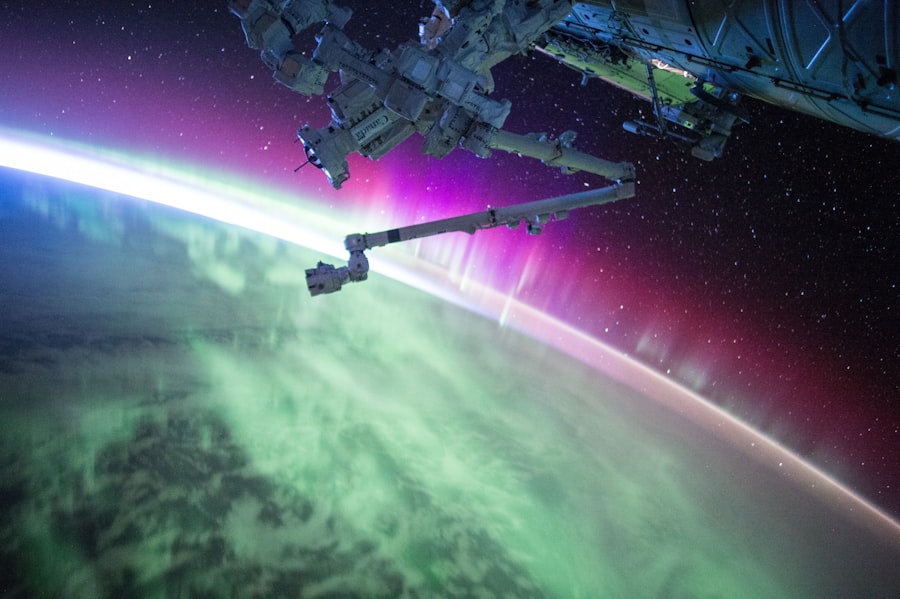
The idea of extraterrestrial life has captivated humanity for generations. However, when documentaries move beyond simplistic portrayals and explore the more complex, and potentially unsettling, implications of alien contact, they tap into deeper anxieties about the unknown and our place in a larger, potentially populated, universe.
The Unsettling Silence and the Search for Intelligence
While the hope of finding alien life is widespread, documentaries that focus on the persistent silence, the null results of SETI (Search for Extraterrestrial Intelligence) projects, and the scientific challenges of detecting faint signals can be profoundly unsettling. They highlight the immense gulf between our desire for connection and the current reality of cosmic isolation. The meticulous scientific process of sifting through noise, the vastness of the data, and the sheer improbability of a definitive signal underscore the difficulty of this endeavor. This prolonged search, without any affirmative results, can foster a sense of loneliness, or conversely, a nagging suspicion that perhaps we are looking in the wrong places, or that something prevents clear communication.
The “Great Filter” Hypothesis and the Fate of Civilizations
The “Great Filter” hypothesis, frequently explored in documentaries, presents a chilling possibility: that somewhere along the evolutionary path from simple life to advanced, space-faring civilization, there exists a catastrophic barrier that most, if not all, species fail to overcome. Documentaries that lay out the various stages where such a filter might exist – from the origin of life itself to the development of nuclear technology – can be deeply unsettling. The implication is that perhaps our current stage of development is precariously close to such a filter, and that the apparent lack of other civilizations is a testament to their demise. This perspective casts a dark shadow over our own progress, suggesting that our achievements might ultimately lead to our undoing.
The Philosophical Implications of First Contact
Should contact with extraterrestrial intelligence ever occur, the philosophical and societal ramifications would be immense. Documentaries that explore these potential consequences, moving beyond science fiction tropes, can be particularly unsettling. They might grapple with how our religions, our sense of identity, and our understanding of life would be challenged by incontrovertible proof of other intelligent beings. The potential for cultural shock, the misinterpretation of signals, and the very real possibility that alien motivations might be incomprehensible or even hostile are all themes that can provoke deep thought and unease. This isn’t about little green men in flying saucers, but about fundamental shifts in our worldview that could destabilize our existing systems of belief and understanding.
The Dark Frontiers: The Unseen Dangers and Unforeseen Consequences

Beyond the vastness and the philosophical quandaries, space presents tangible and often terrifying dangers that are difficult for the human mind to fully grasp until confronted by unflinching documentary evidence.
The Menace of Space Debris: A Growing Cosmic Trash Heap
For decades, the allure of space exploration has been accompanied by the accumulation of discarded equipment, defunct satellites, and fragments from collisions. Documentaries that highlight the escalating problem of space debris present a stark and unsettling picture of humanity’s impact on near-Earth orbit. This is not just an aesthetic issue; the increasing density of these objects poses a significant threat to active satellites, the International Space Station, and future space missions. The “Kessler Syndrome,” a theoretical scenario where the density of orbital debris becomes so high that it triggers a cascading effect of collisions, rendering near-Earth space unusable, is a particularly grim prospect that such documentaries often explore. The image of our celestial neighborhood becoming a hazardous junkyard is a powerful and disquieting one, a testament to our often-careless footprint.
The Invisible Threats: Radiation, Vacuum, and Extreme Temperatures
The environment of space is inherently hostile to human life. Documentaries that meticulously explain the pervasive dangers of cosmic and solar radiation, the absolute vacuum that can instantaneously cause catastrophic bodily harm, and the extreme temperature fluctuations can be deeply unsettling. These are not abstract threats; they are physical realities that require immense technological intervention and constant vigilance to overcome. The exposure to ionizing radiation, even for short periods, can have long-term health consequences, including increased cancer risk. The vacuum itself, a void devoid of any pressure, is a stark reminder of our biological fragility. These films often use scientific exposition to bring home the visceral reality of these dangers, making the comforting illusion of our protective atmosphere seem all the more precious.
The Psychological Toll of Isolation and Confinement
The psychological strains of long-duration space missions are well-documented, and documentaries that focus on this aspect can be profoundly unsettling. The prolonged isolation from loved ones, the confinement in cramped quarters, and the constant pressure of maintaining focus and performance can lead to significant psychological distress. Films might explore the challenges of maintaining crew cohesion, managing interpersonal conflicts, and coping with the surreal experience of living in an alien environment. The human mind, adapted to a vibrant and socially connected terrestrial existence, can be profoundly affected by the sensory deprivation and the unique pressures of space travel, offering a window into the often-unseen psychological battle waged by those who venture beyond our planet.
If you’re intrigued by unsettling space documentaries for adults, you might find the article on Freaky Science particularly captivating. It delves into the psychological impact of exploring the unknown and how these films can evoke a sense of existential dread. For a deeper understanding of this phenomenon, check out the insightful piece here. It offers a fascinating perspective on how the vastness of space can mirror our own fears and uncertainties.
The Future of Humanity: Uncertain Trajectories and Uncomfortable Choices
| Documentary Title | Release Year | Duration (minutes) | Unsettling Themes | Viewer Rating (out of 10) | Platform |
|---|---|---|---|---|---|
| Dark Side of the Moon | 2018 | 90 | Conspiracy theories, unexplained phenomena | 7.8 | Netflix |
| Alien Contact: The Truth Revealed | 2020 | 85 | Government cover-ups, extraterrestrial life | 7.2 | Amazon Prime |
| Void: The Final Frontier | 2019 | 75 | Cosmic horror, isolation in space | 8.1 | Hulu |
| Silent Signals | 2021 | 80 | Unexplained radio signals, alien messages | 7.5 | Discovery+ |
| Lost in the Cosmos | 2017 | 95 | Space disasters, psychological effects | 7.9 | HBO Max |
As humanity contemplates its future, the prospect of becoming a multi-planetary species or confronting other significant cosmic challenges raises profound ethical and existential questions. Documentaries that explore these potential futures often do so with a critical and unsettling eye.
Terraforming and the Ethics of Colonization
The concept of terraforming distant planets, while often presented as a heroic endeavor to secure humanity’s future, can also be fraught with ethical dilemmas. Documentaries that delve into the scientific complexities and the potential ecological or even philosophical implications of fundamentally altering alien worlds can be deeply unsettling. Questions arise about our right to impose our will on other celestial bodies, especially if there is even a remote possibility of undiscovered indigenous life. This is not about planting a flag; it’s about the profound act of reshaping entire ecosystems, raising uncomfortable questions about hubris and responsibility on a cosmic scale.
The Search for Meaning in a Unpredictable Universe
In an era of scientific advancement, the search for meaning continues to be a fundamental human pursuit. Documentaries that connect the grand narratives of cosmology with the individual human experience, often highlighting the apparent randomness and indifference of the universe, can be deeply unsettling. They may explore how our attempts to impose order and find purpose are ultimately dwarfed by cosmic scales and timescales. The confrontation with a universe that does not, inherently, care about our existence can lead to questions about the validity of our aspirations and the ultimate significance of our individual lives. This is not a nihilistic perspective, but a sober reflection on the challenges of reconciling our innate need for meaning with the vast, often inscrutable, nature of reality.
The Specter of Extinction and the Quest for Survival
While the idea of becoming a multi-planetary species is often framed as an insurance policy against terrestrial catastrophe, documentaries that explore the various existential threats facing humanity – whether climatic, nuclear, or asteroid-related – can cast a long shadow over our future. Films that unflinchingly detail the potential consequences of these events, and the limitations of our current evasive capabilities, can be deeply unsettling. The raw, primal fear of extinction, amplified by the contemplation of our technological prowess that also contributes to some of these threats, is a potent source of unease. The question of whether humanity is fundamentally flawed, prone to self-destruction, or simply too vulnerable to evade the inevitable cosmic or terrestrial challenges, is one that these documentaries often leave the viewer pondering long after the credits roll. The universe, in these narratives, is not a benevolent playground, but a formidable and often indifferent arena in which our survival is anything but guaranteed.
FAQs
What makes a space documentary unsettling for adults?
Unsettling space documentaries often explore the vastness and unknown aspects of the universe, highlighting existential themes, cosmic dangers, or the potential for human insignificance. They may include eerie visuals, suspenseful narratives, or discussions about the unknown threats in space.
Are unsettling space documentaries based on real scientific facts?
Yes, many unsettling space documentaries are grounded in real scientific research and data. They often present current theories, discoveries, and hypotheses about space phenomena, while sometimes speculating on the unknown or unexplained aspects of the cosmos.
Can unsettling space documentaries be educational as well as disturbing?
Absolutely. These documentaries aim to educate viewers about space science, astronomy, and cosmology while also evoking a sense of awe or unease about the mysteries and potential dangers of the universe.
What are some common themes found in unsettling space documentaries for adults?
Common themes include the vastness and emptiness of space, the possibility of extraterrestrial life, cosmic disasters like asteroid impacts, black holes, the end of the universe, and the psychological effects of space travel on humans.
Where can I watch unsettling space documentaries for adults?
Unsettling space documentaries can be found on popular streaming platforms such as Netflix, Amazon Prime Video, Hulu, and specialized science channels like National Geographic, Discovery Channel, and PBS. Some may also be available on YouTube or through educational websites.