The Earth’s crust, the thin, brittle shell upon which life as we know it exists, is a mere whisper compared to the vast, molten heart that lies beneath. Beneath the continents and oceans, stretching for thousands of kilometers, lies the mantle – a dynamic, scorching layer of silicate rock that plays a crucial role in shaping our planet’s geology and climate. Scientists have long dreamed of piercing this formidable barrier, of directly sampling its enigmatic composition and understanding the colossal forces that churn within. Yet, despite centuries of scientific inquiry and remarkable advancements in drilling technology, the Earth’s mantle remains stubbornly out of reach, a tantalizing enigma hidden in the planet’s deepest recesses. The question thus arises: why have we, with all our ingenuity, failed to drill into the mantle? The answer is a complex tapestry woven from immense technical challenges, prohibitive costs, and the fundamental laws of physics that govern the extreme environments found there.
The primary impediment to reaching the mantle lies in the sheer physical extremity of its environment. The mantle is not merely hot and pressurized; it is a realm where these conditions reach levels that dwarf anything humanity has encountered in its technological endeavors. Understanding these conditions is the first step in appreciating the scale of the challenge.
Cracking the Crust: The Initial Hurdle
Even before reaching the mantle, humanity has struggled to penetrate the Earth’s crust with any significant depth. The current record holder for the deepest hole ever drilled, the Kola Superdeep Borehole in Russia, reached a depth of just over 12 kilometers. While an impressive feat of engineering, this is a mere scratch on the Earth’s surface when considering the mantle begins approximately 2,900 kilometers down. The crust itself, though seemingly solid, presents a formidable array of challenges. Rocks become denser and more resistant to drilling with increasing depth. Fractures and fissures can cause drill bits to jam or become lost. The presence of underground water reservoirs and geothermal gradients further complicate drilling operations, requiring specialized equipment and careful management of borehole stability.
The Onset of Extreme Heat: A Fiery Embrace
As one descends into the Earth, the temperature rises dramatically. This geothermal gradient is a fundamental property of our planet, a constant reminder of the residual heat from its formation and the radioactive decay of elements within its core. At the boundary between the crust and the mantle, known as the Mohorovičić discontinuity (or Moho), temperatures are estimated to be around 500 to 900 degrees Celsius. By the time one reaches the upper mantle, these temperatures can soar to over 1,500 degrees Celsius, and in the deeper regions, they approach a searing 4,000 degrees Celsius.
Crushing Pressures: A Planetary Grip
Alongside the intense heat comes an equally formidable adversary: pressure. At the Moho, pressures can be tens of thousands of times greater than atmospheric pressure at sea level. As one delves deeper into the mantle, these pressures escalate to hundreds of thousands of times atmospheric pressure. Imagine the weight of an entire mountain range pressing down on every square centimeter of surface. These immense forces can crush conventional drilling equipment, deform drill pipes, and make it impossible for any known material to withstand the strain. The very act of drilling creates a pressure differential, which can lead to the borehole collapsing inward.
The Mantle’s Viscous Nature: A Flowing Fortress
It’s crucial to understand that the mantle is not a static, solid block of rock. While it is often described as a solid, it behaves like an extremely viscous fluid over geological timescales. This slow, convective motion is what drives plate tectonics. For a drilling operation, this means the “rock” itself is constantly shifting and flowing, albeit incredibly slowly. This dynamic environment makes it exceedingly difficult to maintain a stable borehole. The material can squeeze into the borehole, hindering progress and potentially destroying equipment. It’s akin to trying to drill through incredibly thick, hot molasses that is also slowly churning.
Despite the intriguing prospect of drilling to the Earth’s mantle, various scientific, technical, and financial challenges have hindered such endeavors. An article that delves deeper into these obstacles is available at Freaky Science, which explores the reasons behind humanity’s inability to reach this enigmatic layer of the Earth. The article discusses the extreme conditions present in the mantle, including high temperatures and pressures, as well as the significant costs and technological limitations associated with deep drilling projects.
Engineering Nightmares: Designing for the Impossible
The extreme conditions described above necessitate drilling technologies that are far beyond our current capabilities. The materials, the machinery, and the operational strategies required to conquer the mantle are currently in the realm of science fiction.
Materials Science Limitations: The Quest for Unobtainium
Conventional drilling equipment is constructed from alloys that, while robust, are simply not designed to withstand the prolonged exposure to extreme heat and pressure. At temperatures approaching those of lava, steel alloys begin to soften and lose their structural integrity. The immense pressures can cause metals to deform and fracture. Scientists are constantly pushing the boundaries of materials science, exploring new ceramics, superalloys, and composite materials. However, creating materials that can remain strong and functional at over 1,500 degrees Celsius and pressures of hundreds of thousands of atmospheres is a monumental challenge. The development of drill bits, drill pipes, and downhole sensors that can survive these conditions is a critical bottleneck.
The Challenge of Power and Lubrication: Keeping the Drill Turning
To penetrate such resilient rock, drill bits require immense rotational force and downward thrust. Generating this power at such depths, where conventional power cables would be impractical, is a significant hurdle. Furthermore, any drilling operation generates friction, which produces heat. In the already superheated environment of the mantle, this added heat can quickly render equipment inoperable. Traditional lubricants would vaporize or decompose. Developing effective cooling and lubrication systems that can function under these extreme conditions is a daunting engineering task. Imagine trying to lubricate a drill bit that is hotter than a blast furnace in a bath of molten rock.
Maintaining Borehole Integrity: A Constant Battle Against Collapse
As previously mentioned, the immense pressure of the surrounding mantle rocks constantly threatens to collapse any borehole that is drilled. This requires sophisticated methods of reinforcing the borehole walls, often through the use of specialized casing materials. However, these casing materials themselves must withstand the extreme temperatures and pressures. The process of cementing the casing in place also becomes incredibly challenging. Furthermore, the dynamic nature of the mantle means that even a reinforced borehole could be subjected to stresses that it cannot withstand.
The Problem of Heat Dissipation: Cooling the Inferno
Any machinery operating at these depths will generate its own heat from friction and power consumption. This additional heat, superimposed on the already extreme geothermal gradient, can quickly lead to thermal runaway, causing equipment failure. Effectively dissipating this heat in an environment where heat transfer mechanisms are already amplified is a major engineering problem. This requires innovative cooling systems that can operate reliably under immense pressure and extreme temperatures.
The Economic Reality: A Price Tag Beyond Our Reach
Beyond the technical hurdles, the sheer cost of attempting such an undertaking is astronomical. The resources, time, and expertise required would represent an investment of unprecedented scale, making it difficult to justify for any government or private entity.
The Scale of Investment: A National Treasure in a Hole
The Kola Superdeep Borehole, a project that focused on the crust, cost an estimated $150 million in the 1980s and 1990s. This was for a depth of just over 12 kilometers. To reach the mantle, one would need to drill nearly 300 times deeper. Extrapolating the costs suggests an investment in the hundreds of billions, if not trillions, of dollars. This would require a global effort on a scale rarely seen outside of major international conflicts or space exploration programs.
The Long Timescale of Exploration: Decades, Not Years
The geological processes that create and shape the Earth are measured in millions of years. Any drilling project to the mantle would likely take decades, if not generations, to complete. This long-term commitment requires sustained political will and financial backing, which can be difficult to maintain over such extended periods. The economic justifications for such a long-term, high-risk endeavor are challenging to establish.
The Return on Investment: Scientific Knowledge vs. Tangible Gains
While the scientific knowledge gained from directly sampling the mantle would be invaluable, the immediate tangible economic benefits are less clear. Unlike oil or gas exploration, where a successful well can yield immense profits, a mantle drilling project is primarily driven by scientific curiosity. While understanding mantle processes could indirectly lead to advancements in fields like seismology, geothermal energy, or mineral resource exploration, these are speculative and long-term benefits. The lack of immediate, quantifiable economic returns makes it a difficult sell for policymakers and investors.
The Scientific Imperative: Why the Desire?

Despite the formidable challenges, the scientific desire to reach the mantle remains strong. Understanding this vast, hidden realm holds the key to unlocking many of Earth’s most profound mysteries.
Unraveling Plate Tectonics: The Engine of Our Planet
The slow, convective motion within the mantle is the driving force behind plate tectonics, the process that shapes continents, creates mountains, and triggers earthquakes and volcanic eruptions. Direct sampling of mantle materials could provide unprecedented insights into the composition, dynamics, and evolution of these convective currents. This would revolutionize our understanding of how our planet’s surface is constantly reshaped.
The Earth’s Magnetic Field: A Protective Shield
The Earth’s magnetic field, which shields us from harmful solar radiation, is generated by the movement of molten iron in the outer core, which is influenced by the heat and dynamics of the mantle. Understanding mantle convection is crucial for understanding the processes that sustain this vital shield. Direct observations could help predict long-term changes in the magnetic field, which have implications for technology and life on Earth.
Origin and Evolution of the Earth: A Glimpse into the Past
The composition and structure of the mantle provide a record of Earth’s formation and early history. By studying mantle rocks, scientists can infer the conditions under which our planet coalesced from the solar nebula and the subsequent differentiation processes that led to the formation of the core, mantle, and crust. Direct sampling would offer a more direct and detailed account of these formative epochs.
The Search for Extraterrestrial Life: Lessons from Within
Understanding the extreme conditions and potential for unique chemical processes within Earth’s mantle could inform the search for life on other planets. If life can exist in extreme environments on Earth, it might also exist in similar conditions beneath the surfaces of other celestial bodies. The study of Earth’s deep biosphere, which extends into the crust, offers tantalizing clues about the potential for life in seemingly inhospitable places.
Despite the advancements in technology, humans have yet to drill to the Earth’s mantle, primarily due to the extreme conditions and technical challenges involved. The mantle lies beneath the crust, reaching depths of about 2,900 kilometers, where temperatures can soar above 1,000 degrees Celsius and pressures are immense. For a deeper understanding of the scientific and engineering hurdles that have prevented this ambitious endeavor, you can explore a related article on this topic at Freaky Science. This exploration not only highlights the complexities of drilling but also sheds light on the potential discoveries that lie beneath our feet.
Future Prospects and Alternative Approaches: Beyond the Drill Bit
| Reason | Description | Impact on Drilling |
|---|---|---|
| Extreme Depth | The Earth’s mantle begins approximately 35 km below the surface under continents and about 5-10 km under oceans. | Current drilling technology struggles to reach such depths, especially through hard rock layers. |
| High Temperature | Temperatures at the mantle boundary can exceed 400°C to 1,000°C or more. | Heat damages drilling equipment and complicates drilling operations. |
| High Pressure | Pressure increases with depth, reaching thousands of atmospheres at the mantle boundary. | Equipment must withstand extreme pressure, increasing technical challenges and costs. |
| Hard Rock Composition | The crust and upper mantle consist of very hard, dense rocks. | Drilling through such materials requires advanced, durable drill bits and slows progress. |
| Technological Limitations | Current drilling technology is optimized for shallower depths and softer materials. | Limits the ability to drill continuously to mantle depths without equipment failure. |
| Cost and Resources | Deep drilling projects require significant financial investment and resources. | High costs limit the frequency and scale of attempts to reach the mantle. |
| Scientific Risk | Uncertainties about geological conditions and potential hazards. | Concerns about triggering seismic activity or other unintended consequences. |
While direct drilling to the mantle remains an elusive goal, scientific curiosity and the pursuit of knowledge are relentless. Researchers are continuously exploring innovative approaches and leveraging indirect methods to glean information about this hidden world.
Advanced Seismic Imaging: Listening to the Earth’s Whispers
Seismology, the study of earthquakes, provides invaluable information about Earth’s interior. By analyzing the way seismic waves travel through the planet, scientists can create detailed 3D models of the mantle’s structure, temperature, and composition. Advances in seismic tomography are allowing us to peer deeper and with greater resolution than ever before, revealing subtle variations and anomalies within the mantle.
Laboratory Experiments: Recreating the Mantle’s Conditions
High-pressure and high-temperature laboratory experiments are crucial for understanding the behavior of mantle materials. Researchers use diamond anvil cells and other sophisticated equipment to compress and heat small samples of minerals to conditions that mimic those found in the mantle. These experiments allow them to study the physical and chemical properties of mantle rocks and their interactions.
Geochemical Analysis of Volcanic Rocks: Samples from the Depths
Volcanic eruptions bring material from the Earth’s mantle to the surface, albeit in a modified state. Analyzing the chemical and isotopic composition of these volcanic rocks provides vital clues about the composition of the mantle from which they originated. Certain rare volcanic rocks, like kimberlites and komatiites, are believed to originate from deeper within the mantle and offer particularly valuable insights.
The Dream of a Global Collaboration: A Unified Effort
The immense challenges and costs associated with drilling to the mantle suggest that a collaborative international effort would be the most viable path forward. A project of this magnitude would require pooling resources, expertise, and technological capabilities from nations around the globe. Such a unified approach could make the seemingly impossible a tangible reality, albeit in the distant future. The success of projects like the International Space Station demonstrates the power of global cooperation in tackling monumental scientific and engineering endeavors. The pursuit of understanding our planet’s innermost secrets might just be the ultimate unifying cause for humanity.
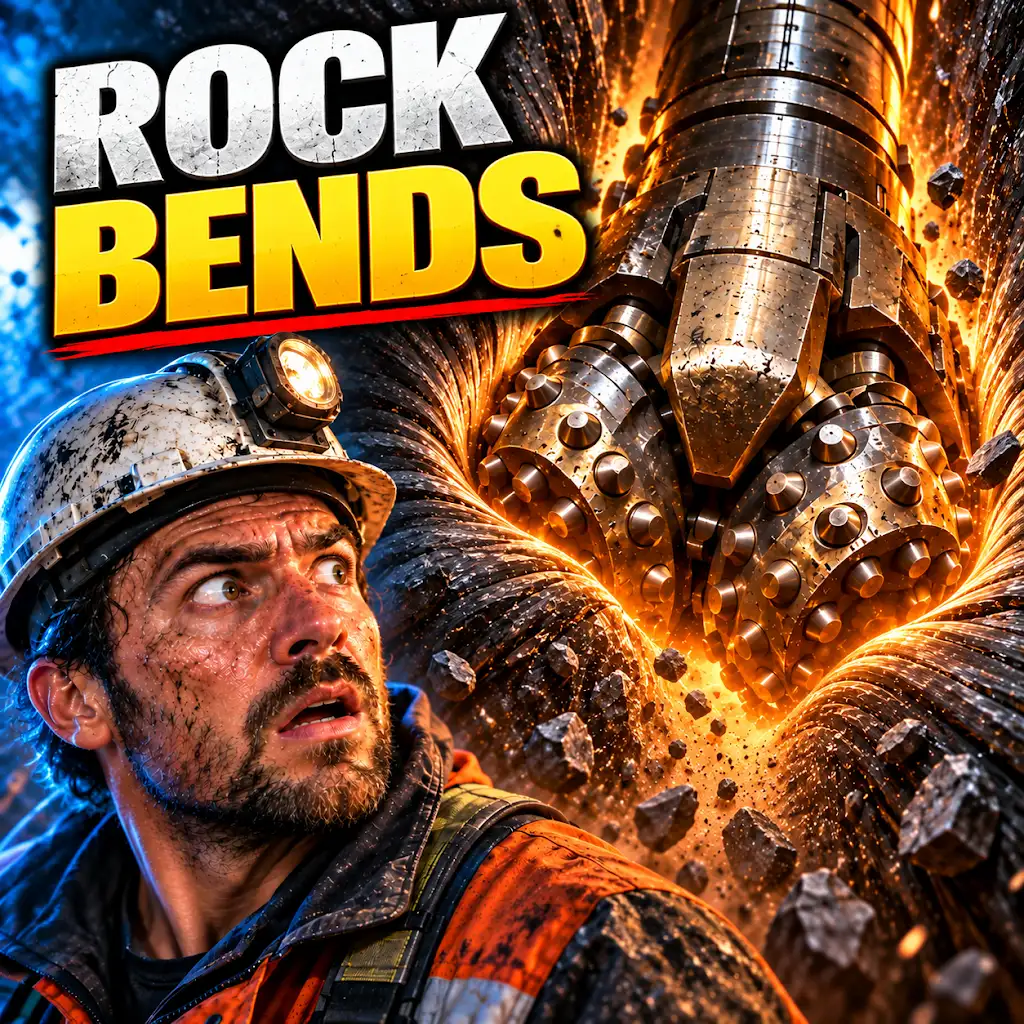
We Drilled 12 KM Into Earth—Then the Rock Started Bending
FAQs
1. What is the mantle?
The mantle is the layer of the Earth located between the outer core and the Earth’s crust. It is composed of hot, solid rock that flows slowly over time.
2. Why haven’t humans drilled to the mantle?
Drilling to the mantle is an extremely challenging task due to the extreme heat and pressure present at such depths. The deepest hole ever drilled, the Kola Superdeep Borehole in Russia, only reached a depth of about 7.5 miles, which is less than 1% of the way to the mantle.
3. What are some of the technical challenges of drilling to the mantle?
Some of the technical challenges of drilling to the mantle include the high temperatures, which can reach up to 2,900 degrees Fahrenheit, and the extreme pressure, which is about 230 times greater than at the surface. Additionally, drilling through the Earth’s crust, which is relatively thin compared to the mantle, is a significant obstacle.
4. What are the potential benefits of drilling to the mantle?
Drilling to the mantle could provide valuable insights into the Earth’s composition, structure, and geological processes. It could also help scientists better understand the formation of the Earth and its tectonic plates, as well as potentially uncover new natural resources.
5. Are there any current plans or research initiatives to drill to the mantle?
While there have been discussions and proposals for drilling to the mantle, no concrete plans or initiatives are currently in place. The technical and logistical challenges, as well as the high costs associated with such a project, make it a daunting task that would require significant international collaboration and resources.