
The concept of a “vacuum bubble” has captured the imagination within theoretical physics, sparking discussions that oscillate between profound implications for the cosmos and the potential for speculative, if not outright fictional, scenarios. This article seeks to demystify the scientific underpinnings of this concept, separating established theoretical frameworks from more speculative extrapolations.
The very notion of a “vacuum” in physics has evolved significantly from the classical understanding of mere emptiness. In classical physics, the vacuum was simply the absence of matter. However, quantum field theory (QFT) paints a far richer and more dynamic picture.
The Quantum Vacuum: A Sea of Fluctuations
Within QFT, the vacuum is not inert; it is a state of lowest possible energy in a quantum field. This “lowest energy state” does not equate to absolute stillness. Instead, it is characterized by constant quantum fluctuations. Imagine these fluctuations as ephemeral “virtual particles” that pop into and out of existence, borrowing energy from the vacuum for fleeting moments before annihilating each other. These are not particles in the sense of observable matter traveling great distances, but rather fleeting disturbances in the fabric of the quantum fields.
- Virtual Particles: These are the ephemeral entities that populate the quantum vacuum, arising from the Heisenberg uncertainty principle, which dictates that certain pairs of physical properties, like energy and time, cannot be known with perfect accuracy simultaneously. This inherent fuzziness allows for temporary energy violations, giving rise to virtual particles.
- Zero-Point Energy: The constant activity of these virtual particles imbues the vacuum with a measurable, non-zero energy, known as zero-point energy. While the exact magnitude of this energy is a subject of ongoing debate and has profound implications for cosmology (the cosmological constant problem), its existence is a fundamental prediction of QFT.
Fields as Fundamental Entities
The modern understanding of the universe places quantum fields at the forefront. These fields permeate all of spacetime, and the particles we observe – electrons, photons, quarks – are considered excitations or ripples in these fields. The vacuum, then, is the ground state of these fields.
- Electromagnetic Field: One of the most familiar quantum fields, responsible for light and electromagnetic forces.
- Higgs Field: Crucial for providing mass to fundamental particles. Its vacuum expectation value is thought to be non-zero, contributing to the structure of the vacuum.
- Other Fundamental Fields: Quarks, leptons, and other force carriers are associated with their respective quantum fields.
The vacuum state is determined by the configuration of these fields in their lowest energy state. Changes in this configuration can lead to profound alterations in the properties of spacetime.
A true vacuum bubble is a fascinating concept in theoretical physics, representing a region of space where the vacuum state is lower in energy than the surrounding space, potentially leading to dramatic consequences for the universe. For those interested in exploring this topic further, you can read a related article that delves into the implications and mechanics of vacuum bubbles. Check it out here: Freaky Science.
The Metaphor of the Bubble: Instability and Phase Transitions
The term “vacuum bubble” often evokes an image of a distinct region of space with different properties, like a bubble in a liquid. This imagery, while intuitive, needs careful scientific unpacking. In physics, the concept relates to the idea of metastability and phase transitions, phenomena familiar from everyday life.
Metastable States: A Ball on a Hill
Consider a ball resting at the top of a small dip on the side of a larger hill. The ball is in a stable position within the dip, but it is not in the absolute lowest energy state. A sufficient nudge could cause it to roll out of the dip and down the hill to a truly stable state. This is analogous to a metastable vacuum.
- Local Minima vs. Global Minimum: In the energy landscape of quantum fields, a metastable vacuum corresponds to a “local minimum” of energy. The truly stable, or “global minimum,” state would represent a lower energy configuration.
- The True Vacuum: The “true vacuum” is the state of absolute lowest energy for the universe. Our current vacuum state might be metastable, meaning it is stable for now but could potentially transition to a lower energy state. This transition is where the “bubble” concept becomes pertinent.
Phase Transitions: The Boiling Water Analogy
Phase transitions are well-understood phenomena in thermodynamics. For instance, water can exist as solid ice, liquid water, or gaseous steam. When water boils, it undergoes a phase transition from liquid to gas. This transition doesn’t happen instantaneously everywhere at once. Instead, bubbles of steam form and expand within the liquid water.
- Spontaneous Formation: In the context of a vacuum phase transition, a bubble of the “true vacuum” could spontaneously nucleate within our current, potentially metastable, vacuum.
- Bubble Expansion: Once nucleated, this bubble would expand outwards at potentially near the speed of light. The boundary between the old vacuum and the new vacuum would be a region of rapidly changing field values.
This analogy is crucial: the “bubble” is not an empty void in the traditional sense, but a region where the fundamental laws of physics, as dictated by the quantum fields, are different.
The Scalar Field and the Higgs Potential
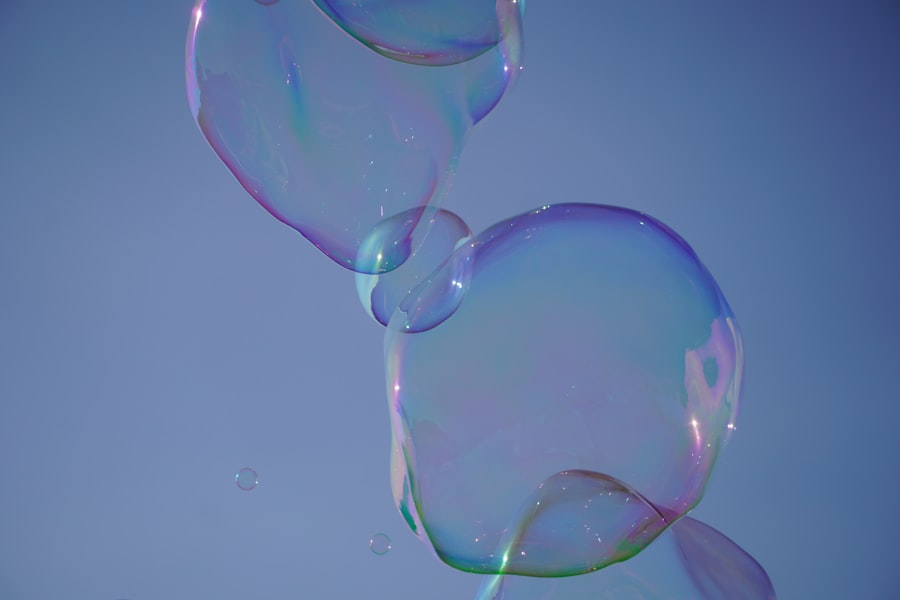
The concept of vacuum bubbles is deeply intertwined with the behavior of scalar fields, particularly the Higgs field, and its associated potential energy function.
The Higgs Potential: A Mexican Hat
The potential energy of the Higgs field is often depicted as a “Mexican hat” potential. In this analogy, the brim of the hat represents the lowest energy states, where the Higgs field has a non-zero value. The central peak represents a higher energy state.
- Metastable Vacuum and the Higgs Potential: If our current vacuum corresponds to a local minimum on the potential landscape that is not the absolute lowest point (the brim), it is metastable. A sufficiently large quantum fluctuation could “kick” the field over the energy barrier, allowing it to roll down to the true vacuum state.
- The Role of Energy Barriers: The height of the energy barrier separating the metastable vacuum from the true vacuum is crucial. A higher barrier means a lower probability of spontaneous nucleation.
Spontaneous Symmetry Breaking and Vacuum Expectation Values
The Higgs field is responsible for spontaneous symmetry breaking, a mechanism by which a system with underlying symmetries can settle into a state that does not exhibit those symmetries. The vacuum expectation value (VEV) of the Higgs field is the value it takes in the vacuum state.
- Different VEVs, Different Physics: If the universe transitioned to a true vacuum state, the VEV of the Higgs field (and potentially other fields) could be different. This would fundamentally alter the masses of fundamental particles and the strengths of fundamental forces.
- Cosmic Inflation: The period of rapid expansion in the early universe, known as cosmic inflation, is theorized to have been driven by a false vacuum state, a temporary, high-energy vacuum state that eventually decayed to a lower energy state, releasing energy that drove inflation. This is a prime example of a vacuum phase transition in action.
Implications of a Vacuum Bubble Encounter

The scientific community has explored the potential consequences of our universe encountering a vacuum bubble originating from a transition to a lower energy state. The implications are profound and, in many scenarios, catastrophic from our current perspective.
Fundamental Constants and Laws of Physics
If a vacuum bubble expands and envelops our region of spacetime, the fundamental constants of nature and the very laws of physics could change. This is because the properties of the vacuum are intimately tied to these constants.
- Altered Particle Masses: As mentioned, a change in the Higgs VEV would alter the masses of fundamental particles. This would disrupt atomic structure, chemical bonding, and ultimately, the formation of stars and galaxies as we know them.
- Modified Force Strengths: The strengths of fundamental forces, such as electromagnetism and the strong and weak nuclear forces, are also dependent on the vacuum state. Changes to these forces would have cascading effects on all physical interactions.
- The Speed of Light: It is conceivable, though not definitively established for all theoretical models, that the speed of light itself could be altered in a different vacuum state, impacting causality and the propagation of information.
The Fate of Structure and Life
The most immediate and dramatic consequence would be the annihilation of all existing structures.
- Disruption of Matter: Atoms would likely become unstable, and chemical bonds would break. Existing matter would be unrecognizable, and the processes that sustain life would cease.
- No Return: The transition would be irreversible. Once a region of spacetime is enveloped by the true vacuum, it cannot revert to the previous state.
Observable Signatures (If Detectable)
The detection of such an event is highly speculative, as the transition is predicted to be extremely rapid and localized to the boundary of the bubble. However, theoretical physicists have considered potential, albeit unlikely, observational signatures.
- Sudden Changes in Cosmological Observations: If we could somehow observe a region of the universe that had already undergone this transition, we might see radically different astrophysical phenomena. However, the expansion of such a bubble at near light speed makes distant observation paradoxical.
- Annihilation Signatures at the Boundary: The extremely energetic processes at the boundary of the expanding bubble might produce peculiar radiation signatures, but these would be transient and localized, making them difficult to attribute to a specific cause before the bubble passes.
A true vacuum bubble is a fascinating concept in theoretical physics that explores the idea of a region of space where the energy density is lower than that of the surrounding vacuum. This intriguing phenomenon has implications for our understanding of the universe and its fundamental forces. For a deeper dive into related topics, you can check out an insightful article on this subject at Freaky Science, which discusses various aspects of vacuum states and their potential impact on cosmology.
Theoretical Frameworks and Ongoing Research
| Metric | Description | Typical Values / Notes |
|---|---|---|
| Definition | A region of space where the vacuum state is at a lower energy than the current vacuum, representing a more stable or “true” vacuum. | Concept in quantum field theory and cosmology |
| Energy Difference | Difference in vacuum energy density between the false vacuum and the true vacuum. | Varies; can be extremely small or large depending on the model |
| Bubble Radius | Initial size of the nucleated true vacuum bubble. | Typically microscopic, on the order of quantum scales |
| Bubble Wall Tension | Energy per unit area of the bubble wall separating true and false vacuum. | Depends on the scalar field potential; often very high |
| Expansion Speed | Speed at which the true vacuum bubble expands into the false vacuum. | Approaches the speed of light |
| Decay Rate | Probability per unit time and volume for nucleation of a true vacuum bubble. | Extremely low in stable vacua; calculated using instanton methods |
| Physical Implications | Transition to true vacuum can alter fundamental constants and particle masses, potentially destroying existing structures. | Hypothetical catastrophic event in cosmology |
The concept of vacuum bubbles is not a standalone fanciful idea but emerges from established pillars of theoretical physics, albeit with significant areas of ongoing research and speculation.
Cosmology and Inflation
As previously discussed, vacuum transitions play a crucial role in some models of cosmic inflation. The early universe is theorized to have existed in a high-energy, false vacuum state, which then decayed, releasing tremendous energy and driving the rapid expansion that shaped the observable universe.
- Eternal Inflation: Some inflationary models suggest that inflation might be eternal in some regions of the multiverse, with pocket universes constantly budding off from an inflating background. Each pocket universe could potentially undergo its own vacuum decay.
- The Multiverse Connection: The idea of a multiverse, where our universe is just one of many, is often linked to vacuum decay. Different pocket universes could potentially exist in different vacuum states, each with its own set of physical laws.
Quantum Gravity and String Theory
More advanced theoretical frameworks, such as quantum gravity and string theory, attempt to unify quantum mechanics and general relativity. These theories may offer deeper insights into the nature of the vacuum and the possibility of vacuum transitions.
- The Landscape of String Theory: String theory suggests a vast “landscape” of possible vacuum states, each corresponding to a different set of physical laws and fundamental constants. This landscape provides a fertile ground for exploring the concept of vacuum metastability.
- Higher Dimensions and Vacuum States: In theories with extra spatial dimensions, the vacuum state could be even more complex, potentially involving configurations in these hidden dimensions that influence the physics we observe in our familiar four dimensions.
Particle Physics and Beyond the Standard Model
The Standard Model of particle physics describes the fundamental particles and forces we know. However, it is incomplete and does not explain phenomena like dark matter and dark energy. Theories that extend the Standard Model may shed light on the true nature of the vacuum.
- New Scalar Fields: Beyond the Higgs field, there might be other undiscovered scalar fields that could influence the vacuum state and its stability.
- Grand Unified Theories (GUTs): GUTs attempt to unify the strong, weak, and electromagnetic forces at very high energies. These theories often predict a hierarchy of vacuum phase transitions as the universe cools.
The scientific pursuit of understanding the vacuum, whether it be our current state or the elusive “true vacuum,” is a testament to humanity’s enduring quest to comprehend the fundamental nature of reality. While the notion of a vacuum bubble remains largely theoretical, its study pushes the boundaries of our knowledge and prompts us to consider the exquisite fragility and potential dynamism of the cosmos we inhabit. It serves as a stark reminder that what we perceive as immutable laws of physics might, in fact, be contingent on the specific energetic configuration of the universe at this moment in its grand cosmic history. The unraveling of the true vacuum bubble, if it ever occurs, will be a story written not in words, but in the very fabric of existence itself.
FAQs
What is a true vacuum bubble?
A true vacuum bubble is a theoretical concept in quantum field theory and cosmology, referring to a region of space where the vacuum state is at a lower energy level than the surrounding false vacuum. It represents a more stable and energetically favorable state.
How does a true vacuum bubble form?
A true vacuum bubble can form through a process called quantum tunneling, where a region of space transitions from a metastable false vacuum to a more stable true vacuum. This transition can create a bubble that expands at the speed of light, converting the false vacuum into the true vacuum.
What is the difference between a true vacuum and a false vacuum?
A false vacuum is a metastable state with higher energy that appears stable but can decay to a lower energy state. A true vacuum is the lowest possible energy state of a field, representing the most stable configuration. The transition from false to true vacuum can release energy and cause significant physical effects.
Why is the concept of a true vacuum bubble important in physics?
The concept is important because it relates to the stability of our universe. If our current vacuum state is false, a true vacuum bubble could theoretically form and expand, altering the fundamental constants and laws of physics, potentially destroying existing structures. It also has implications for cosmology and the fate of the universe.
Has a true vacuum bubble ever been observed?
No, a true vacuum bubble has never been observed. It remains a theoretical construct based on quantum field theory and cosmological models. Scientists study it to understand vacuum stability and the potential risks or phenomena associated with vacuum decay.