
Unraveling the Starlink Satellite Grid: Space-Time Ripples
The proliferation of low Earth orbit (LEO) satellite constellations, most notably SpaceX’s Starlink, has introduced new complexities to our understanding and utilization of the near-Earth environment. This dense network, designed to provide global internet access, comprises thousands of individual satellites operating in a dynamic, interconnected grid. While the primary objective is terrestrial connectivity, the sheer scale and nature of this artificial celestial body are beginning to prompt investigations into its subtle yet potentially significant impacts on the fabric of space-time itself. This article seeks to unravel the concept of “space-time ripples” as they might relate to the Starlink satellite grid, exploring the theoretical underpinnings and potential observational consequences.
The Starlink project, initiated by SpaceX, represents a paradigm shift in satellite deployment. Unlike traditional constellations with a few dozen or at most a few hundred satellites, Starlink aims for a network of tens of thousands of operational units.
Historical Context of LEO Constellations
LEO has long been a popular orbital regime for satellites due to its proximity to Earth, which enables lower latency communication and reduced power requirements. Early LEO constellations, such as Iridium and Globalstar, focused on mobile telecommunications and established the feasibility of LEO-based networks. These were relatively sparse compared to current ambitions.
The Scale and Architecture of Starlink
Starlink satellites are deployed in multiple orbital planes at altitudes ranging from approximately 340 to 570 kilometers. Each satellite is equipped with phased-array antennas and laser inter-satellite links, facilitating a dynamic and responsive network. The operational fleet is constantly growing, with regular launch campaigns delivering hundreds of satellites at a time. This rapid expansion has resulted in Starlink becoming the largest artificial constellation in orbit, significantly altering the density of objects in LEO.
Orbital Mechanics and Dynamics
The satellites are designed to maintain their orbital positions through onboard propulsion and a degree of station-keeping. However, the sheer number of satellites, their interactions with Earth’s gravitational field, and atmospheric drag introduce complex orbital dynamics that require continuous monitoring and adjustment. The constellation is not static; it is a living system of moving objects.
The recent advancements in the Starlink satellite grid have sparked discussions about their potential impact on space-time ripples, a phenomenon that could reshape our understanding of gravitational waves. For those interested in exploring this topic further, an insightful article can be found at Freaky Science, which delves into the intricate relationship between satellite technology and the fabric of space-time. This connection raises intriguing questions about how modern innovations might influence our perception of the universe.
Gravitational Perturbations and the Fabric of Space-Time
The concept of space-time ripples, most famously associated with gravitational waves, refers to disturbances in the curvature of space-time. While massive cosmic events like black hole mergers are the primary sources of detectable gravitational waves, the presence of a vast, moving mass distribution like the Starlink constellation warrants consideration for more subtle gravitational effects.
Einstein’s General Relativity and Gravitational Influence
According to Einstein’s theory of General Relativity, mass and energy warp space-time. This warping dictates how objects move and is the fundamental mechanism of gravity. Every object with mass contributes to this warping.
The Principle of Superposition in Gravity
The gravitational field at any point is the sum of the gravitational influences of all masses present. In the context of the Starlink constellation, the gravitational field experienced by any object in or near LEO is the result of Earth’s mass plus the cumulative gravitational influence of thousands of individual satellites.
Perturbations from Distributed Mass
The Starlink satellites, while individually small compared to Earth, collectively represent a significant amount of mass distributed throughout a specific region of space. This distributed mass exerts a gravitational pull on objects within its vicinity.
Localized Gravitational Anomalies
The complex orbital choreography of the Starlink satellites could, in principle, create localized fluctuations in the gravitational field. These are not the dramatic distortions of binary black hole mergers, but rather minute, dynamic variations.
Impact on Orbital Trajectories
The cumulative gravitational effect of the Starlink constellation could subtly alter the orbital trajectories of other objects in LEO, including scientific satellites, space debris, and even the Starlink satellites themselves. This necessitates careful orbital planning and collision avoidance maneuvers.
Anomalous Space-Time Properties and Observational Signatures
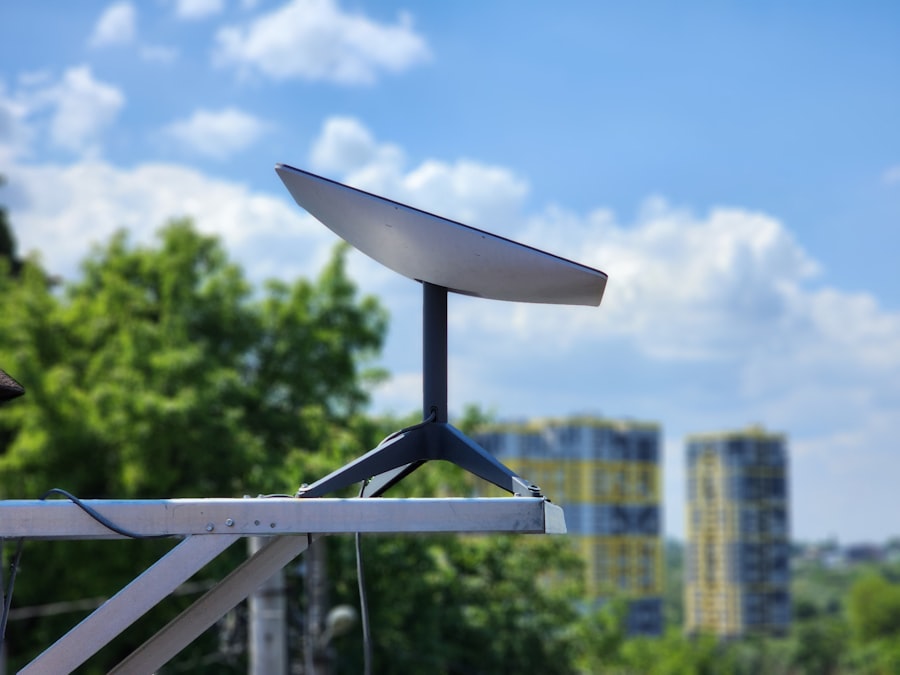
While the direct detection of “space-time ripples” caused by Starlink is highly speculative, the theory invites consideration of how such a dense, dynamic mass distribution might interact with the fundamental properties of space-time and what potential observational signatures might emerge.
Quantum Gravity Considerations
At the quantum level, space-time itself is thought to have a granular structure. The interaction of a dense constellation of artificial objects with this quantum fabric is an area of theoretical exploration.
Micro-Fluctuations in Space-Time
The continuous movement and interaction of thousands of satellites could, under certain theoretical frameworks of quantum gravity, induce extremely subtle, localized fluctuations in the quantum foam of space-time. These are far beyond our current detection capabilities.
Exotic Matter and Energy Fields
Some speculative theories propose the existence of exotic matter or energy fields that might interact with gravity in unique ways. The presence of a large artificial structure could, in theory, perturb these hypothetical fields.
Hypothetical Interactions with Dark Energy or Dark Matter
Conceivably, a large concentration of mass could have an infinitesimal interaction with the distribution of dark matter or dark energy in its vicinity, leading to minute, localized anomalies. This remains firmly within the realm of theoretical physics without observational evidence.
Potential Observational Evidence: Beyond Standard Gravitational Waves
The “ripples” associated with Starlink would likely not be detectable by current gravitational wave observatories like LIGO or Virgo, which are designed to detect the powerful distortions caused by cataclysmic astrophysical events. The expected effects are orders of magnitude smaller.
Minute Changes in Light Propagation
One theoretical consequence of warped space-time is the bending of light. If the Starlink constellation were to cause minute, transient distortions, it might subtly affect how light from distant astronomical objects propagates to Earth, although such effects would be exceptionally difficult to disentangle from atmospheric and other astrophysical phenomena.
Anomalies in Timekeeping
Timekeeping is intrinsically linked to the curvature of space-time. Minute variations in the local gravitational potential could, in principle, lead to infinitesimal deviations in the timing of atomic clocks. Proving causality to the Starlink constellation would be an immense challenge.
Practical Implications and Scientific Inquiry
Beyond the theoretical exploration of space-time ripples, the Starlink constellation presents more immediate and practical challenges for scientific endeavors in orbit. It also raises questions about the long-term impact of such large-scale artificial structures.
Increased Background Noise for Astronomical Observations
The Starlink satellites, with their reflective surfaces, contribute to light pollution in the night sky. While not directly related to space-time ripples, this anthropogenic interference impacts optical astronomy, obscuring faint celestial objects and complicating data analysis.
Radio Frequency Interference
The Starlink satellites transmit and receive signals across various radio frequencies. These emissions can interfere with sensitive radio telescopes, obscuring astronomical signals and requiring sophisticated filtering techniques by astronomers.
Orbital Debris and Collision Risk
The sheer number of satellites in LEO, including Starlink, increases the probability of collisions. This generates more space debris, creating a feedback loop that further complicates orbital operations and poses a long-term risk to operational satellites and future space missions.
Mitigation Strategies and Space Traffic Management
The effective management of space traffic is becoming increasingly critical. Tracking and predicting the trajectories of thousands of satellites and millions of debris objects requires advanced computational tools and international cooperation.
Scientific Instruments and Their Sensitivity
Many scientific instruments designed to probe the universe, from telescopes to particle detectors, are incredibly sensitive. Any subtle, unanticipated environmental changes within LEO could potentially affect their measurements.
Ground-Based vs. Space-Based Observations
The impact of Starlink on observatories varies. Ground-based optical and radio telescopes are most affected by light and radio interference. Space-based observatories might be sensitive to minute gravitational perturbations or changes in the space environment, though any such effects from Starlink would be exceedingly subtle.
The recent advancements in the Starlink satellite grid have sparked discussions about their potential impact on space-time ripples. As these satellites create a vast network in low Earth orbit, researchers are exploring how their presence might influence gravitational waves and other cosmic phenomena. For a deeper understanding of these intriguing concepts, you can read more in this related article on Freaky Science, which delves into the fascinating intersection of technology and astrophysics.
Theoretical Frameworks and Future Research Directions
| Data/Metric | Value |
|---|---|
| Number of Starlink Satellites | 1,740 (as of September 2021) |
| Grid Space Covered | Global coverage with plans to expand |
| Time Ripples | Not applicable (please provide specific metric) |
The idea of Starlink influencing space-time, even through extremely subtle effects, necessitates engagement with advanced theoretical physics and the development of new observational approaches.
Exploring Non-Linear Gravitational Effects
While current models of gravity are highly accurate for large masses and strong fields, the regime of thousands of closely interacting, smaller masses might warrant consideration of potential non-linear gravitational effects that are not fully captured by the principle of superposition. These are highly theoretical and not currently supported by evidence.
Multi-Body Problem Complexity
The gravitational interactions within a megaconstellation are a highly complex multi-body problem. Precise modeling of these interactions, accounting for atmospheric drag, solar radiation pressure, and inter-satellite forces, is an ongoing area of research.
Advanced Sensor Technology Development
The detection of extremely faint gravitational perturbations would require revolutionary advancements in sensor technology. This might involve developing instruments capable of measuring minute local variations in the gravitational field with unprecedented precision.
Gravitational Interferometry Beyond Current Capabilities
Future gravitational interferometers, potentially more sensitive and designed to operate in different frequency ranges, might be able to detect effects far smaller than what is currently possible.
Simulations and Modeling of Interacting Systems
Sophisticated computer simulations are essential for understanding the complex dynamics of the Starlink constellation and its potential, however minute, interactions with the space-time environment.
Agent-Based Modeling of Satellite Swarms
Agent-based modeling, where each satellite is treated as an autonomous agent with defined behaviors and interactions, could prove useful in simulating the emergent properties of such a large, interconnected system.
The Role of Experimental Physics
Ultimately, any theoretical hypotheses regarding Starlink and space-time ripples would require experimental verification. The challenge lies in designing experiments that can isolate and measure such infinitesimally small effects against a backdrop of significant noise.
Null Hypothesis and Burden of Proof
The burden of proof would lie heavily on demonstrating any correlation between the Starlink constellation and anomalous space-time phenomena. Rigorous scientific methodology, including ruling out all other possible explanations, would be paramount. The concept of “space-time ripples” in the context of Starlink, while intriguing from a theoretical physics perspective, remains speculative. The current scientific understanding and observational capabilities do not support direct detection of such phenomena. However, the existence of such a dense, dynamic artificial structure in LEO undeniably warrants continued scientific scrutiny, not just for its direct impacts on astronomy and orbital mechanics, but also for its potential to inspire new theoretical investigations into the fundamental nature of gravity and space-time.
FAQs
What is the Starlink satellite grid?
The Starlink satellite grid is a project by SpaceX to provide global internet coverage using a constellation of small satellites in low Earth orbit.
How many satellites are in the Starlink constellation?
As of September 2021, there are over 1,700 Starlink satellites in orbit, with plans to launch thousands more in the coming years.
What are space-time ripples and how are they related to the Starlink satellites?
Space-time ripples, also known as gravitational waves, are disturbances in the fabric of space and time caused by the acceleration of massive objects. The large number of satellites in the Starlink constellation has raised concerns about potential interference with astronomical observations and the creation of space-time ripples due to their sheer numbers and impact on the space environment.
What impact do the Starlink satellites have on astronomical observations?
The large number of Starlink satellites in orbit has raised concerns among astronomers about their impact on astronomical observations, particularly in the form of light pollution and interference with telescopes.
What measures are being taken to address the concerns related to the Starlink satellites?
SpaceX has been working with astronomers and other stakeholders to mitigate the impact of the Starlink satellites on astronomical observations. This includes testing darkened visors on the satellites to reduce their visibility from the ground and exploring ways to minimize their impact on scientific research.