The interaction between solar wind and Earth’s magnetosphere represents a critical area of space physics research. Solar wind consists of a continuous stream of charged particles released by the sun, which significantly influences the space environment surrounding our planet. This interaction has practical consequences for technological systems, climate patterns, and human health.
Accurate understanding of this relationship is necessary for forecasting space weather events and reducing their potential damage to Earth. As solar wind travels through the solar system, it encounters Earth’s magnetosphere—a magnetic field that shields the planet. This collision produces various effects, including geomagnetic storms and auroras.
Research into solar wind-magnetosphere interaction provides insights into both immediate terrestrial effects and larger cosmic processes. Through continued investigation, scientists identify the specific mechanisms controlling these interactions, enabling improvements in space weather prediction and planetary protection strategies.
Key Takeaways
- Solar wind interacts dynamically with Earth’s magnetosphere, influencing space weather conditions.
- This interaction can cause geomagnetic storms that affect satellite communications and power systems.
- Auroras are a visible result of solar wind particles colliding with Earth’s magnetic field and atmosphere.
- Advanced tools and methods, including satellites and ground-based observatories, are essential for studying these interactions.
- Ongoing research aims to better predict solar wind impacts and develop strategies to mitigate their effects on Earth.
The Role of the Solar Wind in Space Weather
Solar wind is a key player in the realm of space weather, which encompasses the environmental conditions in space that can affect both natural phenomena and human-made technologies. The solar wind consists primarily of electrons and protons, which are ejected from the sun’s corona at high speeds. These particles carry with them magnetic fields that can interact with the Earth’s magnetosphere, leading to various space weather events.
Understanding the solar wind’s characteristics—such as its speed, density, and magnetic field orientation—is crucial for predicting its impact on Earth. When solar wind reaches Earth, it can trigger a range of phenomena, from minor disturbances in satellite operations to significant geomagnetic storms that can disrupt power grids and communication systems.
During periods of heightened solar activity, the solar wind can become more turbulent, leading to increased chances of severe space weather events. Thus, monitoring solar wind conditions is essential for safeguarding technology and ensuring the safety of astronauts in space. The Earth’s Magnetic Field plays a crucial role in protecting our planet from solar radiation.
Understanding the Earth’s Magnetosphere
The Earth’s magnetosphere is a complex and dynamic region that extends far beyond the planet’s surface. It is formed by the interaction of the Earth’s magnetic field with the solar wind. This magnetic field acts as a shield, protecting the planet from harmful cosmic radiation and charged particles.
The magnetosphere is not a static entity; it constantly changes in response to variations in solar wind conditions. Understanding its structure and behavior is crucial for comprehending how it interacts with solar wind.
The bow shock is where the solar wind slows down as it encounters the Earth’s magnetic field, creating a shock wave. The magnetosheath is the region between the bow shock and the magnetopause, where solar wind particles are deflected around the Earth. The magnetotail extends behind the Earth, shaped by the flow of solar wind particles.
Each of these regions plays a vital role in how solar wind interacts with the magnetosphere, influencing everything from satellite operations to atmospheric phenomena.
The Impact of Solar Wind on the Earth’s Magnetosphere
The impact of solar wind on the Earth’s magnetosphere is multifaceted and can lead to both beneficial and detrimental effects. When solar wind particles collide with the magnetosphere, they can transfer energy and momentum, causing disturbances that may manifest as geomagnetic storms. These storms can result in increased auroral activity, which is often seen as beautiful displays of light in polar regions.
However, they can also pose risks to technology and infrastructure on Earth. Geomagnetic storms can induce electric currents in power lines, potentially leading to voltage fluctuations and even blackouts. Additionally, satellites in orbit are vulnerable to radiation exposure during intense solar events, which can damage their electronic systems or alter their orbits.
Understanding how solar wind affects the magnetosphere is crucial for developing strategies to protect both technological systems and human activities in space.
Solar Wind-Magnetosphere Interaction and its Effects on Earth
| Parameter | Description | Typical Range | Units |
|---|---|---|---|
| Solar Wind Speed | Velocity of charged particles emitted by the Sun | 300 – 800 | km/s |
| Solar Wind Density | Number of particles per unit volume in the solar wind | 1 – 10 | particles/cm³ |
| Interplanetary Magnetic Field (IMF) Strength | Magnetic field carried with the solar wind | 1 – 10 | nT (nanotesla) |
| IMF Orientation (Bz component) | North-South component of IMF affecting reconnection | -20 to +20 | nT |
| Magnetopause Stand-off Distance | Distance from Earth to magnetopause boundary | 8 – 12 | Earth radii (Re) |
| Magnetospheric Convection Electric Field | Electric field driving plasma convection inside magnetosphere | 0 – 10 | mV/m |
| Geomagnetic Activity Index (Kp) | Measure of geomagnetic disturbances caused by solar wind | 0 – 9 | Index |
| Ring Current Intensity (Dst Index) | Measure of ring current strength during geomagnetic storms | +20 to -300 | nT |
The interaction between solar wind and the Earth’s magnetosphere has far-reaching effects that extend beyond immediate technological concerns. One significant consequence of this interaction is its influence on atmospheric chemistry and climate patterns. For instance, increased solar activity can enhance ionization in the upper atmosphere, affecting ozone levels and potentially influencing weather patterns.
Moreover, this interaction plays a role in shaping space weather phenomena such as geomagnetic storms and substorms. These events can lead to disruptions in radio communications and navigation systems, impacting everything from air travel to maritime operations. As society becomes increasingly reliant on technology that operates in or relies on satellite systems, understanding these interactions becomes paramount for ensuring safety and reliability.
Tools and Methods for Studying Solar Wind-Magnetosphere Interaction
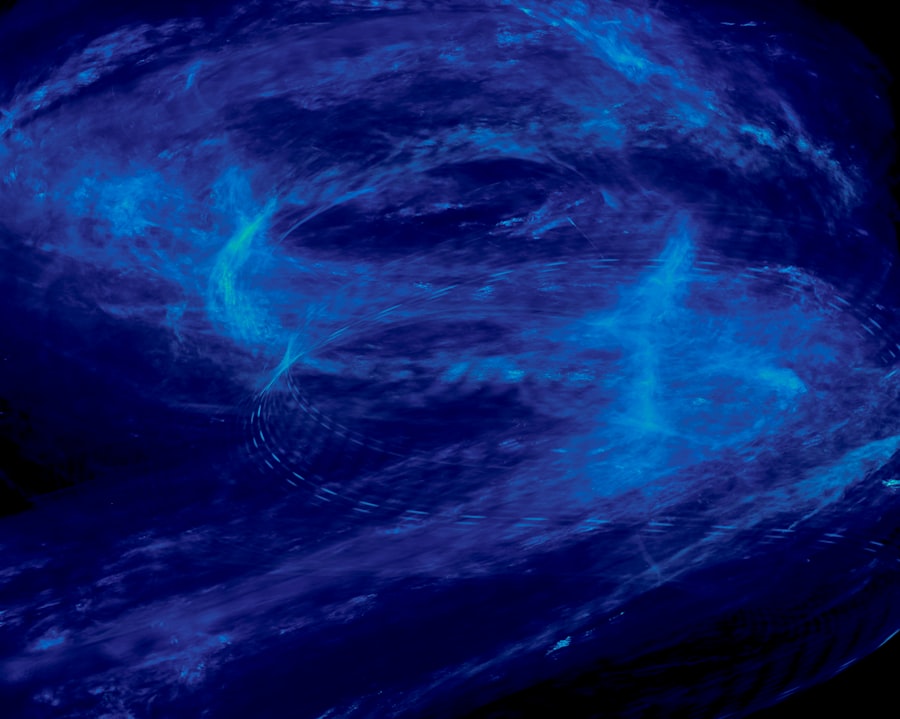
To study solar wind-magnetosphere interaction effectively, scientists employ a variety of tools and methods that range from ground-based observatories to advanced satellite missions. Ground-based observatories monitor geomagnetic activity using magnetometers that measure variations in Earth’s magnetic field. These instruments provide valuable data on how solar wind impacts the magnetosphere in real-time.
In addition to ground-based observations, space missions such as NASA’s Parker Solar Probe and ESA’s Solar Orbiter are designed to study solar wind at its source—the sun itself. These missions gather data on solar activity and its influence on space weather conditions closer to Earth. By combining data from multiple sources, researchers can develop comprehensive models that predict how solar wind will interact with the magnetosphere under varying conditions.
The Connection Between Solar Wind-Magnetosphere Interaction and Auroras
One of the most visually stunning effects of solar wind-magnetosphere interaction is the formation of auroras—natural light displays that occur near polar regions. When charged particles from the solar wind collide with atoms in Earth’s atmosphere, they excite these atoms, causing them to emit light as they return to their normal state. This process creates vibrant displays of color that dance across the night sky.
Auroras are not only beautiful; they also serve as indicators of space weather conditions. During periods of heightened solar activity, auroras become more frequent and intense. Scientists study these phenomena not only for their aesthetic value but also for what they reveal about the underlying processes governing solar wind-magnetosphere interaction.
By analyzing auroral activity, researchers gain insights into how energy is transferred from solar wind to Earth’s atmosphere.
The Influence of Solar Wind-Magnetosphere Interaction on Satellite Communications
The impact of solar wind-magnetosphere interaction extends into the realm of satellite communications, where disruptions can have significant consequences for global connectivity. Satellites rely on stable communication links to transmit data back to Earth; however, during geomagnetic storms caused by intense solar wind activity, these links can be compromised. Solar energetic particles can interfere with satellite electronics, leading to data loss or system malfunctions.
Additionally, increased ionization in the ionosphere during geomagnetic storms can cause signal degradation or delays in communication signals traveling between satellites and ground stations. As reliance on satellite technology continues to grow across various sectors—including telecommunications, navigation, and weather forecasting—understanding how solar wind affects these systems becomes increasingly critical for maintaining operational integrity.
Future Implications and Research in Solar Wind-Magnetosphere Interaction
As research into solar wind-magnetosphere interaction continues to evolve, several future implications emerge that warrant attention from both scientists and policymakers. One area of focus is improving predictive models for space weather events based on real-time data from satellites and ground-based observatories. Enhanced forecasting capabilities could help mitigate risks associated with geomagnetic storms by providing timely warnings to industries reliant on satellite technology.
Furthermore, ongoing research aims to deepen understanding of how long-term changes in solar activity may influence Earth’s climate over extended periods. By studying historical records alongside modern observations, scientists hope to uncover potential links between solar cycles and climate variability—insights that could inform future climate models.
Mitigating the Effects of Solar Wind-Magnetosphere Interaction on Earth
Mitigating the effects of solar wind-magnetosphere interaction requires a multifaceted approach involving technological advancements and public awareness initiatives. For instance, power grid operators are increasingly implementing measures to protect infrastructure from geomagnetic-induced currents during severe space weather events. This includes developing adaptive systems capable of responding dynamically to changing conditions.
Public awareness campaigns also play a vital role in educating individuals about potential risks associated with space weather events. By informing communities about how geomagnetic storms can impact daily life—such as disruptions in communication or transportation—society can better prepare for potential challenges posed by these natural phenomena.
Advancements in Understanding Solar Wind-Magnetosphere Interaction
In conclusion, advancements in understanding solar wind-magnetosphere interaction have far-reaching implications for science, technology, and society at large. As researchers continue to explore this complex relationship through innovative tools and methods, they uncover new insights that enhance our ability to predict space weather events and mitigate their impacts on Earth. The ongoing study of this interaction not only enriches scientific knowledge but also informs practical applications that safeguard technology and human activities in an increasingly interconnected world.
As humanity ventures further into space exploration while relying heavily on satellite technology here on Earth, understanding these cosmic interactions will remain paramount for ensuring safety and sustainability in our technological landscape.
The interaction between solar wind and the Earth’s magnetosphere is a fascinating area of study that helps us understand space weather and its effects on our planet. For a deeper dive into this topic, you can read more in the article available at