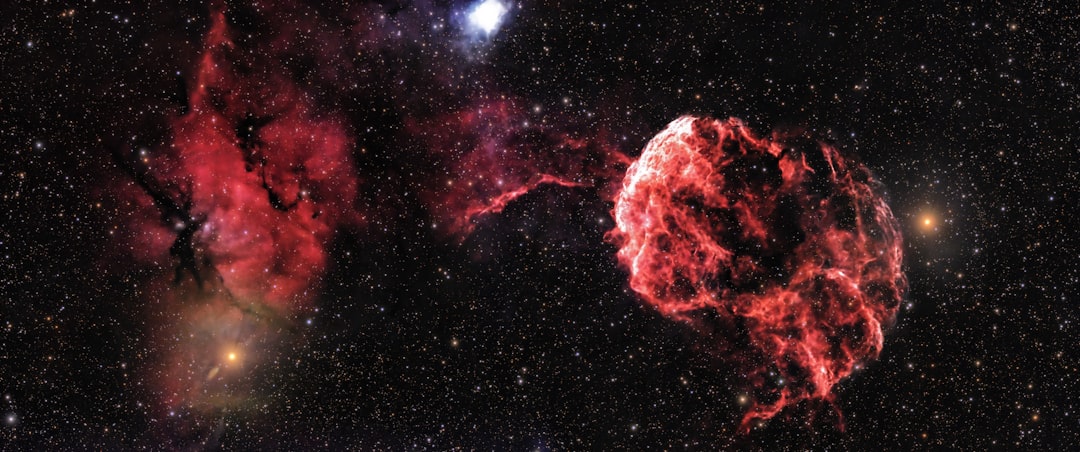
The cosmos is a dynamic realm, continually shaped by forces that dwarf human comprehension. Within this vastness, a ballet of creation and destruction unfolds, punctuated by events so immense they defy easy categorization. These cosmic catastrophes, far from being mere destructive occurrences, are integral to the universe’s evolution, forging new structures and distributing the elements that comprise everything we observe. Understanding these phenomena requires a blend of observational astronomy, theoretical physics, and meticulous data analysis.
The life cycle of stars is a grand narrative, beginning with the gravitational collapse of interstellar gas and dust, culminating in a dramatic conclusion. For massive stars, this finale is often a spectacular explosion known as a supernova, an event that can briefly outshine an entire galaxy.
Type Ia Supernovae: Standard Candles of the Cosmos
Type Ia supernovae are not the death throes of a single massive star, but rather the explosive demise of a white dwarf star in a binary system. When a white dwarf siphons material from its companion star, it eventually reaches a critical mass known as the Chandrasekhar limit (approximately 1.4 solar masses). At this point, electron degeneracy pressure, which normally prevents the white dwarf from collapsing further, is overcome. The star undergoes a runaway thermonuclear fusion reaction, igniting carbon and oxygen throughout its interior almost simultaneously. This explosion releases an immense amount of energy, ejecting much of the star’s material into space at incredible velocities.
Crucially, Type Ia supernovae exhibit a remarkably consistent peak luminosity, making them “standard candles” for astronomers. Their predictable brightness allows scientists to measure immense cosmic distances with accuracy, providing vital data for understanding the universe’s expansion. By observing the apparent brightness of a Type Ia supernova and knowing its intrinsic luminosity, astronomers can calculate its distance, a crucial step in mapping the large-scale structure of the cosmos.
Core-Collapse Supernovae: The Birth of Neutron Stars and Black Holes
Core-collapse supernovae, on the other hand, represent the end-of-life sequence for massive stars, typically those with initial masses greater than eight times that of our Sun. As these stars exhaust their nuclear fuel, their iron cores become unable to sustain fusion reactions. Iron is a stable element, and attempting to fuse it consumes energy rather than releasing it. The core then collapses under its own immense gravity in a matter of milliseconds.
This rapid collapse creates an incredibly dense object, and when it reaches nuclear densities, the core essentially “bounces” back, sending a powerful shockwave outwards. This shockwave, energized by a torrent of neutrinos produced during the core’s collapse, expels the star’s outer layers into space at velocities reaching tens of thousands of kilometers per second.
The remnant left behind after a core-collapse supernova depends on the original mass of the star. If the core’s mass is between roughly 1.4 and 3 solar masses, it collapses into an incredibly dense neutron star, an object composed almost entirely of neutrons. If the core’s mass exceeds approximately 3 solar masses, the immense gravitational forces are too powerful even for neutron degeneracy pressure to resist, and the core collapses further, forming a stellar-mass black hole.
Hypernovae: The Apex of Stellar Explosions
Slightly more enigmatic are hypernovae, a rare and exceptionally energetic subclass of core-collapse supernovae. These events are believed to be the demise of very massive, rapidly rotating stars that are sometimes associated with long-duration gamma-ray bursts (GRBs). While the precise mechanisms are still under investigation, it is thought that hypernovae involve the collapse of a rapidly rotating core that forms a black hole surrounded by an accretion disk. This configuration is capable of launching powerful jets of relativistic particles that can produce the characteristic gamma-ray emission. The energy released by a hypernova can be an order of magnitude higher than that of a typical supernova, making them some of the most powerful explosions in the universe.
In exploring the fascinating realm of cosmic catastrophes, one can gain deeper insights by reading the article on the science behind these events at Freaky Science. This resource delves into various phenomena such as asteroid impacts, supernovae, and gamma-ray bursts, highlighting their potential effects on Earth and the universe. For more information, you can visit the article here: Freaky Science.
The Collisions of Giants: Galactic Mergers
Galaxies are not static islands of stars; they are dynamic entities that interact and merge over cosmic timescales. These galactic mergers, while seemingly devastating, are often a crucial driver of galaxy evolution, influencing star formation, the growth of supermassive black holes, and the overall morphology of galaxies.
The Andromeda-Milky Way Collision: A Future Event
Our own Milky Way galaxy is on a collision course with its nearest large galactic neighbor, the Andromeda galaxy. This cosmic rendezvous is predicted to occur in approximately 4.5 billion years. While the term “collision” evokes images of widespread destruction, the vast distances between stars mean that individual stellar impacts are exceedingly rare. Instead, the galaxies will interpenetrate, their gravitational fields subtly warping and reshaping each other over hundreds of millions of years.
During this protracted merger, the gas and dust within both galaxies will be compressed, triggering intense bursts of star formation. The supermassive black holes at the centers of both galaxies are also expected to eventually merge, likely releasing enormous amounts of gravitational waves and electromagnetic radiation. The ultimate outcome is predicted to be a new, larger elliptical galaxy, often playfully referred to as “Milkomeda” or “Milkdromeda.”
The Role of Mergers in Galaxy Evolution
Galactic mergers are a fundamental process in the hierarchical model of galaxy formation, where smaller galaxies coalesce to form larger ones. These events can dramatically alter the star formation rates within galaxies. The compression of gas clouds during a merger can trigger a starburst, a period of exceptionally rapid star formation. Conversely, mergers can also deplete gas reservoirs, eventually leading to a cessation of star formation.
Mergers also play a critical role in the growth of supermassive black holes. As galaxies merge, their central black holes can eventually spiral towards each other and coalesce. This process is believed to be a primary mechanism for the growth of the most massive black holes observed in the universe. Furthermore, the energetic feedback from these growing black holes, in the form of powerful outflows and jets, can influence the surrounding gas and regulate star formation across the host galaxy.
The Silent Destroyers: Rogue Black Holes and Interstellar Objects
Beyond the spectacle of stellar demise and galactic collisions, the cosmos harbors more insidious threats: objects that can wreak havoc through gravitational interference or direct impact.
Rogue Black Holes: Invisible and Potentially Dangerous
Rogue black holes, those not gravitationally bound to a star or residing at the center of a galaxy, are a theoretical but plausible hazard. These objects, stellar-mass black holes ejected from their birth pangs during supernovae or primordial black holes formed in the early universe, traverse interstellar space in silent anonymity.
While the probability of Earth encountering a rogue black hole is extremely low, the consequences of such an event would be catastrophic. A close encounter would severely disrupt the Oort Cloud, sending a barrage of comets towards the inner solar system. A direct hit would be an unparalleled disaster, likely consuming Earth entirely or fragmenting it into a cloud of debris. Detecting these objects is exceptionally challenging due to their dark nature; they are typically only revealed through their gravitational lensing effects on background stars or their accretion of interstellar gas.
Interstellar Objects: Voyagers from Beyond
The discovery of ‘Oumuamua in 2017 and 2I/Borisov in 2019 provided the first conclusive evidence of objects originating from outside our solar system traversing interstellar space. These interstellar objects (ISOs), likely ejected from other star systems, offer a tantalizing glimpse into the diversity of planetary formation processes beyond our cosmic neighborhood.
While most ISOs are likely inert rocks or cometary bodies, the possibility of encountering artificial interstellar objects, or even objects carrying extraterrestrial life, sparks scientific and public imagination. The study of ISOs is a nascent field, but it promises to reveal unprecedented insights into the prevalence and characteristics of planetary debris in the vast expanse of the galaxy. A direct collision with a large ISO, while infrequent, could have devastating impacts on any planet in its path, similar to the hypothesized impact that led to the extinction of the non-avian dinosaurs.
The Cataclysmic Births: Gamma-Ray Bursts
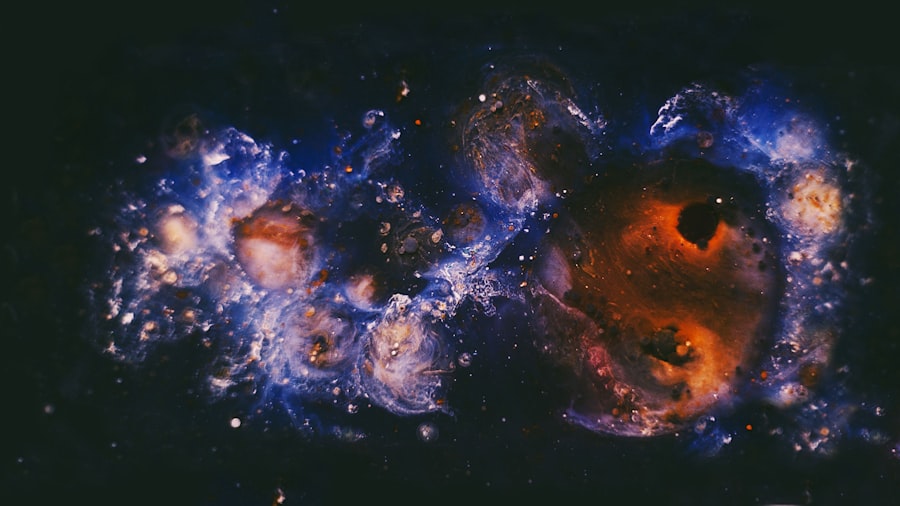
Gamma-ray bursts (GRBs) are the most energetic explosions known in the universe since the Big Bang. These transient events release more energy in a few seconds than the Sun will produce over its entire 10-billion-year lifespan.
Short-Duration GRBs: Merging Neutron Stars
Short-duration GRBs, lasting less than two seconds, are now widely attributed to the merger of two neutron stars (or a neutron star and a black hole). As these incredibly dense objects spiral inward due to gravitational wave emission, they eventually collide, forming a black hole and ejecting a small amount of extremely hot, neutron-rich material. This material undergoes rapid nuclear reactions, producing heavy elements through the r-process (rapid neutron capture). Simultaneously, powerful jets of relativistic particles are launched from the newly formed black hole, which, when pointed towards Earth, are observed as a short-duration GRB. These events are also the primary cosmic laboratories for the creation of gold, platinum, and other heavy elements.
Long-Duration GRBs: The Hypernova Connection
Long-duration GRBs, lasting from a few seconds to several minutes, are almost universally associated with the core-collapse of very massive, rapidly rotating stars – the hypernovae discussed earlier. In this “collapsar model,” the collapsing core forms a black hole surrounded by an accretion disk. Powerful, collimated jets are launched from the poles of the black hole, drilling through the star’s outer layers. When these jets break out of the star, they produce the observable gamma-ray emission. The subsequent supernova explosion, often unusually bright, is also detectable, confirming the hypernova connection.
The Potential Danger of GRBs to Life
While GRBs are immensely powerful, their extreme distances typically render them harmless to Earth. However, a GRB occurring within our own galaxy, particularly one pointed directly at our solar system from a relatively close distance (e.g., within a few thousand light-years), could have severe consequences for life on Earth. The intense burst of gamma rays could strip away a significant portion of the Earth’s ozone layer, exposing the surface to harmful ultraviolet radiation from the Sun. Such an event could lead to widespread extinctions and drastically alter the course of evolution. While such an occurrence is statistically improbable within the foreseeable future, it remains a theoretical cosmic threat.
The study of cosmic catastrophes reveals the potential threats that our planet faces from celestial events, such as asteroid impacts and supernova explosions. Understanding these phenomena is crucial for developing strategies to mitigate their effects on Earth. For those interested in delving deeper into this fascinating subject, a related article can be found at Freaky Science, which explores various cosmic events and their implications for our future.
The Expanding Void: The Ultimate Fate of the Universe
| Cosmic Catastrophe | Cause | Frequency (per million years) | Energy Released (Joules) | Potential Impact on Earth |
|---|---|---|---|---|
| Gamma-Ray Burst (GRB) | Massive star collapse or neutron star merger | 0.1 – 1 | 10^44 – 10^47 | Severe atmospheric damage, mass extinction |
| Supernova Explosion | Death of massive stars | 2 – 3 | 10^44 | Radiation exposure, possible ozone depletion |
| Asteroid Impact | Collision with near-Earth objects | 10 – 100 | 10^15 – 10^23 | Global climate change, mass extinction |
| Solar Flare / Coronal Mass Ejection | Solar magnetic activity | Daily to weekly | 10^25 – 10^26 | Disruption of satellites and power grids |
| Black Hole Encounter | Passing black hole near solar system | Very rare (once per billion years) | Variable | Gravitational disturbances, possible orbital disruption |
The universe’s destiny, a cosmic catastrophe on the grandest possible scale, is a subject of intense cosmological research. Our understanding hinges on the interplay of dark energy, dark matter, and ordinary matter, particularly the role of dark energy in accelerating the universe’s expansion.
The Big Freeze (Heat Death): A Gradual Dilution
Current observations strongly suggest that the universe is not only expanding but that its expansion is accelerating. This acceleration is attributed to a mysterious force known as dark energy. If dark energy continues to dominate, the universe is destined for a “Big Freeze,” or heat death. In this scenario, galaxies will eventually recede from each other at ever-increasing speeds, eventually disappearing beyond our cosmic horizon. Star formation will cease as gas and dust are flung too far apart to coalesce. Existing stars will exhaust their fuel, black holes will evaporate through Hawking radiation, and the universe will become an increasingly dilute, cold, and empty expanse. All matter and energy will be spread so thinly that no further interactions will be possible, leading to a state of maximal entropy and an ultimate thermodynamic equilibrium characterized by absolute zero temperature.
The Big Rip: A Tearing Apart of Reality
A more extreme, albeit less favored, theoretical alternative to the Big Freeze is the “Big Rip.” This scenario would occur if dark energy’s density were to increase over time, implying a “phantom energy” that could overcome all fundamental forces. In such a universe, the accelerating expansion would become so powerful that it would eventually tear apart galaxies, then star systems, and ultimately, individual atoms themselves. This cataclysmic event would represent the complete disintegration of all matter and structure in the cosmos, a true unmaking of reality. However, current data on dark energy do not strongly support a phantom energy model.
The Big Crunch: A Reversal of Expansion (Less Likely)
Conversely, if the universe contained significantly more matter and dark matter than currently observed, or if dark energy were to weaken or reverse its effects, the expansion could eventually slow and reverse. This “Big Crunch” scenario would see the universe contract, eventually collapsing back into a hot, dense singularity, potentially leading to another Big Bang in a cyclical universe model. However, current cosmological observations, particularly those related to the accelerating expansion and the measured density of matter and energy, strongly indicate that the universe’s expansion will continue indefinitely, making the Big Crunch highly unlikely.
The science of cosmic catastrophes is a testament to the dynamic and often violent nature of the universe. From the explosive deaths of stars to the slow, relentless march towards heat death, these events, though often destructive on individual scales, are fundamental to the grand cosmic narrative. They forge new elements, shape galaxies, and ultimately, dictate the very fabric and fate of the universe we inhabit. Understanding them not only deepens our knowledge of the cosmos but also highlights the unique and fragile existence of our own planet within this grand cosmic theater.
WATCH NOW ▶️ The Universe Is A False State: Is Reality a Simulation?
FAQs
What are cosmic catastrophes?
Cosmic catastrophes refer to large-scale, often violent events in space that can have significant effects on celestial bodies, including stars, planets, and galaxies. Examples include supernovae, gamma-ray bursts, asteroid impacts, and black hole collisions.
What causes a supernova?
A supernova occurs when a massive star exhausts its nuclear fuel and its core collapses under gravity, leading to a powerful explosion. Alternatively, a supernova can happen when a white dwarf star accumulates enough material from a companion star to trigger a thermonuclear explosion.
How do gamma-ray bursts affect Earth?
Gamma-ray bursts (GRBs) are intense bursts of gamma radiation from distant cosmic events. If a GRB were to occur close enough to Earth and be directed toward us, it could potentially damage the atmosphere and harm living organisms by depleting the ozone layer.
Can asteroid impacts cause mass extinctions?
Yes, large asteroid impacts have been linked to mass extinction events on Earth. The most famous example is the asteroid impact 66 million years ago that contributed to the extinction of the dinosaurs by causing widespread environmental changes.
What role do black holes play in cosmic catastrophes?
Black holes can cause cosmic catastrophes through their immense gravitational forces. When black holes merge or consume nearby matter, they release enormous amounts of energy, sometimes producing gravitational waves and high-energy radiation that can affect their surroundings.