
The Cosmic Enigma: A Region of Unusual Coldness
The universe, in its vast and unfathomable expanse, is a tapestry woven with light and matter, constantly expanding and evolving since the cataclysmic Big Bang. Astronomers, through meticulous observation and sophisticated instruments, have pieced together much of its grand narrative. However, even in this well-charted cosmic landscape, anomalies persist, sparking curiosity and challenging established cosmological models. Among the most intriguing of these cosmic puzzles is the CMB Cold Spot, a region of the sky exhibiting a statistically significant lower temperature than its surrounding cosmic microwave background (CMB) radiation. This anomaly, discovered by the Wilkinson Microwave Anisotropy Probe (WMAP) and further observed by the Planck satellite, represents a deviation from the expected uniformity of the CMB, a relic radiation left over from the early universe.
The CMB itself is a uniform glow of microwave radiation that permeates all of space, a faint echo of the fiery infancy of the cosmos. It is remarkably uniform, with tiny temperature fluctuations—on the order of microkelvins—that represent the seeds of the large-scale structures we observe today, such as galaxies and galaxy clusters. These fluctuations are predicted by the standard cosmological model, known as the Lambda-CDM model, which describes a universe dominated by dark energy and cold dark matter. The CMB is our most direct window into the conditions of the universe approximately 380,000 years after the Big Bang, a time when it cooled enough for electrons and protons to combine, allowing photons to travel freely. The astonishing uniformity of the CMB, coupled with these tiny anisotropies, has provided powerful evidence for the Big Bang theory and the subsequent inflation of the early universe.
Yet, the Cold Spot, a vast circular region spanning several degrees across the sky, presents a conundrum. Its temperature is approximately 100-200 microkelvins colder than the average CMB temperature. While this difference might seem minuscule in absolute terms, in the context of the precisely measured and remarkably uniform CMB, it is a statistically significant anomaly. The probability of such a cold region arising purely by chance within the standard cosmological framework is estimated to be very low, prompting scientists to investigate potential explanations, ranging from mundane instrumental errors to exotic cosmological phenomena. The quest to unravel the mystery of the CMB Cold Spot is not merely an academic exercise; it is a journey that could potentially refine our understanding of the fundamental laws governing the universe and the very nature of reality.
The CMB Cold Spot, a significant anomaly in the cosmic microwave background radiation, has intrigued scientists for years due to its implications for our understanding of the universe. For a deeper exploration of this phenomenon and its potential explanations, you can read the related article available at Freaky Science. This article delves into various theories surrounding the Cold Spot, including cosmic voids and the possibility of large-scale structures influencing the CMB.
Unveiling the Anomaly: Discovery and Characterization of the Cold Spot
The CMB Cold Spot first entered the scientific spotlight with data from the WMAP mission. Launched in 2001, WMAP provided unprecedentedly detailed maps of the CMB, revealing its intricate pattern of temperature fluctuations. While analyzing these maps, researchers noticed a vast, somewhat circular area in the constellation Eridanus where the CMB temperature was consistently lower than expected. Initially, the statistical significance of this observation was debated, with some scientists attributing it to potential foreground contamination or observational biases. However, subsequent observations, particularly from the Planck satellite, which offered even higher resolution and sensitivity, confirmed the existence and extent of the Cold Spot, solidifying its status as a genuine cosmological anomaly.
The Planck satellite, operational from 2009 to 2013, has been instrumental in precisely characterizing the CMB. Its advanced instruments allowed for a more detailed examination of the Cold Spot, confirming its size, shape, and the magnitude of its temperature deficit. Planck’s data revealed that the Cold Spot is not a perfectly circular feature but rather has a somewhat irregular shape. Its angular size is approximately 18 degrees across, a substantial area in the cosmic sense. The temperature difference, while small, is significant enough to be statistically improbable under the assumptions of the standard Lambda-CDM model. This confirmation from an independent and more sensitive instrument significantly boosted the confidence of the scientific community in the reality of the Cold Spot.
The Statistical Significance of a Cold Patch
To understand why the CMB Cold Spot is considered an anomaly, it is crucial to grasp the statistical underpinnings of CMB observations. The standard cosmological model predicts that the temperature fluctuations in the CMB should follow a specific statistical distribution, known as a Gaussian distribution. This means that most of the temperature variations should be small, with increasingly fewer fluctuations occurring at larger deviations from the mean temperature. The probability of observing a region as cold as the CMB Cold Spot purely by random chance, assuming the standard model is correct, is estimated to be less than 1%. This low probability is what makes the Cold Spot a subject of intense scientific scrutiny. If the universe is as uniform on large scales as predicted, such a significant cold region should not exist.
Distinguishing from Instrumental Artifacts and Foreground Contamination
A crucial step in validating any cosmological discovery is to rule out mundane explanations. In the case of the CMB Cold Spot, scientists have rigorously investigated potential instrumental errors and foreground contamination. Instrumental errors could arise from the complex instruments used to observe the CMB, such as biases in detectors or calibration issues. Foreground contamination refers to radiation from sources within our own galaxy, such as dust and gas, or from extragalactic sources that could mimic or obscure the CMB signal. Extensive analysis has been performed to subtract these foreground contributions and to ensure that the observed coldness is indeed a property of the CMB itself and not a result of the observation process. The consistency of the anomaly across different instruments and observation periods has largely allayed concerns about instrumental artifacts. Similarly, the careful mapping and removal of galactic foregrounds have further strengthened the case for the Cold Spot being an intrinsic feature of the CMB.
Theoretical Explanations: From Mundane to Exotic

The persistent nature of the CMB Cold Spot anomaly has spurred a wide array of theoretical explanations, broadly falling into two categories: those that remain within the confines of the standard cosmological model, albeit with some ingenious modifications or interpretations, and those that venture into more speculative, exotic cosmological scenarios. Each proposed explanation grapples with the fundamental challenge of reconciling this observed cold region with our prevailing understanding of the universe’s evolution and structure.
The Supervoid Hypothesis: A Less Exciting but Plausible Origin
One of the most popular and, in some ways, less exotic explanations for the CMB Cold Spot is the supervoid hypothesis. This theory posits that the cold region is simply the result of the gravitational lensing effect of a vast, underdense region of matter, a so-called “supervoid,” located between us and the surface of last scattering. In this scenario, light from the CMB passing through this supervoid would travel a slightly longer path through a region with less matter. According to the Sachs-Wolfe effect, photons that climb out of gravitational potential wells lose energy, becoming redder and cooler. Conversely, photons falling into gravitational potential wells gain energy, becoming bluer and hotter. If a supervoid represents a significant absence of matter, photons passing through it would experience a net effect of climbing out of shallower potential wells over a larger distance compared to photons passing through average density regions. This would result in a slight cooling of the CMB photons as they reach us.
The existence of such supervoids is not entirely unexpected. The universe is not perfectly homogeneous; it is characterized by large-scale structures like galaxy clusters and vast voids. While the CMB Cold Spot is unusually large and cold, some simulations suggest that a sufficiently large and deep supervoid, positioned in the right direction, could indeed produce an effect similar to what is observed. The challenge with this hypothesis lies in the statistical probability of such a supervoid existing in the specific location and with the precise properties required to create the observed coldness. While it doesn’t require new physics, it does necessitate a very specific and perhaps rare cosmic arrangement.
Cosmic Strings and Topological Defects: Relics of Early Universe Phase Transitions
Moving into more speculative territory, some theories propose that the CMB Cold Spot could be a remnant of exotic phenomena that occurred during the very early universe. One such class of explanations involves topological defects, which are hypothetical stable structures that could have formed during phase transitions in the universe’s early history, much like how imperfections form when water freezes into ice. Among these, cosmic strings are one-dimensional topological defects that are predicted by some Grand Unified Theories (GUTs).
If a cosmic string, or a network of them, passed through the region of space that later became the CMB Cold Spot, it could have interacted with the primordial plasma in a way that caused a localized cooling effect. The exact mechanism by which cosmic strings could produce a cold spot is complex, but it generally involves the energy density variations associated with the string causing a gravitational perturbation or directly interacting with photons. The advantage of this explanation is that it could potentially explain the large angular scale of the Cold Spot and its statistical significance without requiring an improbable arrangement of matter in the present-day universe. However, the direct observational evidence for cosmic strings themselves remains elusive, making this a more hypothetical explanation.
Exotic Cosmological Models: Alternative Universes or Multiverses
Perhaps the most intriguing, albeit highly speculative, explanations for the CMB Cold Spot involve venturing beyond the standard Lambda-CDM model and even our observable universe. One such radical idea is that the Cold Spot might be a “shadow” or “imprint” of a region outside our observable universe. This could arise in the context of certain multiverse scenarios. For instance, if our universe is part of a larger multiverse, it is conceivable that our universe might have collided with or been influenced by another “bubble universe” in the distant past.
In this hypothetical scenario, such an interaction could have created a large-scale anomaly in the CMB radiation. The Cold Spot could represent a region where our universe was “bruised” or “dimpled” by this encounter, leading to a persistent deficit in temperature. Another related idea suggests that the Cold Spot could be a relic of a pre-inflationary epoch or a violation of the cosmological principle, which states that the universe is homogeneous and isotropic on large scales. These theories, while conceptually fascinating, are exceedingly difficult to test and often rely on advanced physics that is not yet fully understood or verified. The primary challenge with these exotic explanations is their lack of direct empirical evidence, making them more philosophical or theoretical pursuits for now.
The Debate and Ongoing Investigations: Seeking Definitive Answers
The existence of the CMB Cold Spot has ignited a vigorous debate within the cosmological community. While its observational reality is largely accepted, its interpretation remains a subject of intense research and discussion. Scientists are actively pursuing various avenues of investigation to either confirm one of the proposed explanations or to identify new ones that better fit the observational data. This ongoing scientific endeavor highlights the dynamic nature of cosmology, where anomalies serve as powerful catalysts for pushing the boundaries of knowledge.
The quest for definitive answers involves a multi-pronged approach. Researchers are continuously refining their analyses of existing CMB data, looking for subtle patterns and correlations that might favor one theory over another. They are also developing new theoretical models that attempt to explain the Cold Spot’s properties with greater precision. Furthermore, the design and execution of future observational missions are being influenced by the enigma of the Cold Spot, with a focus on achieving even higher sensitivity and resolution in CMB measurements.
Refining Observational Data and Analysis Techniques
The precision of astronomical measurements is paramount in distinguishing between subtle cosmological phenomena. Scientists are constantly improving their techniques for analyzing CMB data, aiming to minimize uncertainties and to extract the most accurate information possible. This includes developing more sophisticated algorithms for foreground subtraction, which is crucial for isolating the CMB signal from other sources of radiation. Furthermore, advancements in statistical analysis are allowing researchers to better assess the significance of the Cold Spot and to test the predictions of various theoretical models against the observational evidence. The ongoing work with data from Planck and other telescopes continues to refine our understanding of the Cold Spot’s characteristics, providing a more detailed portrait of this cosmic anomaly.
Testing Theoretical Predictions Against Future Observations
The ultimate goal is to find a theoretical explanation that not only accounts for the CMB Cold Spot but also makes testable predictions for future observations. If a particular theory, such as the supervoid hypothesis, is correct, then we should be able to find independent evidence for the existence of such a void in the direction of the Cold Spot. Similarly, if exotic physics is at play, there might be other observable consequences that future experiments could detect. This interplay between theory and observation is the bedrock of scientific progress. Astronomers are actively searching for direct evidence of supervoids using galaxy surveys and other observational methods. The development of next-generation CMB experiments, such as the proposed LiteBIRD satellite, promises to provide even more detailed maps of the CMB, which could potentially resolve some of the remaining ambiguities surrounding the Cold Spot.
The CMB cold spot has intrigued scientists for years, leading to various theories about its origin and implications for our understanding of the universe. A related article that delves deeper into this phenomenon can be found on Freaky Science, where researchers explore the potential explanations and the significance of this anomaly in the cosmic microwave background radiation. For more insights, you can read the full article here.
Implications for Cosmology: Reassessing Our Cosmic Blueprint
| Metric | Description | Value | Unit | Notes |
|---|---|---|---|---|
| Angular Size | Approximate diameter of the CMB Cold Spot on the sky | 5 | Degrees | Measured from WMAP and Planck data |
| Temperature Deviation | Difference in temperature compared to average CMB temperature | -70 | μK (microkelvin) | Indicates a colder region than average |
| Redshift Range | Estimated redshift of structures possibly causing the Cold Spot | 0.1 – 1.0 | z | Associated with large-scale voids or supervoids |
| Supervoid Size | Estimated diameter of the supervoid linked to the Cold Spot | 200 – 300 | Megaparsecs (Mpc) | Large-scale underdense region in galaxy distribution |
| Significance Level | Statistical significance of the Cold Spot anomaly | 2 – 3 | σ (sigma) | Indicates moderate anomaly compared to Gaussian fluctuations |
| Possible Explanations | Leading hypotheses explaining the Cold Spot | Supervoid, Cosmic Texture, Statistical Fluctuation | N/A | Ongoing research to determine cause |
The CMB Cold Spot, irrespective of its ultimate explanation, carries profound implications for our understanding of the universe. If it is indeed a deviation from the expected statistical fluctuations within the standard Lambda-CDM model, it could necessitate a revision or expansion of our current cosmological framework. The implications range from subtle adjustments to the parameters of the existing model to more significant paradigm shifts in our understanding of fundamental physics.
Challenging the Cosmological Principle and Lambda-CDM
The very existence of a statistically significant anomaly like the CMB Cold Spot subtly challenges the assumption of perfect homogeneity and isotropy on the largest scales, enshrined in the Cosmological Principle. While the Lambda-CDM model is incredibly successful in explaining a vast array of cosmological observations, anomalies like the Cold Spot serve as important tests of its completeness. If the Cold Spot cannot be adequately explained by the existing model, even with modifications, it could signal the need for new physics. This could involve introducing new fundamental particles, forces, or even a deeper understanding of gravity. The ongoing effort to explain the Cold Spot is thus a crucial part of the scientific process of refining and, if necessary, revolutionizing our cosmic blueprint.
The Potential for New Physics and Unforeseen Phenomena
The allure of the CMB Cold Spot lies in its potential to unlock doors to new physics and unforeseen phenomena. Explanations involving cosmic strings, the multiverse, or other exotic early universe scenarios, while speculative, highlight the vastness of what we still don’t know about the cosmos. The pursuit of understanding the Cold Spot is, in essence, an exploration into the unknown. It pushes the boundaries of our theoretical imagination and inspires the development of innovative observational techniques. The resolution of this cosmic enigma, whatever it may be, is bound to be a landmark moment in cosmology, offering a clearer and perhaps more wondrous view of our universe and its origins. The journey to unravel the mystery of the CMB Cold Spot is far from over; it is a testament to humanity’s unyielding curiosity and its drive to comprehend the grand cosmic theater in which we reside.
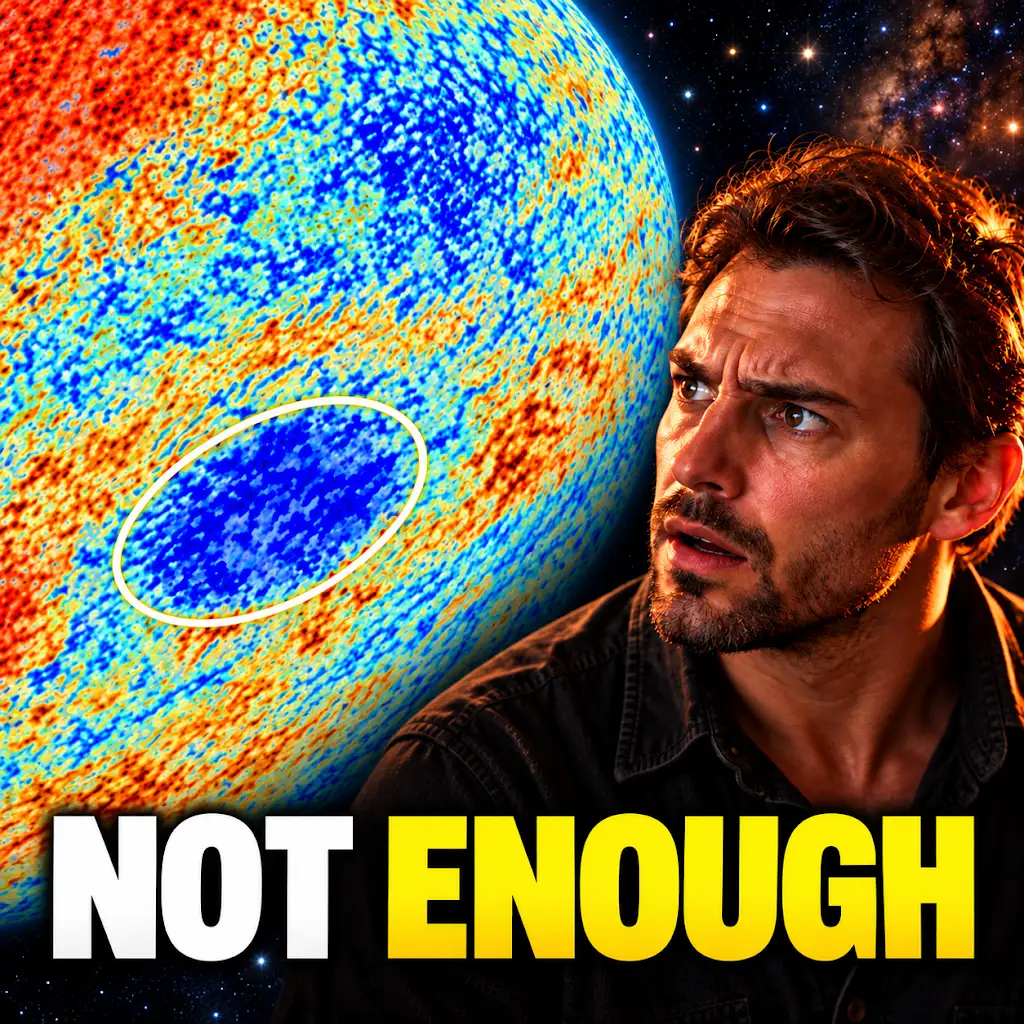
The Universe’s Cold Spot Has an Explanation. It’s Not Enough.
FAQs
What is the CMB cold spot?
The CMB cold spot is a region of the cosmic microwave background (CMB) radiation that appears colder than its surroundings. It is a large, anomalous area of the sky where the temperature of the CMB is lower than expected.
How was the CMB cold spot discovered?
The CMB cold spot was first discovered in 2004 by astronomers using data from the Wilkinson Microwave Anisotropy Probe (WMAP) satellite. It was identified as a significant deviation from the expected temperature fluctuations in the CMB.
What are some proposed explanations for the CMB cold spot?
Some proposed explanations for the CMB cold spot include the presence of a supervoid, a large void in the distribution of galaxies that could cause the CMB radiation to appear colder in that region. Other theories suggest that the cold spot could be the result of gravitational lensing or interactions with other structures in the universe.
What impact does the CMB cold spot have on our understanding of the universe?
The CMB cold spot challenges our current understanding of the large-scale structure of the universe and the distribution of matter. By studying the cold spot, astronomers hope to gain insights into the formation and evolution of the cosmos.
How are scientists continuing to study the CMB cold spot?
Scientists are using data from more recent missions, such as the Planck satellite, to further investigate the CMB cold spot and its implications. They are also conducting simulations and theoretical studies to explore different scenarios that could explain the origin of the cold spot.