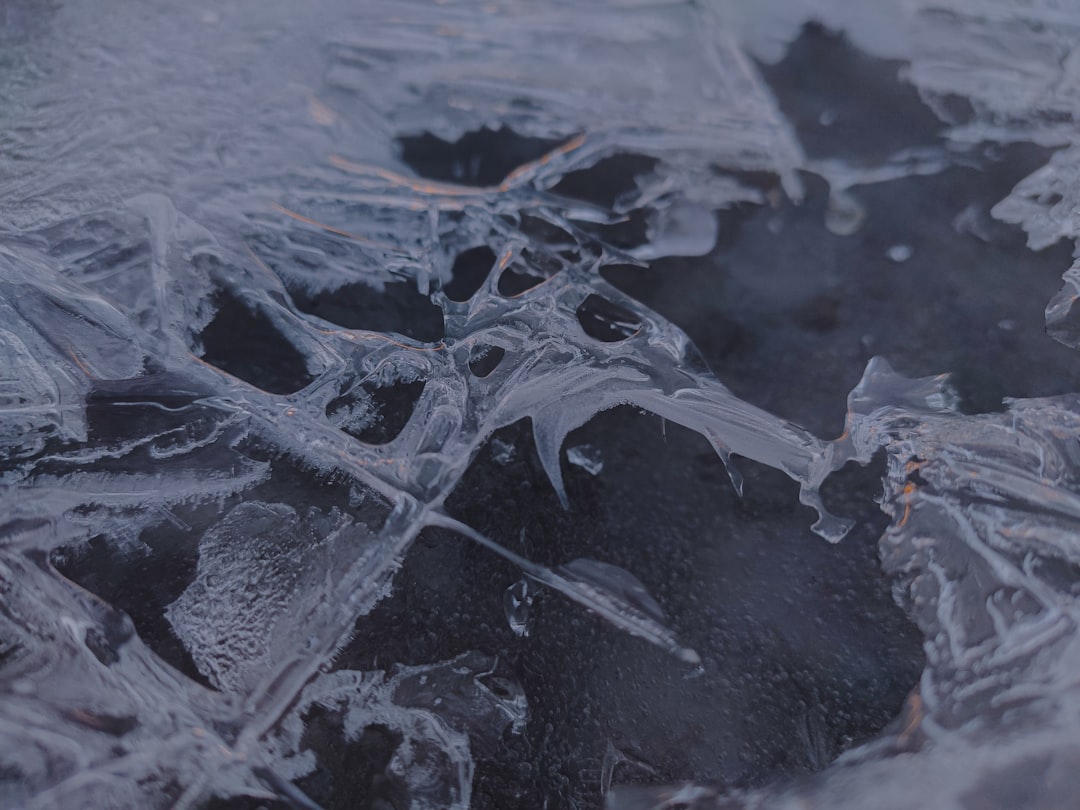
The ubiquitous frozen solid, ice, has long been understood as a crystalline lattice of water molecules, rigidly held in place. Yet, for decades, scientists have observed and pondered a peculiar characteristic of ice: its uncanny ability to flow, albeit imperceptibly, at interfaces. This phenomenon, often described as liquid-like behavior, challenges our fundamental understanding of solids and has profound implications across various scientific disciplines. Unraveling this mystery requires delving into the intricate world of surfaces, molecular dynamics, and the subtle interplay of energy and motion at the atomic scale.
The notion that ice, a substance typically associated with solidity and immobility, can exhibit fluid-like properties at its boundaries might initially seem counterintuitive. However, this observation is not a recent discovery; it has been documented and debated for a considerable period. The most striking manifestation of this liquid-like behavior is the significantly lower friction observed when sliding objects over ice compared to other solid surfaces. This phenomenon is the very reason why ice skates glide so effortlessly, and why winter sports like skiing and snowboarding are possible. But the slipping is not confined to macroscopic scales. Microscopic studies reveal that even at the atomic level, the surface of ice can behave in ways that defy the rigid structure expected of a solid.
Friction and the Ice Surface
The most direct evidence for ice’s slippery nature comes from friction experiments. When an object slides over ice, the resistance to motion is remarkably low, especially at temperatures close to the melting point. This low friction is not solely due to the lubrication provided by a thin film of meltwater, as was once the prevailing theory. While meltwater undoubtedly plays a role, it cannot fully account for the observed slipperiness, particularly under conditions where melting is not expected to be significant.
The “Meltwater Layer” Hypothesis and its Limitations
Historically, the most widely accepted explanation for ice’s slipperiness was the formation of a thin layer of liquid water on its surface. This theory proposed that the pressure exerted by a sliding object, or the heat generated by friction itself, would melt a microscopic layer of ice, creating a lubricating film. This meltwater then allowed the object to glide with minimal resistance. However, this hypothesis faced several challenges.
Pressure Melting: A Deeper Dive
The concept of pressure melting suggests that increasing pressure can lower the melting point of a substance. For ice, this effect is measurable, though relatively small. Under the immense pressure exerted by the sharp blade of an ice skate, the melting point is indeed lowered, leading to a thin film of water. However, the speeds achieved in sports like speed skating or the forces involved in other ice-related activities are often not sufficient to generate the degree of melting predicted by pressure alone to explain the observed low friction.
Frictional Heating: A Significant Contributor, but not the Whole Story
Frictional heating, the generation of heat due to the rubbing of two surfaces, is another well-established mechanism for melting ice. As an object slides across the ice surface, the kinetic energy is converted into thermal energy at the interface. This localized heating can indeed cause melting. However, studies have shown that even in the absence of significant friction or pressure, ice can still exhibit slippery behavior, particularly at very low temperatures or when the ice surface is exceptionally smooth. This suggests that other mechanisms are at play.
Nanoscale Observations of Surface Mobility
Beyond macroscopic friction, advanced surface science techniques have provided compelling evidence for a mobile layer at the ice-water interface, even well below the macroscopic melting point. These observations have revolutionized the understanding of ice’s liquid-like behavior, pointing towards phenomena occurring at the molecular level.
Atomic Force Microscopy (AFM) Revelations
Atomic Force Microscopy (AFM) is a powerful tool that allows scientists to image surfaces at the atomic scale. Using an AFM, researchers have been able to probe the very top layers of ice. These experiments have revealed that the surface molecules of ice are not as rigidly fixed as their bulk counterparts. Instead, they exhibit a greater degree of freedom, appearing to move and rearrange themselves more readily. This mobility, observed even at temperatures as low as -100°C, strongly suggests a quasi-liquid layer.
Surface Roughness and Molecular Motion
The nature of the ice surface, whether it’s perfectly smooth or has microscopic imperfections, can influence the degree of surface mobility. While a perfectly crystalline surface might be expected to be more ordered, it’s the subtle dynamics at the atomic level that are of interest. AFM studies have shown that even on apparently smooth surfaces, there is a dynamic exchange of molecules between the solid and a potentially mobile layer.
The Energetics of the Ice Surface
Understanding the liquid-like behavior of ice necessitates a deep dive into the energetic landscape of its surface. At the interface between ice and another phase (like air or water), the constituent water molecules experience different bonding environments compared to those within the bulk of the ice crystal. These differences in energy play a crucial role in driving the observed mobility.
Surface Energy and Unpaired Bonds
In the bulk of an ice crystal, each water molecule is hydrogen-bonded to four neighboring water molecules. However, at the surface, molecules are exposed to a less ordered environment. They have fewer neighboring molecules to form hydrogen bonds with, leaving some of their bonding sites unsatisfied. This creates a higher surface energy. To minimize this energy, the surface molecules tend to rearrange themselves.
Hydrogen Bond Rearrangement
The hydrogen bonds in ice are not static; they are constantly breaking and reforming. At the surface, this dynamic process is amplified. The unsatisfied bonds on the surface can lead to a greater propensity for molecular reorientation and movement, essentially creating a less rigid structure. This dynamic rearrangement is a key factor in the observed liquid-like behavior.
Recent studies have shown that the surface of ice can behave like a liquid due to the presence of a thin layer of water molecules that are in a quasi-liquid state. This phenomenon is explained in detail in the article found at Freaky Science, which discusses how temperature and pressure can influence the molecular structure of ice, leading to this unique behavior. Understanding this aspect of ice can have significant implications for various fields, including climate science and materials engineering.
The Interfacial Layer: A Quasi-Liquid Continuum
The concept of a “quasi-liquid layer” is central to understanding ice’s fluid behavior. This isn’t a distinct layer of bulk liquid water sitting on top of the ice, but rather a more diffuse and dynamic region where water molecules possess enhanced mobility. The thickness and properties of this layer are influenced by various factors, including temperature, pressure, and the nature of the adjacent phase.
The Nature of the Quasi-Liquid Layer
Defining the precise nature of this interfacial layer is an ongoing area of research. It is not a simple macroscopic film of water, but rather a molecular-level phenomenon. The mobility of water molecules within this layer is significantly higher than in the bulk ice, allowing for phenomena like sliding and diffusion to occur more readily.
Molecular Dynamics Simulations: A Window into the Microscopic World
Computer simulations, particularly molecular dynamics (MD) simulations, have been invaluable in providing detailed insights into the behavior of water molecules at the ice surface. These simulations can model the interactions between individual water molecules and track their movements over time, revealing the formation and dynamics of the interfacial layer.
Simulating the Hydrogen Bond Network
MD simulations can accurately replicate the hydrogen bond network of water and ice. By observing how these bonds form, break, and rearrange at the surface, scientists can gain a deeper understanding of the energetic drivers behind the quasi-liquid layer. These simulations have consistently shown increased molecular diffusion and reorientation at the ice-water interface.
Factors Influencing the Quasi-Liquid Layer
The properties of this quasi-liquid layer are not static. Several environmental and material factors can influence its thickness, mobility, and overall behavior. Understanding these influences is crucial for predicting and controlling ice-related phenomena.
Temperature Dependence: Closer to Melting, More Mobile
As the temperature of ice approaches its melting point, the thermal energy available to the water molecules increases. This leads to a greater propensity for breaking and reforming hydrogen bonds, resulting in a thicker and more mobile quasi-liquid layer. At very low temperatures, the layer is thinner and less mobile, but still present.
The Effect of Impurities and Surface Contamination
The presence of impurities or contaminants on the ice surface can significantly alter the behavior of the quasi-liquid layer. Dissolved salts, for instance, can lower the freezing point of water, leading to a thicker liquid layer even at sub-zero temperatures. Similarly, surface roughness and adsorbed molecules can influence the hydrogen bonding and thus the mobility of the interfacial water.
Beyond Friction: Implications of Ice’s Liquid-Like Behavior
The liquid-like behavior of ice is not merely an academic curiosity. This phenomenon has far-reaching implications across a diverse range of scientific and engineering fields, influencing everything from geological processes to the design of advanced materials.
Glaciology and the Movement of Ice Sheets
The subtle flow of ice is fundamental to understanding the dynamics of glaciers and ice sheets. While large-scale movement is driven by gravity and internal deformation, the ability of ice to slide over bedrock is critically influenced by its surface properties. The quasi-liquid layer plays a significant role in this process.
Lubrication at the Glacier Bed
The interface between a glacier and the underlying bedrock is often lubricated by a thin film of water. This water film, which can be generated by pressure melting and frictional heating, allows the glacier to slide more readily. The inherent liquid-like behavior of the ice surface contributes to the formation and stability of this lubricating layer.
Ice Sheet Dynamics and Climate Change
The rate at which ice sheets slide and deform has a direct impact on sea level rise. Understanding the mechanisms that govern ice movement, including the role of surface slipperiness, is therefore crucial for accurate climate modeling and predicting the future behavior of ice sheets in a warming world.
Tribology and the Design of Low-Friction Surfaces
The field of tribology, which studies friction, wear, and lubrication, is directly impacted by the understanding of ice’s unique properties. The quest for developing highly efficient lubricants and low-friction materials often draws inspiration from natural phenomena.
Biomimicry and Ice-Inspired Materials
Researchers are exploring ways to mimic the low-friction characteristics of ice in artificial materials. This could lead to the development of advanced coatings for applications ranging from medical devices to industrial machinery, where reducing friction is paramount for efficiency and longevity.
Superlubricity and Future Technologies
The concept of “superlubricity,” an extreme state of low friction, is an active area of research. Understanding the molecular mechanisms behind ice’s slipperiness could provide valuable clues for achieving superlubricity in other material systems, paving the way for revolutionary technological advancements.
Unraveling the Molecular Mechanisms: A Multidisciplinary Approach
The enigma of ice’s liquid-like behavior is being systematically unraveled through a concerted effort that combines experimental techniques with theoretical modeling. No single approach can fully capture the complexity of this phenomenon; rather, it is the synergy of diverse scientific disciplines that is illuminating the underlying molecular mechanisms.
Experimental Probes of Ice Surfaces
A battery of sophisticated experimental techniques is employed to investigate the nature of the ice surface and the behavior of its molecules. Each technique offers a unique perspective, contributing to a more comprehensive understanding.
Spectroscopic Techniques: Unveiling Molecular Vibrations and Interactions
Various spectroscopic methods, such as Raman spectroscopy and infrared spectroscopy, can probe the vibrational modes of water molecules in ice. Changes in these vibrational frequencies and their intensities can provide information about the hydrogen bonding network and the degree of molecular mobility at the surface.
Neutron Scattering: Tracking Atomic Motion
Neutron scattering is a powerful technique for studying the dynamics of atoms and molecules. By analyzing how neutrons scatter off the ice surface, researchers can directly measure the diffusion coefficients and vibrational frequencies of water molecules, providing quantitative data on their mobility.
Computational Modeling: Simulating the Dance of Molecules
Computational methods, especially those based on quantum mechanics and molecular dynamics, are indispensable tools for understanding the behavior of water molecules at the nanoscale. These simulations allow scientists to explore scenarios that are difficult or impossible to replicate experimentally.
Quantum Mechanical Calculations: Understanding Bonding Energies
Quantum mechanical calculations can precisely determine the energies associated with hydrogen bonds and other intermolecular forces in ice. This allows researchers to quantify the energetic landscape of the ice surface and understand why certain configurations are more favorable, leading to increased mobility.
Coarse-Grained Simulations: Bridging Length and Time Scales
While atomistic simulations provide exquisite detail, they are computationally expensive and limited in the length and time scales they can cover. Coarse-grained simulations, which represent groups of atoms as single units, allow researchers to simulate larger systems over longer periods, providing insights into the collective behavior of water molecules at the interface.
Recent studies have shown that the surface of ice can behave like a liquid under certain conditions, which has intrigued scientists for years. This phenomenon is often attributed to the presence of a thin layer of water molecules that can form on the ice surface, allowing it to exhibit properties similar to those of a liquid. For a deeper understanding of this intriguing behavior, you can explore a related article that delves into the science behind it. Check out this insightful piece on Freaky Science to learn more about the fascinating interactions at play.
The Future of Ice Research: Towards a Unified Understanding
| Reasons | Explanation |
|---|---|
| Pressure | High pressure can cause ice to melt and behave like a liquid. |
| Temperature | At higher temperatures, ice can melt and exhibit liquid-like behavior. |
| Friction | Friction between ice molecules can cause them to slide past each other, resembling a liquid. |
| Surface Tension | Ice can exhibit liquid-like behavior due to surface tension effects. |
The journey to fully comprehend the liquid-like behavior of ice is ongoing. While significant progress has been made, many questions remain, driving future research efforts. The ultimate goal is to achieve a unified understanding that bridges the gap between microscopic molecular dynamics and macroscopic observable phenomena.
Addressing the Unanswered Questions
Despite decades of research, there are still aspects of ice’s interfacial behavior that require further investigation. The precise thickness and composition of the quasi-liquid layer under various conditions, for instance, are still subjects of active debate and research.
The Role of Defects and Grain Boundaries
The influence of structural defects, such as vacancies and dislocations within the ice crystal lattice, and the presence of grain boundaries (interfaces between different crystalline orientations) on surface mobility are areas that warrant deeper exploration. These imperfections can significantly alter the local energy landscape and potentially enhance molecular motion.
Interplay of Ice Phases and Other Solids
Understanding how ice behaves at interfaces with a wider range of other solid materials, not just bedrock or sliding objects, is crucial. This includes exploring interfaces with polymers, metals, and other substances that are relevant in various technological applications.
Technological Innovations Driven by Ice Science
The continuous unraveling of ice’s mysteries holds the promise of inspiring transformative technological innovations. From more efficient de-icing strategies to novel materials with unique frictional properties, the applications are vast and largely untapped.
Advanced De-Icing and Anti-Icing Technologies
A deeper understanding of the mechanisms that cause ice to adhere and slip could lead to the development of more effective and environmentally friendly de-icing and anti-icing solutions. This could range from improved coatings that prevent ice formation to more energy-efficient methods for removing existing ice.
New Frontiers in Material Science and Engineering
The principles governing ice’s liquid-like behavior could be harnessed to design new classes of materials with tailored surface properties. This could include developing self-lubricating surfaces, advanced thermal interface materials, and even novel methods for manipulating biological tissues that interact with ice.
In conclusion, the mystery of ice’s liquid-like behavior is a testament to the complexity and elegance of the natural world. What appears as a simple solid at first glance is, at its fundamental level, a dynamic system with intricate interfacial phenomena. The ongoing scientific endeavor to unravel this mystery not only deepens our understanding of water, a substance vital to life, but also promises to unlock new technological frontiers, shaping our future in ways we are only beginning to imagine. The flowing whispers of ice at its boundary continue to inspire and challenge, pushing the boundaries of scientific knowledge.

Why Ice Is Slippery Is Stranger Than You Think
FAQs
1. Why does ice behave like a liquid on its surface?
Ice behaves like a liquid on its surface due to a thin layer of liquid water that forms on top of the ice when it comes into contact with air. This layer is caused by the pressure of the air and the temperature, which allows the ice to partially melt and create a slippery surface.
2. What is the name of the phenomenon where ice behaves like a liquid on its surface?
The phenomenon where ice behaves like a liquid on its surface is called “surface melting” or “surface melting point depression.” This occurs when the pressure of the air and the temperature cause the ice to partially melt and create a thin layer of liquid water on its surface.
3. How does the behavior of ice on its surface affect activities such as ice skating and skiing?
The behavior of ice on its surface affects activities such as ice skating and skiing by creating a slippery surface that allows for smoother movement. The thin layer of liquid water on the ice reduces friction, making it easier for skates and skis to glide across the surface.
4. Can the behavior of ice on its surface change under different environmental conditions?
Yes, the behavior of ice on its surface can change under different environmental conditions. Factors such as temperature, air pressure, and the presence of impurities can affect the formation of the thin layer of liquid water on the ice, altering its behavior.
5. Is the behavior of ice on its surface a common occurrence in nature?
Yes, the behavior of ice on its surface is a common occurrence in nature, especially in cold and humid environments. This phenomenon can be observed on frozen lakes, ponds, and other bodies of water, as well as on glaciers and icebergs.