The vast expanse of the cosmos has captivated humanity since the dawn of consciousness. From the earliest stargazers to the sophisticated instruments of modern cosmology, the fundamental drive to understand our place within this immensity remains constant. Cosmology, the scientific study of the origin, evolution, and ultimate fate of the universe, grapples with questions so profound they touch upon the very nature of reality. These aren’t just academic curiosities; they are the bedrock upon which our understanding of existence is built, pushing the boundaries of human knowledge and imagination.
The Dawn of Existence: Cosmic Origins and the Big Bang
The prevailing scientific model for the universe’s beginning is the Big Bang theory. This theory posits that approximately 13.8 billion years ago, the entire observable universe was contained within an infinitesimally small, extremely dense, and hot point. This point then underwent a rapid expansion, not an explosion in the traditional sense, but a stretching of spacetime itself. As the universe expanded, it cooled, allowing fundamental particles to form, followed by atoms, then stars, galaxies, and eventually the complex structures we observe today.
Evidence for the Big Bang: Pillars of Cosmic Understanding
The Big Bang theory is not a speculative idea but is supported by a wealth of observational evidence. The most compelling piece of evidence is the cosmic microwave background (CMB) radiation. Discovered accidentally in 1964 by Arno Penzias and Robert Wilson, the CMB is a faint afterglow of the Big Bang, a uniform bath of microwave radiation permeating the entire sky. It represents the light that was released when the universe cooled enough for neutral atoms to form, approximately 380,000 years after the Big Bang. Tiny temperature fluctuations within the CMB, meticulously mapped by missions like COBE, WMAP, and Planck, provide crucial information about the early universe’s composition and structure, acting as seeds for the large-scale structures we see today.
Another significant pillar of support is the abundance of light elements. The Big Bang theory accurately predicts the observed ratios of hydrogen, helium, and lithium in the universe. During the first few minutes after the Big Bang, the extreme temperatures and densities allowed for nuclear fusion to occur, creating these light elements. Any discrepancies in these predicted abundances would challenge the validity of the Big Bang model.
Furthermore, the expansion of the universe, as famously observed by Edwin Hubble in the late 1920s, strongly supports the Big Bang. Hubble’s Law states that galaxies are moving away from us, and the farther away they are, the faster they recede. This implies that the universe is not static but is expanding, and if we run the clock backward, everything must have been much closer together in the past, leading to a singularity. The search for evidence of primordial gravitational waves, ripples in spacetime predicted by inflationary cosmology (a period of rapid expansion in the earliest moments of the Big Bang), continues to be a frontier of research, promising to unlock even deeper secrets about the universe’s birth.
The Mystery of the Singularity: Before the Bang?
Despite its successes, the Big Bang theory doesn’t explain what existed before the Big Bang or what caused it. The singularity itself, the point of infinite density and temperature, is a concept that our current laws of physics struggle to describe. Theories such as quantum cosmology attempt to bridge this gap, proposing that the universe might have arisen from a quantum fluctuation in a pre-existing state, or perhaps that the Big Bang was not a singular event but one in a cyclical series of expansions and contractions. The concept of a multiverse, where our universe is just one of many, also offers a potential framework for understanding the origin of our specific cosmic bubble. These are areas where theoretical physics and speculative cosmology intersect, pushing the boundaries of what we can currently observe and verify.
One of the most intriguing articles related to the biggest questions in cosmology can be found on Freaky Science, where they explore the mysteries of dark matter and dark energy. These two components are believed to make up about 95% of the universe, yet their true nature remains elusive. For a deeper understanding of these cosmic enigmas and their implications for our understanding of the universe, you can read the article here: Freaky Science.
The Fabric of Reality: Dark Matter, Dark Energy, and the Unknown

While the Big Bang theory provides a framework for the universe’s origin and evolution, it also reveals profound mysteries about its current composition and behavior. The most significant of these are the enigmatic components known as dark matter and dark energy. Together, they are estimated to constitute approximately 95% of the universe’s total mass-energy content, leaving ordinary matter – the stuff stars, planets, and ourselves are made of – as a mere 5%.
Dark Matter: The Invisible Scaffolding of Galaxies
Dark matter is a hypothetical form of matter that does not interact with the electromagnetic force, meaning it does not absorb, reflect, or emit light. This makes it invisible to telescopes and direct observation. Its existence is inferred from its gravitational effects on visible matter. For instance, galaxies rotate much faster than they should based on the visible matter they contain. Without the extra gravitational pull of unseen dark matter, these galaxies would fly apart. Similarly, the way light bends around massive objects in space (gravitational lensing) also indicates the presence of far more mass than we can see.
The exact nature of dark matter remains one of the biggest puzzles in physics. Leading candidates include WIMPs (Weakly Interacting Massive Particles), hypothetical particles that interact only through gravity and the weak nuclear force. Other possibilities include axions, very light particles that were initially proposed to solve a problem in quantum chromodynamics, or even more exotic possibilities like primordial black holes. Numerous experiments around the world are dedicated to detecting dark matter particles, either directly by observing their rare interactions with ordinary matter or indirectly by looking for the products of their annihilation or decay. The confirmation of its existence and precise nature would revolutionize our understanding of fundamental particle physics.
Dark Energy: The Accelerating Mystery of Cosmic Expansion
Even more perplexing than dark matter is dark energy. Observations of distant supernovae in the late 1990s revealed that the expansion of the universe is not only happening but is actually accelerating. This acceleration implies the existence of a repulsive force counteracting gravity, pushing space itself apart at an ever-increasing rate. This force is attributed to dark energy.
The leading candidate for dark energy is the cosmological constant, a term originally introduced by Albert Einstein in his theory of general relativity, which he later famously called his “biggest blunder” when the universe was believed to be static. However, modern observations have resurrected this concept. The cosmological constant represents a constant energy density inherent to space itself. Another possibility is quintessence, a dynamic energy field that permeates space and whose density can change over time.
The implications of dark energy are profound. If its density remains constant or increases, it suggests that the universe will continue to expand indefinitely, leading to a scenario known as the Big Freeze or Heat Death, where galaxies become increasingly isolated, stars eventually burn out, and the universe becomes a cold, dark, and empty place. If dark energy’s density decreases or even becomes negative, other fates are possible, though less likely based on current data. Understanding the nature of dark energy is crucial for predicting the ultimate destiny of our universe.
The Grand Design: Cosmic Structures and Their Formation
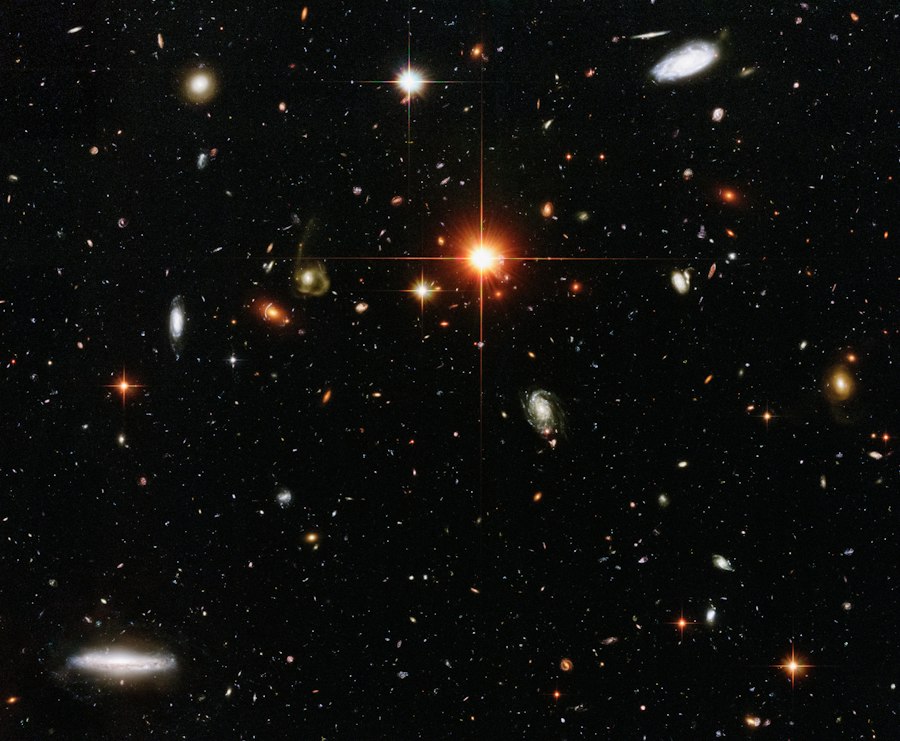
The universe is not a homogeneous soup of particles; it is a tapestry woven with intricate structures, from the humble planets orbiting stars to the colossal cosmic webs that span billions of light-years. Understanding how these structures formed and evolved is a central goal of cosmology, providing insights into the interplay of gravity, matter, and the initial conditions imprinted by the Big Bang.
The Cosmic Web: Filaments, Voids, and Galactic Clusters
The large-scale structure of the universe is often described as a cosmic web. This web consists of vast, interconnected filaments of galaxies and dark matter, interspersed with enormous, nearly empty regions called voids. Galaxies are not randomly distributed but tend to congregate within these filaments, forming clusters and superclusters of galaxies. These superclusters, in turn, are arranged in a filamentary network.
The formation of this cosmic web is thought to be a direct consequence of tiny density fluctuations in the early universe, amplified by gravity over billions of years. Regions that were slightly denser than average attracted more matter, growing into the filaments and clusters we see today. The voids are the regions that were slightly less dense, and therefore matter was pulled away from them. Studying the distribution and evolution of these structures allows cosmologists to test models of structure formation and to probe the properties of dark matter and dark energy.
Galaxies and Their Evolution: From Primordial Clouds to Cosmic Islands
Galaxies, the fundamental building blocks of the visible universe, are themselves complex systems. They are born from the gravitational collapse of primordial gas clouds, enriched by the heavier elements forged in the cores of stars and dispersed through supernova explosions. The diversity of galaxies – from the majestic spiral arms of the Milky Way to the elliptical behemoths and the irregular dwarf galaxies – reflects their varied formation histories and their interactions with their environment.
The study of galaxy evolution involves understanding processes like star formation, black hole growth, and mergers. Massive galaxies at the centers of clusters are often thought to have grown through repeated mergers with smaller galaxies. The supermassive black holes at the centers of most galaxies play a significant role in regulating star formation within their host galaxies, either by accreting vast amounts of gas and expelling energy or by channeling jets of plasma that can heat or sweep away interstellar gas. The ongoing “cosmic census” of galaxies, using powerful telescopes like the Hubble Space Telescope and the James Webb Space Telescope, continues to reveal new insights into their formation and evolution across cosmic time.
The Question of Life: Exoplanets and the Search for Extraterrestrial Intelligence
Beyond the physical makeup and evolution of the cosmos lies one of the most profound and enduring questions humanity has ever pondered: Are we alone? The discovery of exoplanets – planets orbiting stars other than our Sun – has transformed this question from philosophical speculation into a tangible scientific pursuit.
The Exoplanet Revolution: A Universe Teeming with Worlds
The past few decades have witnessed an explosion in exoplanet discoveries. Missions like Kepler and TESS have revealed that planets are not rare exceptions but are incredibly common. It is now estimated that there are more planets in our galaxy than there are stars. These exoplanets exhibit an astonishing diversity in size, mass, composition, and orbital characteristics. We have found gas giants larger than Jupiter, rocky planets similar in size to Earth, and even planets that orbit multiple stars.
The focus of exoplanet research has increasingly shifted towards identifying potentially habitable worlds. This involves searching for planets within the habitable zone of their stars, the region where temperatures could allow liquid water to exist on the surface. However, habitability is a complex concept, and scientists are also considering factors like atmospheric composition, the presence of a magnetic field, and the stability of the stellar environment. The detailed study of exoplanet atmospheres, using techniques like transit spectroscopy, is beginning to reveal the chemical makeup of these distant worlds, offering clues about their potential to support life.
The Search for Biosignatures: Hints of Life Beyond Earth
The ultimate goal of exoplanet research, from a life-finding perspective, is to detect biosignatures – indicators of biological processes. These could be specific gases in an exoplanet’s atmosphere, such as oxygen and methane coexisting, which are difficult to explain through purely geological or chemical processes. The detection of such biosignatures would be a monumental discovery, profoundly altering our understanding of life’s place in the universe.
The search for extraterrestrial intelligence (SETI) also continues, albeit with less direct observational power than exoplanet atmosphere studies. SETI projects employ radio telescopes and other instruments to scan the skies for artificial signals that might be transmitted by advanced civilizations. While no definitive signals have been detected to date, the vastness of the universe and the ever-increasing number of known exoplanets suggest that the probability of life existing elsewhere cannot be dismissed. The question of life’s prevalence in the cosmos remains one of the most exciting and challenging frontiers of scientific exploration.
One of the most intriguing aspects of cosmology is the quest to understand the fundamental questions surrounding the universe’s origin and structure. For those interested in delving deeper into these mysteries, a related article can be found that explores the biggest questions in cosmology and their implications for our understanding of existence. You can read more about it in this insightful piece on Freaky Science, which discusses the latest theories and discoveries that continue to shape our view of the cosmos.
The Ultimate Fate: Cosmic Endgames and Future Horizons
| Biggest Question in Cosmology | Description | Current Understanding | Key Metrics/Data |
|---|---|---|---|
| What is Dark Matter? | Understanding the nature of the unseen matter that makes up about 27% of the universe’s mass-energy content. | Detected via gravitational effects; composition unknown. | ~27% of universe’s mass-energy; inferred from galaxy rotation curves and gravitational lensing. |
| What is Dark Energy? | The mysterious force driving the accelerated expansion of the universe. | Modeled as cosmological constant or dynamic field; origin unknown. | ~68% of universe’s mass-energy; measured via supernovae redshift and cosmic microwave background. |
| What Happened Before the Big Bang? | Exploring the conditions or existence of the universe prior to the Big Bang event. | Speculative; no direct observational evidence. | Time zero at ~13.8 billion years ago; no data before this point. |
| Why is the Universe So Uniform? | Understanding the homogeneity and isotropy of the universe on large scales. | Explained by cosmic inflation theory. | Temperature fluctuations in CMB ~1 part in 100,000. |
| What is the Fate of the Universe? | Determining how the universe will evolve in the far future. | Depends on dark energy properties; possibilities include continued expansion or Big Crunch. | Hubble constant ~67-74 km/s/Mpc; dark energy equation of state parameter w ~ -1. |
The universe, like all things, is subject to the passage of time and the relentless march of physical processes. Cosmology seeks to understand not only the universe’s origin and present state but also its ultimate destiny. The future of the cosmos is intimately tied to the nature of dark energy and the balance of fundamental forces.
Scenarios for the End of the Universe: From Freeze to Rip
As mentioned earlier, the dominant scenario for the universe’s end, based on current data, is the Big Freeze. In this scenario, dark energy continues to drive an ever-accelerating expansion. Galaxies will recede from each other at speeds exceeding the speed of light, eventually becoming causally disconnected. Stars will exhaust their fuel, leaving behind stellar remnants like white dwarfs, neutron stars, and black holes. Eventually, even these will fade, and the universe will become a cold, dark, and empty expanse, approaching absolute zero temperature.
Another theoretical, though less likely, scenario is the Big Rip. This would occur if dark energy’s repulsive force were to grow stronger over time. In such a scenario, the accelerating expansion would become so intense that it would eventually overcome all fundamental forces, tearing apart galaxies, stars, planets, atoms, and even subatomic particles.
A more cyclical, though currently disfavored by data, possibility is the Big Crunch. If the universe’s expansion were to eventually halt and reverse due to gravity, it could lead to a collapse back into a singularity, potentially triggering another Big Bang in a cyclical process. However, the observed acceleration of expansion makes this scenario highly improbable under current cosmological models.
The Horizon of Human Understanding: Pushing the Boundaries of Knowledge
The questions in cosmology are not merely about cataloging celestial objects or describing physical laws. They delve into the fundamental nature of space, time, matter, and energy. They challenge our intuition and force us to confront the limitations of our current understanding. The pursuit of answers drives innovation in theoretical physics, observational astronomy, and technological development.
The ongoing quest to unravel the mysteries of the universe is a testament to human curiosity and our innate desire to comprehend our place in the grand cosmic narrative. Each new discovery, from the faint whispers of the CMB to the distant glow of nascent galaxies, brings us closer to a more complete picture. The biggest questions in cosmology may remain unanswered for generations, but the journey of exploration itself is one of humanity’s most profound and enduring endeavors, continuously expanding the horizon of our knowledge and our place within the infinite cosmos.
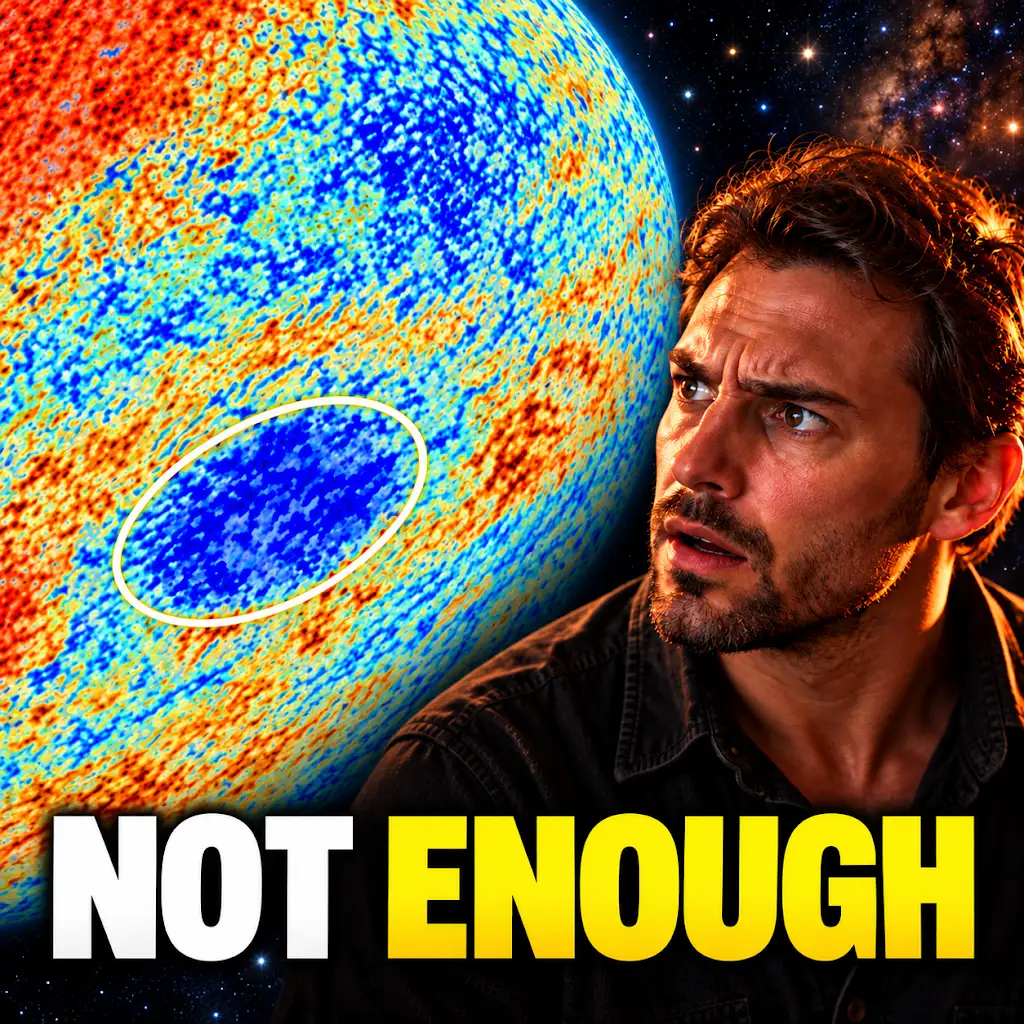
The Universe’s Cold Spot Has an Explanation. It’s Not Enough.
FAQs
What are the biggest questions in cosmology?
Cosmology is the study of the origin, evolution, and eventual fate of the universe. Some of the biggest questions in cosmology include the nature of dark matter and dark energy, the ultimate fate of the universe, the existence of other universes or multiverses, the origin of cosmic inflation, and the search for a unified theory of physics.
What is dark matter and dark energy?
Dark matter and dark energy are two mysterious components that make up the majority of the universe’s mass-energy content. Dark matter does not emit, absorb, or reflect light, making it invisible and detectable only through its gravitational effects. Dark energy is a hypothetical form of energy that is believed to be responsible for the accelerated expansion of the universe.
What is the ultimate fate of the universe?
The ultimate fate of the universe is a topic of great debate among cosmologists. Depending on the amount of dark energy in the universe, it could continue expanding forever, eventually tearing apart galaxies and stars in a “Big Rip.” Alternatively, the universe could reach a maximum size and begin contracting in a “Big Crunch,” leading to a possible collapse or a new Big Bang.
What is cosmic inflation?
Cosmic inflation is a theory that proposes the universe underwent a rapid and exponential expansion in the first moments after the Big Bang. This period of inflation helps explain the large-scale structure and uniformity of the universe, as well as the existence of cosmic microwave background radiation.
Is there evidence for other universes or multiverses?
The existence of other universes or multiverses is a speculative idea in cosmology. While there is currently no direct evidence for the existence of other universes, some theories, such as string theory and the multiverse hypothesis, suggest the possibility of a vast and diverse multiverse beyond our observable universe.