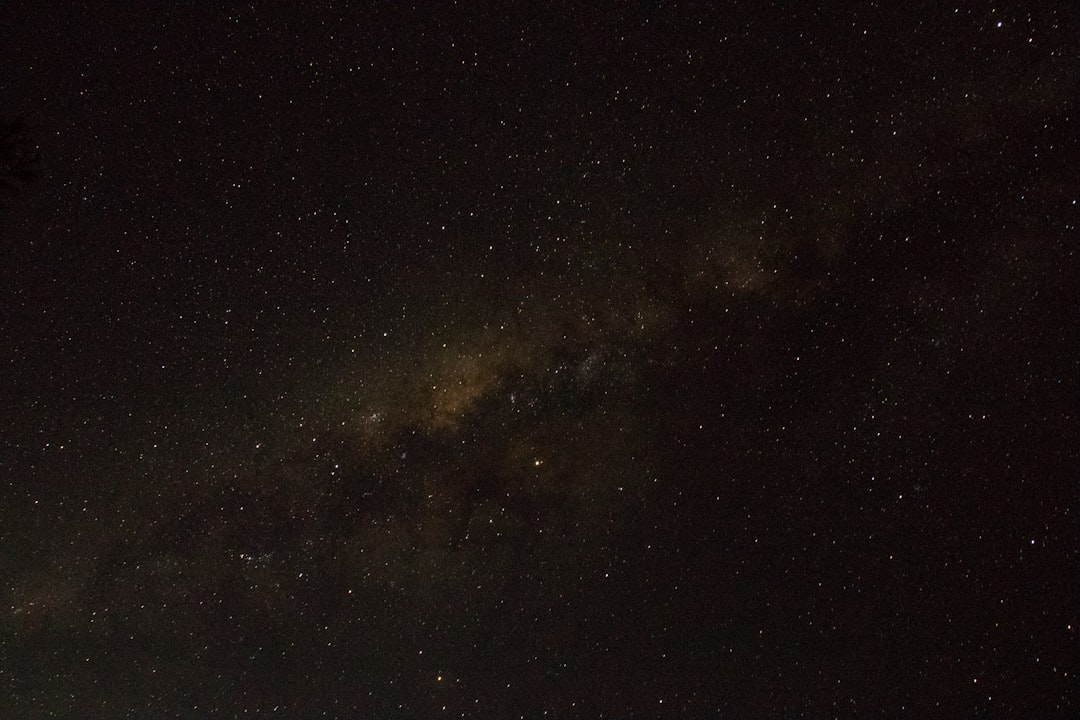
The universe, an expanse of darkness punctuated by celestial bodies, has been a source of human fascination for millennia. From ancient astronomers observing the night sky to modern scientists peering through powerful telescopes, the quest to unravel the mysteries of space has driven innovation and expanded our understanding of our place within the cosmos. This article delves into the wonders that lie beyond Earth, exploring the vastness of space, the formations and phenomena that populate it, and humanity’s ongoing efforts to comprehend these cosmic marvels.
The sheer scale of the universe is a concept that often defies easy comprehension. It is a canvas so vast that our terrestrial experiences provide little frame of reference. To truly grasp its immensity, one must consider the distances involved, the number of celestial entities, and the theoretical boundaries of observable reality.
Vast Distances: Measured in Light-Years and Parsecs
Space is not merely empty; it is an ocean of distance. The fundamental unit for measuring these cosmic gulfs is the light-year, the distance light travels in one Earth year. At approximately 9.46 trillion kilometers (5.88 trillion miles), a single light-year is a staggering figure. Our nearest stellar neighbor, Proxima Centauri, is over 4.2 light-years away. This means that the light we observe from it today began its journey when early hominids were just beginning to master tools.
Beyond our immediate stellar vicinity, distances escalate dramatically. The Milky Way galaxy, our home, spans approximately 100,000 light-years in diameter. Even at the speed of light, traversing our own galaxy would be an endeavor spanning a significant portion of cosmic history. Further still are the galaxies beyond our own. The Andromeda Galaxy, our closest large galactic neighbor, is about 2.5 million light-years away. The light we see from Andromeda tonight embarked on its journey when the earliest ancestors of Homo sapiens walked the Earth.
For even greater distances, astronomers employ the parsec, a unit equivalent to approximately 3.26 light-years. This unit is particularly useful for measuring distances to stars and other celestial objects within our galaxy and to nearby galaxies. The concept of these immense distances underscores the isolation of celestial bodies and the vast empty spaces that separate them, akin to individual dust motes suspended in an infinite, dark hall.
The Cosmic Census: Billions of Galaxies and Trillions of Stars
The universe is not a sparsely populated expanse. The Hubble Space Telescope, in one of its most profound observations, captured the Hubble Ultra Deep Field, a minuscule patch of sky that revealed thousands of galaxies, each containing billions of stars. Extrapolating from such observations, scientists estimate that there are possibly trillions of galaxies in the observable universe.
Each of these galaxies is a bustling metropolis of stars, planets, nebulae, and dark matter. Our Sun, a single star in the Milky Way, is just one of an estimated 100 to 400 billion stars within our galaxy alone. When considering the trillions of galaxies, the number of stars in the universe becomes an almost incomprehensible figure, often colloquially referred to as a number “larger than the number of grains of sand on all the beaches of Earth.” This sheer abundance of celestial bodies suggests that the conditions for star formation and potentially planet formation are widespread throughout the cosmos.
The Expanding Universe: A Dynamic and Evolving Realm
The universe is not static; it is in a constant state of expansion. This discovery, pioneered by Edwin Hubble in the late 1920s, revealed that galaxies are moving away from each other, and the farther away a galaxy is, the faster it recedes. This cosmic expansion is not like an explosion in pre-existing space; rather, space itself is stretching, carrying galaxies along with it.
The rate of this expansion is quantified by the Hubble Constant, which, while subject to ongoing refinement, provides a crucial parameter for understanding the age and fate of the universe. The expansion of the universe implies that in the distant past, all matter and energy were closer together, leading to theories about a singular beginning, the Big Bang. Understanding this expansion is fundamental to comprehending the evolution of cosmic structures and the eventual destiny of the universe, whether it will continue to expand indefinitely, eventually tear itself apart, or ultimately collapse back upon itself.
In the ever-evolving field of space science, researchers are continuously making groundbreaking discoveries that expand our understanding of the universe. A fascinating article that delves into recent advancements in astrophysics can be found at this link. It explores the implications of new data collected from various space missions and how these findings could reshape our knowledge of cosmic phenomena.
Celestial Architecture: Formations and Phenomena in Space
The universe is far from homogenous; it is a dynamic arena where matter coalesces into intricate structures and energy manifests in spectacular phenomena. From the birth and death of stars to the enigmatic presence of black holes, the cosmos presents a breathtaking array of celestial architecture.
Stellar Nurseries and Stellar Lifecycle: From Nebulae to Supernovae
Stars are the fundamental building blocks of galaxies, and their formation is a process that begins in vast clouds of gas and dust known as nebulae. Within these nebulae, gravity causes denser regions to collapse, forming protostars. As these protostars accumulate mass, their core temperature and pressure increase, eventually igniting nuclear fusion, the process that powers stars. This marks the birth of a star, a process similar to a cosmic forge igniting.
The life of a star is determined primarily by its mass. Low-mass stars, like our Sun, will eventually exhaust their hydrogen fuel and expand into red giants before shedding their outer layers to form planetary nebulae, leaving behind a dense white dwarf. More massive stars, however, live shorter, more dramatic lives. Their end is marked by a catastrophic explosion known as a supernova, a luminous event that can briefly outshine an entire galaxy. These supernovae are crucial for the distribution of heavier elements, synthesized in the star’s core, throughout the cosmos.
Galaxies: Islands of Stars and Cosmic Cities
Galaxies are colossal collections of stars, gas, dust, and dark matter, bound together by gravity. They come in a variety of shapes and sizes, broadly classified into three main types: spiral, elliptical, and irregular.
Spiral galaxies, like our Milky Way, are characterized by their flattened, rotating disks with prominent spiral arms. These arms are regions of active star formation, giving them a bluish hue. Elliptical galaxies, on the other hand, are more spherical or oval-shaped and generally contain older stars with little ongoing star formation. Irregular galaxies lack a defined shape and are often the result of galactic collisions or gravitational interactions.
Galaxies are not isolated entities; they often congregate in clusters and superclusters, forming the largest known structures in the universe. The gravitational dance between galaxies can lead to stunning displays of cosmic artistry, including mergers and tidal stripping, where one galaxy pulls material from another.
Black Holes: Gravitational Singularities
Black holes represent one of the most extreme and enigmatic phenomena in the universe. These objects possess such immense gravity that nothing, not even light, can escape their pull once it has crossed a boundary known as the event horizon.
Black holes are formed from the collapse of massive stars at the end of their lives, or they can grow to supermassive sizes, millions or even billions of times the mass of our Sun, at the centers of galaxies. The existence and properties of black holes are described by Einstein’s theory of general relativity, and while directly observing them is impossible due to their nature, their presence is inferred through their gravitational influence on surrounding matter and the radiation emitted as matter falls into them. These cosmic vacuum cleaners, as they might be metaphorically called, are crucial players in galactic evolution.
Nebulae: Cosmic Clouds of Beauty and Creation
Nebulae are vast interstellar clouds composed of dust and gas, primarily hydrogen and helium. They serve as the birthplace of stars and often exhibit breathtaking beauty in their intricate patterns and vibrant colors.
Emission nebulae, like the Orion Nebula, glow due to the ionization of gas by ultraviolet radiation from nearby hot young stars. Reflection nebulae, such as the Pleiades star cluster’s surrounding nebulae, reflect the light of nearby stars. Dark nebulae, like the Horsehead Nebula, are dense clouds of dust that obscure the light from objects behind them, appearing as dark silhouettes against brighter backgrounds. These nebulae are not just visually stunning; they are fundamental to the cosmic cycle of creation and destruction.
The Search for Life Beyond Earth: Astrobiology and the Exoplanet Revolution
The question of whether life exists beyond Earth, once relegated to the realm of science fiction, has become a serious scientific pursuit. The discovery of thousands of exoplanets—planets orbiting stars other than our Sun—has revolutionized our understanding of planetary formation and fueled the search for potentially habitable worlds.
Exoplanet Discoveries: Unveiling Other Worlds
The last few decades have witnessed an unprecedented surge in exoplanet discoveries, thanks to missions like the Kepler Space Telescope and the Transiting Exoplanet Survey Satellite (TESS). These missions have employed various detection methods, primarily the transit method, which observes the slight dimming of a star as a planet passes in front of it.
The catalog of known exoplanets now numbers in the thousands, revealing a diversity of planetary types, from gas giants larger than Jupiter to rocky planets similar in size to Earth. This abundance suggests that planets are not an anomaly but a common feature of star systems throughout the galaxy. The sheer number of these distant worlds presents a veritable cosmic real estate survey.
The Habitable Zone: The Sweet Spot for Life
For life as we know it to arise and persist, a planet needs to exist within its star’s “habitable zone,” also known as the “Goldilocks zone.” This is the region around a star where temperatures are just right for liquid water to exist on a planet’s surface. Too close to the star, and water would evaporate; too far, and it would freeze.
Scientists are actively searching for exoplanets within the habitable zones of their stars, particularly those orbiting red dwarf stars, which are the most common type of star in the galaxy. While red dwarfs have their own challenges, such as stellar flares, their longevity offers ample time for life to evolve. Identifying these prime candidates is a crucial step in the search for extraterrestrial life.
The Search for Biosignatures: Hints of Life
Detecting life on exoplanets is a formidable challenge. Direct observation is currently beyond our technological capabilities. Instead, astrobiologists focus on identifying “biosignatures” – substances or phenomena that provide evidence of biological processes.
These biosignatures could include the presence of certain gases in a planet’s atmosphere, such as oxygen and methane, in proportions that are difficult to explain by non-biological processes. Future telescopes, like the James Webb Space Telescope, are equipped to analyze the atmospheres of exoplanets, searching for these telltale signs. The detection of such biosignatures would be a monumental discovery, confirming that life is not unique to Earth.
The Drake Equation and the Fermi Paradox: Estimating the Odds
The Drake Equation, formulated by Frank Drake in 1961, provides a probabilistic framework for estimating the number of extraterrestrial civilizations in our galaxy with which communication might be possible. While many of its parameters remain speculative, it highlights the factors involved, such as the rate of star formation, the fraction of stars with planets, and the average lifetime of a communicative civilization.
Complementing this is the Fermi Paradox, which poses the question: If extraterrestrial civilizations are common, why have we not yet encountered any evidence of them? Various proposed solutions range from the vast distances involved and the difficulty of interstellar travel to the possibility that civilizations are short-lived or intentionally avoid contact. These conceptual frameworks serve as thought experiments, guiding our understanding of our cosmic solitude, or lack thereof.
Humanity’s Reach: Space Exploration and Technological Advancements
Humanity’s journey into space is a testament to our innate curiosity and our relentless drive to explore the unknown. From the early days of rocketry to sophisticated interplanetary probes and ambitious future missions, our understanding and exploration of space are continuously evolving.
The Era of Spaceflight: From Sputnik to Mars Rovers
The dawn of the space age was marked by the Soviet Union’s launch of Sputnik 1 in 1957, the first artificial satellite. This event ignited a fierce space race with the United States, leading to landmark achievements such as the Apollo moon landings and the establishment of the International Space Station (ISS).
Subsequent decades have seen the deployment of numerous robotic missions, including the Voyager probes, which have ventured into interstellar space, and rovers like Spirit, Opportunity, Curiosity, and Perseverance, which have explored the Martian surface, searching for evidence of past or present life. These missions are like tireless emissaries, carrying our gaze and our instruments to distant worlds.
Telescopes and Observatories: Our Eyes on the Cosmos
Ground-based and space-based telescopes are indispensable tools in our quest to understand space. The Hubble Space Telescope, launched in 1990, has delivered breathtaking images and invaluable scientific data, revolutionizing our understanding of the universe. The James Webb Space Telescope, its successor, is designed to observe the universe in infrared light, allowing us to peer further back in time and study the formation of the earliest galaxies and stars.
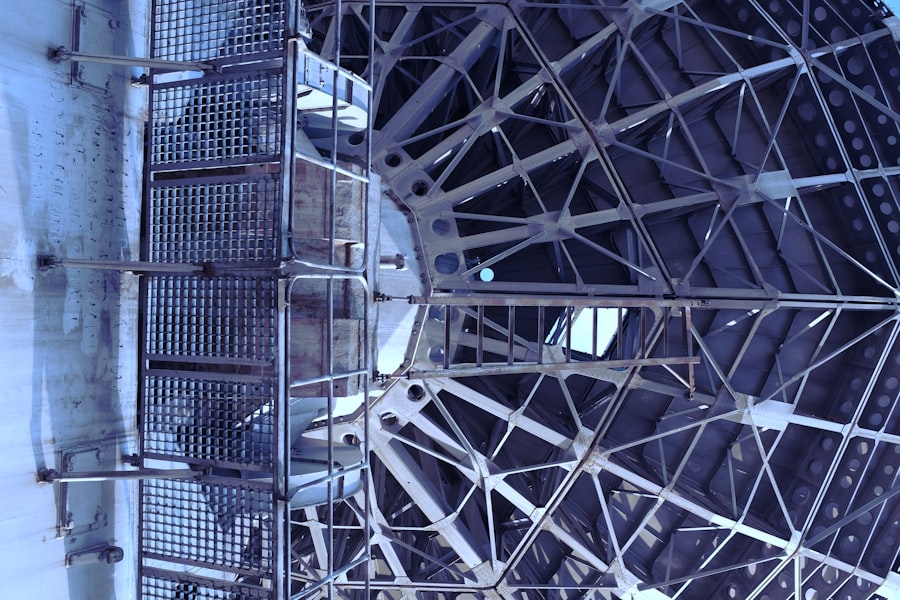
Radio telescopes, like the Atacama Large Millimeter/submillimeter Array (ALMA), observe the universe in radio waves, revealing phenomena not visible in optical light, such as the formation of stars and planets within dusty nebulae. These observatories are the extensions of our senses, allowing us to ‘see’ the invisible.
Future Frontiers: Artemis Program and Interstellar Travel
The Artemis program, led by NASA, aims to return humans to the Moon and establish a sustainable lunar presence, serving as a stepping stone for future missions to Mars. This endeavor signifies a renewed commitment to human exploration of the solar system.
The dream of interstellar travel, while currently a distant prospect, continues to inspire scientific and technological innovation. Concepts like fusion propulsion and advanced solar sails are being explored as potential pathways for traversing the vast distances between stars. The pursuit of such technologies represents humanity’s aspiration to break free from our terrestrial cradle and become a truly interstellar species.
The Challenges of Space Exploration: Cost, Risk, and Ethics
Space exploration is not without its significant challenges. The immense cost of space missions, the inherent risks to human life, and the ethical considerations surrounding planetary protection and the potential contamination of other worlds are all critical factors that must be addressed.
The development of robust life support systems, radiation shielding, and advanced propulsion technologies are essential for enabling longer and more ambitious human missions. Furthermore, establishing international cooperation and resource sharing is crucial for the sustainable and responsible exploration of space.
Recent advancements in space science have opened up new avenues for exploration and understanding of our universe. One fascinating aspect is the study of exoplanets, which has revealed a plethora of potentially habitable worlds beyond our solar system. For those interested in diving deeper into this topic, you can read more about the latest discoveries and research in the field by visiting this insightful article on space science. Check it out here to explore how these findings could reshape our understanding of life beyond Earth.
Unanswered Questions: The Enigmas of the Universe
| Metric | Value | Unit | Description |
|---|---|---|---|
| Distance to Moon | 384,400 | km | Average distance from Earth to the Moon |
| Speed of Light | 299,792 | km/s | Speed at which light travels in vacuum |
| Age of Universe | 13.8 | billion years | Estimated age since the Big Bang |
| Mass of Sun | 1.989 × 10^30 | kg | Mass of the Sun |
| Orbital Period of Earth | 365.25 | days | Time Earth takes to orbit the Sun |
| Number of Known Exoplanets | 5,500+ | count | Confirmed planets outside our solar system |
| Temperature on Mars Surface | -63 | °C | Average surface temperature on Mars |
| Diameter of Milky Way | 105,700 | light years | Estimated diameter of our galaxy |
Despite tremendous advancements, the universe remains a realm of profound mysteries. Many fundamental questions continue to elude our grasp, driving ongoing research and inspiring future generations of scientists.
Dark Matter and Dark Energy: The Invisible Majority
One of the most significant cosmic enigmas is the existence of dark matter and dark energy. These theoretical forms of matter and energy constitute approximately 95% of the universe’s total mass-energy content, yet their nature remains largely unknown.
Dark matter is inferred from its gravitational effects on visible matter; it holds galaxies together and influences the formation of large-scale structures. Dark energy, on the other hand, is responsible for the accelerated expansion of the universe. Understanding these elusive components is crucial for a complete picture of cosmic evolution and the ultimate fate of the universe. They are the silent architects of cosmic architecture, their presence felt but not seen.
The Origin of the Universe: The Big Bang and Beyond
While the Big Bang theory provides a robust framework for the early universe, the precise conditions and mechanisms that led to it, as well as what might have existed before it, remain subjects of intense scientific inquiry. Questions about the initial singularity, the rapid inflation of the universe, and the fundamental laws that governed these early moments continue to be explored through theoretical physics and astronomical observations.
The Nature of Consciousness and Intelligence: Are We Alone?
The question of whether we are alone in the universe extends beyond the existence of simple life to the possibility of intelligent extraterrestrial civilizations. The search for extraterrestrial intelligence (SETI) employs radio telescopes to listen for artificial signals from space. The discovery of another intelligent civilization would have profound philosophical and societal implications, challenging our understanding of humanity’s unique place in the cosmos.
The Future of Cosmology: Quantum Gravity and String Theory
The quest to unify the fundamental forces of nature, particularly gravity with quantum mechanics, is a central goal in modern physics. Theories like string theory propose that fundamental particles are not point-like but rather tiny vibrating strings, offering a potential framework for a unified theory of everything. The eventual breakthrough in these areas could unlock deeper secrets about the universe’s fundamental workings.
The exploration of space is more than just a scientific endeavor; it is a reflection of humanity’s enduring curiosity and our desire to understand our origins, our place, and our future within the grand cosmic tapestry. As we continue to unravel the mysteries of space, we not only expand our knowledge of the universe but also deepen our understanding of ourselves.
FAQs
What is space science?
Space science is the study of outer space, including the observation and analysis of celestial bodies such as stars, planets, comets, and galaxies, as well as the physical phenomena that occur beyond Earth’s atmosphere.
What are the main branches of space science?
The main branches of space science include astronomy, astrophysics, planetary science, cosmology, and space exploration. Each branch focuses on different aspects of space and celestial phenomena.
How do scientists study space?
Scientists study space using telescopes, satellites, space probes, and space telescopes like the Hubble Space Telescope. They also use computer simulations and data from space missions to understand the universe.
What is the importance of space science?
Space science helps us understand the origin and evolution of the universe, the nature of celestial bodies, and the potential for life beyond Earth. It also drives technological advancements and inspires innovation in various fields.
What are some recent advancements in space science?
Recent advancements include the discovery of exoplanets, improved imaging of black holes, successful Mars rover missions, and the development of new space telescopes like the James Webb Space Telescope, which provide deeper insights into the cosmos.