
The universe, a canvas of unimaginable scale and complexity, whispers secrets about its origin and evolution. Among these celestial murmurs, one of the most profound is the Cosmic Microwave Background (CMB) radiation. This faint afterglow of the Big Bang, a relic from a time when the universe was a mere infant, offers an unparalleled window into the universe’s earliest moments. Unraveling its mysteries has been a monumental scientific endeavor, pushing the boundaries of our understanding and revealing fundamental truths about the cosmos.
The Genesis of the Cosmic Whisper
The story of the Cosmic Microwave Background begins not with a deliberate search, but with a serendipitous discovery. In 1964, Arno Penzias and Robert Wilson, two radio astronomers working at Bell Labs, were trying to eliminate an inexplicable persistent static noise in their horn antenna. This noise, a steady hiss that permeated their observations regardless of the direction they pointed their instrument, proved stubbornly resistant to all their efforts to suppress it. They meticulously checked for equipment malfunctions, atmospheric interference, and even the droppings of pigeons nesting in the antenna. Yet, the noise persisted, a constant, isotropic hum that seemed to come from everywhere in the sky.
Meanwhile, a team of physicists at Princeton University, led by Robert Dicke, was independently working on a theoretical framework for a universe that had undergone a hot, dense beginning – the Big Bang model. They predicted that such an event would have left behind a residual thermal radiation, a faint echo that would pervade the cosmos. This radiation, they theorized, should be observable across the microwave spectrum. When Dicke and his colleagues learned of Penzias and Wilson’s persistent noise, the connection was immediate and profound. The unwanted static was, in fact, the very evidence they were seeking – the Cosmic Microwave Background radiation. Penzias and Wilson’s discovery, for which they were awarded the Nobel Prize in Physics in 1978, marked a pivotal moment in cosmology, providing the first strong observational evidence for the Big Bang.
The Physics of the Early Universe
To truly appreciate the significance of the CMB, one must delve into the physics of the universe in its nascent stages. In the first few hundred thousand years after the Big Bang, the universe was an incredibly hot, dense plasma. Photons, the particles of light, were constantly scattering off free electrons and protons, preventing light from traveling freely. This state of affairs is analogous to being inside a thick fog; light can’t travel far before being absorbed and re-emitted. The universe was opaque.
As the universe expanded, it also cooled. Around 380,000 years after the Big Bang, the temperature dropped to a point where electrons and protons could combine to form neutral atoms. This process, known as recombination or decoupling, was a transformative event. With most of the free electrons bound into atoms, photons were no longer constantly scattering. They were suddenly free to travel unimpeded through the cosmos. The universe became transparent, and the light that was released at this moment has been traveling ever since, stretching and red-shifting as the universe continues to expand. This ancient light, now cooled to a mere 2.7 Kelvin above absolute zero, is the CMB we observe today.
The Blackbody Spectrum of the CMB
One of the most striking features of the CMB is its near-perfect blackbody spectrum. A blackbody is an idealized object that absorbs all incident electromagnetic radiation and emits radiation based solely on its temperature. The CMB’s spectrum precisely matches that of a blackbody at a temperature of 2.725 Kelvin. This remarkable agreement is a powerful confirmation of the Big Bang model. If the universe had evolved differently, or if the CMB had originated from some other source, its spectrum would not exhibit such a precise blackbody distribution. The uniformity of this spectrum across all directions in the sky further reinforces the idea that the early universe was remarkably homogeneous, at least on large scales.
Cosmic background radiation is a fascinating topic that provides insight into the early universe and the Big Bang theory. For those looking to understand this concept in a more straightforward manner, a related article can be found at Freaky Science, which simplifies the complexities of cosmic background radiation and its significance in cosmology. This resource is perfect for anyone curious about the fundamental aspects of our universe and how scientists study its origins.
Probing the CMB: A Journey of Precision
The initial discovery of the CMB was a landmark achievement, but the true unraveling of its mysteries began with increasingly precise measurements. The faintness of the CMB, coupled with the need to distinguish it from foreground emissions from our own galaxy and other astronomical sources, necessitated the development of sophisticated instruments and observation techniques.
Early Ground-Based and Balloon Experiments
Following Penzias and Wilson’s discovery, a series of increasingly sensitive experiments were conducted. Early efforts involved ground-based telescopes and, later, high-altitude balloon experiments. These balloons could ascend above the majority of Earth’s atmosphere, significantly reducing atmospheric interference and allowing for more accurate measurements of the CMB’s temperature and its subtle variations. Experiments like the Berkeley-Illinois-Maryland Association (BIMA) array and the Cosmic Background Explorer (COBE) satellite played crucial roles in refining our understanding of the CMB. COBE, launched in 1989, was particularly groundbreaking. It provided the first detailed map of the CMB, confirming its blackbody spectrum with unprecedented accuracy and, crucially, detecting tiny temperature fluctuations – anisotropies – across the sky.
The Revolution of Space-Based Observatories
The real revolution in CMB research came with dedicated space-based observatories. The harsh environment of Earth’s atmosphere, with its absorption and emission of microwave radiation, makes precise ground-based measurements extremely challenging. Satellites, orbiting above the atmosphere, offered a pristine vantage point. The aforementioned COBE satellite was the first major step in this direction. Its successor, the Wilkinson Microwave Anisotropy Probe (WMAP), launched in 2001, pushed the precision of CMB measurements to a new level. WMAP meticulously mapped the CMB over nine years, providing a wealth of data that revolutionized our understanding of the universe’s age, composition, and geometry.
The current pinnacle of CMB observation is the Planck satellite, operated by the European Space Agency. Launched in 2009, Planck has delivered the most precise and comprehensive maps of the CMB to date. Its advanced instruments have measured the temperature anisotropies with exquisite detail, revealing subtle patterns that encode information about the universe’s earliest moments, the seeds of cosmic structure formation, and the fundamental parameters of the universe.
The Anisotropies: Whispers of Cosmic Imprimatur
While the CMB is remarkably uniform, the tiny temperature fluctuations, or anisotropies, detected by COBE, WMAP, and Planck are its most scientifically rich aspect. These minute variations, on the order of one part in 100,000, are not random noise. Instead, they are the imprints of quantum fluctuations in the very early universe, amplified by inflation and providing the initial seeds for the large-scale structures we observe today, such as galaxies and galaxy clusters.
The Seeds of Structure Formation
In the primordial soup of the early universe, slight overdensities and underdensities of matter existed. These density fluctuations, imprinted on the CMB, represent regions where matter was slightly more or less concentrated. Due to gravity, regions with slightly higher density would attract more matter, eventually growing into the stars, galaxies, and clusters of galaxies we see today. Conversely, regions with slightly lower density would become the vast voids that separate these cosmic structures. The patterns of these anisotropies, particularly their statistical properties, provide crucial information about the initial conditions of the universe and the processes that led to its observed structure.
The Power Spectrum: A Cosmic Fingerprint
Cosmologists analyze the CMB anisotropies by studying their power spectrum. This statistical tool quantifies the amplitude of temperature variations as a function of their angular scale on the sky. The resulting power spectrum is not a smooth curve; it exhibits a series of peaks and troughs. Each peak and trough corresponds to specific physical processes that occurred in the early universe. The height and position of these peaks are exquisitely sensitive to the universe’s fundamental parameters, such as the density of baryonic matter (ordinary matter), the density of dark matter, the density of dark energy, and the Hubble constant (the rate of the universe’s expansion). By fitting theoretical models to the observed power spectrum, cosmologists can precisely determine these parameters, effectively “fingerprinting” our universe.
Unveiling the Cosmic Inventory
The detailed analysis of CMB anisotropies has led to a remarkably precise understanding of the universe’s composition. The power spectrum acts like a cosmic inventory, revealing the proportions of different components that make up the cosmos.
The Dominance of Dark Matter and Dark Energy
One of the most significant revelations from CMB observations is the unexpected composition of the universe. The data unequivocally shows that ordinary baryonic matter, the stuff of stars, planets, and ourselves, accounts for only about 5% of the total energy density of the universe. A much larger component, about 27%, is attributed to dark matter. This invisible substance interacts gravitationally but does not emit, absorb, or reflect light, making it incredibly elusive. Its presence is inferred from its gravitational effects on visible matter and light.
The largest component, making up about 68% of the universe’s energy density, is dark energy. This mysterious force is responsible for the observed accelerated expansion of the universe. While its nature remains one of the biggest puzzles in physics, its existence and dominant role are strongly supported by CMB data.
The Age and Geometry of the Universe
The CMB also provides incredibly precise estimates for the age and geometry of the universe. By analyzing the expansion history implied by the CMB and other cosmological data, scientists have determined the age of the universe to be approximately 13.8 billion years. Furthermore, the patterns of the anisotropies indicate that the universe is remarkably flat, meaning that parallel lines will remain parallel over vast distances, at least on cosmological scales. This flatness is a strong prediction of the inflationary theory, a hypothetical period of rapid expansion in the universe’s earliest moments.
If you’re curious about the origins of the universe and the fascinating concept of cosmic background radiation, you might find this article particularly enlightening. It breaks down complex ideas into simpler terms, making them accessible to everyone. For a deeper understanding, you can check out this related piece on Freaky Science, which explores the significance of cosmic background radiation in the context of the Big Bang theory.
The Ongoing Quest: What Lies Ahead?
| Metric | Description | Value | Units |
|---|---|---|---|
| Temperature | Average temperature of the cosmic microwave background radiation | 2.725 | Kelvin (K) |
| Frequency Peak | Frequency at which the radiation intensity is highest | 160.2 | GHz |
| Wavelength Peak | Wavelength corresponding to the peak frequency | 1.9 | mm |
| Age of Universe | Time since the cosmic background radiation was emitted | 13.8 | billion years |
| Redshift (z) | Redshift value when the radiation was emitted | ~1100 | dimensionless |
| Intensity | Intensity of the radiation at peak frequency | ~3.5 | mW/m²/sr/Hz |
| Polarization | Degree of polarization of the radiation | ~10% | percent |
Despite the remarkable progress made in unraveling the mysteries of the Cosmic Microwave Background, the quest for knowledge is far from over. The CMB continues to be a rich source of information, and future observations and theoretical advancements promise to shed light on even deeper cosmic questions.
The Primordial Gravitational Waves
While Planck has provided unprecedented detail about the temperature anisotropies, scientists are eager to detect another type of subtle signal in the CMB: primordial gravitational waves. These ripples in spacetime, generated during the inflationary epoch, would leave a distinct imprint on the polarization of the CMB light, known as B-modes. Detecting these B-modes would provide direct evidence for inflation and offer crucial insights into the physics of the universe at energies far beyond what can be achieved in terrestrial laboratories. Several experiments are currently underway and planned to search for these elusive signals.
Testing the Standard Cosmological Model
The standard cosmological model, often referred to as the Lambda-CDM model (Lambda representing dark energy and CDM representing cold dark matter), has been incredibly successful in explaining CMB observations. However, there are persistent tensions between different measurements derived from the CMB and other cosmological probes, such as the Hubble constant. Resolving these discrepancies could point towards new physics beyond the standard model, leading to a more complete understanding of the universe’s fundamental constituents and evolution. The CMB will continue to be a critical tool in testing and refining these models.
The Cosmic Microwave Background radiation, once a perplexing static, has transformed into a Rosetta Stone for cosmology. It has allowed us to peer back to the dawn of time, revealing a universe far stranger and more wondrous than we could have imagined. As our observational capabilities continue to advance and our theoretical frameworks evolve, the CMB will undoubtedly continue to whisper its cosmic secrets, guiding us on our ongoing journey to comprehend the grand tapestry of existence.
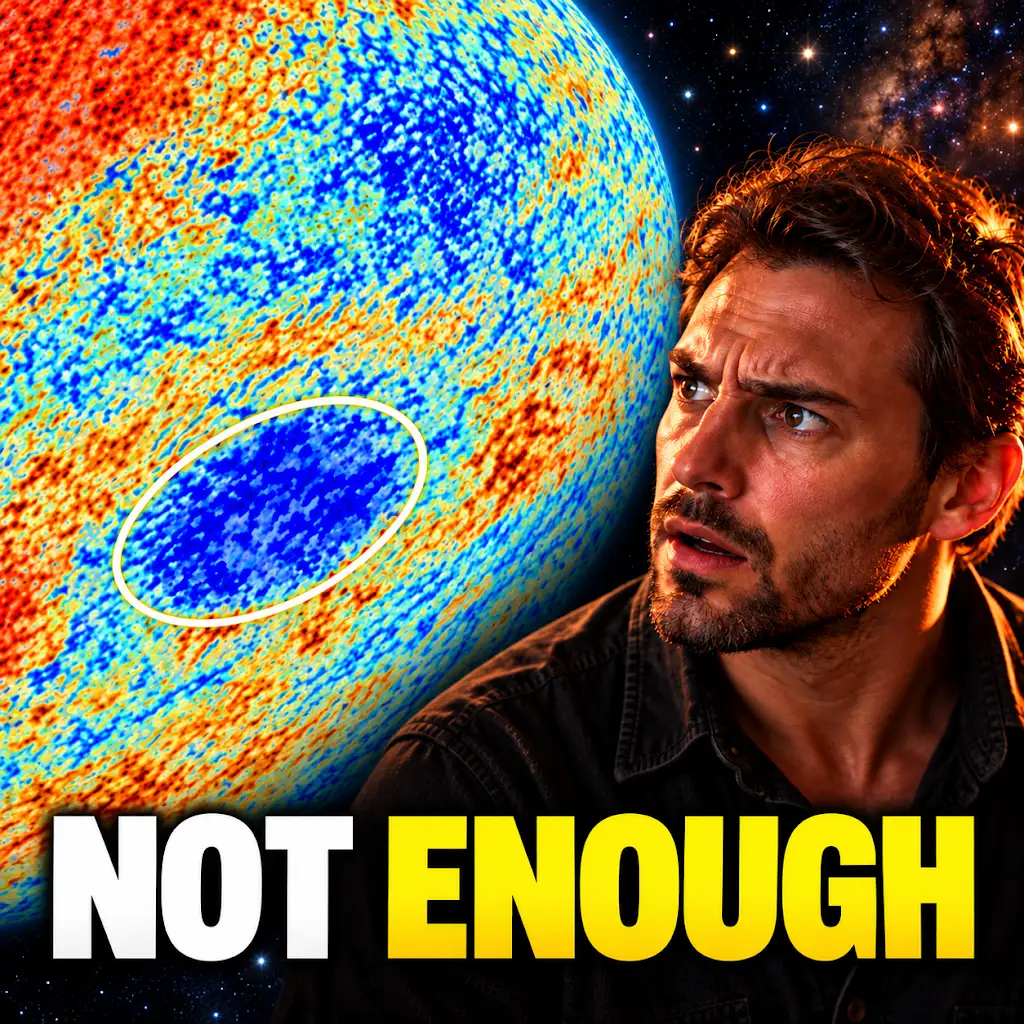
The Universe’s Cold Spot Has an Explanation. It’s Not Enough.
FAQs
What is cosmic background radiation?
Cosmic background radiation is a faint glow of radiation that fills the universe, leftover from the Big Bang that occurred approximately 13.8 billion years ago.
How was cosmic background radiation discovered?
Cosmic background radiation was discovered accidentally in 1965 by Arno Penzias and Robert Wilson, who were conducting radio astronomy experiments and found a persistent noise that could not be explained.
What does cosmic background radiation tell us about the universe?
Studying cosmic background radiation provides valuable insights into the early universe, such as its age, composition, and the formation of structures like galaxies and galaxy clusters.
How is cosmic background radiation measured?
Cosmic background radiation is measured using specialized instruments like radio telescopes and satellites, which detect the faint radiation signals coming from all directions in the universe.
Why is cosmic background radiation important in cosmology?
Cosmic background radiation is important in cosmology because it serves as a key piece of evidence supporting the Big Bang theory, helping scientists understand the origins and evolution of the universe.