The Genesis of Cosmological Ripples: The Sachs-Wolfe Effect Unveiled
The universe, in its vast expanse, is not a perfectly smooth entity. While on the grandest scales it appears remarkably uniform, upon closer inspection, subtle temperature variations in the cosmic microwave background (CMB) radiation reveal a rich tapestry of structure formation. These anisotropies, the minute deviations from the average temperature of the CMB, are the echoes of the early universe, imprinted on the photons that have traveled for billions of years to reach our telescopes. Among the various physical mechanisms that contribute to these observed fluctuations, the Sachs-Wolfe effect stands as a pivotal component, offering profound insights into the gravitational landscape of the cosmos.
Understanding the Sachs-Wolfe effect, and its integrated form, is crucial for deciphering the physics of the early universe, the nature of dark matter and dark energy, and the overall geometry of spacetime. This phenomenon, at its core, relates the gravitational potential wells and hills present in the universe to the energy of the CMB photons passing through them. It’s a testament to Einstein’s theory of General Relativity, demonstrating how gravity can directly influence light. While the basic Sachs-Wolfe effect describes a static scenario, the universe is dynamic, constantly evolving. Therefore, the integrated Sachs-Wolfe effect, which accounts for the time evolution of these gravitational potentials, provides a more complete and accurate picture of the CMB anisotropies. This article aims to unravel the intricacies of the integrated Sachs-Wolfe effect, exploring its theoretical underpinnings, its observational consequences, and its profound implications for our understanding of the cosmos.
The integrated Sachs-Wolfe effect is a fascinating phenomenon in cosmology that describes how the gravitational potential wells of large-scale structures influence the cosmic microwave background radiation. For a deeper understanding of this effect and its implications for our universe, you can explore a related article that delves into the intricacies of cosmic microwave background fluctuations and their connection to dark energy. To read more about this topic, visit Freaky Science.
Gravitational Potentials and Photon Energy: The Foundation of the Sachs-Wolfe Effect
The seeds of structure in the early universe were sown in regions of slightly higher or lower density. These density fluctuations, amplified by gravity over cosmic timescales, led to the formation of the large-scale structures we observe today, such as galaxies and galaxy clusters. The Sachs-Wolfe effect directly connects these primordial density fluctuations to the temperature variations observed in the CMB.
The Cosmic Microwave Background: A Snapshot of the Early Universe
The CMB is a relic radiation, emitted when the universe was approximately 380,000 years old. At this epoch, known as the recombination era, the universe had cooled enough for electrons and protons to combine and form neutral atoms. Before this, the universe was a hot, dense plasma where photons were constantly scattering off free electrons, preventing them from traveling long distances. Once neutral atoms formed, the universe became transparent, and these photons were free to propagate, carrying information about the conditions at that time. These photons, stretched by the expansion of the universe, are what we observe today as the CMB, with an average temperature of about 2.7 Kelvin. The remarkable uniformity of the CMB, with temperature variations of only about one part in 100,000, is a cornerstone of the standard cosmological model, Lambda-CDM. However, it is precisely these tiny anisotropies that hold the key to understanding the universe’s evolution.
Gravity’s Influence on Light: Gravitational Redshift and Blueshift
The fundamental principle behind the Sachs-Wolfe effect lies in the interaction of photons with gravitational potentials. According to General Relativity, gravity is a manifestation of the curvature of spacetime. Massive objects warp the fabric of spacetime around them, creating gravitational potentials. When a photon travels through a gravitational potential, its energy can change. In a gravitational well (a region of strong gravity), photons lose energy as they climb out, a phenomenon known as gravitational redshift. Conversely, when photons fall into a gravitational well, they gain energy, experiencing a gravitational blueshift.
Imagine a photon starting its journey from a region of lower gravitational potential and traveling towards a region of higher gravitational potential. As it moves deeper into the well, it gains energy (blueshift). However, if this photon then emerges from the gravitational well, it loses energy (redshift). The Sachs-Wolfe effect considers the net change in photon energy experienced during its passage through a region with a changing gravitational potential. If a photon originates from a region that eventually collapses into a gravitational well, it will redshift. Conversely, if it originates from a region that evolves into a gravitational hill (a region of lower density and therefore weaker gravity), it will blueshift. The observed temperature of the CMB photon is directly related to its energy; a redshifted photon appears cooler, and a blueshifted photon appears hotter.
The Standard Sachs-Wolfe Effect: A Static Picture
In its simplest form, the Sachs-Wolfe effect considers a CMB photon traveling through a static gravitational potential. If a photon is emitted from a region that is in a gravitational well, it will travel across this well and then emerge. If the gravitational potential changes as the photon travels, it will experience a net energy shift. Specifically, if a photon is emitted from a region with a positive gravitational potential (a gravitational hill), it will lose energy as it climbs out of this hill, leading to a redshift and a cooler observed temperature. Conversely, if it is emitted from a region with a negative gravitational potential (a gravitational well), it will gain energy as it falls in, leading to a blueshift and a hotter observed temperature.
However, the early universe was not static. The density fluctuations that led to structure formation were evolving. Gravitational potentials were not fixed but were changing over time due to the expansion of the universe and the growth of these density perturbations. This is where the integrated Sachs-Wolfe effect becomes crucial.
The Dynamics of Gravity: Introducing the Integrated Sachs-Wolfe Effect

The integrated Sachs-Wolfe (ISW) effect accounts for the time-dependent nature of gravitational potentials as the CMB photons propagate through the universe. It recognizes that these potentials are not static and that their evolution during the photon’s journey significantly influences the observed temperature anisotropies. The ISW effect is particularly sensitive to the influence of dark energy on the expansion history of the universe.
Time-Varying Gravitational Potentials: The Universe’s Expansion
As the universe expands, the density of matter decreases. If a region of space contains more matter than average, its gravitational potential will be deeper. However, the expansion of the universe causes this potential to decay over time. Conversely, regions with less matter have shallower potentials, and these shallow potentials can also evolve. The ISW effect captures the cumulative effect of these evolving potentials on the CMB photons.
Imagine a CMB photon traveling from the surface of last scattering towards us. During its journey, it passes through various gravitational potentials. If these potentials are evolving, the photon will experience changes in its energy beyond what the static Sachs-Wolfe effect would predict. Specifically, if a photon is traveling through a region where the gravitational potential is decaying (i.e., the gravitational well is becoming shallower or the gravitational hill is becoming less pronounced), the photon will gain energy. This is because the photon is effectively “climbing out” of a less deep well than it would have been if the potential had remained static. Conversely, if the potential is deepening, the photon will lose energy.
The Role of Dark Energy: Accelerating Expansion and Potential Decay
The integrated Sachs-Wolfe effect is profoundly sensitive to the presence of dark energy. Dark energy is a mysterious force that is driving the accelerated expansion of the universe. In a matter-dominated universe, gravitational potentials decay relatively slowly. However, in the presence of dark energy, the expansion accelerates, causing matter-dominated structures to become less gravitationally dominant. This leads to a faster decay of gravitational potentials.
As CMB photons traverse the universe, they encounter these decaying potentials. If a photon passes through a region where the gravitational potential is decaying due to the influence of dark energy, it will gain energy. This energy gain results in a slight blueshift of the CMB photon, leading to a hotter observed temperature. Conversely, if the potential were to deepen, the photon would lose energy, appearing cooler. Therefore, the ISW effect predicts a correlation between large-scale CMB temperature fluctuations and the distribution of matter at later times, specifically when dark energy begins to dominate the universe’s expansion.
Mathematical Formulation: Capturing the Cumulative Effect
The mathematical description of the integrated Sachs-Wolfe effect involves integrating the time derivative of the gravitational potential along the photon’s path. The temperature fluctuation in a given direction, $\Delta T/T$, can be expressed as:
$\frac{\Delta T}{T} \approx -\int_{0}^{z_{recomb}} dz \frac{d\Phi}{d\tau}$
where $\Phi$ is the gravitational potential, $z_{recomb}$ is the redshift of recombination, and $d\tau$ is the infinitesimal path element in conformal time. The term $d\Phi/d\tau$ represents the time evolution of the gravitational potential. This integral essentially sums up the energy changes experienced by the photon as the gravitational potentials it encounters evolve during its journey. The fact that this integral can be non-zero signifies the impact of the dynamic nature of gravity on the CMB.
Observational Signatures: Detecting the ISW Effect
Detecting the integrated Sachs-Wolfe effect is a challenging but crucial endeavor in observational cosmology. The effect produces subtle temperature fluctuations in the CMB, and distinguishing them from other sources of anisotropy requires sophisticated analysis and cross-correlation techniques.
Correlation with Large-Scale Structures: The ISW Signal
The most significant observational signature of the ISW effect is its correlation with the distribution of large-scale structures in the universe, such as galaxies and galaxy clusters. As CMB photons travel towards us, they pass through these structures. If dark energy is present and causing potentials to decay, photons passing through overdense regions (which are collapsing under gravity) will experience a slight heating, and photons passing through underdense regions will experience a slight cooling. This means that there should be a correlation between the temperature of the CMB in a particular direction and the presence of massive structures along that line of sight at later times.
This correlation is expected to be strongest on large angular scales in the CMB. On smaller scales, the primary anisotropies are generated by acoustic oscillations in the early universe plasma, a phenomenon that dominates the Sachs-Wolfe effect’s contribution on those scales. However, on scales larger than a few degrees, the ISW effect becomes a more significant contributor to the observed temperature fluctuations.
The Challenge of Detection: Noise and Other Effects
Detecting this subtle correlation is fraught with challenges. The ISW signal is typically small, often masked by the larger contributions from other sources of CMB anisotropies, such as the adiabatic fluctuations from inflation and the thermal Sunyaev-Zel’dovich effect (a distortion of the CMB spectrum caused by hot gas in galaxy clusters). Furthermore, our measurements of large-scale structures are also subject to observational uncertainties and biases.
Careful analysis is required to isolate the ISW signal. This involves precisely mapping the CMB temperature across the sky and simultaneously mapping the distribution of galaxies and other cosmological objects. By cross-correlating these two maps, cosmologists can look for the predicted correlation pattern. Regions of the CMB that appear slightly hotter should, on average, correspond to directions with more massive structures along the line of sight, and vice versa.
Past and Future Observational Efforts: Probing the ISW
Several observational efforts have aimed to detect the ISW effect. Early attempts using data from missions like COBE and WMAP provided tentative hints, but the statistical significance was limited. More recent analyses using data from the Planck satellite, combined with large galaxy surveys like the Sloan Digital Sky Survey (SDSS), have yielded stronger evidence for the ISW effect. These cross-correlation studies have shown a statistically significant correlation between CMB temperature fluctuations on large angular scales and the distribution of matter.
Future missions and more comprehensive galaxy surveys will further refine these measurements. The next generation of CMB experiments and upcoming large-scale structure surveys promise to provide even more precise measurements of the ISW effect, allowing cosmologists to place tighter constraints on the properties of dark energy and test the validity of the standard cosmological model.
The integrated Sachs-Wolfe effect is a fascinating phenomenon in cosmology that describes how the gravitational potential of large-scale structures influences the cosmic microwave background radiation. For a deeper understanding of this effect and its implications for our universe, you can explore a related article that delves into the intricacies of cosmic microwave background fluctuations and their significance in modern astrophysics. To learn more about this topic, visit this informative article that provides valuable insights into the interconnectedness of cosmic structures and their impact on our observations of the universe.
Implications for Cosmology: Dark Energy, Dark Matter, and Beyond
| Metric | Description | Typical Value / Range | Relevance to Integrated Sachs-Wolfe Effect |
|---|---|---|---|
| Redshift (z) | Measure of the universe’s expansion since the emission of CMB photons | 0 < z < 2 (for ISW effect) | ISW effect occurs at low to intermediate redshifts where dark energy influences gravitational potentials |
| Temperature Fluctuation (ΔT/T) | Relative change in CMB temperature due to ISW effect | ~10-6 to 10-5 | Represents the magnitude of CMB temperature anisotropies caused by evolving gravitational potentials |
| Gravitational Potential Decay Rate | Rate at which gravitational potentials change over time | Positive in accelerating universe (dark energy dominated) | Non-zero decay leads to ISW effect; zero decay means no ISW contribution |
| Angular Scale (Multipole moment l) | Angular size on the sky corresponding to ISW signal | l < 30 (large angular scales) | ISW effect is most prominent on large angular scales in the CMB power spectrum |
| Cross-correlation Coefficient | Correlation between CMB temperature maps and large-scale structure surveys | Positive, typically 0.1 – 0.3 | Used to detect and quantify the ISW effect by correlating CMB with galaxy distributions |
The integrated Sachs-Wolfe effect is not merely a theoretical curiosity; it has profound implications for our understanding of the fundamental constituents and evolution of the universe. Its detection provides crucial evidence for the existence of dark energy and offers a powerful tool for probing its properties.
The Dark Energy Connection: A Cosmic Accelerator
The strong detection of the ISW effect, particularly its correlation with large-scale structures, provides compelling evidence for the existence of dark energy. Without dark energy, the expansion of the universe would be decelerating due to gravity. In a decelerating universe, gravitational potentials would decay more slowly, and the ISW effect would be significantly weaker. The observed strength of the ISW correlation aligns well with predictions from cosmological models that include a component of dark energy driving an accelerated expansion. The ISW effect therefore acts as a sensitive probe of the equation of state of dark energy, which describes how its pressure relates to its density.
Constraining Cosmological Parameters: Precision Cosmology
The ISW effect, when measured with high precision, can help to constrain various cosmological parameters, including the density of matter, the density of dark energy, and the amplitude of primordial fluctuations. By comparing the observed ISW signal with theoretical predictions from different cosmological models, cosmologists can determine which models best fit the data. This leads to more precise estimates of fundamental cosmological quantities, solidifying our understanding of the universe’s composition and evolution.
For instance, the amplitude of the ISW effect is directly influenced by the relative contributions of dark energy and dark matter to the total energy density of the universe. A stronger ISW signal generally implies a greater contribution from dark energy in the later stages of cosmic history. This allows cosmologists to narrow down the possible values for the dark energy density parameter, $\Omega_\Lambda$.
Testing General Relativity and Beyond: The Gravitational Framework
The ISW effect is a direct consequence of Einstein’s theory of General Relativity. The fact that we observe a signature consistent with the ISW effect supports the validity of General Relativity as our description of gravity on cosmological scales. Deviations from the predicted ISW signal could point towards modifications to General Relativity or the presence of exotic physics.
Furthermore, the ISW effect can be used to test alternative theories of gravity. If gravity behaves differently on very large scales or in the presence of dark energy, this could manifest as a different ISW signal. Therefore, precision measurements of the ISW effect are crucial for both confirming our current understanding of gravity and potentially discovering new physics.
The Integrated Sachs-Wolfe Effect in Context: A Symphony of Cosmological Phenomena
To fully appreciate the significance of the integrated Sachs-Wolfe effect, it is essential to place it within the broader context of the CMB anisotropies and the phenomena that shape them. The ISW effect is one piece of a larger cosmological puzzle, and its interplay with other effects provides a richer and more comprehensive understanding of the universe.
Complementarity with Other CMB Anisotropies: Acoustic Peaks and Kinematic SZ
The CMB is characterized by a power spectrum, which describes the amplitude of temperature fluctuations as a function of angular scale. This power spectrum exhibits several prominent features, including acoustic peaks and the integrated Sachs-Wolfe plateau. The acoustic peaks, which dominate the power spectrum on smaller angular scales, are generated by the interplay of gravity and pressure in the primordial plasma, leading to sound waves that imprinted characteristic fluctuations. These peaks provide information about the baryonic matter density, the dark matter density, and the geometry of the universe.
The ISW effect, on the other hand, primarily contributes to the power spectrum on large angular scales, often referred to as the ISW plateau. This distinct feature arises from the correlation between CMB photons and late-time large-scale structures, as described by the ISW mechanism. The fact that the ISW plateau is observed to be relatively flat and to a certain amplitude is crucial for constraining dark energy.
The kinematic Sunyaev-Zel’dovich (kSZ) effect is another important phenomenon that affects the CMB. It arises from the scattering of CMB photons by the bulk motion of hot gas in galaxy clusters. While the thermal SZ effect distorts the CMB spectrum, the kSZ effect causes temperature shifts that are correlated with the velocity of the cluster. The kSZ effect can also contribute to large-scale anisotropies, and disentangling it from the ISW signal is an important aspect of cosmological analysis.
Understanding Structure Formation: From Seeds to Galaxies
The Sachs-Wolfe effect, in both its standard and integrated forms, is intrinsically linked to the process of structure formation in the universe. The initial density fluctuations, amplified by gravity, eventually led to the formation of the cosmic web. The ISW effect provides a window into how these gravitational potentials evolved over time, particularly during the era when dark energy began to dominate. By studying the ISW signal, we gain insights into the growth rate of structures and how it has been influenced by the cosmic acceleration. This, in turn, helps us to build a more complete picture of the hierarchical formation of galaxies and galaxy clusters from the small density fluctuations present in the early universe.
The Future of ISW Research: Pushing the Boundaries of Knowledge
As observational capabilities continue to advance, the integrated Sachs-Wolfe effect will remain a crucial target for cosmological research. Improved CMB experiments with higher sensitivity and resolution, coupled with ever-larger and more precise galaxy surveys, will allow for more accurate measurements of the ISW signal and its correlation with large-scale structures. This will lead to tighter constraints on dark energy properties, potentially revealing whether dark energy is a cosmological constant or something more dynamic. Furthermore, continued investigation of the ISW effect will refine our understanding of the universe’s geometry, the nature of dark matter, and the fundamental laws of gravity. The unraveling of the integrated Sachs-Wolfe effect is an ongoing journey, promising to unlock further secrets of the cosmos.
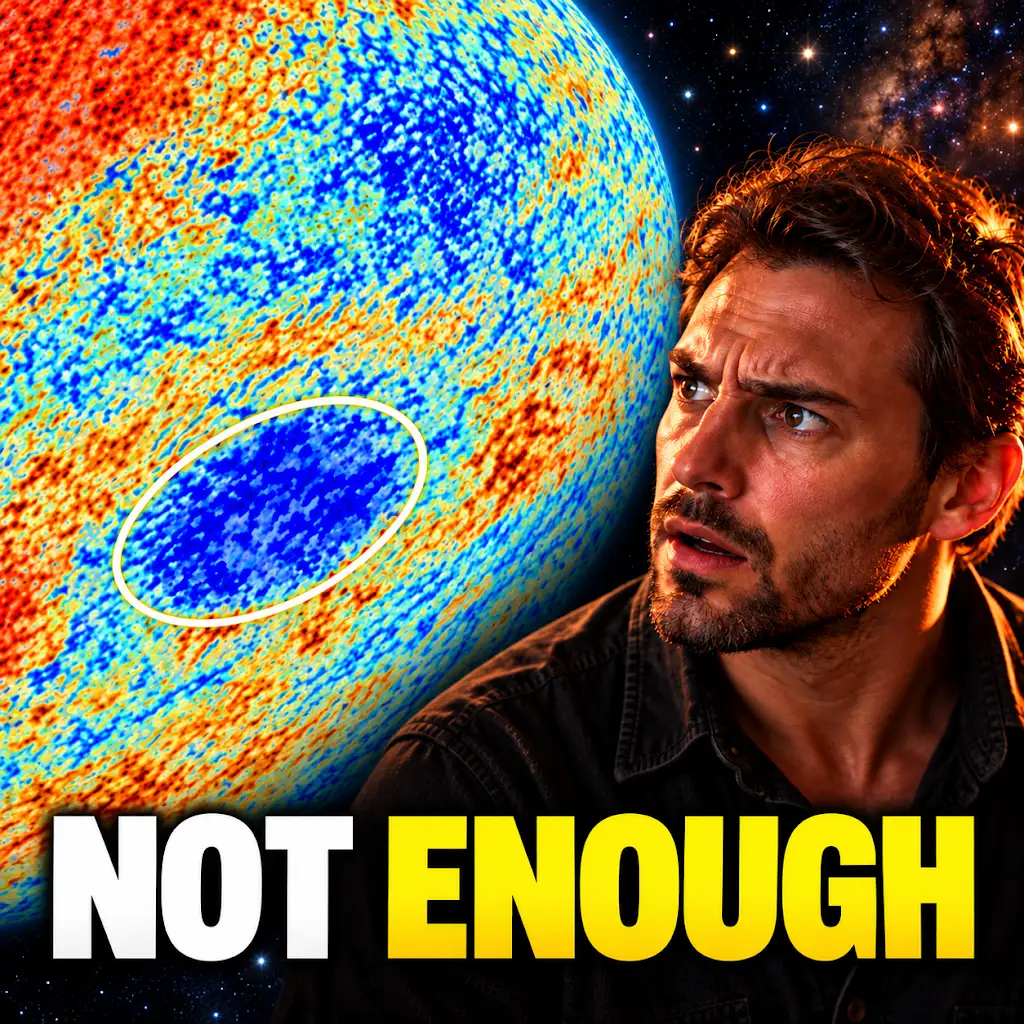
The Universe’s Cold Spot Has an Explanation. It’s Not Enough.
FAQs
What is the Integrated Sachs-Wolfe Effect?
The Integrated Sachs-Wolfe Effect is a phenomenon in cosmology that describes the correlation between the temperature of the cosmic microwave background radiation and the large-scale structure of the universe.
How does the Integrated Sachs-Wolfe Effect work?
The Integrated Sachs-Wolfe Effect occurs when photons from the cosmic microwave background radiation pass through gravitational potential wells created by large-scale structures in the universe, such as galaxy clusters. As the photons travel through these regions, they experience a change in energy due to the gravitational redshift effect.
What causes the Integrated Sachs-Wolfe Effect?
The Integrated Sachs-Wolfe Effect is primarily caused by the gravitational redshift of photons as they travel through regions of varying gravitational potential in the universe. This effect is a result of the expansion of the universe and the presence of large-scale structures like galaxy clusters.
What are the implications of the Integrated Sachs-Wolfe Effect?
Studying the Integrated Sachs-Wolfe Effect can provide valuable insights into the distribution of matter in the universe, the evolution of large-scale structures, and the nature of dark energy. It can also help astronomers better understand the overall geometry and dynamics of the universe.
How is the Integrated Sachs-Wolfe Effect observed and measured?
Astronomers use data from cosmic microwave background surveys, such as the Planck satellite mission, to study the Integrated Sachs-Wolfe Effect. By analyzing temperature fluctuations in the cosmic microwave background radiation and correlating them with the distribution of large-scale structures, researchers can measure the impact of gravitational redshift on the photons.