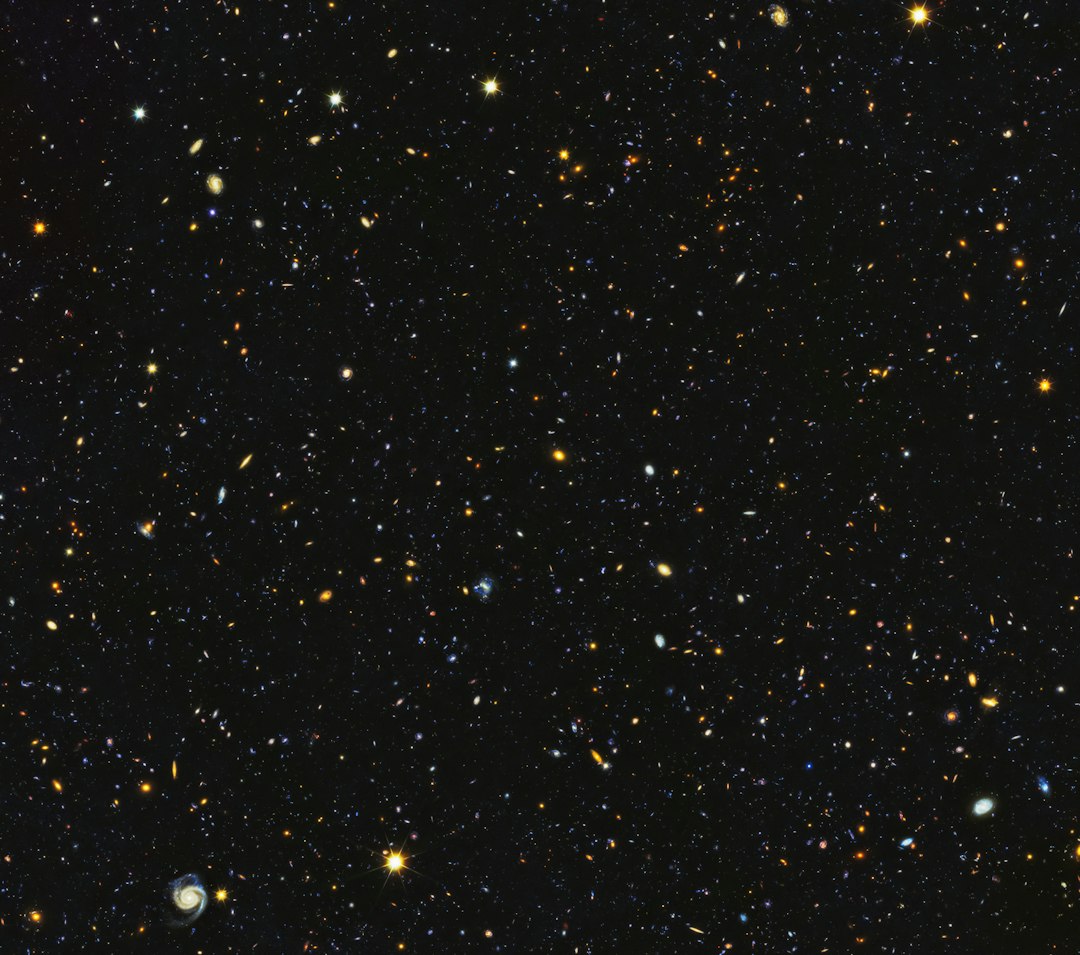
The universe, a canvas stretching beyond human comprehension, whispers secrets of its birth and evolution. Cosmology, the study of this grand cosmic tapestry, delves into the fundamental questions of existence: where did it all come from, how has it changed, and where is it headed? It’s a field brimming with mind-bending theories and observations that often challenge our everyday intuition, painting a picture of reality that is both profoundly strange and breathtakingly beautiful. Unraveling the freaky science of cosmology involves piecing together fragments of evidence from the faintest starlight to the subtle imprints left by the universe’s infancy, all while wrestling with concepts that push the boundaries of our understanding.
The Echoes of Creation: Unpacking the Big Bang
The prevailing scientific model for the origin and evolution of the universe is the Big Bang theory. It’s not an explosion in the traditional sense, but rather a rapid expansion of space itself from an incredibly hot and dense state. Tracing its origins back requires understanding the pivotal evidence that solidified its place as the dominant cosmological paradigm.
Evidence of a Fiery Beginning: The Cosmic Microwave Background
Perhaps the most compelling piece of evidence for the Big Bang is the Cosmic Microwave Background (CMB) radiation. Discovered serendipitously in 1964 by Arno Penzias and Robert Wilson, this faint glow permeates the entire sky, appearing as a nearly uniform temperature of about 2.7 Kelvin. Cosmologists interpret this radiation as the afterglow of the Big Bang, a snapshot of the universe when it was only about 380,000 years old. Before this epoch, the universe was so hot and dense that matter existed as a plasma of free electrons and atomic nuclei. Photons, the particles of light, were constantly scattered by these free electrons, making the universe opaque. As the universe expanded and cooled, electrons and nuclei combined to form neutral atoms. This event, known as recombination, allowed photons to travel freely through space. The CMB is essentially these primordial photons, stretched by the ongoing expansion of the universe to microwave wavelengths.
The remarkable uniformity of the CMB across the sky, observed with unprecedented precision by missions like COBE, WMAP, and Planck, initially seemed like a puzzle. If the early universe was so homogeneous, how could the vast structures like galaxies and galaxy clusters we see today have formed? This led to the development of theories addressing the origin of these inhomogeneities.
Tiny Ripples, Monumental Consequences: Inflation and the Horizon Problem
One of the most significant challenges to the early Big Bang model was the “horizon problem.” Regions of the CMB that are now widely separated in the sky appear to have the same temperature. However, according to the standard Big Bang expansion, these regions would never have been in causal contact to exchange heat and reach thermal equilibrium. This suggests that either the universe is fine-tuned to an astonishing degree, or there was a period of extremely rapid expansion in the very early universe, far exceeding the rate of the Big Bang itself.
This is where the theory of cosmic inflation comes in. Proposed by Alan Guth in the early 1980s, inflation suggests that in the first fraction of a second after the Big Bang, the universe underwent a period of exponential expansion. This period of inflation would have smoothed out initial inhomogeneities, explaining the uniformity of the CMB. Crucially, quantum fluctuations in the very early, tiny, inflatating universe would have been stretched to macroscopic scales, becoming the seeds for the large-scale structure we observe today. The CMB, therefore, is not perfectly uniform; it contains tiny temperature fluctuations, on the order of parts per hundred thousand. These minute variations are the imprints of these primordial quantum fluctuations, amplified by inflation and later evolving into the cosmic web of galaxies.
If you’re intrigued by the mysteries of the universe and want to delve deeper into the fascinating realm of cosmology, you might find this related article on dark matter and its implications for our understanding of the cosmos particularly enlightening. It explores the unseen forces that shape our universe and the ongoing research efforts to uncover their secrets. To read more, visit this article.
The Unseen Architects: Dark Matter and Dark Energy
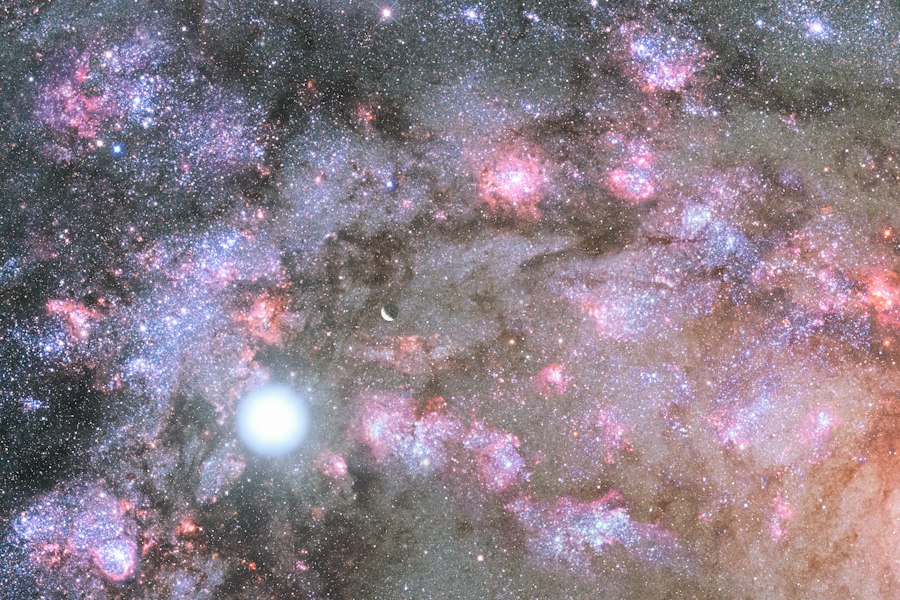
The universe’s composition is a far stranger story than what is visible to our telescopes. Visible matter – the stars, planets, and gas clouds – constitutes only a small fraction of the total mass-energy of the universe. The vast majority is made up of two enigmatic components: dark matter and dark energy. Their existence is inferred through their gravitational effects on visible matter and the expansion of the universe, respectively.
The Invisible Scaffolding: The Case for Dark Matter
The concept of dark matter arose from observations of galaxies and galaxy clusters. Astronomers noticed that galaxies in clusters were moving much faster than they should if only the visible matter were providing the gravitational pull. This implied the presence of an unseen mass, a gravitational scaffold holding these structures together. Further evidence came from the rotation curves of individual galaxies. Stars in the outer regions of galaxies orbit much faster than predicted by Newtonian gravity based on the visible matter alone. This discrepancy pointed to a halo of invisible matter surrounding galaxies, providing the extra gravitational force.
What exactly is dark matter? This remains one of cosmology’s biggest mysteries. The leading candidates are weakly interacting massive particles (WIMPs) or axions, hypothetical particles that do not interact with light and therefore are invisible to electromagnetic observation. Direct detection experiments are underway to try and capture these elusive particles, but so far, their nature remains unknown. The gravitational influence of dark matter is not only crucial for the formation and stability of galaxies and clusters but also played a significant role in the early universe, influencing the distribution of matter that would eventually clump together.
The Accelerating Expansion: The Mystery of Dark Energy
Perhaps even more perplexing than dark matter is dark energy. In the late 1990s, observations of distant supernovae revealed that the expansion of the universe is not slowing down, as one might expect due to gravity, but is actually accelerating. This acceleration implies the existence of a repulsive force counteracting gravity, a force attributed to dark energy.
Dark energy is thought to be a property of space itself, perhaps related to the cosmological constant introduced by Einstein in his theory of general relativity, though with a vastly different magnitude. Alternatively, it could be a dynamic energy field, known as quintessence, that changes over time. The exact nature of dark energy is unknown, and its dominance in the universe’s energy budget is a profound puzzle. Currently, it’s estimated to make up about 68% of the universe’s total mass-energy, while dark matter accounts for about 27%, leaving visible matter at a mere 5%. Understanding dark energy is crucial for predicting the ultimate fate of the universe.
The Grand Cosmic Architecture: Large-Scale Structure
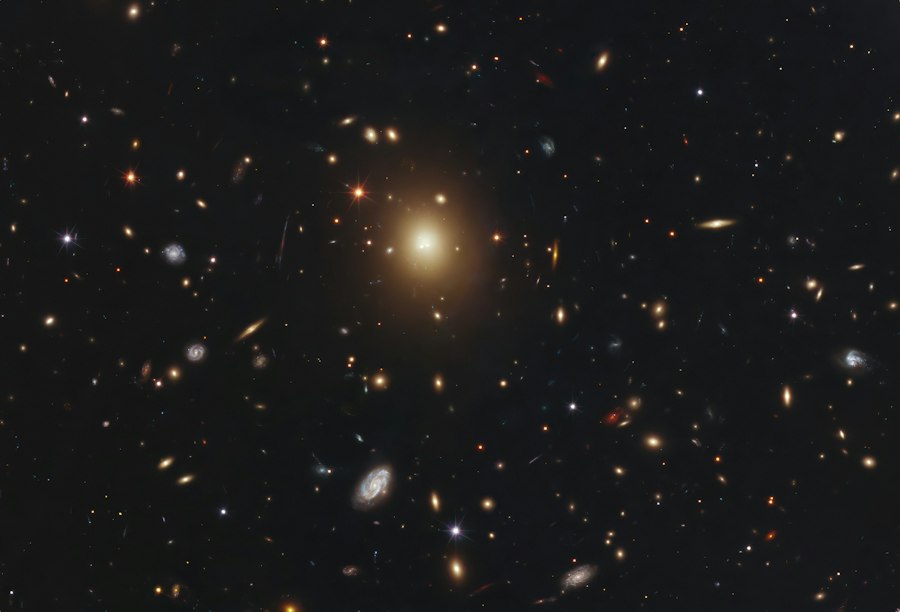
The universe is not a uniform soup of matter. Instead, it’s organized into a vast, intricate cosmic web, characterized by filaments of galaxies and galaxy clusters, separated by enormous voids. The formation and evolution of this large-scale structure are a direct consequence of the gravitational interplay between dark matter and visible matter, seeded by the initial fluctuations in the early universe.
From Seeds to Galaxies: The Gravitational Dance
The slight density variations in the early universe, imprinted on the CMB, served as the seeds for structure formation. Regions that were slightly denser had a stronger gravitational pull. Over billions of years, dark matter, which interacts only gravitationally, began to clump together in these denser regions. Visible matter then fell into these gravitational wells, forming the first stars and galaxies.
The theory of hierarchical structure formation, where smaller structures merge to form larger ones, is well supported by observations. Galaxy clusters, the largest gravitationally bound structures in the universe, are thought to have formed through the continuous merging of smaller galaxies and groups of galaxies. The distribution of galaxies and the voids between them observed in large galaxy surveys, like the Sloan Digital Sky Survey, closely match the predictions of cosmological simulations that incorporate dark matter and dark energy. This cosmic web is a testament to the power of gravity and the fundamental role of unseen components in shaping the universe.
The Cosmic Web and Beyond: Mapping the Universe
Mapping the distribution of galaxies across vast cosmic distances allows cosmologists to study the evolution of the universe and test their theoretical models. Techniques such as redshift surveys, which measure the redshift of light from distant galaxies to infer their distance and recession velocity, have been instrumental in charting the cosmic web.
Beyond mapping galaxies, cosmologists also study the distribution of matter at even larger scales by observing the subtle distortions in the light from distant galaxies caused by the gravitational lensing effect of intervening dark matter. These observations provide a three-dimensional map of the universe’s mass distribution, offering further insights into the interplay of dark matter, dark energy, and the formation of structure. The ongoing quest to understand the cosmic web is not just about cataloging celestial objects; it’s about understanding the fundamental processes that have sculpted the universe over billions of years.
The Unfolding Future: Cosmic Scenarios and the Fate of the Universe
The interplay of dark matter, dark energy, and the continued expansion of the universe dictates its ultimate fate. Cosmologists have devised several potential scenarios, each with profound implications for the long-term future of existence. The dominance of dark energy is a key factor in determining which of these scenarios is most likely.
The Endless Expansion: The Big Freeze
The most widely accepted scenario, given the accelerating expansion driven by dark energy, is the “Big Freeze” or “Heat Death.” In this scenario, the universe continues to expand indefinitely. Galaxies will drift further and further apart, eventually becoming isolated islands in an ever-expanding void. Stars will exhaust their fuel, and new star formation will cease as gas clouds become too diffuse. Black holes will eventually evaporate through Hawking radiation, and even protons may decay, leaving behind a cold, dark, and empty universe. The universe will become a vast expanse of diffuse particles, approaching absolute zero, with no thermodynamic activity and no possibility for complex structures or life to exist.
The Cosmic Collapse: The Big Crunch
In contrast, if the density of matter in the universe were high enough, gravity would eventually overcome the expansion, leading to a reversal of cosmic evolution. This scenario, known as the “Big Crunch,” would see the universe contract, with galaxies rushing towards each other. The universe would become hotter and denser, eventually collapsing back into a singularity similar to the initial state of the Big Bang. While current observations of dark energy make this scenario unlikely, it remains a theoretical possibility if the nature of dark energy changes significantly over time.
The Oscillating Universe: The Big Bounce
A more speculative scenario, the “Big Bounce,” suggests that a Big Crunch could be followed by another Big Bang, leading to a cyclical universe. In this model, the universe expands, contracts, and then re-expands, repeating this process indefinitely. The mechanism for this bounce is not well understood and is still a subject of theoretical research. It would require exotic physics at the point of maximum contraction to prevent a singularity and initiate a new expansion.
In the realm of freaky science cosmology, the exploration of dark matter and its mysterious properties continues to captivate researchers and enthusiasts alike. A fascinating article that delves deeper into this enigmatic subject can be found at Freaky Science, where the latest theories and discoveries are discussed. Understanding dark matter not only challenges our perceptions of the universe but also opens up new avenues for scientific inquiry, making it a thrilling topic for anyone interested in the cosmos.
The Frontiers of Knowledge: Unanswered Questions and Future Explorations
| Metric | Value | Description |
|---|---|---|
| Age of Universe | 13.8 billion years | Estimated time since the Big Bang |
| Dark Matter Percentage | 27% | Proportion of total mass-energy made up by dark matter |
| Dark Energy Percentage | 68% | Proportion of total mass-energy made up by dark energy |
| Observable Universe Diameter | 93 billion light years | Estimated size of the observable universe |
| Cosmic Microwave Background Temperature | 2.725 K | Temperature of the residual radiation from the Big Bang |
| Hubble Constant | 67.4 km/s/Mpc | Rate of expansion of the universe |
| Number of Known Fundamental Forces | 4 | Gravity, Electromagnetism, Strong Nuclear, Weak Nuclear |
| Multiverse Hypothesis Status | Theoretical | Proposed idea that multiple universes exist beyond our own |
Despite the remarkable progress made in cosmology, numerous profound questions remain unanswered, pushing the boundaries of our scientific inquiry and inspiring future generations of astronomers and physicists. The freaky science of cosmology is far from solved; it is a vibrant and evolving field.
The Nature of Reality: Beyond the Standard Model
The Standard Model of particle physics, while incredibly successful, does not fully explain the universe. The existence of dark matter and dark energy suggests that there are fundamental particles and forces yet to be discovered. The search for these new particles and interactions is a major focus of current and future research, both in particle accelerators and through astrophysical observations. Understanding the relationship between quantum mechanics and general relativity, the two pillars of modern physics, is also a critical frontier, particularly for understanding the very earliest moments of the universe and the nature of black holes.
The Quest for Origins and Destiny: Pushing the Observational Limits
Future cosmological missions aim to refine our measurements of the CMB, probe the distribution of dark matter and dark energy with unprecedented precision, and explore the universe at even earlier times. The James Webb Space Telescope, for example, is already providing groundbreaking insights into the formation of the first galaxies. Next-generation telescopes and gravitational wave observatories will offer new windows into cosmic history, potentially revealing the elusive nature of dark energy or even providing evidence for theories beyond the standard cosmological model. The journey to unravel the freaky science of cosmology is an ongoing odyssey, driven by insatiable curiosity and the ever-present allure of the unknown. Each discovery, however strange, brings us closer to understanding our place in this vast and mysterious cosmos.
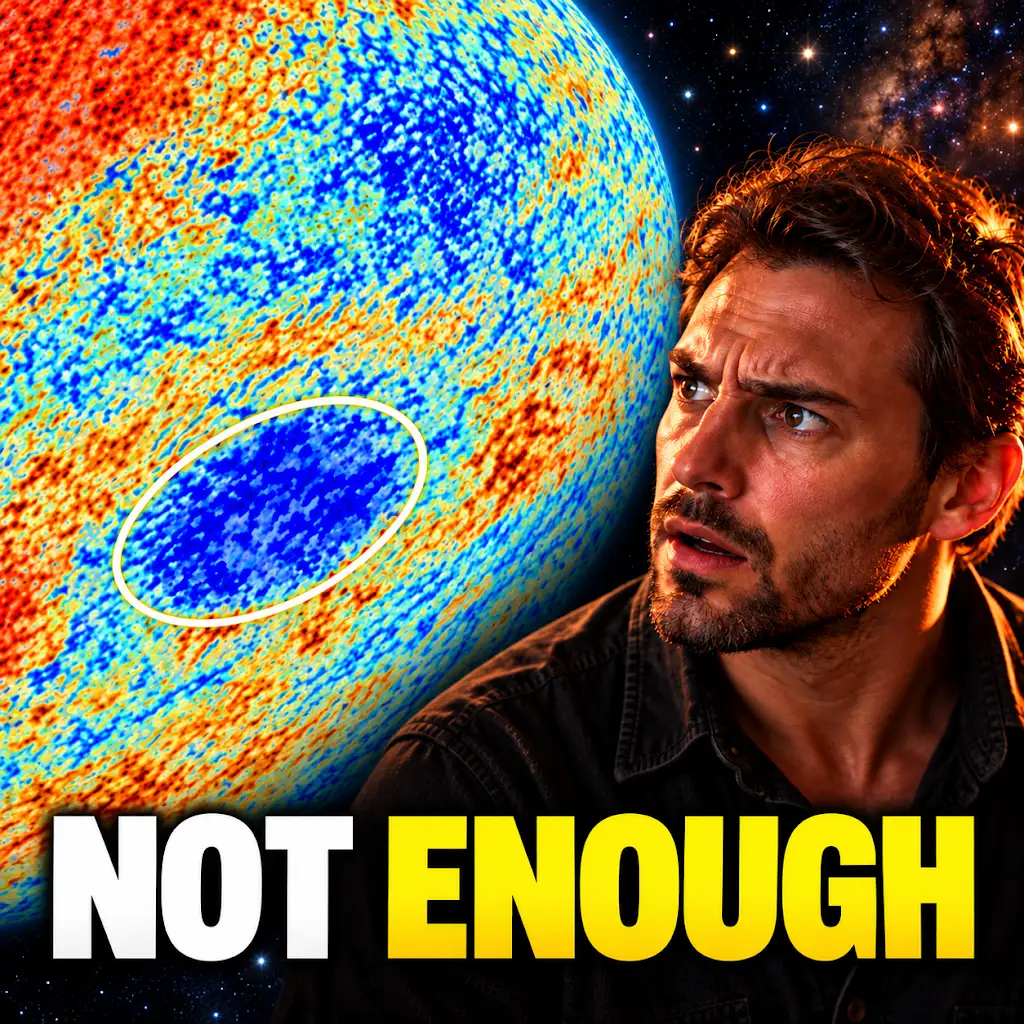
The Universe’s Cold Spot Has an Explanation. It’s Not Enough.
FAQs
What is cosmology in science?
Cosmology is the branch of science that studies the origin, evolution, and eventual fate of the universe as a whole.
What are some of the key concepts in cosmology?
Some key concepts in cosmology include the Big Bang theory, dark matter, dark energy, cosmic microwave background radiation, and the expansion of the universe.
How does cosmology relate to astronomy?
Cosmology and astronomy are closely related fields, with cosmology focusing on the larger scale structure and evolution of the universe, while astronomy focuses on the observation and study of celestial objects within the universe.
What are some of the current mysteries in cosmology?
Some current mysteries in cosmology include the nature of dark matter and dark energy, the ultimate fate of the universe, the origin of cosmic inflation, and the existence of parallel universes.
How does cosmology impact our understanding of the universe?
Cosmology helps us understand the fundamental nature of the universe, its origins, evolution, and structure. It also provides insights into the laws of physics and the forces that govern the cosmos.