
The silent expanse of deep space, a canvas of unimaginable scale and unknown phenomena, has long captivated the human imagination. For centuries, humanity has gazed at the stars, pondering the mysteries that lie beyond our terrestrial home. Today, with advanced technology and an insatiable curiosity, scientists are peeling back the layers of these cosmic enigmas, venturing into the profound questions that define our place in the universe. The quest to unravel deep space mysteries is not merely an academic pursuit; it is a fundamental human endeavor, driven by a desire to understand our origins, our future, and the very nature of reality. From the enigmatic dark matter and dark energy that constitute the vast majority of the universe’s mass and energy, to the potential for extraterrestrial life and the formation of distant galaxies, the challenges and rewards of deep space exploration are immense. This article delves into some of the most pressing and intriguing mysteries that scientists are currently grappling with, highlighting the innovative approaches and groundbreaking discoveries that are pushing the boundaries of our cosmic knowledge.
Echoes from the Cosmic Dawn
The very beginning of the universe, a period often referred to as the “cosmic dawn,” remains one of the most profound and elusive mysteries. The Big Bang theory provides a robust framework for understanding the universe’s expansion from an incredibly hot and dense state, but the initial moments, the infinitesimally small fraction of a second after the singularity, are shrouded in theoretical complexity and observational limitations. Scientists are employing an array of sophisticated tools and theoretical models to probe this primordial epoch, seeking clues that could unlock the secrets of cosmic origins.
The Inflationary Epoch’s Fingerprints
One of the prevailing theories attempting to explain the early universe’s homogeneity and flatness is cosmic inflation. This hypothetical period of exponential expansion, occurring fractions of a second after the Big Bang, is thought to have smoothed out initial irregularities and stretched quantum fluctuations to macroscopic scales, seeding the structures we observe today. Detecting direct evidence of inflation is a significant challenge, as its effects are incredibly subtle. However, cosmologists are looking for specific imprints on the cosmic microwave background (CMB), the afterglow of the Big Bang.
One such imprint would be primordial gravitational waves, ripples in spacetime predicted by inflationary theory. These waves would have stretched spacetime as they propagated, leaving characteristic patterns in the polarization of the CMB. Detecting these so-called “B-modes” has been a major goal of CMB experiments. While several experiments have claimed tentative detections, definitive confirmation remains elusive. The challenges lie in distinguishing these primordial B-modes from astrophysical foregrounds, such as polarized light from dust within our own galaxy, which can mimic similar signals. Future, more sensitive experiments, like the Simons Observatory and CMB-S4, aim to achieve the precision needed to either confirm or refute the existence of primordial gravitational waves, thereby providing crucial evidence for or against the inflationary paradigm.
The Birth of the First Stars and Galaxies
Following inflation and the cooling of the universe, a period known as the “Dark Ages” ensued, where the universe was filled with neutral hydrogen but devoid of stars. Eventually, gravity began to pull together the nascent clumps of matter, leading to the formation of the first stars and galaxies. This epoch, known as reionization, marks a critical transition from a dark universe to one illuminated by stellar light. Understanding how and when this process occurred is vital to comprehending the evolution of cosmic structures.
Observations from telescopes like the Hubble Space Telescope and, more recently, the James Webb Space Telescope (JWST), are providing unprecedented views of the early universe. JWST, with its infrared capabilities, is particularly adept at observing the faint light from the most distant and therefore earliest galaxies. By studying the properties of these early galaxies – their sizes, luminosities, and chemical compositions – astronomers are beginning to piece together the timeline of reionization and the stellar populations that drove it. The detection of highly redshifted Lyman-alpha photons, a signature of active star formation, is a key indicator. However, disentangling the contributions of various sources, such as young, massive stars and early active galactic nuclei (AGN), to the reionization process remains an active area of research. The ongoing analysis of JWST data is expected to revolutionize our understanding of this pivotal era in cosmic history.
Recent discoveries in astrophysics have shed light on the enigmatic phenomena of deep space, leading to significant breakthroughs in our understanding of the universe. A related article that delves into these fascinating developments can be found at Freaky Science, where researchers discuss the implications of their findings and how they contribute to solving long-standing mysteries of the cosmos. This exploration not only enhances our knowledge of celestial bodies but also opens new avenues for future research in deep space exploration.
The Invisible Architecture of the Cosmos

The universe, as we perceive it through visible light, is only a small fraction of its total constituent. The vast majority of its mass and energy is composed of invisible entities that exert profound gravitational influence: dark matter and dark energy. These enigmatic components dominate the cosmic landscape, dictating the formation of structures and the ultimate fate of the universe. Unraveling their nature is perhaps the most significant challenge in modern cosmology.
The Elusive Nature of Dark Matter
Dark matter, first theorized to explain the anomalous rotation curves of galaxies, is a form of matter that does not interact with electromagnetic radiation, making it invisible to traditional telescopes. Its presence is inferred solely through its gravitational effects on visible matter and light. While its gravitational pull is undeniable, its fundamental composition remains unknown. The leading candidates for dark matter particles are weakly interacting massive particles (WIMPs), hypothetical particles that interact only through gravity and the weak nuclear force.
Numerous experiments are underway to directly detect WIMPs. These experiments typically involve highly sensitive detectors placed deep underground to shield them from cosmic rays. The principle is to look for rare collisions between WIMP particles and atomic nuclei within the detector material, which would produce a faint signal. So far, no definitive detection of WIMPs has been made, leading some scientists to consider alternative candidates for dark matter, such as axions, sterile neutrinos, or even modifications to the laws of gravity itself. The search for dark matter is a multi-pronged approach, involving direct detection experiments, indirect detection (looking for annihilation products of dark matter particles), and astrophysical observations that constrain its distribution.
The Accelerating Expansion Driven by Dark Energy
Perhaps even more perplexing than dark matter is dark energy, a mysterious force that appears to be driving the accelerated expansion of the universe. Observations of distant supernovae in the late 1990s revealed that the universe’s expansion is not slowing down due to gravity, as expected, but is instead speeding up. This phenomenon is attributed to dark energy, which acts as a repulsive force, counteracting gravity on cosmic scales.
The nature of dark energy is still a profound mystery. The simplest explanation is the cosmological constant, an intrinsic energy density of empty space proposed by Albert Einstein. However, theoretical calculations for this vacuum energy yield a value that is orders of magnitude larger than what is observed, a discrepancy known as the “cosmological constant problem.” Other proposed explanations for dark energy include dynamic fields that change over time, or modifications to Einstein’s theory of gravity.
Astronomers are employing various observational techniques to better understand dark energy. These include studying the distribution of galaxies, the patterns of cosmic microwave background radiation, and the statistics of gravitational lensing. Large-scale surveys like the Dark Energy Survey (DES) and future missions like the Nancy Grace Roman Space Telescope are designed to map the distribution of matter and galaxies with unprecedented precision, providing crucial data to constrain the properties of dark energy. The ultimate goal is to determine if dark energy is indeed a constant or if its properties evolve over cosmic time, which would have significant implications for the future of the universe.
The Enigma of Exoplanets and the Search for Life
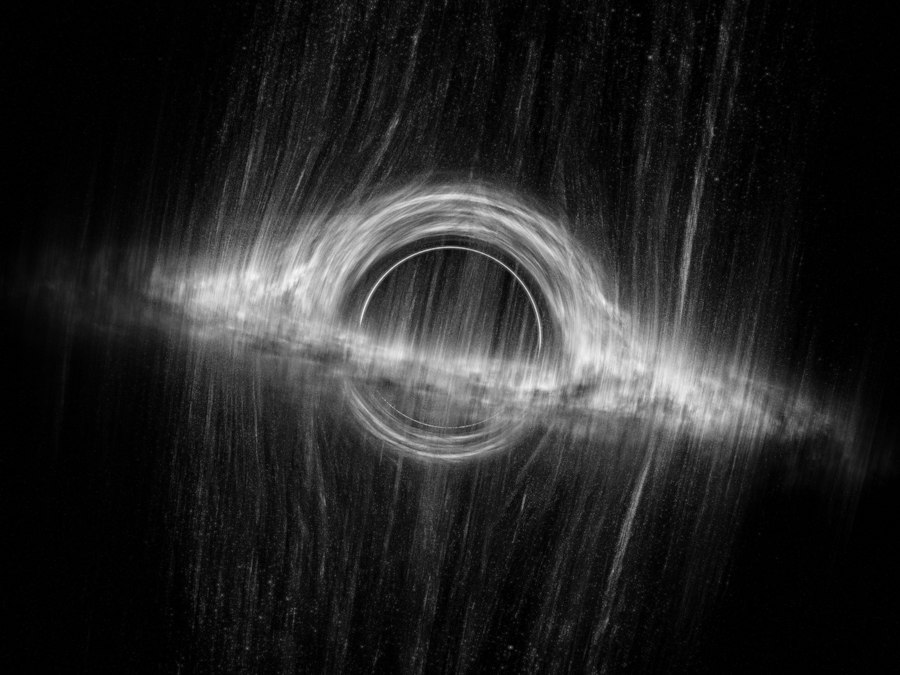
The discovery of planets orbiting stars other than our Sun, known as exoplanets, has revolutionized our understanding of planetary systems and ignited the age-old question: “Are we alone in the universe?” The sheer abundance of exoplanets discovered so far suggests that planetary systems are common, increasing the probability that life may have arisen elsewhere.
Cataloging Worlds Beyond Our Solar System
The first confirmed exoplanet was discovered in 1992, orbiting a pulsar. Since then, thousands of exoplanets have been identified using various detection methods, primarily the transit method and the radial velocity method. The transit method detects the slight dimming of a star’s light as a planet passes in front of it. The radial velocity method measures the wobble of a star caused by the gravitational tug of an orbiting planet.
Missions like NASA’s Kepler Space Telescope and TESS (Transiting Exoplanet Survey Satellite) have been instrumental in this endeavor, discovering thousands of exoplanet candidates. These missions have revealed a surprising diversity of planetary systems, including hot Jupiters orbiting very close to their stars, super-Earths with masses larger than Earth but smaller than Neptune, and rocky planets within the habitable zones of their stars – regions where liquid water could potentially exist on a planet’s surface. The sheer number of exoplanets found suggests that planets are ubiquitous in our galaxy, with estimates indicating that there could be billions of potentially habitable planets in the Milky Way alone.
The Quest for Biosignatures
Identifying exoplanets is just the first step; the next, more challenging, is to determine if any of them harbor life. This involves searching for “biosignatures” in the atmospheres of these exoplanets. Biosignatures are gases or combinations of gases that are indicative of biological processes. For instance, the simultaneous presence of oxygen and methane in an exoplanet’s atmosphere would be a strong indication of life, as these gases tend to react with each other and would need to be continuously replenished by biological activity.
The James Webb Space Telescope is playing a crucial role in this endeavor. Its powerful spectrographic instruments can analyze the light that passes through an exoplanet’s atmosphere during a transit. This allows scientists to identify the chemical composition of the atmosphere and search for the presence of molecules like water vapor, carbon dioxide, methane, and potentially even oxygen. Future telescopes, such as the Habitable Exoplanet Observatory (HabEx) and the Large Ultraviolet Optical Infrared Surveyor (LUVOIR), are being designed with even greater capabilities to directly image exoplanets and characterize their atmospheres in greater detail, bringing the search for extraterrestrial life closer to reality. The scientific community is keenly awaiting the results from these ongoing and future missions, as the confirmation of life beyond Earth would be one of the most profound discoveries in human history.
The Cosmic Ballet of Galaxies and Black Holes
Galaxies, the grand architectural units of the universe, are not static entities but are engaged in a constant, dynamic interaction, shaped by gravity and the presence of supermassive black holes at their centers. Understanding these cosmic interactions is key to comprehending the evolution of the universe and the formation of the structures we observe today.
Galactic Mergers and Evolution
Galaxies are not isolated islands; they frequently collide and merge. These galactic mergers are violent events that can trigger bursts of star formation, feed supermassive black holes, and fundamentally alter the structure and morphology of the merging galaxies. For example, spiral galaxies can transform into elliptical galaxies after a significant merger.
Astronomers study galactic mergers by observing galaxies at various stages of interaction. Observations from telescopes like Hubble have provided stunning images of galaxies in the process of merging, revealing tidal tails of stars and gas being pulled out by gravitational forces. Simulations are also crucial tools, allowing scientists to model the complex physics involved in these collisions and predict their outcomes. By studying the populations of stars and the chemical enrichment within galaxies, astronomers can also infer their past merger histories. The Milky Way itself is on a collision course with the Andromeda galaxy, a cosmic event predicted to occur in several billion years. Understanding these processes helps us place our own galaxy’s evolution within a broader cosmic context.
The Influence of Supermassive Black Holes
At the heart of most large galaxies lies a supermassive black hole, an object with a gravitational pull so strong that nothing, not even light, can escape. These behemoths, with masses ranging from millions to billions of times that of our Sun, play a critical role in galactic evolution. When a supermassive black hole actively accretes matter, it forms an accretion disk that can become incredibly luminous, powering quasars and active galactic nuclei (AGN).
The energy and radiation output from AGN can have a profound impact on their host galaxies. They can heat and expel gas, quenching star formation and regulating the growth of the galaxy. This feedback mechanism is a crucial aspect of galaxy formation and evolution. Studying the relationship between the mass of a supermassive black hole and the properties of its host galaxy has revealed strong correlations, suggesting a co-evolutionary process. Telescopes like the Event Horizon Telescope (EHT) have achieved the remarkable feat of imaging the shadow of the black hole at the center of M87 and, more recently, our own Milky Way’s supermassive black hole, Sagittarius A*. These observations provide direct evidence of the extreme environments around black holes and offer insights into the physics of accretion and jet formation. The ongoing study of AGN and their feedback mechanisms is essential for a complete understanding of how galaxies form and evolve over cosmic timescales.
Recent advancements in astrophysics have shed light on a deep space mystery that has puzzled scientists for decades. Researchers have made significant progress in understanding the enigmatic signals emanating from distant galaxies, which has opened new avenues for exploration and discovery. For those interested in learning more about this fascinating topic, you can read a related article that delves deeper into the findings and their implications for our understanding of the universe. Check it out here.
The Frontiers of Cosmic Exploration
| Metric | Value | Description |
|---|---|---|
| Discovery Date | 2024-05-15 | Date when the deep space mystery was solved |
| Distance from Earth | 3.2 billion light years | Distance to the deep space object involved in the mystery |
| Type of Object | Quasar | Classification of the celestial object studied |
| Observation Instruments | James Webb Space Telescope, Chandra X-ray Observatory | Telescopes used to gather data |
| Key Finding | Unusual energy emissions explained by black hole spin | Summary of the mystery’s solution |
| Data Collection Period | 2019-2024 | Time span over which data was collected |
| Research Team Size | 45 scientists | Number of researchers involved in the study |
| Publication | Astrophysical Journal, June 2024 | Journal and date of the research publication |
Humanity’s journey into deep space is a continuous evolution, driven by technological advancements and an enduring quest for knowledge. As our observational capabilities expand and our theoretical understanding deepens, new mysteries emerge, pushing the boundaries of what we know and inspiring future generations of explorers.
The Quest for Interstellar Travel and Beyond
The dream of interstellar travel, of venturing beyond our solar system to explore other stars and potentially other worlds, has long been a staple of science fiction. While currently beyond our technological reach, significant research is being conducted into potential propulsion systems that could one day make such journeys feasible. Concepts like fusion rockets, antimatter propulsion, and even theoretical ideas like warp drives are being explored, albeit in their very early stages.
Beyond propulsion, the challenges of interstellar travel are immense, including the vast distances involved, the long travel times, and the need for life support systems that can sustain crews for decades or even centuries. Nevertheless, the development of probes like the Voyager spacecraft, which have now entered interstellar space, represents a significant step in our physical reach into the cosmos. Future missions are envisioned that could carry sophisticated instrumentation to analyze the composition of interstellar gas and dust, and perhaps even to search for signs of life on planets orbiting nearby stars. The ultimate goal for some is the establishment of human outposts beyond our solar system, a monumental undertaking that would redefine humanity’s place in the cosmos.
The Unfolding Tapestry of Cosmic Mysteries
The universe is a dynamic and ever-changing entity, and our understanding of it is constantly being refined and expanded. As we probe deeper into its depths, new questions arise, challenging our current paradigms and driving further scientific inquiry. The search for extraterrestrial intelligence (SETI), while still yielding no definitive results, continues to explore the possibility of life beyond Earth through radio astronomy and other methods. The fundamental nature of gravity and its relationship to quantum mechanics, the search for a unified theory of everything, and the ultimate fate of the universe are all grand scientific challenges that lie at the heart of deep space exploration.
The insights gained from studying the universe are not confined to the realm of abstract science; they often have profound implications for our understanding of ourselves and our place in the grand cosmic narrative. The ongoing unraveling of deep space mysteries is a testament to human ingenuity, curiosity, and the relentless pursuit of knowledge. Each discovery, no matter how small, adds another thread to the intricate tapestry of cosmic understanding, reminding us of the vastness of the unknown and the exhilarating journey of exploration that lies ahead. The universe, in its infinite complexity and boundless wonder, continues to beckon, inviting us to gaze outward and unravel its deepest secrets.

The Universe’s Cold Spot Has an Explanation. It’s Not Enough.
FAQs
What was the deep space mystery that was solved?
The deep space mystery that was solved involved the origin of powerful radio bursts known as fast radio bursts (FRBs) coming from a galaxy 3.6 billion light-years away.
How were scientists able to solve the deep space mystery?
Scientists were able to solve the deep space mystery by tracing the origin of the FRBs to a magnetar, which is a type of neutron star with an extremely strong magnetic field.
What is a fast radio burst (FRB)?
A fast radio burst (FRB) is a high-energy astrophysical phenomenon characterized by short bursts of radio waves lasting only a few milliseconds.
What is a magnetar?
A magnetar is a type of neutron star with an extremely strong magnetic field, thousands of times more powerful than a typical neutron star.
Why is solving the deep space mystery of FRBs significant?
Solving the deep space mystery of FRBs is significant because it helps scientists better understand the origins of these powerful radio bursts and provides insights into the extreme astrophysical processes occurring in the universe.