The universe, in all its breathtaking grandeur and perplexing complexity, has long been a subject of intense scientific inquiry. For millennia, humanity has gazed at the stars, weaving myths and seeking order. In the modern era, this quest has coalesced into a powerful theoretical framework: the Cosmological Standard Model, often referred to as the Lambda-CDM model. This model represents our current best understanding of the universe’s origin, evolution, and large-scale structure. It is a triumph of theoretical physics and observational astronomy, pieced together through decades of relentless research, sophisticated experiments, and profound conceptual leaps. Yet, like any scientific model, it is not without its enigmas, prompting ongoing investigation and hinting at deeper layers of cosmic reality yet to be unveiled.
The Foundations of Cosmic Understanding
The Cosmological Standard Model is built upon a bedrock of fundamental principles and key observational pillars. Understanding these foundational elements is crucial to appreciating the model’s elegance and its limitations. It’s a narrative that begins with the Big Bang and extends to the vast, expanding cosmos we observe today.
The Big Bang: A Universe in Expansion
At the heart of the Cosmological Standard Model lies the Big Bang theory. This is not an explosion in pre-existing space, but rather the rapid expansion of space-time itself from an incredibly hot and dense initial state. The theory is supported by overwhelming evidence, most notably the expansion of the universe, as observed by Edwin Hubble in the late 1920s. Hubble’s meticulous observations revealed that distant galaxies are receding from us, and the further away they are, the faster they are moving. This cosmic redshift is a direct consequence of the stretching of space-time as the universe expands. This expansion implies that if we rewind the clock, the universe must have been smaller, denser, and hotter.
Cosmic Microwave Background Radiation: The Echo of Creation
Perhaps the most compelling piece of evidence for the Big Bang is the Cosmic Microwave Background (CMB) radiation. Discovered serendipitously in 1964 by Arno Penzias and Robert Wilson, the CMB is a faint, uniform glow of microwave radiation permeating all of space. This radiation is interpreted as the afterglow of the Big Bang, the residual heat left over from the early universe when it was about 380,000 years old. At this epoch, known as recombination, the universe had cooled enough for electrons and protons to combine, forming neutral atoms. This event made the universe transparent to photons, allowing the light from that era to travel freely and reach us today as the CMB. The remarkable uniformity of the CMB across the sky, with tiny temperature fluctuations (anisotropies) on the order of parts in 100,000, is a crucial piece of information that the Standard Model explains. These fluctuations represent the initial seeds of structure formation that would eventually grow into galaxies and clusters of galaxies.
The Abundance of Light Elements: A Cosmic Recipe
Another significant observational pillar supporting the Big Bang is the observed abundance of light elements in the universe, particularly hydrogen, helium, and lithium. The Big Bang nucleosynthesis (BBN) theory predicts the relative proportions of these elements formed in the first few minutes after the Big Bang, when temperatures and densities were suitable for nuclear fusion. The predictions of BBN, based on the physics of nuclear reactions and the expansion rate of the early universe, align remarkably well with the observed cosmic abundances of these light elements. This agreement provides strong evidence that the universe did indeed undergo a period of extreme heat and density in its early history.
The cosmological standard model, which describes the large-scale structure and evolution of the universe, is a fascinating topic that intersects with various fields of astrophysics. For those interested in a deeper exploration of this subject, a related article can be found at Freaky Science, where you can discover more about the latest research and theories that shape our understanding of the cosmos.
The Unseen Architects: Dark Matter and Dark Energy

While the Big Bang theory and its observational support paint a compelling picture, the Cosmological Standard Model is incomplete without accounting for two enigmatic components that dominate the universe’s mass-energy budget: dark matter and dark energy. These invisible entities exert profound gravitational influence and drive the universe’s expansion, yet their fundamental nature remains one of the most significant mysteries in modern physics.
The Enigma of Dark Matter
The existence of dark matter was first inferred from observations of galaxy rotation curves by Vera Rubin and her colleagues in the 1970s. They observed that stars in the outer regions of galaxies were orbiting much faster than expected based on the visible matter alone. This suggested that galaxies are embedded in a much larger, invisible halo of matter exerting additional gravitational pull. Further evidence for dark matter comes from the dynamics of galaxy clusters, gravitational lensing – the bending of light by massive objects – and the structure of the CMB. Current estimates suggest that dark matter constitutes about 27% of the total mass-energy density of the universe, far outweighing the ordinary, visible matter (baryonic matter) which makes up only about 5%. Despite extensive searches, the exact composition of dark matter remains elusive. Leading candidates include weakly interacting massive particles (WIMPs) or axions, hypothetical particles that interact only very weakly with ordinary matter, making them incredibly difficult to detect.
The Driving Force of Dark Energy
The most surprising discovery in cosmology in the late 20th century was the observation that the expansion of the universe is not slowing down, as would be expected from the gravitational pull of matter, but is actually accelerating. This acceleration is attributed to dark energy, a mysterious component that makes up approximately 68% of the universe’s total mass-energy. Dark energy is thought to possess a negative pressure, acting as a sort of anti-gravitational force that pushes space-time apart. The simplest explanation for dark energy is the cosmological constant, denoted by the Greek letter Lambda ($Lambda$), first proposed by Albert Einstein. This constant represents an intrinsic energy density of empty space. However, theoretical calculations of this vacuum energy lead to a value vastly larger than what is observed, creating a major theoretical challenge known as the “cosmological constant problem.” Other proposed explanations for dark energy include dynamic fields, such as quintessence, whose energy density can change over time. Understanding dark energy is paramount to comprehending the ultimate fate of the universe.
The Cosmic Inventory: A Universe of Particles and Forces

The Cosmological Standard Model is not just about the large-scale structure and evolution of the universe; it also incorporates our understanding of the fundamental constituents of matter and the forces that govern their interactions. This is where the realm of particle physics intersects with cosmology.
The Standard Model of Particle Physics: The Building Blocks
The Standard Model of Particle Physics is a remarkably successful theory that describes the fundamental particles and their interactions through three of the four fundamental forces: the electromagnetic force, the weak nuclear force, and the strong nuclear force. It classifies elementary particles into two main categories: fermions, which are the matter particles (quarks and leptons), and bosons, which are the force-carrying particles (photons, W and Z bosons, gluons). Quarks combine to form protons and neutrons, the building blocks of atomic nuclei, while electrons orbit these nuclei to form atoms. The Higgs boson, discovered in 2012, is responsible for giving mass to these fundamental particles. The Cosmological Standard Model seamlessly integrates the Standard Model of Particle Physics, assuming that the particles and forces described therein were present and active in the early universe.
The Interplay of Forces: Gravity and Beyond
While the Standard Model of Particle Physics describes three of the fundamental forces, gravity, the force that governs the large-scale structure of the universe, is described by Einstein’s theory of General Relativity. This theory views gravity not as a force in the traditional sense, but as a curvature of space-time caused by mass and energy. The Cosmological Standard Model reconciles General Relativity with the other fundamental forces, particularly in describing the expansion of the universe and the formation of cosmic structures. However, a complete unification of all four fundamental forces into a single quantum theory of gravity remains a major unsolved problem in theoretical physics, and its resolution could have profound implications for our understanding of the very beginning of the universe.
The Genesis of Structure: From Fluctuations to Galaxies
The uniform nature of the CMB, punctuated by tiny temperature fluctuations, is the key to understanding how the large-scale structure of the universe – the cosmic web of galaxies and galaxy clusters – came into being. The Cosmological Standard Model provides a detailed narrative of this process.
Inflation: Smoothing the Early Universe
The remarkably smooth and flat geometry of the observable universe, as indicated by the CMB, presents a challenge for simpler Big Bang models. The theory of cosmic inflation, proposed by Alan Guth in the early 1980s, offers a solution. Inflation suggests that in the first fraction of a second after the Big Bang, the universe underwent an extremely rapid period of exponential expansion. This inflationary epoch is thought to have smoothed out initial irregularities and stretched quantum fluctuations to macroscopic scales, seeding the initial density variations that would eventually grow into the structures we see today. The properties of these initial fluctuations are imprinted on the CMB and are crucial for the subsequent evolution of the universe.
Gravitational Collapse: The Formation of Cosmic Structures
Following inflation and recombination, the slightly denser regions of the universe began to attract more matter due to gravity. Over millions and billions of years, these overdense regions grew through a process of gravitational collapse. Dark matter played a crucial role in this process, forming gravitational potential wells into which baryonic matter, along with gas and radiation, fell. This gas then cooled, condensed, and eventually formed the first stars and galaxies. The hierarchical nature of structure formation, where smaller structures merge to form larger ones, is a key prediction of the Lambda-CDM model, and it is supported by observations of the cosmic web and galaxy evolution. The distribution of galaxies in clusters and superclusters, separated by vast voids, is a testament to this ongoing process.
The cosmological standard model, which describes the evolution of the universe, is a fascinating topic that has garnered significant attention in recent years. For those interested in exploring this subject further, a related article can provide additional insights into the underlying principles and recent discoveries in cosmology. You can read more about these developments in the article found here, which delves into the implications of dark matter and dark energy on our understanding of the cosmos.
Challenges and Future Directions: The Frontiers of Cosmology
| Parameter | Symbol | Value | Units | Description |
|---|---|---|---|---|
| Hubble Constant | H0 | 67.4 | km/s/Mpc | Current expansion rate of the universe |
| Dark Energy Density Parameter | ΩΛ | 0.685 | Dimensionless | Fraction of total energy density due to dark energy |
| Dark Matter Density Parameter | Ωc | 0.265 | Dimensionless | Fraction of total energy density due to cold dark matter |
| Baryonic Matter Density Parameter | Ωb | 0.05 | Dimensionless | Fraction of total energy density due to ordinary matter |
| Curvature Density Parameter | Ωk | 0.0 | Dimensionless | Indicates spatial curvature of the universe (flat if zero) |
| Scalar Spectral Index | ns | 0.965 | Dimensionless | Describes the scale dependence of primordial fluctuations |
| Optical Depth to Reionization | τ | 0.054 | Dimensionless | Measures the opacity of the universe due to reionization |
| Amplitude of Primordial Fluctuations | As | 2.1 × 10⁻⁹ | Dimensionless | Normalization of the primordial power spectrum |
Despite its remarkable success, the Cosmological Standard Model is not a final theory. Several persistent puzzles and discrepancies challenge its completeness and point towards the need for further refinements and perhaps entirely new physics. These challenges serve as the driving force for current and future cosmological research.
The Hubble Tension: A Discrepancy in Expansion
One of the most significant contemporary challenges to the Lambda-CDM model is the “Hubble tension.” This refers to the disagreement between measurements of the Hubble constant ($H_0$), which quantifies the current rate of the universe’s expansion, derived from observations of the local universe (e.g., using supernovae and Cepheid variables) and those derived from observations of the early universe (e.g., from the CMB). The local measurements consistently yield a higher value for $H_0$ than those derived from the early universe. This discrepancy could indicate limitations in our understanding of either the early universe, the late universe, or the nature of dark energy. Proposed solutions range from modifications to the Lambda-CDM model to new physics or systematic errors in the measurements.
The Small-Scale Crisis: Anomalies in Structure Formation
Another area of concern, sometimes referred to as the “small-scale crisis,” involves discrepancies between the predictions of the Lambda-CDM model and observations of the distribution and properties of dark matter halos and dwarf galaxies on smaller scales. For instance, simulations based on the Lambda-CDM model predict that there should be many more small, satellite galaxies around larger galaxies than are observed. Additionally, the density profiles of some dwarf galaxies appear to be “cored” rather than “cuspy” as predicted. While some of these issues might be resolved by refining our understanding of baryonic physics (the physics of ordinary matter) within dark matter halos, others could point to fundamental issues with the nature of dark matter itself.
The Search for New Physics: Beyond the Standard Model
The Cosmological Standard Model, while robust, is a testament to our current understanding. The mysteries of dark matter and dark energy, the Hubble tension, and the small-scale anomalies all strongly suggest that there is more to the universe than we currently comprehend. Future research will focus on developing more precise observational probes, such as advanced telescopes and gravitational wave detectors, and theoretical frameworks that can accommodate these discrepancies. This could involve exploring new particle candidates for dark matter, developing more sophisticated models for dark energy, or even revisiting our fundamental understanding of gravity and space-time. The ongoing quest to unravel the cosmological standard model is a journey of discovery that continues to push the boundaries of human knowledge, promising to reveal even more wonders about the universe we inhabit.
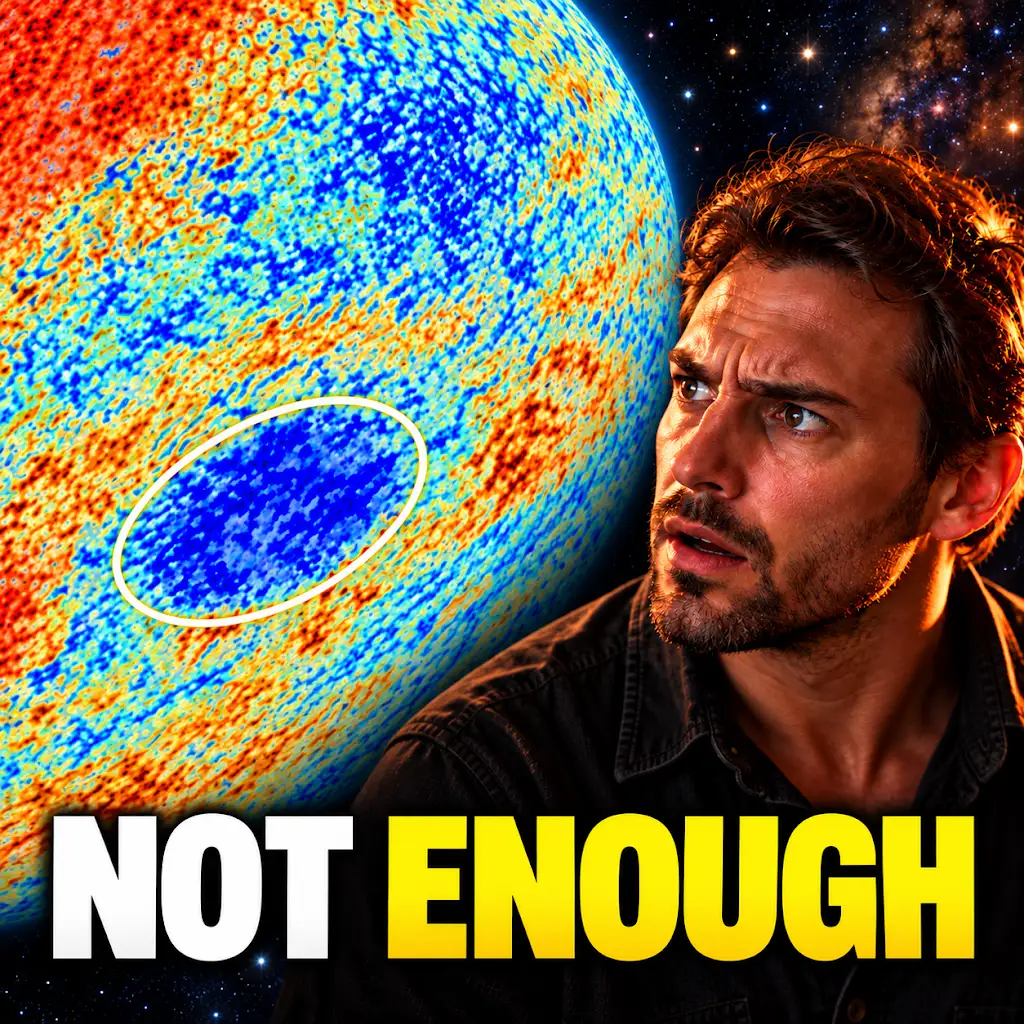
The Universe’s Cold Spot Has an Explanation. It’s Not Enough.
FAQs
What is the cosmological standard model?
The cosmological standard model is a theoretical framework used in cosmology to describe the evolution and structure of the universe. It is based on the Big Bang theory and includes concepts such as dark matter, dark energy, and the expansion of the universe.
What are the key components of the cosmological standard model?
The key components of the cosmological standard model include ordinary matter (atoms), dark matter (a form of matter that does not emit light or energy), dark energy (a mysterious force driving the accelerated expansion of the universe), and radiation (such as cosmic microwave background radiation).
How does the cosmological standard model explain the formation of galaxies and large-scale structures in the universe?
The cosmological standard model explains the formation of galaxies and large-scale structures through the process of gravitational collapse. Small density fluctuations in the early universe grew over time due to gravity, eventually leading to the formation of galaxies, galaxy clusters, and cosmic filaments.
What evidence supports the cosmological standard model?
Evidence supporting the cosmological standard model includes the cosmic microwave background radiation, the distribution of galaxies in the universe, the observed acceleration of the universe’s expansion, and the abundance of light elements (such as hydrogen and helium) predicted by Big Bang nucleosynthesis.
Are there any challenges or limitations to the cosmological standard model?
While the cosmological standard model has been successful in explaining many observations of the universe, there are still some challenges and limitations. For example, the nature of dark matter and dark energy remains poorly understood, and there are discrepancies between observations and predictions related to the distribution of matter on large scales. Ongoing research and observations aim to address these issues and refine our understanding of the universe.