The universe, when viewed on its grandest scales, is not a uniform expanse. Instead, it appears as an intricate, filamentary network, a celestial tapestry woven from galaxies, gas, and dark matter. This colossal structure, known as the cosmic web, is the largest arrangement of matter observed in the universe, and understanding its formation and evolution is a cornerstone of modern cosmology. This article will delve into the unraveling of this cosmic web, exploring its components, its origins, and the profound implications of its existence for our understanding of the universe.
To comprehend the cosmic web, one must first understand its constituent parts. These are not simply isolated stars or galaxies, but vast reservoirs of matter distributed across immense distances.
Galaxies: The Luminous Anchors
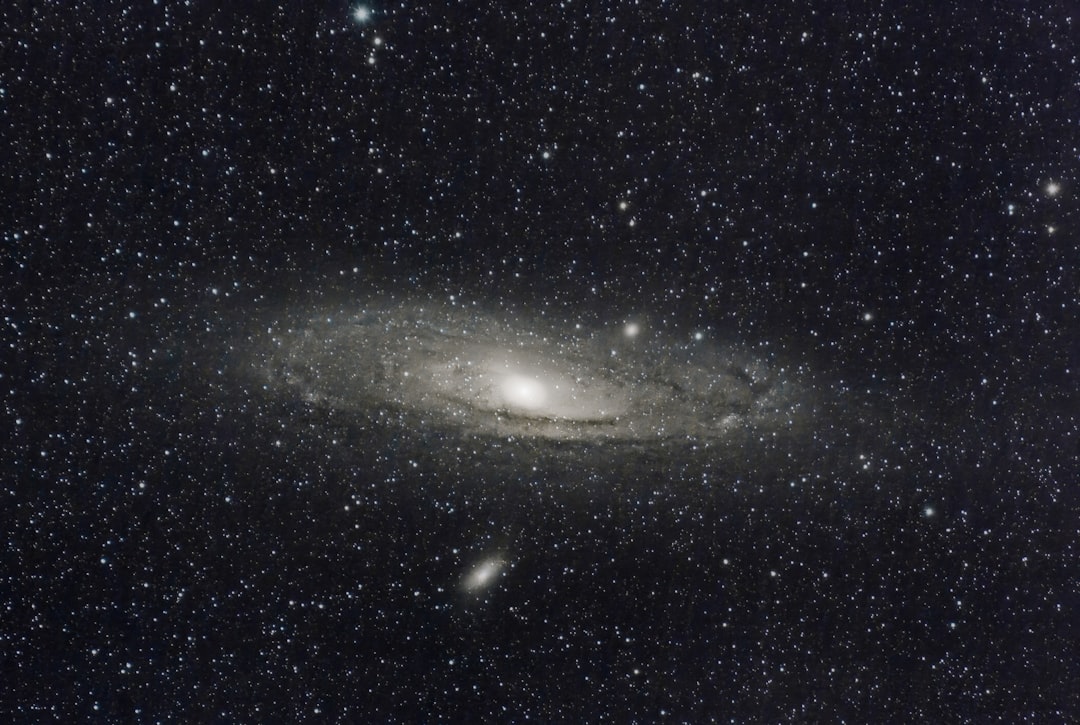
Galaxies, the familiar islands of stars, gas, and dust, are the most visible components of the cosmic web. They are not uniformly scattered but are concentrated in specific regions, forming clusters and superclusters that serve as nodes and intersections within the larger structure. These galactic congregations are the luminous signposts of the cosmic web, allowing astronomers to map its contours and trace its intricate patterns. The Andromeda Galaxy, our closest large galactic neighbor, is a testament to the dynamic nature of these structures.
Galaxy Clusters and Superclusters: Cosmic Cities and Their Metropolitan Areas
Where galaxies are densely packed, they form galaxy clusters. These are the most massive gravitationally bound structures in the universe, containing hundreds to thousands of galaxies, along with vast quantities of hot, X-ray emitting gas and dark matter. These clusters are not the ultimate endpoints of cosmic organization. Instead, they themselves are arranged in even larger structures: superclusters. Superclusters are loose, sprawling associations of galaxy clusters, sometimes spanning hundreds of millions of light-years. They are like the metropolitan areas of the universe, with clusters acting as major cities. The Laniakea Supercluster, which encompasses our own Milky Way, is an example of the sheer scale of these arrangements.
Filaments: The Interconnecting Arteries
Connecting these dense knots of galaxies are vast, thread-like structures known as filaments. These are regions where galaxies and gas are more sparsely distributed than in clusters but are still significantly denser than the average density of the universe. Filaments are the arterial highways of the cosmic web, channeling matter and dictating the flow of galactic evolution. They are composed of both visible matter, primarily in the form of galaxies and intergalactic gas, and the invisible scaffold of dark matter.
Voids: The Vast Emptiness
Punctuating the network of filaments and clusters are immense, nearly empty regions known as voids. These are the cosmic deserts, vast expanses of space where matter is significantly less dense than the cosmic average. Voids are not truly devoid of matter, containing some sparse galaxies and diffuse gas, but their emptiness is striking when contrasted with the crowded hubs of clusters. These voids can be hundreds of millions of light-years across, representing a significant fraction of the volume of the observable universe.
The large-scale structure of the cosmos is a fascinating topic that delves into the distribution of galaxies and cosmic filaments across the universe. For those interested in exploring this subject further, I recommend reading the related article available at Freaky Science, which provides insights into the formation and evolution of these vast structures, shedding light on the underlying forces that shape our universe.
The Invisible Architect: The Role of Dark Matter
While galaxies and gas provide the visible spectacle of the cosmic web, it is the invisible hand of dark matter that truly sculpted this grand design. Dark matter, a mysterious substance that does not interact with light, constitutes about 85% of the matter in the universe. Its gravitational influence is paramount in the formation and maintenance of the cosmic web.
Dark Matter Halos: Gravitational Wells
Dark matter is believed to exist in vast, spherical or ellipsoidal structures called dark matter halos. These halos act as gravitational wells, attracting ordinary baryonic matter, which then cools, collapses, and eventually forms galaxies within their centers. Think of dark matter halos as the invisible scaffolding upon which the visible universe is built. Without these pervasive gravitational attractors, baryonic matter would simply not have been able to clump together efficiently enough to form the structures we observe.
Gravitational Instability: The Seeds of Structure
The initial seeds of structure in the universe are thought to have arisen from tiny quantum fluctuations in the extremely hot and dense early universe. These fluctuations, amplified by cosmic inflation, led to slight variations in the density of matter. In regions where matter was slightly denser, gravity began to pull in more matter, while in less dense regions, gravity was weaker. This process, known as gravitational instability, is the fundamental driver behind the formation of all cosmic structures, from galaxies to the largest superclusters. Dark matter, with its dominant gravitational influence, played a crucial role in amplifying these initial density fluctuations.
The Cosmic Web as a Gravitational Landscape
The cosmic web can be visualized as the gravitational landscape of the universe, sculpted by the distribution of dark matter. The filaments of dark matter are regions of higher gravitational potential, attracting and channeling baryonic matter. The clusters of galaxies reside at the intersections of these filaments, where the gravitational pull is strongest. The voids, conversely, are regions of lower gravitational potential, where matter has been largely drawn away.
The Genesis of the Cosmic Web: From the Big Bang to Tod

The formation of the cosmic web is a story that began with the Big Bang and has been unfolding over billions of years. Cosmological models provide a compelling narrative of this evolution, tracing the journey from a smooth, early universe to the complex web we observe today.
The Early Universe: A Smooth Beginning
Immediately after the Big Bang, the universe was incredibly hot, dense, and remarkably uniform. The evidence for this lies in the cosmic microwave background (CMB) radiation, a faint afterglow of the Big Bang that permeates the entire sky. The CMB is exceptionally smooth, with only very small temperature fluctuations, on the order of one part in 100,000. These tiny variations, however, are of immense significance, representing the initial seeds of all structure.
Cosmic Inflation: Rapid Expansion and Amplification
A key theoretical concept in cosmology is cosmic inflation, a hypothesized period of extremely rapid expansion that occurred fractions of a second after the Big Bang. Inflation is thought to have stretched microscopic quantum fluctuations to macroscopic scales, thereby imprinting the initial density variations that would later grow into the cosmic web. Without inflation, these primordial seeds might have remained too small to have had a significant impact on the large-scale structure.
The Dark Ages: The Universe Cloaked in Darkness
Following the rapid expansion of inflation and the subsequent cooling of the universe, a period known as the “Dark Ages” commenced. During this epoch, the universe was filled with neutral hydrogen and helium gas, but there were no stars or galaxies to emit light. The universe was effectively opaque to visible light, and the only radiation present was the cooling CMB. Gravity, however, was relentlessly at work, slowly pulling matter together in the slightly denser regions.
The Dawn of Reionization: The First Stars Ignite
As matter continued to clump under gravity, the first stars and galaxies began to form within the growing dark matter halos. The radiation from these early stars played a crucial role in reionizing the neutral hydrogen in the universe, transforming it back into an ionized plasma. This process, known as reionization, marked the end of the Dark Ages and made the universe transparent to light once again. These early luminous structures were the first visible anchors in the nascent cosmic web.
Mapping the Cosmic Tapestry: Observational Techniques
Unraveling the cosmic web is an ongoing endeavor, relying on sophisticated observational techniques that allow astronomers to map the distribution of galaxies and matter across vast cosmic distances. These observations paint a picture of the web’s structure and provide the data needed to test cosmological models.
Galaxy Redshift Surveys: Peering into the Depths
One of the primary tools for mapping the cosmic web is galaxy redshift surveys. When a galaxy moves away from an observer, the light it emits is stretched to longer, redder wavelengths – a phenomenon known as redshift. The amount of redshift is directly proportional to the galaxy’s recession velocity due to the expansion of the universe, and thus to its distance. By measuring the redshifts of hundreds of thousands, or even millions, of galaxies, astronomers can create three-dimensional maps of the universe, revealing the distribution of galaxies and the intricate structure of the cosmic web. Projects like the Sloan Digital Sky Survey (SDSS) have been instrumental in this regard.
Gravitational Lensing: Bending Light to Reveal Mass
Another powerful technique is gravitational lensing. Massive objects, such as galaxy clusters and filaments, bend spacetime and thus the path of light passing through them. This bending effect can distort and magnify the images of more distant galaxies. By studying these distortions, astronomers can infer the distribution of mass, including dark matter, within the foreground structures. Gravitational lensing acts like a cosmic magnifying glass, allowing us to probe the invisible mass that shapes the cosmic web.
Baryon Acoustic Oscillations: A Cosmic Ruler
Baryon acoustic oscillations (BAOs) provide a crucial “standard ruler” for measuring cosmic distances. In the early universe, sound waves propagated through the plasma, leaving characteristic imprints on the distribution of matter. These imprints, frozen in place when the universe cooled and became neutral, manifest as a preferred separation distance between galaxies. By measuring the statistical distribution of galaxy separations, astronomers can use this known distance to infer the expansion history of the universe and constrain cosmological parameters, thereby helping to map the cosmic web and test models of its formation.
The large scale structure of the cosmos is a fascinating topic that delves into the intricate web of galaxies and dark matter that shapes our universe. For those interested in exploring this subject further, a related article can provide valuable insights into the formation and evolution of these cosmic structures. You can read more about it in this detailed article, which discusses the latest discoveries and theories surrounding the vastness of space. Understanding these concepts not only enhances our knowledge of the universe but also ignites curiosity about our place within it.
The Cosmic Web as a Laboratory for Cosmology
| Metric | Description | Typical Value / Range | Units |
|---|---|---|---|
| Cosmic Web Filament Length | Typical length of filaments connecting galaxy clusters | 10 – 100 | Megaparsecs (Mpc) |
| Galaxy Cluster Mass | Mass of large galaxy clusters within the cosmic web | 1014 – 1015 | Solar Masses (M☉) |
| Void Size | Typical diameter of cosmic voids (regions with few galaxies) | 20 – 150 | Megaparsecs (Mpc) |
| Galaxy Density Contrast | Ratio of galaxy density in clusters vs. average cosmic density | 10 – 100 | Dimensionless |
| Correlation Length | Scale at which galaxy clustering is significant | 5 – 10 | Megaparsecs (Mpc) |
| Redshift Range of Large Scale Structure Surveys | Typical redshift range covered by galaxy surveys mapping large scale structure | 0.1 – 3 | Redshift (z) |
| Dark Matter Fraction | Fraction of total mass in large scale structures attributed to dark matter | ~85% | Percentage |
The study of the cosmic web is not merely an exercise in cataloging astronomical objects; it is a fundamental tool for testing and refining our understanding of the universe. The intricate patterns within the web provide a cosmic laboratory where the fundamental laws of physics and the nature of dark matter and dark energy can be probed.
The Lambda-CDM Model: A Framework for Understanding
The dominant cosmological model, known as the Lambda-CDM (Cold Dark Matter) model, provides a remarkably successful framework for explaining the formation and evolution of the cosmic web. This model posits that the universe is composed primarily of cold dark matter (CDM) and dark energy (represented by Lambda), with a smaller fraction of ordinary baryonic matter. The predictions of the Lambda-CDM model, when applied to simulations of structure formation, closely match the observed large-scale structure of the universe.
Testing the Nature of Dark Matter
The precise distribution and properties of dark matter within the cosmic web are crucial for validating our understanding of this elusive substance. If dark matter behaved according to different theories, the resulting cosmic web would exhibit different characteristics. For example, if dark matter were “warm” rather than “cold,” it would tend to smooth out smaller structures, leading to a cosmic web with fewer small galaxies and an altered distribution of matter on larger scales. Observing how galaxies are clustered within filaments and halos helps to constrain the possible properties of dark matter.
Probing Dark Energy and Cosmic Acceleration
The expansion of the universe is not constant but is currently accelerating, a phenomenon attributed to dark energy. The cosmic web plays a role in constraining the nature of dark energy. The way in which the cosmic web has evolved over time, and how structures have grown within it, is sensitive to the influence of dark energy. By studying the growth of galaxy clusters and the dynamics of the web at different cosmic epochs, scientists can place tighter limits on the properties of dark energy and the nature of cosmic acceleration.
Unanswered Questions and Future Directions
Despite the remarkable progress made in unraveling the cosmic web, many profound questions remain. The precise nature of dark matter is still unknown, and the identity and properties of dark energy are subjects of intense research. Future telescopic surveys, like the Vera C. Rubin Observatory and the Square Kilometer Array, promise to map the cosmic web with unprecedented detail, providing more robust data to test cosmological models and potentially uncover new physics. The intricate patterns of the cosmic web, from the densest galaxy clusters to the vastest voids, hold the keys to some of the universe’s greatest mysteries, and the ongoing unraveling of this celestial tapestry continues to drive our quest for cosmic understanding.

WATCH NOW ▶️ Our Galaxy Is Sliding Toward a Cosmic Drain
FAQs
What is the large scale structure of the cosmos?
The large scale structure of the cosmos refers to the organization and distribution of matter on scales much larger than individual galaxies. It includes galaxy clusters, superclusters, filaments, and vast voids, forming a cosmic web that spans hundreds of millions of light-years.
How do scientists study the large scale structure of the universe?
Scientists study the large scale structure by observing the distribution of galaxies and galaxy clusters using telescopes across various wavelengths, including optical, radio, and X-ray. They also use redshift surveys to map the three-dimensional positions of galaxies and computer simulations to model cosmic evolution.
What role does dark matter play in the large scale structure?
Dark matter is believed to be the primary component influencing the formation and evolution of the large scale structure. Its gravitational pull helps gather ordinary matter into dense regions, leading to the formation of galaxies and clusters, while shaping the cosmic web.
What are cosmic voids?
Cosmic voids are vast, relatively empty regions of space with very few galaxies. They are the large, underdense areas between the filaments and clusters in the cosmic web, often spanning tens to hundreds of millions of light-years.
Why is understanding the large scale structure important?
Understanding the large scale structure helps scientists learn about the origin, composition, and evolution of the universe. It provides insights into fundamental physics, including the nature of dark matter and dark energy, and tests cosmological models such as the Big Bang theory.