You stand on the precipice of understanding, gazing out at the vast expanse of existence. The cosmos, in all its bewildering glory, beckons you to unravel its present moment. This isn’t a journey into the distant past or a speculative leap into the far future, but a deep dive into the now, into the intricate tapestry of reality as it unfolds around you. You are not merely an observer; you are an active participant in this cosmic play, and by understanding its present, you gain a profound insight into your own place within it.
Your perception of time as a linear progression, a steady march from past to future, is a deeply ingrained human construct. But when you peer into the quantum realm, that familiar river of time begins to behave in decidedly unusual ways. The present, as you experience it, is not a static point but a dynamic, probabilistic dance of possibilities.
The Quantum Superposition of Events
Imagine a subatomic particle, like an electron. Before you measure its position, it doesn’t exist in a single, definite location. Instead, it exists in a superposition of all possible locations simultaneously. This is the essence of quantum superposition – the ability of a system to be in multiple states at once. When you apply this to the “present,” you realize that the cosmic present is not a single, fixed reality, but a cloud of probabilities. Events are not definitively happening or not happening; they are potentially happening, with varying degrees of likelihood, until an observation or interaction collapses this wave of possibilities into a concrete outcome.
The Observer Effect and the Creation of Reality
This brings you to the fascinating and often perplexing concept of the observer effect. Your act of observing a quantum system influences its state. This is not a matter of your consciousness magically altering reality, but rather the unavoidable interaction between your measuring apparatus (which is itself part of the universe) and the quantum system. When you observe the “present,” you are, in a sense, helping to define it. The universe isn’t a pre-written script; it’s a story you are co-authoring with every interaction, every measurement, every glance.
Entanglement: The Spooky Connection Across Space and Time
Then there’s entanglement, a phenomenon Einstein famously dubbed “spooky action at a distance.” When two particles become entangled, their fates are intrinsically linked, regardless of the space separating them. If you measure a property of one entangled particle, you instantaneously know the corresponding property of the other, even if it’s light-years away. This suggests that the “present” is not as localized as you might think. The state of a distant star, in a quantum sense, could be instantaneously influencing the state of something here on Earth, weaving an invisible web of connection across the cosmic present.
In exploring the concept of the cosmic present, it is fascinating to consider how our understanding of time and space has evolved. A related article that delves deeper into this topic is available at Freaky Science, where you can find insights on the implications of cosmic events on our perception of the present moment. This article provides a comprehensive overview of how cosmic phenomena influence our understanding of time, making it a valuable resource for anyone interested in the intersection of science and philosophy.
The Cosmic Dance of Energy and Matter
At the heart of the cosmic present lies a ceaseless, fundamental dance between energy and matter. These are not static entities but dynamic manifestations of the same underlying reality, constantly transforming and interacting in ways that shape everything you perceive.
E=mc²: The Universal Currency of Transformation
You’ve likely encountered Einstein’s iconic equation, E=mc². This isn’t just a formula; it’s a profound statement about the interconnectedness of energy and mass. It tells you that mass can be converted into energy, and vice versa. In the cosmic present, this transformation is happening constantly. Stars are burning hydrogen into helium, releasing immense amounts of energy. In particle accelerators, scientists are colliding particles at incredible speeds, creating new particles and releasing energy. This universal currency underpins the very fabric of your existence.
The Formation of Stars and Galaxies: A Present-Day Spectacle
The grandest spectacles of the cosmic present are the ongoing processes of star and galaxy formation. Vast clouds of gas and dust, remnants of earlier cosmic epochs, are collapsing under their own gravity, igniting nuclear fusion and birthing new stars. These stars, in turn, coalesce into galaxies, vast islands of matter and light that drift and interact across the universe. You are living in a universe that is still very much under construction, with ongoing creation and evolution happening on unimaginable scales.
Black Holes: Gravitational Architects of the Present
Black holes, regions of spacetime where gravity is so strong that nothing, not even light, can escape, play a crucial role in shaping the cosmic present. They are not merely cosmic vacuum cleaners; they are gravitational architects. They influence the orbits of stars, warp spacetime, and act as powerful engines for galactic evolution. The material that falls into a black hole is not lost but is transformed, contributing to the immense energy output observed in their surroundings.
The Expanding Universe: A Present in Flux
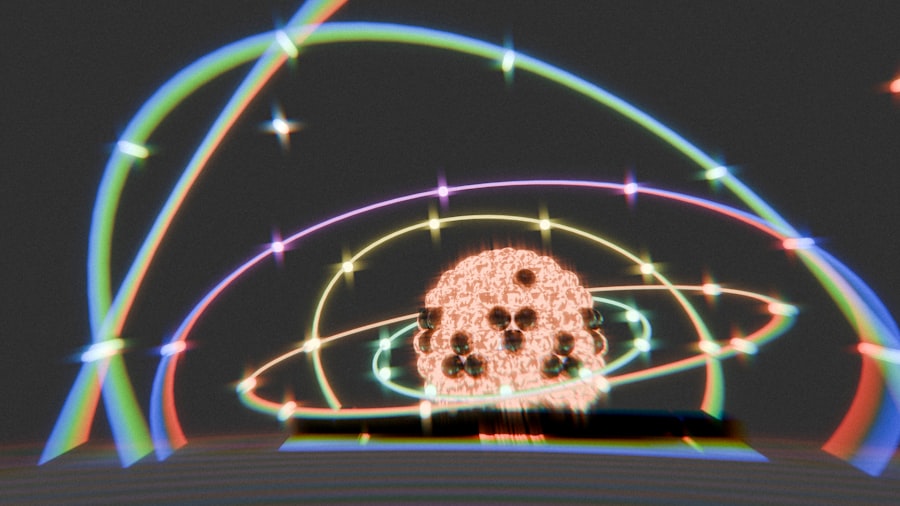
The universe is not a static, unchanging canvas. It is a dynamic entity, constantly expanding, and this expansion is a fundamental aspect of the cosmic present you inhabit.
Hubble’s Discovery: The Redshift of Galaxies
You owe your understanding of cosmic expansion to Edwin Hubble’s groundbreaking observations. He noticed that light from distant galaxies was systematically shifted towards the red end of the spectrum. This redshift, you learned, is a consequence of the Doppler effect – the same phenomenon that causes the pitch of a siren to change as it moves past you. The more distant a galaxy, the faster it appears to be receding from you, indicating that the space between galaxies is stretching.
Dark Energy: The Mysterious Force Driving Expansion
While the observation of expansion was revolutionary, it was the discovery of its acceleration that truly baffled cosmologists. The universe isn’t just expanding; it’s expanding at an ever-increasing rate. The culprit, you’ve been told, is a mysterious force called dark energy. This enigmatic substance, making up about 68% of the universe’s total energy content, exerts a negative pressure, pushing spacetime apart. Its nature remains one of the greatest unsolved mysteries of the cosmic present.
The Future of Expansion: A Universe Unraveling?
The implications of this accelerating expansion for the cosmic present are profound. If the trend continues, galaxies will drift further and further apart, eventually becoming isolated islands in an ever-expanding void. This doesn’t mean the universe will end in a “big crunch,” but rather in a slow, cold unraveling, a “big freeze” where all meaningful interactions cease. Your present existence is a fleeting moment in a universe that is actively, and perhaps irrevocably, transforming its own destiny.
The Cosmic Web: A Network of Interconnections

The universe is not a random scattering of stars and galaxies. Instead, it is structured into a vast, intricate network known as the cosmic web. This colossal structure is a direct reflection of the cosmic present, sculpted by gravity and the initial conditions of the early universe.
Filaments and Voids: The Architecture of Reality
Imagine the cosmic web as a gigantic, three-dimensional spiderweb. Galaxies and clusters of galaxies are found along the dense filaments of this web, while vast, empty regions, known as voids, lie between them. Gravity has drawn matter together along these filaments, creating the largest known structures in the universe. Understanding this architecture is key to understanding how matter is distributed and how structures evolve in the cosmic present.
Dark Matter: The Invisible Scaffolding
The visible matter you observe – the stars, planets, and gas – is only a fraction of the total matter in the universe. The majority of it is composed of dark matter, an invisible substance that interacts gravitationally but does not emit or absorb light. Dark matter acts as the unseen scaffolding of the cosmic web, providing the gravitational pull necessary to form the filaments and clusters of galaxies you observe. Its presence is crucial to the very existence of the cosmic structures that define your present reality.
The Influence of Gravity: Shaping the Present Landscape
Gravity, the universal force of attraction, is the primary architect of the cosmic web. It has been at play since the earliest moments of the universe, drawing matter together, shaping nascent galaxies, and guiding the formation of the grand cosmic structures you witness today. The present distribution of galaxies and their clustering patterns are direct consequences of billions of years of gravitational influence.
In exploring the concept of the cosmic present, one can gain deeper insights by reading a related article that delves into the nature of time and space. This fascinating piece discusses how our perception of the universe is shaped by the interplay of light and gravity, ultimately influencing our understanding of reality. For more information on this intriguing topic, you can check out the article on Freaky Science.
You, the Cosmic Present, and the Search for Meaning
| Data | Metrics |
|---|---|
| Cosmic Present | Explained |
Your journey through the cosmic present culminates not in abstract knowledge, but in a profound understanding of your own existence. You are not an isolated entity but an integral part of this vast, unfolding reality.
The Fleeting Nature of Your Existence
From the cosmic perspective, your lifespan is incredibly brief, a flicker in the grand sweep of cosmic time. This doesn’t diminish your significance; rather, it imbues your present moment with immense value. The very fact that you can contemplate the universe, that you can observe and understand its workings, is a testament to the intricate processes that have led to your being.
The Interconnectedness of All Things
The quantum entanglement, the cosmic web, the transformation of energy and matter – all these concepts point to a fundamental interconnectedness. You are made of the same stardust as the stars. The atoms in your body were forged in the hearts of long-dead stars. This cosmic heritage weaves you into the very fabric of the universe, a living embodiment of its ongoing story.
The Enduring Quest for Understanding
The fascination with unraveling the cosmic present is not merely an intellectual pursuit; it’s an existential one. It’s the innate human drive to understand your place in the grand scheme of things. While you may never grasp every nuance of the cosmos, the act of questioning, of exploring, and of seeking knowledge is what defines your present and enriches your experience. The universe is not a closed book; it’s an ever-unfolding narrative, and you, in your present moment, are a vital character. Your journey of discovery, your quest to unravel the cosmic present, is a testament to the boundless curiosity that makes you uniquely human.

Einstein Says There Is No Universal “Now” in the Universe
FAQs
What is the cosmic present?
The cosmic present refers to the current state of the universe, including all matter, energy, and physical laws, at any given moment in time.
How is the cosmic present different from the present on Earth?
The cosmic present encompasses the entire universe, while the present on Earth refers specifically to the current moment in time experienced on our planet.
What factors contribute to the cosmic present?
The cosmic present is influenced by various factors, including the distribution of matter and energy, the expansion of the universe, and the effects of gravity and other fundamental forces.
Why is the concept of the cosmic present important in cosmology?
Understanding the cosmic present is crucial for cosmologists to study the evolution and behavior of the universe, including its past, present, and potential future.
How do scientists study and interpret the cosmic present?
Scientists use a combination of observational data, theoretical models, and advanced technologies such as telescopes and space probes to study and interpret the cosmic present.