You stand at the precipice of a revolution in understanding the universe, a concept so profound it reshapes your very perception of reality. You’re about to embark on a journey to unravel Albert Einstein’s Theory of Relativity, a monumental achievement that has, for over a century, dictated how we understand gravity, space, and time. Forget what you think you know about the universe; relativity asks you to question it all. It’s a theory that, at first glance, seems abstract and counterintuitive, but its implications are touchable, measurable, and essential to our modern world, from the GPS in your pocket to the very stars you gaze at. Prepare yourself, for this is not merely an academic exercise; it’s a voyage into the fabric of existence itself.
Before you can truly grasp relativity, you must first grapple with a seemingly simple, yet mind-bending, fact: the speed of light in a vacuum is constant for all observers, regardless of their motion. Imagine you’re on a train moving at a significant speed. You throw a ball forward. To you, the ball moves at a certain speed. To someone standing stationary on the platform, the ball’s speed will be the speed you threw it plus the speed of the train. This is common sense, right? Now, replace the ball with a beam of light. You shine a flashlight forward from the moving train. Intuitively, you’d expect someone on the platform to measure the light’s speed as its normal speed plus the train’s speed. But here’s where Einstein’s genius kicks in: they don’t. They measure the exact same speed of light as you do, even though you’re moving and they are not. This is the cornerstone, the very bedrock, upon which the edifice of relativity is built.
The Michelson-Morley Experiment: Planting the Seed of Doubt
It wasn’t Einstein who first noticed this anomaly, but the experimental evidence was building. In the late 19th century, physicists believed light, like all other waves, needed a medium to propagate – an “luminiferous ether.” Experiments were designed to detect the Earth’s motion through this ether. The most famous of these was the Michelson-Morley experiment. They set out to measure the Earth’s speed by detecting differences in the speed of light traveling in different directions. Their results were shocking: no matter how they oriented their apparatus, the speed of light was always the same. This null result, initially baffling, began to chip away at the established physics of the time. It suggested that perhaps the ether didn’t exist, or that light behaved in a way that didn’t fit with their current understanding of waves.
Maxwell’s Equations: A Glimpse of Invariance
James Clerk Maxwell, in the mid-19th century, unified electricity and magnetism into a beautiful set of equations. These equations predicted the existence of electromagnetic waves, which we now know as light, and crucially, they showed that the speed of these waves was determined by fundamental constants of electromagnetism. What was remarkable, and perhaps even confusing to Maxwell himself, was that the speed of light derived from his equations didn’t depend on the motion of the observer. This was a profound theoretical hint, a whisper of the strangeness to come, that the speed of light might be a fundamental, invariant quantity.
For those interested in a deeper understanding of Einstein’s theory of relativity, a related article can be found at Freaky Science, which delves into the implications and applications of relativity in modern physics. This resource provides an accessible explanation of complex concepts, making it easier for readers to grasp the significance of Einstein’s work. You can read more about it by visiting Freaky Science.
Special Relativity: The World of Constant Velocity
With the empirical and theoretical ground prepared, Einstein presented his Special Theory of Relativity in 1905. This theory deals with situations where objects are moving at constant velocities relative to each other, in the absence of gravity. It’s “special” because it’s a specific case, a foundation upon which a more general theory would later be built. Special relativity is often described through its two postulates, which, when you truly internalize them, lead to a radical rethinking of space and time.
Postulate 1: The Principle of Relativity
The first postulate states that the laws of physics are the same for all observers in uniform motion. This means that if you’re conducting an experiment in a lab on Earth, or in a perfectly smooth-riding laboratory on a spaceship traveling at a constant speed, the results of that experiment will be identical. There’s no absolute frame of reference; all inertial frames of reference (those moving at constant velocity) are equally valid. Think about it: if you were blindfolded on that train, you wouldn’t be able to tell if you were moving or stationary, unless you opened a window or felt the train lurch. The physics inside the train car works exactly the same in both scenarios.
Postulate 2: The Constancy of the Speed of Light
As we’ve already discussed, this is the game-changer. The speed of light in a vacuum, denoted by $c$ (approximately 299,792,458 meters per second), is the same for all observers, regardless of their own motion or the motion of the light source. This is where intuition truly breaks down. If you’re moving towards a light source, you don’t see the light coming at you faster. If you’re moving away, you don’t see it coming at you slower. The speed of light is an ultimate cosmic speed limit, a constant woven into the fabric of the universe.
Time Dilation: Time is Not Absolute
The direct consequence of these two postulates is the mind-bending phenomenon of time dilation. Imagine two identical clocks. One stays with you on Earth, and the other is placed on a very fast-moving spaceship. According to special relativity, when the spaceship returns, the clock that traveled at high speed will show less elapsed time than your clock. Time itself, you see, is not an absolute, universal ticking that applies equally to everyone. It’s relative to your motion. The faster you move, the slower time passes for you relative to a stationary observer. This isn’t just a theoretical quirk; it’s been experimentally verified. For instance, atomic clocks on commercial airplanes flying at high speeds are found to run slightly slower than identical clocks on the ground.
The Twin Paradox: A Thought Experiment Made Real
A classic illustration of time dilation is the “twin paradox.” Imagine identical twins. One stays on Earth, while the other embarks on a long journey through space at near the speed of light. When the traveling twin returns, they will be younger than the twin who stayed on Earth. This is often called a paradox because it seems like if motion is relative, then each twin should see the other aging more slowly. However, the key is that the traveling twin undergoes acceleration and deceleration during their journey (turning around, for example), which breaks the symmetry. They are not in a uniformly moving frame of reference for the entire trip.
Length Contraction: Space Shrinks With Speed
Just as time is affected by motion, so too is space. Length contraction, a consequence of special relativity, states that the length of an object moving at a high velocity appears shorter in the direction of its motion to a stationary observer. If you were to observe a spaceship zooming past you at a significant fraction of the speed of light, it would appear squashed in the direction it’s traveling. The faster it goes, the more compressed it appears. Again, to the occupants of the spaceship, their ship appears its normal length. This effect is only noticeable at speeds approaching the speed of light.
Mass-Energy Equivalence: The Famous $E=mc^2$
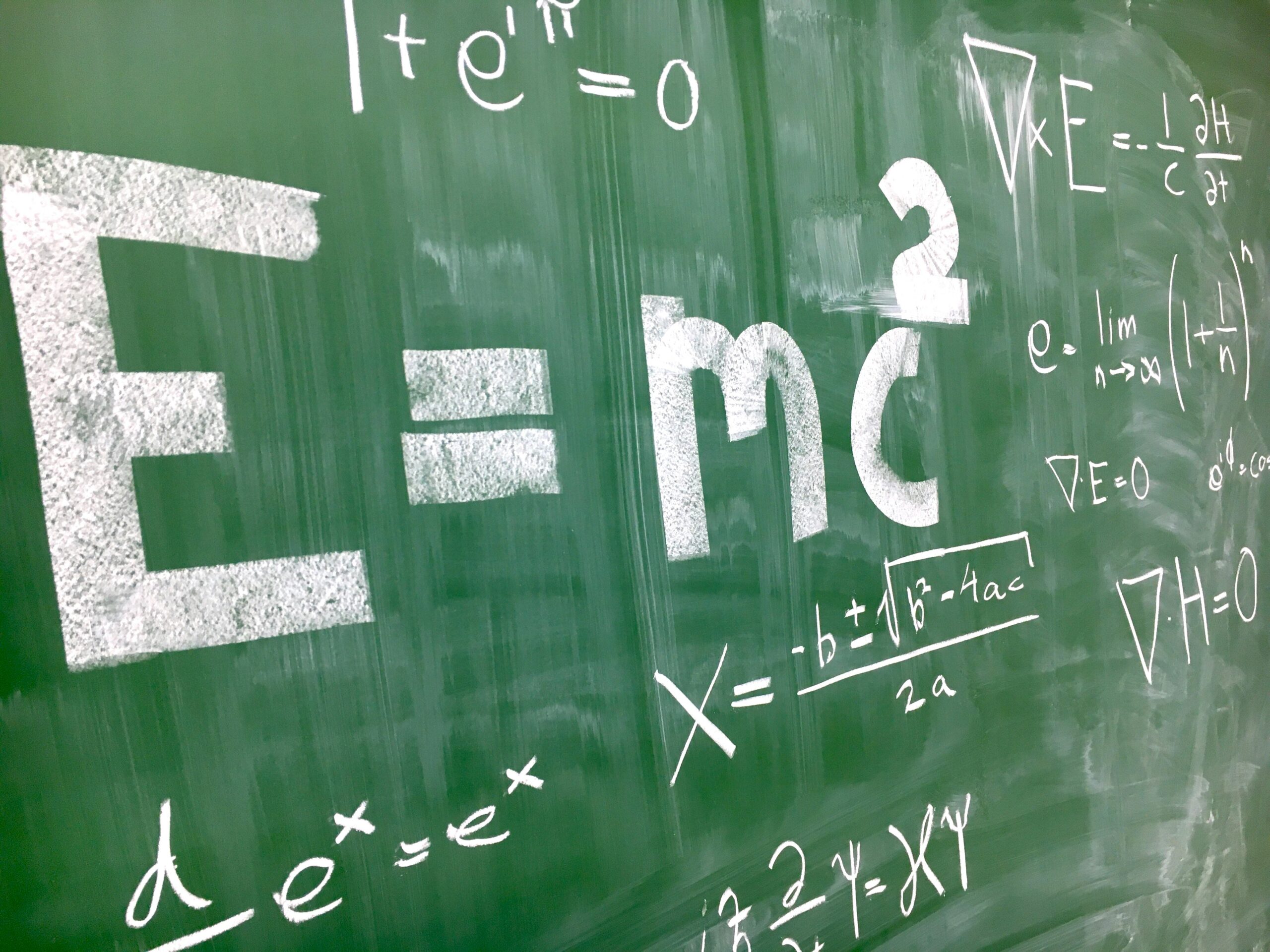
Perhaps the most famous equation in physics, $E=mc^2$, is also a direct product of special relativity. It reveals a profound equivalence between mass ($m$) and energy ($E$). This equation tells you that mass and energy are two sides of the same coin. A small amount of mass can be converted into a tremendous amount of energy (because $c^2$ is a very large number), and conversely, energy can be converted into mass. This principle underpins nuclear power and nuclear weapons, where small amounts of mass are converted into vast quantities of energy. It also explains how stars generate their immense power.
General Relativity: The Universe as a Gravitational Arena

While special relativity revolutionized our understanding of space and time in the absence of gravity, it was limited to uniform motion. Einstein’s next great leap, the General Theory of Relativity, published in 1915, extended his ideas to include gravity and accelerated motion. It’s a sweeping redefinition of gravity, moving away from the Newtonian concept of a mysterious force pulling objects together. Instead, general relativity paints a picture of spacetime itself as a dynamic entity, warped and curved by the presence of mass and energy.
The Equivalence Principle: Gravity and Acceleration are One
The conceptual lynchpin of general relativity is the equivalence principle. Einstein realized that the effects of gravity are indistinguishable from the effects of acceleration. Imagine you’re in an elevator. If the elevator is accelerating upwards, you’ll feel a force pressing you down into the floor, just as if you were in a gravitational field. Conversely, if the elevator is in freefall, you’ll feel weightless, just as if you were floating in outer space, far from any gravitational pull. This equivalence led Einstein to hypothesize that gravity isn’t a force in the traditional sense, but rather a manifestation of the curvature of spacetime.
Spacetime Curvature: The Fabric of Reality Bends
According to general relativity, mass and energy don’t create a gravitational force; they warp the fabric of spacetime around them. Think of a stretched rubber sheet. If you place a heavy ball in the center, it creates a dip. If you then roll a smaller marble across the sheet, it will curve towards the heavier ball, not because the ball is pulling it, but because the sheet itself is bent. Similarly, planets orbit the Sun not because the Sun exerts a direct pull, but because the Sun’s mass has curved the spacetime around it, and the planets are simply following the contours of this warped geometry.
Gravitational Lensing: Light Bends to the Curvature
One of the most compelling predictions of general relativity is gravitational lensing. If light travels through a region of strong spacetime curvature, its path will be bent. This means that massive objects, like galaxies and black holes, can act like cosmic lenses, bending the light from more distant objects behind them. This phenomenon has been repeatedly observed, providing powerful evidence for Einstein’s theory. We see multiple images of the same distant galaxy, or distorted arcs and rings of light, all because the intervening massive object is bending spacetime and, consequently, the light.
Gravitational Time Dilation: Gravity Slows Down Time
Just as speed affects the passage of time, so too does gravity. Gravitational time dilation is the prediction that clocks run slower in stronger gravitational fields. This means that time passes more slowly for you if you are standing at sea level (closer to Earth’s center of mass) than for someone on top of a mountain. This effect, though minuscule on Earth, is crucial for the accuracy of GPS satellites. Their clocks run faster in their orbit than ground-based clocks due to weaker gravity (and also slower due to their speed, a combination of special and general relativistic effects that must be accounted for).
The Universe According to Relativity: From Big Bang to Black Holes

Einstein’s theories have transformed our cosmological understanding, offering explanations for phenomena that were once mysteries. From the grand sweep of the universe’s expansion to the enigmatic darkness of black holes, relativity provides the framework for our modern cosmic narrative.
The Expanding Universe: Spacetime Stretches
General relativity predicts that the universe cannot be static; it must be either expanding or contracting. In the 1920s, observations by Edwin Hubble confirmed that distant galaxies are indeed moving away from us, and the further away they are, the faster they recede. This observation of an expanding universe is a direct confirmation of the dynamic nature of spacetime described by general relativity. The Big Bang theory, which posits that the universe began in an extremely hot, dense state and has been expanding ever since, is built upon the foundation of general relativity.
Black Holes: Singularities of Infinite Density
Perhaps the most dramatic and bizarre prediction of general relativity is the existence of black holes. These are regions of spacetime where gravity is so intense that nothing, not even light, can escape. They form when massive stars collapse under their own gravity. At the heart of a black hole lies a singularity, a point of infinite density where the laws of physics as we currently understand them break down. General relativity describes the extreme curvature of spacetime around a black hole, creating an event horizon – the point of no return.
Event Horizons: The Ultimate Boundary
The event horizon of a black hole is not a physical surface, but rather a boundary in spacetime. Once something crosses this boundary, it is irrevocably pulled towards the singularity. From the perspective of an outside observer, an object falling into a black hole would appear to slow down and become redder as it approaches the event horizon, eventually freezing in time due to extreme time dilation. This is another testament to the mind-bending consequences of extreme gravitational fields on spacetime.
Gravitational Waves: Ripples in the Cosmic Fabric
General relativity also predicted the existence of gravitational waves – ripples in spacetime created by cataclysmic cosmic events, such as the collision of black holes or neutron stars. For decades, these waves were purely theoretical. However, in 2015, the LIGO (Laser Interferometer Gravitational-Wave Observatory) experiment made the first direct detection of gravitational waves, a monumental scientific achievement that validated another key prediction of Einstein’s theory and opened a new window onto observing the universe.
Einstein’s theory of relativity has transformed our understanding of space and time, and for those looking to delve deeper into its implications, a related article provides a comprehensive overview of its fundamental concepts. This insightful piece not only breaks down the principles of relativity but also explores its impact on modern physics. For more information, you can read the article here.
The Enduring Legacy and the Unanswered Questions
| Concept | Explanation |
|---|---|
| Special Relativity | Explains the relationship between space and time, and the concept of time dilation and length contraction. |
| General Relativity | Describes the force of gravity as a curvature of spacetime caused by mass and energy. |
| Time Dilation | The phenomenon where time passes at different rates for observers in different gravitational fields or relative motion. |
| Length Contraction | The shortening of an object’s length in the direction of its motion as its speed approaches the speed of light. |
Einstein’s theories of relativity are not just academic curiosities; they are the bedrock of much of modern physics and technology. They have passed every experimental test thrown at them with flying colors, forever changing our perception of the fundamental nature of reality. Yet, as with all great scientific endeavors, relativity also points towards the frontiers of our knowledge, hinting at deeper mysteries yet to be unraveled.
Technological Applications: From Satellites to Particle Accelerators
You might be surprised to learn how deeply relativity is woven into your daily life. The Global Positioning System (GPS) relies on incredibly precise timing from satellites. Without accounting for both special (due to satellite speed) and general (due to weaker gravity at altitude) relativistic effects, GPS accuracy would degrade rapidly, rendering it useless for navigation. Particle accelerators, used in scientific research and medical treatments, also operate at speeds where relativistic effects are paramount. The behavior of subatomic particles at near-light speeds can only be accurately predicted and controlled using relativity.
The Quest for Unification: Blending Relativity with Quantum Mechanics
While relativity beautifully describes the large-scale structure and dynamics of the universe, it stands in contrast with quantum mechanics, our other fundamental pillar of physics, which governs the realm of the very small. These two theories, despite their individual successes, are incompatible. General relativity describes a smooth, continuous spacetime, while quantum mechanics is inherently probabilistic and quantized. The search for a unified theory of quantum gravity, a theory that can reconcile relativity and quantum mechanics, is one of the most significant challenges in modern physics. This quest aims to describe phenomena like the Big Bang and the interior of black holes, where both gravity and quantum effects are crucial.
Beyond the Standard Model: What Else Might Lie Ahead?
The success of relativity has inspired generations of physicists to push the boundaries of our understanding. While Einstein’s theories have held up remarkably well, the ongoing exploration of the universe continuously presents new puzzles and phenomena that might require further refinements or entirely new theoretical frameworks. Dark matter and dark energy, for instance, are mysteries that current relativistic models struggle to fully explain. These enigmatic components make up the vast majority of the universe’s mass-energy content, and their nature remains one of the most pressing questions for 21st-century cosmology.
You have journeyed through the core concepts of Einstein’s Theory of Relativity. You’ve seen how the constancy of light speed forces us to abandon our intuitive notions of absolute space and time, leading to phenomena like time dilation and length contraction. You’ve witnessed how gravity is redefined as the curvature of spacetime, a concept that explains everything from planetary orbits to the bending of starlight. You’ve touched upon the profound implications for our understanding of the universe, from its explosive birth to the enigmatic depths of black holes. While you may not be an astrophysicist, you now possess a foundational understanding of one of the most profound intellectual achievements in human history, a testament to the power of human curiosity and the elegance of the universe’s underlying laws. The journey, however, is far from over. The universe, as revealed by relativity, is a vast and wondrous place, and the quest for deeper understanding continues.

You’ve Never Experienced the Present
FAQs
What is Einstein’s theory of relativity?
Einstein’s theory of relativity is a fundamental theory in physics that describes the relationship between space and time. It consists of two main theories: special relativity and general relativity. Special relativity deals with the behavior of objects in inertial frames of reference, while general relativity extends the theory to include gravity and the curvature of spacetime.
What are the key concepts of special relativity?
Special relativity introduces the concepts of time dilation, length contraction, and the equivalence of mass and energy (as described by the famous equation E=mc^2). It also establishes the principle that the laws of physics are the same for all observers in uniform motion.
How does general relativity explain gravity?
General relativity proposes that gravity is not a force, but rather a curvature in the fabric of spacetime caused by the presence of mass and energy. Objects with mass or energy, such as planets or stars, create a “dimple” in spacetime, and the motion of other objects is influenced by this curvature.
What are some practical implications of Einstein’s theory of relativity?
Einstein’s theory of relativity has led to practical applications such as the Global Positioning System (GPS), which relies on the precise timing of signals from satellites in orbit. Additionally, the theory has been confirmed through numerous experiments and observations, and it continues to shape our understanding of the universe.
How has Einstein’s theory of relativity impacted our understanding of the universe?
Einstein’s theory of relativity has revolutionized our understanding of space, time, and gravity. It has provided a framework for understanding the behavior of objects at high speeds and in strong gravitational fields, and it has influenced the development of modern cosmology and astrophysics.