The universe, in its boundless expanse, is not silent. It hums with a subtle, pervasive energy, a cosmic whisper that has accompanied humanity since its inception. This is background radiation, a fundamental component of the cosmos that offers profound insights into its origins, evolution, and ultimate fate. Far from being a mere annoyance or a trivial curiosity, background radiation represents a vital piece of the cosmic puzzle, a relic of the universe’s most formative moments, and a testament to the scientific endeavor to understand our place within it. This article aims to unravel the mysteries of background radiation, offering a concise yet comprehensive explanation of its nature, origins, detection, and the profound implications it holds for our understanding of the cosmos.
The Ubiquitous Glow: What is Background Radiation?
At its core, background radiation refers to any naturally occurring ionizing radiation that is present in the environment. It is a ubiquitous phenomenon, emanating from a multitude of sources, both terrestrial and extraterrestrial. While the term “background radiation” can encompass a variety of types of radiation, in the context of cosmology and astrophysics, it most frequently refers to the Cosmic Microwave Background (CMB) radiation, a faint afterglow from the Big Bang. However, it is crucial to acknowledge that other forms of background radiation, such as terrestrial radiation from the Earth’s crust and radioactive decay, and even extraterrestrial sources like cosmic rays, also contribute to the overall radiation field we experience. Understanding these different facets of background radiation is essential for a holistic appreciation of its significance.
Terrestrial Origins: The Earth’s Own Radiance
The ground beneath our feet is not inert. The Earth’s crust is permeated with naturally occurring radioactive isotopes, primarily uranium, thorium, and potassium-40. These elements undergo radioactive decay, a process by which their unstable nuclei transform into more stable forms, releasing energy in the form of alpha particles, beta particles, and gamma rays. This internal radioactivity contributes to the ambient radiation levels experienced by all life on Earth. The concentration of these radioactive elements varies significantly across different geographical locations, leading to regional differences in terrestrial background radiation. For instance, areas with granite bedrock tend to have higher levels of radiation due to the higher concentration of uranium and thorium in such rocks. Even the air we breathe contains trace amounts of radioactive radon gas, which emanates from the decay of uranium in the soil and rocks. While these levels are generally considered safe, they form a constant component of our terrestrial radiation environment. Furthermore, building materials themselves can contribute to background radiation; for example, concrete and bricks can contain small amounts of naturally occurring radioactive elements.
Extraterrestrial Influences: The Cosmic Shower
Beyond our planet, the cosmos is a constant source of radiation. Energetic particles, known as cosmic rays, bombard the Earth from outer space. These particles are primarily atomic nuclei, mostly protons and helium nuclei, accelerated to incredibly high energies by violent astrophysical phenomena such as supernovae and active galactic nuclei. When these cosmic rays strike the Earth’s atmosphere, they interact with atmospheric molecules, producing a cascade of secondary particles that reach the surface. This flux of cosmic rays is another significant contributor to background radiation. The intensity of cosmic rays can vary depending on factors like solar activity; during periods of increased solar flares, the influx of charged particles from the Sun can also augment the background radiation. Spacecraft and astronauts in orbit are particularly exposed to higher levels of cosmic radiation due to the reduced shielding of the Earth’s atmosphere.
Background radiation is a natural phenomenon that surrounds us, originating from cosmic rays, terrestrial sources, and even from within our own bodies. To gain a deeper understanding of this topic, you can explore a related article that delves into the various sources and effects of background radiation. For more information, visit this article which provides a comprehensive overview of the subject.
The Big Bang’s Echo: The Cosmic Microwave Background

The most profound and cosmologically significant form of background radiation is the Cosmic Microwave Background (CMB). This faint, uniform glow of microwave radiation pervades the entire universe, a direct relic of the Big Bang itself. It is the oldest light we can observe, a snapshot of the universe when it was only about 380,000 years old, a mere infant compared to its current age of approximately 13.8 billion years. At that early epoch, the universe was a hot, dense plasma of protons, electrons, and photons. As the universe expanded and cooled, the electrons and protons eventually combined to form neutral atoms, a process known as recombination. This event made the universe transparent to photons, allowing them to travel freely for the first time. The CMB represents these liberated photons, stretched and cooled by the continued expansion of the universe to microwave frequencies.
The Early Universe: A Plasma of Light and Matter
In the immediate aftermath of the Big Bang, the universe was an intensely hot and dense soup of fundamental particles. The energy density was so high that matter and radiation were inextricably intertwined. Photons, the particles of light, were constantly interacting with charged particles, primarily electrons and protons, scattering off them like balls in a pinball machine. This meant that light could not travel freely; the universe was opaque, much like fog. This state persisted for hundreds of thousands of years. The conditions were so extreme that atoms as we know them could not form.
Recombination and Decoupling: The Universe Becomes Transparent
As the universe continued to expand, it also cooled. Eventually, the temperature dropped to a point where the electromagnetic force could overcome the kinetic energy of the particles. This allowed electrons to bind with protons to form neutral hydrogen atoms. This event, known as recombination, marked a pivotal moment in cosmic history. With the free electrons now bound within atoms, the primary scattering agents for photons were removed. This phenomenon is known as photon decoupling. The photons, which had been trapped in the plasma, were finally free to travel unimpeded through space. This ancient light, traveling for billions of years, is what we now detect as the CMB.
The CMB Spectrum: A Perfect Blackbody
The CMB exhibits a remarkable characteristic: it is an almost perfect blackbody spectrum. A blackbody is an idealized object that absorbs all incident electromagnetic radiation and emits radiation based solely on its temperature. The CMB’s spectrum closely matches that of a blackbody at a temperature of approximately 2.725 Kelvin (about -270.4 degrees Celsius). This uniformity across the spectrum is a powerful piece of evidence for the Big Bang theory, as it indicates that the early universe was in thermal equilibrium and that the radiation we observe originated from a single, hot event.
Detecting the Faintest Whispers: Measuring Background Radiation
Detecting and studying background radiation, particularly the CMB, requires sophisticated instruments capable of sensing extremely faint signals amidst terrestrial and instrumental noise. The initial discovery of the CMB was somewhat accidental, but subsequent scientific missions have pushed the boundaries of observational cosmology, providing increasingly detailed maps of this ancient radiation. These measurements are crucial for understanding the properties of the early universe and testing cosmological models.
Accidental Discovery: The Penzias and Wilson Surprise
In 1964, Arno Penzias and Robert Wilson, radio astronomers at Bell Labs, were attempting to eliminate all sources of noise from a large horn antenna. They detected a persistent, uniform hiss of microwave radiation coming from all directions in the sky, regardless of the antenna’s orientation. Despite their efforts to explain it away, this signal remained. Simultaneously, a team of physicists at Princeton University, led by Robert Dicke, was independently developing a radiometer to search for evidence of the Big Bang’s residual heat. When the two groups learned of each other’s work, it became clear that Penzias and Wilson had stumbled upon the very radiation Dicke’s team was seeking. Their discovery earned them the Nobel Prize in Physics in 1978.
Space-Based Observatories: Peering Through the Atmosphere
Earth’s atmosphere, while vital for life, is a significant obstacle for observing faint microwave radiation like the CMB. Water vapor and other atmospheric gases absorb and emit microwaves, creating a considerable amount of noise. To overcome this, scientists have launched dedicated space-based observatories. The Cosmic Background Explorer (COBE) satellite, launched in 1989, provided the first precise measurements of the CMB spectrum, confirming its blackbody nature and revealing tiny temperature fluctuations. Later missions, such as the Wilkinson Microwave Anisotropy Probe (WMAP) launched in 2001, and the Planck satellite launched in 2009, have provided increasingly detailed maps of these fluctuations, revealing intricate patterns in the early universe.
Analyzing the Anisotropies: Seeds of Structure
The CMB is not perfectly uniform; it exhibits minute temperature variations, known as anisotropies, on the order of parts per hundred thousand. These tiny differences in temperature are incredibly important. They represent regions of slightly higher or lower density in the early universe. These density fluctuations acted as the gravitational seeds from which all the structures we observe today – galaxies, stars, and galaxy clusters – eventually grew. By studying the patterns and distribution of these anisotropies, cosmologists can deduce fundamental properties of the universe, such as its age, composition, and the rate of its expansion.
Unlocking Cosmic Secrets: What the CMB Tells Us
The study of background radiation, particularly the CMB, has revolutionized our understanding of cosmology. The detailed information encoded within the CMB’s anisotropies allows us to test and refine cosmological models, providing answers to some of the most fundamental questions about the universe’s origin, evolution, and composition. It has moved cosmology from a largely theoretical field to one with precise observational constraints.
The Age and Composition of the Universe: A Cosmic Inventory
The precise measurements of the CMB anisotropies have allowed cosmologists to determine the age of the universe with remarkable accuracy, estimated to be around 13.8 billion years. Furthermore, by analyzing the relative amplitudes of different fluctuation scales, scientists have been able to determine the universe’s composition. The current standard cosmological model, known as the Lambda-CDM model, posits that the universe is composed of approximately 5% ordinary baryonic matter (the stuff we can see and interact with), about 27% dark matter (an invisible form of matter that interacts gravitationally), and about 68% dark energy (a mysterious force driving the accelerated expansion of the universe). The CMB data provides strong support for this composition.
Inflationary Theory: A Burst of Rapid Expansion
One of the most significant implications of CMB studies is the strong support it provides for the theory of cosmic inflation. Inflation proposes that in the first tiny fraction of a second after the Big Bang, the universe underwent an incredibly rapid period of exponential expansion. This theory elegantly explains several cosmological puzzles, such as the flatness of the universe and the uniformity of the CMB across vast distances (the horizon problem). The specific patterns of anisotropies observed in the CMB are consistent with predictions made by inflationary models.
Testing Cosmological Models: Refining Our Understanding
The CMB serves as a powerful cosmic laboratory for testing and validating various cosmological models. Any proposed model for the universe’s evolution must be able to reproduce the observed features of the CMB. Discrepancies between theoretical predictions and observational data can lead to revisions of existing models or the development of entirely new ones. For instance, slight deviations in the observed power spectrum of CMB anisotropies could hint at new physics beyond the standard model. The ongoing analysis of CMB data continues to refine our understanding of the fundamental laws governing the cosmos.
Background radiation is an ever-present phenomenon that surrounds us, originating from both natural and artificial sources. Understanding its implications is crucial for assessing exposure risks and ensuring safety. For a deeper insight into the various aspects of background radiation, you can explore a related article that delves into its sources and effects. This informative piece can be found at Freaky Science, where you will discover more about how background radiation influences our daily lives and the environment.
Beyond the CMB: Other Forms of Background Radiation and Their Significance
| Source of Background Radiation | Average Annual Dose (mSv) | Description |
|---|---|---|
| Cosmic Radiation | 0.3 | Radiation from outer space, including the sun and other celestial bodies. |
| Terrestrial Radiation | 0.5 | Radiation emitted from naturally occurring radioactive materials in the earth’s crust. |
| Radon Gas | 1.2 | A radioactive gas released from the decay of uranium in soil and rocks, often accumulating indoors. |
| Internal Radiation | 0.3 | Radiation from radioactive isotopes naturally present in the human body, such as potassium-40. |
| Total Average Background Radiation | 2.3 | Sum of all natural sources of radiation exposure to an average person annually. |
While the CMB often dominates discussions about background radiation in cosmology, it is important to remember that other forms of radiation also contribute to the cosmic background and hold scientific significance. These include diffuse gamma-ray and X-ray backgrounds, as well as the diffuse infrared and radio backgrounds. Each of these provides a unique window into different astrophysical processes and epochs of the universe.
The Diffuse Gamma-Ray and X-ray Backgrounds: High-Energy Phenomena
The diffuse gamma-ray background (GRB) is thought to originate from a combination of sources, including the decay of neutral pions produced by cosmic ray interactions with interstellar gas, and potentially from more exotic processes like the annihilation of dark matter particles. The diffuse X-ray background (XRB) is largely attributed to emission from hot gas in galaxy clusters and from active galactic nuclei. Studying these high-energy backgrounds allows astronomers to probe energetic phenomena in the universe, such as supernova remnants, pulsars, and the supermassive black holes at the centers of galaxies.
The Diffuse Infrared and Radio Backgrounds: Tracing Star Formation and Early Galaxies
The diffuse infrared background (DIRB) is primarily composed of light emitted by dust particles that have been heated by starlight. This background is a tracer of star formation activity throughout the universe’s history. By analyzing the DIRB, astronomers can study the evolution of galaxies and the processes by which stars are born. Similarly, the diffuse radio background arises from synchrotron radiation emitted by relativistic electrons spiraling in magnetic fields. This background provides insights into the distribution of magnetic fields in galaxies and galaxy clusters and can also be a source of confusion when trying to observe faint radio sources.
The Role in Astrobiology and Future Exploration
While the primary focus of background radiation research in cosmology is on understanding the universe’s origins and evolution, the pervasive nature of radiation also has implications for astrobiology and future space exploration. Understanding the levels and types of background radiation, both terrestrial and extraterrestrial, is crucial for assessing the habitability of exoplanets and for designing spacecraft and habitats that can protect astronauts from harmful radiation. As humanity ventures further into space, a comprehensive understanding of all forms of background radiation will become increasingly vital for our survival and exploration.
The unraveling of background radiation, from the faint hum of the CMB to the energetic whispers of gamma rays, has been a monumental journey of scientific discovery. It has taken us from the earliest moments of creation to the intricate tapestry of galaxies that populate our universe. The ongoing study of these cosmic signals promises to reveal even deeper secrets, pushing the frontiers of our knowledge and forever shaping our perception of our place in the grand cosmic narrative.
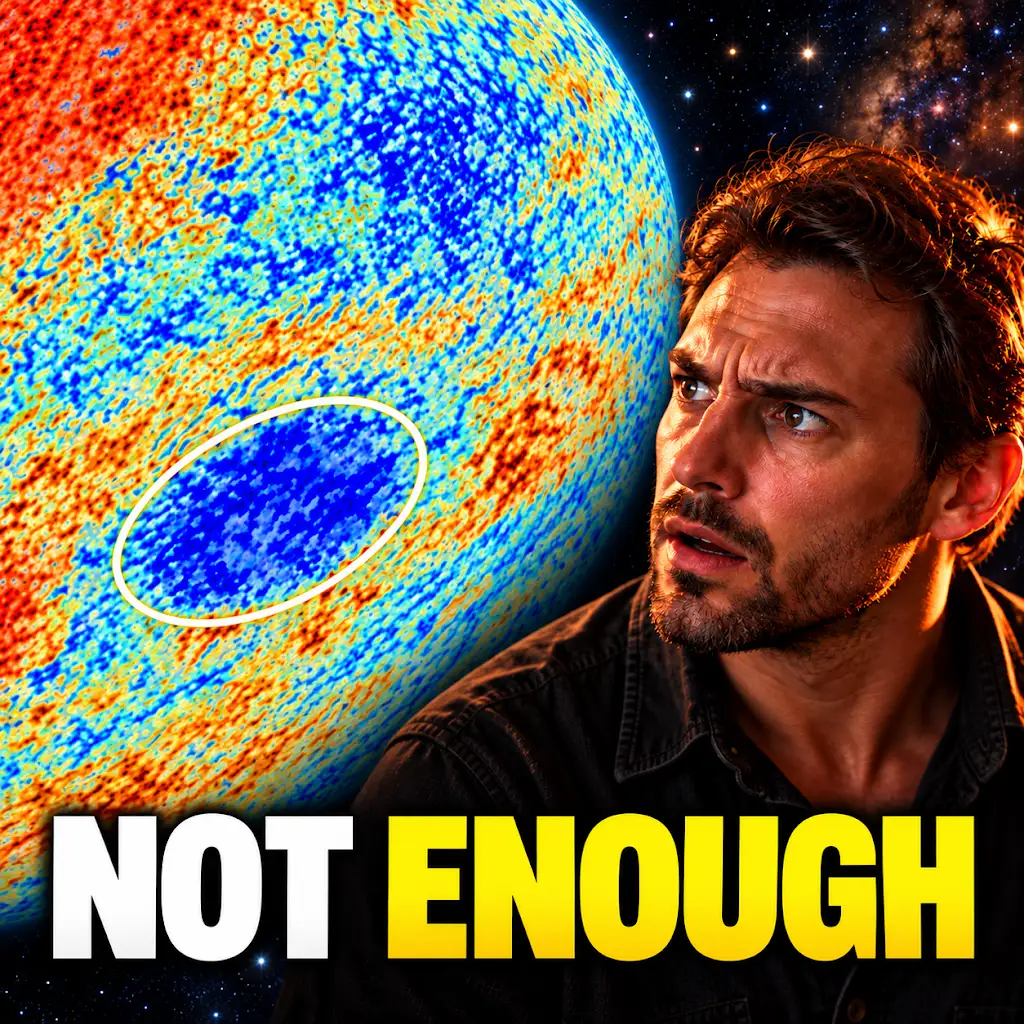
The Universe’s Cold Spot Has an Explanation. It’s Not Enough.
FAQs
What is background radiation?
Background radiation is the ionizing radiation that is constantly present in the environment. It comes from natural sources such as cosmic rays, radon gas, and radioactive elements in the soil and rocks.
How does background radiation affect humans?
Exposure to background radiation is a part of everyday life and is generally considered to be harmless in small doses. However, prolonged exposure to high levels of background radiation can increase the risk of cancer and other health issues.
How is background radiation measured?
Background radiation is measured in units called millisieverts (mSv) or microsieverts (μSv). Different devices such as Geiger counters or dosimeters are used to measure background radiation levels in various environments.
What are some common sources of background radiation?
Some common sources of background radiation include cosmic radiation from outer space, radon gas from the ground, radioactive elements in building materials, and medical procedures like X-rays.
How can we protect ourselves from background radiation?
While it is not possible to completely avoid background radiation, there are steps we can take to minimize exposure. This includes proper ventilation to reduce radon gas buildup, using protective gear during medical procedures, and limiting time spent in high-radiation areas.