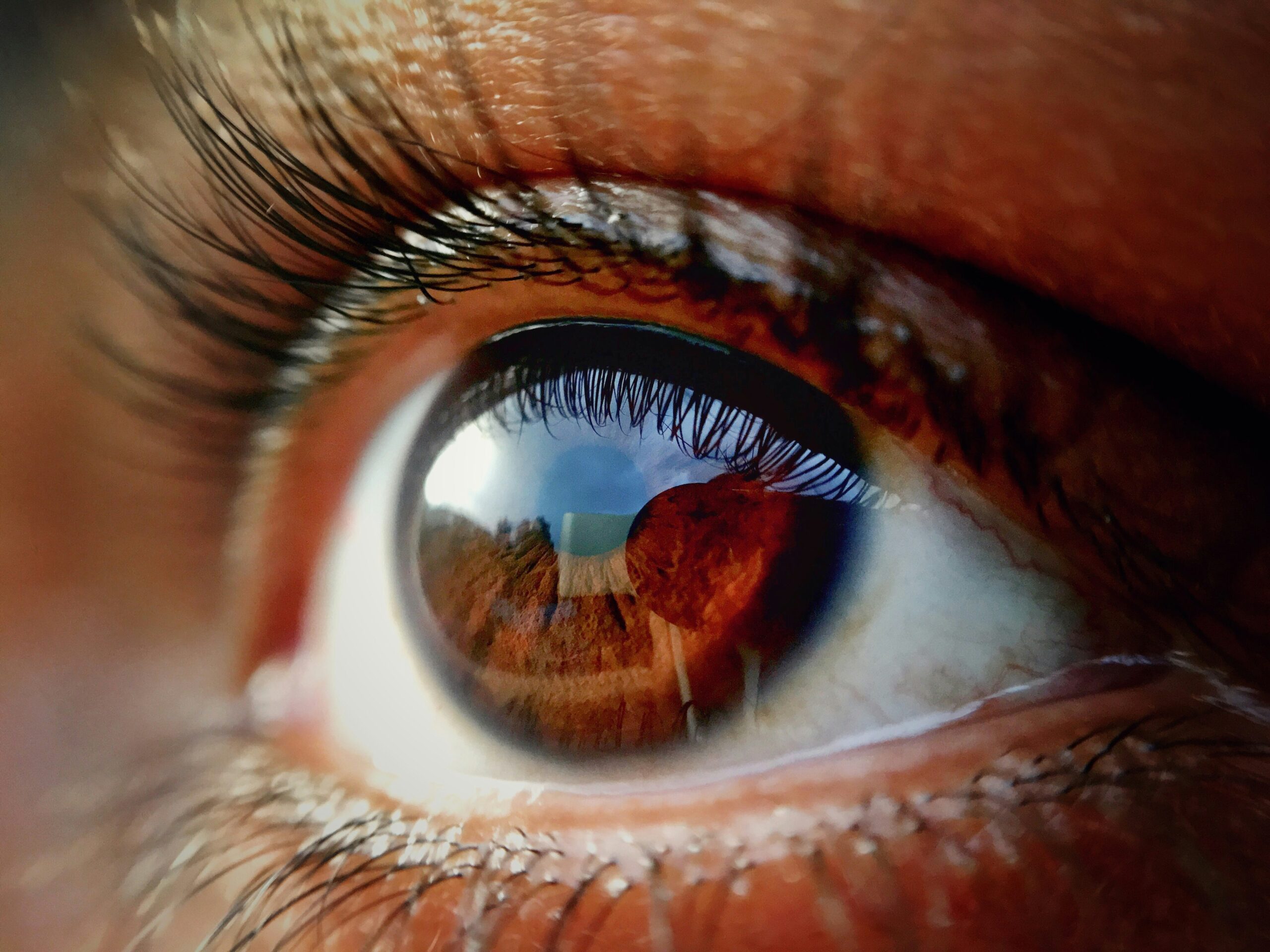
You open your eyes. A dizzying kaleidoscope of light, color, and form floods your awareness. Yet, within milliseconds, this raw sensory input coalesces into a coherent, meaningful experience. Buildings stand solid, faces register recognition, and a scattered collection of objects transforms into a scene. This is the magic of visual perception, a marvel of your brain’s intricate machinery that you often take for granted. You don’t just see; you actively interpret. Your mind isn’t a passive camera lens; it’s a sophisticated artist, constantly constructing your reality from the fractured pieces of light that strike your retinas.
This process, so effortless and immediate, is in reality an astonishingly complex dance between external stimuli and your internal cognitive architecture. It’s a testament to eons of evolution, a finely tuned system designed to navigate your surroundings, identify threats and opportunities, and ultimately, to survive and thrive. Understanding how your mind unlocks visual perception is akin to understanding a fundamental aspect of your existence, a key to deciphering the very fabric of your lived experience.
The Fundamental Building Blocks: From Light to Neural Signals
Your journey into understanding visual perception begins with the most basic element: light. Light, as electromagnetic radiation, travels in waves and photons, carrying information about the world. When this light bounces off objects – their surfaces, textures, and colors – it enters your eyes.
The Eye: A Biological Camera
Think of your eye as a remarkably advanced biological camera, but one that does far more than simply capture an image.
Capturing Light: The Retina as the Sensor
The light first passes through the cornea, a transparent outer layer that helps to focus it. Then, it traverses the pupil, the opening in your iris, whose size adjusts to control the amount of light entering. The lens, a flexible structure behind the iris, further refines this focusing, ensuring the light converges precisely onto the retina. The retina, lining the back of your eye, is where the magic of conversion truly begins. It’s a light-sensitive tissue packed with millions of specialized photoreceptor cells: rods and cones.
Rods: Masters of Low Light and Motion
Your rods, found predominantly in the periphery of your retina, are incredibly sensitive to light. They are your nocturnal vision specialists, allowing you to see in dim conditions where cones provide little to no information. While they don’t distinguish colors, they are excellent at detecting movement, a crucial skill for spotting predators or prey in low light.
Cones: The Color and Detail Specialists
Scattered throughout the center of your retina, particularly in the fovea (your area of sharpest vision), are your cones. These are responsible for your vibrant perception of color and your ability to discern fine details. You have three types of cones, each sensitive to different wavelengths of light: red, green, and blue. Your brain then mixes the signals from these cones to create the entire spectrum of colors you perceive. This trichromatic theory is the foundation of your color vision.
Transduction: The Language of Neurons
Once light strikes these rods and cones, a phenomenal process called phototransduction occurs. This is the conversion of light energy into electrical signals – the language of your nervous system. When light hits a photoreceptor, it triggers a complex biochemical cascade that ultimately alters the electrical potential of the cell.
From Photoreceptors to Ganglion Cells
These electrical signals don’t stay confined to the photoreceptors. They are then processed and relayed through a series of other neurons within the retina, including bipolar cells and amacrine cells. Finally, the information is passed to the retinal ganglion cells. It’s here that the signals are integrated and bundled together. The axons of these ganglion cells form the optic nerve, the crucial highway that carries visual information from your eye to your brain.
The Blind Spot: A Glimpse into the Brain’s Workarounds
Interestingly, there’s a spot on your retina where the optic nerve leaves the eye. This area, devoid of photoreceptors, is your blind spot. Yet, you don’t detect a hole in your vision. Your brain, in its remarkable efficiency, interpolates information from the surrounding areas and other eye to fill in the gap. This is one of the first hints of your brain actively constructing your visual reality.
Visual perception is a complex process that allows us to interpret and understand the world around us through our sense of sight. For a deeper exploration of this fascinating topic, you can read a related article that delves into the mechanisms of visual perception and how they influence our daily experiences. To learn more, visit this link: Understanding Visual Perception.
The Brain’s Grand Network: Decoding the Neural Highway
The optic nerve is just the beginning of a much larger and more intricate journey. The electrical signals, now encoded into neural impulses, embark on a sophisticated relay race through various structures in your brain, each playing a vital role in interpreting what you see.
The Thalamus: A Relaying Station for Sensory Information
The majority of visual information from the optic nerve first arrives at a crucial relay station in the center of your brain: the thalamus. Specifically, it heads to the lateral geniculate nucleus (LGN).
The LGN’s Role in Organizing Information
The LGN acts as a sophisticated switchboard, sorting and organizing the incoming visual data before sending it to the visual cortex. It receives input not only from the eyes but also from other brain regions, allowing it to modulate the flow of information based on your attention and state. This means your brain can prioritize what it deems important, even before you’re consciously aware of it.
Parallel Processing Streams
Within the LGN, information is already being segregated into different pathways. Some neurons in the LGN are tuned to process details like color and form, while others are specialized for detecting motion and depth. This early parallel processing is fundamental to the speed and richness of your visual perception.
The Visual Cortex: The Seat of Visual Interpretation
From the thalamus, the visual information is shunted to the primary visual cortex (V1), located at the very back of your brain. This is where the initial, more rudimentary stages of visual analysis take place.
V1: The Feature Detectors
In V1, specialized neurons, often referred to as “feature detectors,” are activated by specific orientations of lines, edges, and simple shapes. Think of them as highly trained individuals, each with a very specific job. One neuron might fire vigorously when it encounters a vertical line, another a horizontal line, and yet another a diagonal line at a specific angle.
Hierarchical Processing: Building Complexity
From V1, the information cascades to other areas of the visual cortex, organized in a hierarchical manner. As the information moves up through these areas (V2, V3, V4, V5/MT, etc.), the neurons become responsive to increasingly complex features. Simple lines are combined to form shapes, shapes are assembled into objects, and objects are placed within a spatial context.
The Magic of Gestalt: Seeing the Whole, Not Just the Parts
Your brain doesn’t process isolated lines and shapes in a vacuum. It has an innate tendency to organize visual elements into unified wholes. This is the realm of Gestalt psychology, and it profoundly shapes how you perceive the world. Your mind seeks to find order, pattern, and meaning in the visual chaos.
The Principles of Perceptual Organization
Gestalt principles are a set of rules your brain follows to group visual elements together and create a coherent perception. You apply these unconsciously, allowing you to quickly make sense of complex scenes.
Proximity: Things That Are Close Together Belong Together
When you see a cluster of dots, your mind automatically groups them based on their closeness. If the dots are spaced far apart, you’ll see individual dots. If they are close, you’ll see groups or even patterns. This principle is fundamental to how you recognize objects and perceive relationships between them.
Example: A Row of Text
Consider a line of text. The letters are individual elements, but because they are close together, you perceive them as words, and the words as a sentence. The spaces between words are larger than the spaces between letters, allowing your brain to discern word boundaries.
Similarity: Like Attracts Like
Elements that share similar visual characteristics – color, shape, size, or orientation – are perceived as belonging together.
Example: A Crowd of People
Imagine a crowd of people. If you’re looking for someone, you might scan for specific clothing colors or hairstyles. Your brain automatically groups similar-looking individuals, making it easier to find who you’re looking for. In a stadium filled with people wearing different team jerseys, you’ll group them by color.
Continuity: The Path of Least Resistance
Your brain prefers to see continuous, flowing lines rather than broken or disjointed ones. It will “complete” interrupted lines or curves to maintain a sense of smooth progression.
Example: Intersecting Lines
When two lines intersect, you don’t perceive them as four separate lines meeting at a point. Instead, you see two distinct lines that run through each other. Your brain “continues” each line beyond the intersection.
Closure: Completing the Incomplete
Your mind tends to close open shapes or fill in missing parts of an image to perceive it as a complete, familiar form. This allows you to recognize things even when they are partially obscured.
Example: A Dashed Circle
If you see a series of dashed lines that form an outline of a circle, you will perceive it as a circle, even though there are no solid lines. Your brain fills in the gaps. This is why logos with incomplete shapes can still be instantly recognizable.
Common Fate: Moving Together, Belonging Together
Objects that move in the same direction and at the same speed are perceived as belonging to a single group.
Example: A Flock of Birds
When you see a flock of birds flying together, you perceive them as a unit, a single flock, rather than a collection of individual birds. Their synchronized movement binds them together in your perception.
Depth and Distance: Constructing a 3D World from a 2D Image
One of the most remarkable achievements of your visual system is its ability to create a perception of three-dimensional space from the two-dimensional image projected onto your retinas. This is a complex process involving a variety of cues.
Binocular Cues: The Power of Two Eyes
Having two eyes provides your brain with powerful clues about depth and distance.
Retinal Disparity: The Slight Difference
Because your eyes are positioned a few inches apart, they capture slightly different images of the world. This difference, known as retinal disparity, is a primary cue for depth perception, especially for objects that are relatively close. Your brain compares these two images and uses the disparity to compute how far away an object is.
The Closer the Object, the Greater the Disparity
When an object is close, the angle at which each eye sees it is significantly different. As an object recedes, the disparity between the two images decreases.
Convergence: The Muscles at Work
When you focus on a close object, your eyes naturally turn inward – they converge. The degree of this inward turn, detected by the muscles controlling your eye movements, provides your brain with another cue about distance.
The Further the Object, the Less Convergence
When you look at a distant object, your eyes are nearly parallel. The less your eyes have to converge, the further away the object is.
Monocular Cues: Clues for One Eye
Even with just one eye, your brain can infer depth and distance using a variety of monocular cues. These are often less precise than binocular cues but are crucial for perceiving depth in static images or when the other eye is closed.
Relative Size: Bigger Means Closer
If you perceive two objects of the same actual size, the one that appears larger in your visual field will be perceived as being closer.
Example: Roadsides
Imagine standing on a road. Cars in the distance appear smaller than cars closer to you. Your brain uses this relative size difference to infer their distances.
Interposition (Occlusion): What’s in Front?
When one object partially blocks the view of another, the object that is blocking is perceived as being closer.
Example: A Tree in Front of a House
If you see a tree in front of a house, you know the tree is closer to you because it’s obscuring part of the house.
Linear Perspective: The Vanishing Point
Parallel lines that extend into the distance appear to converge at a single point on the horizon, called the vanishing point. This creates a sense of depth and distance.
Example: Railroad Tracks
Railroad tracks are a classic example. They are parallel in reality, but they appear to meet in the distance, giving the illusion of a long, receding vista.
Texture Gradient: Finer Details Up Close
Textures appear more detailed and distinct when they are close and become coarser and less defined as they recede into the distance.
Example: A Pebble Beach
On a sandy beach, you can see individual pebbles clearly when they are near your feet, but further away, they blend into a more uniform texture.
Motion Parallax: The World Races By
As you move your head or body, objects closer to you appear to move faster and in the opposite direction of your movement, while distant objects appear to move slower or not at all.
Example: Looking Out a Car Window
When you’re in a car, nearby trees zoom past quickly, while distant mountains seem to glide by much more slowly, if at all. Your brain uses this relative motion to judge depth.
Visual perception is a fascinating topic that explores how we interpret and understand the world around us through our sense of sight. For those interested in delving deeper into this subject, a related article can be found at Freaky Science, which discusses the intricacies of how our brains process visual information and the various factors that can influence our perception. Understanding these concepts can enhance our appreciation of the complexities involved in how we see and interpret our environment.
Recognition and Meaning: Connecting Sight to Knowledge
The process doesn’t stop at perceiving lines, shapes, and depth. Your brain’s ultimate goal is to recognize what you’re seeing and assign meaning to it, drawing upon your vast storehouse of memories and knowledge.
Top-Down vs. Bottom-Up Processing: Two Sides of the Same Coin
Visual perception is a constant interplay between bottom-up and top-down processing.
Bottom-Up Processing: Data-Driven and Unfiltered
This is the processing that starts with the raw sensory data from your eyes. It’s driven by the features of the stimulus itself. The detection of edges, colors, and movements in V1 is an example of bottom-up processing.
Building from the Ground Up
Imagine looking at an unknown object. Your initial perception will be a collection of lines, colors, and shapes. This is the bottom-up phase, where your brain is building the perception from the basic sensory input.
Top-Down Processing: Concept-Driven and Experiential
This type of processing involves your prior knowledge, expectations, memories, and context influencing how you interpret sensory information.
Influenced by Your Mind’s History
If you’re in a kitchen, your brain will be primed to expect to see appliances, utensils, and food. This expectation, a top-down influence, can help you quickly recognize an object as a toaster, even if it’s partially obscured or seen from an unusual angle. Your memories of what a toaster looks like guide your interpretation of the incoming sensory data.
Feature Integration Theory: Binding the Elements
How does your brain bind together all the different features – color, form, motion – that have been processed in parallel to create a unified object perception? The Feature Integration Theory offers an explanation.
The Importance of Attention
According to this theory, during the initial stages of perception, features are processed independently in different areas of the brain. However, to form a cohesive perception of an object, attention must be directed to that object, integrating these disparate features.
The “Binding Problem”
This “binding problem” has fascinated neuroscientists. When you see a red ball rolling, how does your brain know that the redness is associated with that particular ball and not another red object nearby? Attention acts as the glue, linking the color, shape, and motion to the correct object.
Object Recognition: The Grand Finale
The culmination of all these processes is object recognition. Your brain compares the analyzed visual information to stored representations of objects in your memory.
Template Matching vs. Feature Analysis
Historically, theories proposed that your brain might have an exact “template” for every object you’ve ever seen and then tries to match incoming visual information to these templates. While this might apply to simple objects, it’s not sufficient for recognizing the vast number of objects you encounter, especially considering variations in size, orientation, and lighting.
More Sophisticated Models
Modern theories emphasize more flexible and robust methods, such as prototype matching (comparing to an idealized representation) and structural descriptions (analyzing the relationships between object parts). Your brain is remarkably adept at recognizing objects even when they are presented in novel ways.
The Dynamic Nature of Perception: Expectations, Attention, and Illusions
Your visual perception is not a static, fixed experience. It’s a dynamic, active process constantly shaped by your internal states and the context of your environment.
The Role of Attention: What You Focus On Matters
Attention acts as a spotlight, directing your cognitive resources to specific aspects of visual information. You can’t possibly process everything your eyes detect with equal depth.
Selective Attention: Ignoring the Distractions
Selective attention allows you to focus on a particular object or event while filtering out irrelevant stimuli. This is why you can have a conversation in a crowded room and not be overwhelmed by every other sound and sight.
Inattentional Blindness: What Happens When You Don’t Attend
Conversely, inattentional blindness demonstrates the power of attention. If you’re not paying attention to something, even if it’s directly in your field of vision, you may not perceive it at all. The famous “gorilla experiment” highlights this phenomenon.
Expectations and Prediction: The Brain as a Predictive Machine
Your brain is not just reacting to sensory input; it’s actively predicting what it expects to see. These predictions are based on past experiences, context, and learned patterns.
Filling in the Blanks and Resolving Ambiguities
When sensory information is ambiguous or incomplete, your expectations can guide your interpretation, often filling in the missing pieces. This is why you can often read messy handwriting or understand what someone is saying even with background noise. Your brain anticipates the words and phrases.
The Surprise Factor: When Expectations Are Broken
When reality deviates significantly from your predictions, you experience surprise. This surprise can trigger a re-evaluation of your interpretation and a refinement of your internal models.
Visual Illusions: When Your Mind Plays Tricks
Visual illusions are fascinating because they reveal the underlying mechanisms and assumptions of your visual system. They exploit the shortcuts and heuristics your brain uses to interpret the world.
Exploiting Heuristics and Assumptions
Illusions often play on principles like depth cues, color constancy, or the way your brain groups information. The Müller-Lyer illusion, for instance, plays on how your brain interprets line endings as outward or inward pointing corners, influencing its perceived length.
The Brain’s Best Guess
Think of illusions not as “errors” but as demonstrations of your brain making its “best guess” about the visual scene based on the available information and its internal rules. The illusion arises when those assumptions are misapplied or misled.
Top-Down Influences on Perception: Mood, Motivation, and Memory
Your internal state profoundly influences what and how you perceive.
Mood and Emotion: Seeing Things Through a Colored Lens
When you’re feeling sad, you might be more attuned to negative stimuli and interpret ambiguous situations in a more pessimistic light. Conversely, a cheerful mood can make the world seem brighter and more welcoming.
The Influence of Motivation: What You Want to See
If you’re hungry, you might be more likely to notice food-related stimuli. Your motivations can direct your attention and shape your perceptions.
Memory’s Role in Recognition and Interpretation
As discussed earlier, memory is central to object recognition. But it also influences how you interpret ambiguous images or situations, drawing on past experiences to make sense of the present.
The Enduring Mystery and the Future of Vision Science
Despite incredible advancements, visual perception remains a rich and complex field of study. The journey from light hitting your retina to your subjective experience of seeing is a testament to the astonishing capabilities of your brain.
The Unfolding Mysteries of Consciousness
While we can map neural pathways and understand the building blocks of perception, the leap from neural processing to conscious experience – the “hard problem of consciousness” – remains one of science’s greatest challenges.
The Subjectivity of Experience
Why does the interpretation of red light feel like seeing red? This subjective, qualitative aspect of perception is still a profound mystery.
Technological Advancements and Artificial Vision
The ongoing research into visual perception is not only enhancing our understanding of ourselves but also driving innovation in artificial intelligence and robotics.
Machine Vision: Mimicking Human Sight
Scientists are striving to create artificial systems that can “see” and interpret the world as effectively as humans. This involves developing algorithms for image recognition, object detection, and scene understanding.
The Implications for the Future
The progress in machine vision has far-reaching implications, from autonomous vehicles and medical diagnostics to enhanced surveillance and virtual reality experiences.
The Lifelong Learner: Your Brain’s Adaptability
Your visual system is not static; it’s remarkably adaptable. Through experience and practice, your brain can refine its perceptual abilities, learn new skills, and even compensate for damage or loss of visual function.
Neuroplasticity: The Brain’s Ability to Rewire
The principle of neuroplasticity suggests that your brain can reorganize itself by forming new neural connections throughout life. This is why training can improve your visual acuity or your ability to detect subtle changes in an image.
You are a visual being, and your mind is the conductor of this magnificent orchestra of sight. The next time you glance at a bustling street, a serene landscape, or the face of a loved one, take a moment to appreciate the extraordinary feat of your brain. You are not merely receiving information; you are actively constructing your reality, unlocking the visual world with every blink, every scan, and every moment of focused attention. The journey of visual perception is a continuous, dynamic wonder, and you are at its very heart.

You’ve Never Experienced the Present
FAQs

What is visual perception?
Visual perception is the ability to interpret and make sense of the information that our eyes receive from the environment. It involves the processing of visual stimuli to understand and recognize objects, shapes, colors, and depth.
How does visual perception work?
Visual perception works through a complex process involving the eyes, the brain, and the nervous system. When light enters the eyes, it is converted into electrical signals that are sent to the brain for interpretation. The brain then processes these signals to form a visual perception of the surrounding environment.
What factors can affect visual perception?
Several factors can affect visual perception, including lighting conditions, distance, motion, and individual differences in perception. Additionally, certain medical conditions or injuries to the eyes or brain can also impact visual perception.
Why is visual perception important?
Visual perception is important for everyday tasks such as recognizing faces, reading, driving, and navigating the environment. It also plays a crucial role in learning, communication, and understanding the world around us.
How can visual perception be improved?
Visual perception can be improved through various methods such as vision therapy, eye exercises, and using corrective lenses if needed. Additionally, maintaining overall eye health and seeking regular eye exams can help to optimize visual perception.