The human eye, a marvel of biological engineering, possesses an incredible ability to adjust to vastly different light levels. This phenomenon, known as dark adaptation, is particularly crucial for astronomers who spend countless hours observing the universe in the faintest of light. Unlocking the secrets of dark adaptation is not merely an academic pursuit; it’s a fundamental requirement for pushing the boundaries of our celestial understanding. From the subtle glow of distant galaxies to the fleeting transit of exoplanets, every whisper of light from the cosmos requires the observer to be at their most sensitive. This article delves into the intricate biological processes underlying dark adaptation and explores its profound implications for astronomical observation.
At the heart of vision lie specialized cells within the retina called photoreceptors. These remarkable cells, the rods and cones, are responsible for converting light into electrical signals that the brain can interpret. Their distinct roles and mechanisms are fundamental to understanding how we see, and how our vision adapts to the dark.
The Dual Nature of Photoreceptors: Rods and Cones
The retina, the light-sensitive tissue at the back of the eye, houses two primary types of photoreceptor cells: rods and cones. Each plays a vital, yet distinct, role in our visual experience.
Cones: The Architects of Daylight Vision
Cones are responsible for our high-acuity, color vision, predominantly active in bright light conditions. They are concentrated in the fovea, the central part of the retina, providing sharp, detailed images. Humans possess three types of cones, each sensitive to different wavelengths of light: red, green, and blue. The relative stimulation of these cone types allows us to perceive the full spectrum of colors. While incredibly efficient at detecting subtle variations in color and detail, cones are less sensitive to low light levels, meaning they are largely non-functional in the dim conditions astronomers often face. Their photopigment, a molecule called photopsin, saturates quickly in bright light, making them ill-suited for detecting faint celestial objects.
Rods: The Sentinels of the Night
In stark contrast to cones, rods are far more numerous and are scattered throughout the peripheral retina. They are the workhorses of our night vision, possessing an extraordinary sensitivity to light. A single photon can trigger a response in a rod, a feat far beyond the capability of cones. This heightened sensitivity comes at the cost of color perception and fine detail. Rods contain a single type of photopigment, rhodopsin, which is highly efficient at absorbing photons across a broad range of wavelengths, making them ideal for detecting dim light. However, rhodopsin is easily bleached by bright light, rendering the rods temporarily insensitive. This bleaching process is a key player in the phenomenon of dark adaptation.
The Photopigment Cascade: A Molecular Symphony
The conversion of light into neural signals is a complex biochemical process involving photopigments. These molecules undergo a series of transformations upon absorbing light, initiating a cascade of events that ultimately leads to vision.
Rhodopsin and the Photon’s Impact
Rhodopsin, the primary photopigment in rods, is a protein complex consisting of opsin and a light-sensitive molecule called retinal. When a photon strikes rhodopsin, it causes a conformational change in the retinal molecule, transforming it from its 11-cis form to its all-trans form. This activation of rhodopsin is the first step in a signal transduction pathway.
The Biochemical Cascade: From Photon to Signal
Activated rhodopsin then binds to and activates a G-protein called transducin. Transducin, in turn, activates phosphodiesterase (PDE), an enzyme that breaks down cyclic guanosine monophosphate (cGMP). cGMP acts as a second messenger, keeping ion channels in the photoreceptor cell membrane open. When cGMP levels drop due to PDE activity, these ion channels close, causing a hyperpolarization of the cell membrane. This hyperpolarization is the electrical signal that is transmitted to other neurons in the retina, eventually reaching the brain and being interpreted as vision. This entire cascade is remarkably efficient, allowing for the detection of even single photons.
Dark adaptation is a fascinating process that plays a crucial role in astronomy, allowing our eyes to adjust to low-light conditions and enabling us to see faint celestial objects. For a deeper understanding of this phenomenon and its significance in stargazing, you can explore a related article that delves into the science behind dark adaptation and its implications for astronomers. To read more about it, visit this article.
The Adaptive Dance: The Process of Dark Adaptation
Dark adaptation is the process by which the eyes become more sensitive to light after being exposed to a brighter environment. This adjustment is crucial for astronomers, enabling them to perceive the faint light from distant celestial objects. The process involves both neural and photochemical changes within the retina.
Stages of Adaptation: A Gradual Ascent
The journey into darkness is not instantaneous; it unfolds in distinct phases, each characterized by different rates of improvement in visual sensitivity.
The Initial Burst: Cone Sensitivity Recovery
Upon entering darkness, there is an immediate, albeit temporary, improvement in visual sensitivity. This initial phase is primarily driven by the recovery of cone function. The cones, having been bleached by the brighter light, begin to regenerate their photopigment, allowing them to detect fainter light sources. However, the cones’ inherent sensitivity is limited, and this initial adaptation plateaus relatively quickly, typically within 5-10 minutes. While this offers some improvement, it is not sufficient for astronomical observations.
The Slow Burn: Rods Take the Reins
The true power of dark adaptation emerges in the subsequent, slower phase, driven by the regeneration of rhodopsin in the rods. This process takes considerably longer, with significant improvements continuing for 30-45 minutes, and in some individuals, even up to an hour. As rhodopsin levels increase, the rods become progressively more sensitive to light. This is why prolonged periods in darkness are essential for optimal astronomical viewing. The rod-dominated vision allows for the detection of much fainter objects than cones ever could.
The Role of Neural Plasticity
Beyond the photochemical regeneration of photopigments, the brain also plays an active role in enhancing visual sensitivity during dark adaptation. Neural pathways become more attuned to weak signals, and the brain learns to interpret less distinct visual information.
Enhanced Signal Amplification
The neural circuitry in the retina and visual cortex can amplify weak signals. In low light conditions, neurons become more responsive to incoming stimuli, effectively boosting the signal-to-noise ratio. This neural plasticity allows the brain to extract meaningful information from even the faintest of light.
Lateral Inhibition and Contrast Enhancement
The visual system employs mechanisms like lateral inhibition, where the activation of one neuron can suppress the activity of its neighbors. In dim light, this process can be reconfigured to enhance contrast, making faint objects stand out more clearly against the background. The brain learns to “sharpen” the image by suppressing distracting signals.
Optimizing Astronomical Observations: Practical Strategies
Understanding dark adaptation is not just about appreciating the biology; it’s about applying that knowledge to enhance astronomical observations. Astronomers have developed a range of strategies to maximize their dark-adapted vision.
The Importance of Red Light
The use of red light is a cornerstone of astronomical practice for preserving night vision. This seemingly simple practice has profound implications for dark adaptation.
Minimizing Photobleaching
Red light, with its longer wavelengths, is less effective at bleaching rhodopsin compared to shorter wavelengths like blue or green. Therefore, using red lights for reading charts, adjusting equipment, or navigating around an observatory minimizes the disruption to the rods’ sensitivity. This allows astronomers to maintain a higher level of dark adaptation throughout their observing session.
The Red Light Rule
The cardinal rule for astronomers is to use red light whenever possible. This includes specialized red flashlights, red-filtered headlamps, and even red-tinted instrument displays. The goal is to introduce the minimum amount of light necessary to perform tasks without significantly impacting the hard-earned sensitivity of the eyes.
Avoiding Light Pollution and Its Effects
Light pollution, the pervasive presence of artificial light in the night sky, is a major adversary of astronomical observation and significantly hinders dark adaptation.
The Impact of Stray Light
Even seemingly minor sources of light, such as distant streetlights or illuminated buildings, can scatter off atmospheric particles and reach the observer’s eyes. This scattered light, even if not directly viewed, can still cause photobleaching of the rods, undoing the benefits of dark adaptation.
Seeking Dark Skies
Astronomers actively seek out locations with minimal light pollution to conduct their observations. These “dark sky sites” offer a pristine celestial canvas, allowing for the best possible dark adaptation and the observation of the faintest astronomical phenomena.
The Role of Specialized Equipment
Beyond personal adaptation, astronomers also rely on sophisticated equipment that either augments or bypasses the limitations of human vision.
Night Vision Devices and Image Intensifiers
While not typically used for professional astronomical research due to image degradation, night vision devices and image intensifiers are technologies that amplify faint light. These devices use a photocathode to convert photons into electrons, which are then amplified by a microchannel plate before being converted back into visible light. They demonstrate the principle of light amplification in a technological context.
Digital Cameras and Long Exposures
Modern digital astronomical cameras are far more sensitive than the human eye and can collect light over extended periods through long exposures. These cameras can capture details that would be invisible to even the most dark-adapted human observer. While the process is different from biological dark adaptation, the underlying principle of gathering faint light is the same.
The Psychology of Darkness: Factors Influencing Adaptation

The experience of dark adaptation is not purely physiological; psychological factors can also play a role in an individual’s ability to adapt to the dark.
Individual Variability and Genetics
Just as people have different heights and eye colors, there is also variability in the speed and degree of dark adaptation among individuals. This variation can be influenced by genetics, as well as factors like age and overall eye health.
Age and Visual Acuity
As people age, their ability to dark adapt can diminish. This is partly due to changes in the lens of the eye, which can become more opaque and scatter light, and also due to a general decline in the efficiency of photoreceptor function.
Nutrition and Eye Health
Certain nutrients, such as Vitamin A, are crucial for the production of rhodopsin. Deficiencies in these nutrients can impair dark adaptation. Maintaining good overall eye health through a balanced diet and regular eye check-ups can contribute to better visual function.
The Mental State and Expectations
An individual’s mental state and their expectations can also influence their perception of darkness and their ability to adapt.
Patience and Focus
Astronomers are trained to be patient and focused. Knowing that dark adaptation takes time and requires concentration can help individuals persevere through the initial discomfort and fully reap the benefits of their adapted vision.
The “Halo Effect” and Perception
In very low light, the brain can sometimes create visual artifacts or “hallucinations” due to the exaggerated sensitivity of the rods and the brain’s attempt to interpret ambiguous signals. Understanding these perceptual phenomena can help astronomers distinguish between genuine celestial objects and subjective visual experiences.
Dark adaptation is a fascinating process that plays a crucial role in astronomy, allowing our eyes to adjust to low-light conditions and enabling us to observe celestial objects more effectively. For those interested in exploring this topic further, a related article can be found at Freaky Science, which delves into the science behind how our vision adapts in darkness and its implications for stargazing. Understanding dark adaptation not only enhances our appreciation of the night sky but also enriches our overall experience of observing astronomical phenomena.
Beyond Astronomy: The Broader Implications of Dark Adaptation
| Dark Adaptation Metrics | Explanation |
|---|---|
| Scotopic Vision | The ability of the eye to see in low light conditions, such as star gazing at night. |
| Rhodopsin Regeneration | The process by which the eye replenishes its light-sensitive pigment after exposure to bright light. |
| Time to Dark Adapt | The duration it takes for the eye to adjust to low light conditions after being exposed to bright light. |
| Dark Adaptation Curve | A graphical representation of the eye’s ability to see in the dark over time. |
While intimately linked to astronomy, the principles of dark adaptation have relevance in other fields and offer insights into human physiology and technology.
Military Applications and Night Operations
The military has long recognized the importance of dark adaptation for operations conducted under the cover of darkness.
Tactical Advantages
Soldiers and pilots require excellent night vision for navigation, surveillance, and combat. Training in dark adaptation techniques and the use of red lighting are standard procedures in military settings. This ensures that personnel can effectively operate in low-light conditions without compromising their visual acuity.
Red-Light Safety and Communication
The use of red lights in military contexts extends beyond visual preservation to communication. Red light is less conspicuous and can be used for signaling and communication without compromising the overall darkness.
Understanding Sensory Perception and Neurological Disorders
The study of dark adaptation provides valuable insights into the fundamental mechanisms of sensory perception and can help identify and understand certain neurological disorders.
Investigating Visual Pathway Disorders
Abnormalities in dark adaptation can be indicative of various retinal diseases, such as retinitis pigmentosa, or other disorders affecting the visual pathway. Studying these adaptations can aid in diagnosis and research into potential treatments.
The Brain’s Role in Sensory Processing
The process of dark adaptation highlights the complex interplay between the eyes and the brain in sensory processing. Further research in this area can shed light on how the brain interprets and adapts to sensory input in different environments.
Technological Inspirations and Future Innovations
The biological marvel of dark adaptation continues to inspire technological advancements.
Advancements in Low-Light Imaging
The principles behind rhodopsin’s sensitivity and the neural amplification mechanisms in the retina are being studied to improve the performance of digital cameras and other light-sensing technologies. This can lead to cameras that can capture images in extremely low light conditions with unprecedented clarity.
Bio-Inspired Sensors
Researchers are developing bio-inspired sensors that mimic the structure and function of photoreceptor cells. These sensors could revolutionize fields ranging from medical imaging to environmental monitoring, enabling the detection of faint signals in diverse applications.
In conclusion, dark adaptation is a complex and fascinating biological process that is indispensable for astronomical observation. By understanding the intricate interplay of photoreceptors, photopigments, and neural pathways, astronomers can optimize their viewing conditions and push the boundaries of our cosmic knowledge. The continued study of dark adaptation not only enhances our ability to explore the universe but also offers valuable insights into human physiology, technology, and the very nature of perception. The silent ballet of rods and cones, working in tandem to unlock the secrets of the night sky, remains one of nature’s most elegant and profound achievements.
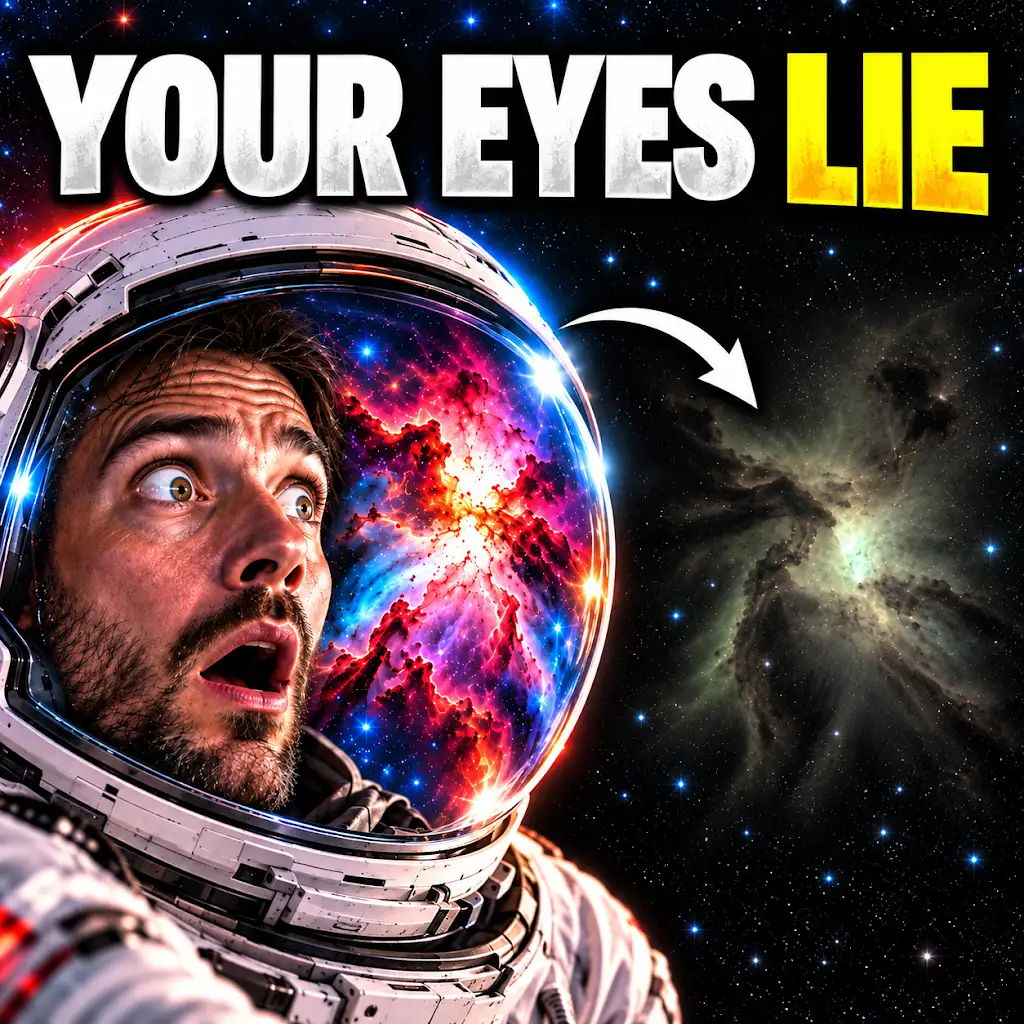
The Space Photos Are Real—But Your Eyes Would See This
FAQs
What is dark adaptation?
Dark adaptation is the process by which the eyes adjust to low levels of light. It allows the eyes to become more sensitive to dim light, making it easier to see in the dark.
How does dark adaptation affect astronomy?
Dark adaptation is crucial for astronomers as it allows them to see faint celestial objects such as stars, galaxies, and nebulae. By allowing the eyes to become more sensitive to light, dark adaptation enhances the ability to observe and study these dim objects in the night sky.
How long does it take to fully dark adapt?
It typically takes around 20-30 minutes for the eyes to fully dark adapt. However, the time can vary depending on factors such as age, overall health, and the level of light exposure prior to entering a dark environment.
What can affect dark adaptation?
Factors such as age, overall health, and exposure to bright light can affect dark adaptation. Older individuals may experience slower dark adaptation, while those with certain eye conditions or health issues may have impaired dark adaptation. Exposure to bright light can also temporarily hinder dark adaptation.
How can astronomers optimize dark adaptation?
Astronomers can optimize dark adaptation by avoiding exposure to bright lights before observing the night sky. Using red light sources instead of white light can also help preserve dark adaptation, as red light has less impact on the eyes’ sensitivity to dim light. Additionally, taking regular breaks from looking through telescopes or binoculars can help maintain dark adaptation.