The landscape of materials science is undergoing a profound transformation, shifting from the serendipitous discovery of novel materials to their deliberate and precise engineering. At the heart of this paradigm shift lies the burgeoning field of engineered geometry, a discipline that leverages intricate structural design at the micro- and nano- scale to imbue materials with unprecedented properties and functionalities. This is not merely about altering chemical composition; it’s about orchestrating the spatial arrangement of matter to unlock entirely new behaviors. From enhancing mechanical strength and conductivity to enabling advanced optical phenomena and targeted drug delivery, engineered geometry is proving to be a powerful toolkit for innovation.
At its core, engineered geometry in materials science is about control. It’s about dictating the precise arrangement, size, shape, and connectivity of structural elements within a material. This level of control transcends the traditional bulk properties and delves into the realm of hierarchical structures, where features at different length scales interact to produce emergent behaviors.
The Scale of Control: From Nanoscale to Macroscale
The impact of engineered geometry is felt across a vast spectrum of scales. At the nanoscale, the precise arrangement of atoms and molecules dictates the fundamental electronic and chemical properties of a material. Think of quantum dots, where size and shape precisely tune their optical emission, or nanoporous materials designed for highly selective filtration. Moving up to the microscale, engineered microstructures, such as intricate lattices, pores, or fibers, can drastically alter mechanical properties like stiffness, toughness, and fatigue resistance. For instance, architected materials with precisely designed voids can exhibit exceptional strength-to-weight ratios. Even at the macroscale, the arrangement of constituent parts, as seen in composite laminates or metamaterials, can lead to novel macroscopic behaviors not found in the individual components.
The Role of Topology and Connectivity
Beyond simple dimensions, the topology of a material’s structure plays a crucial role. Topology refers to the connectivity of its elements – how they are linked and whether they form continuous pathways or discrete units. For example, a material with interconnected pores will have different fluid transport properties than one with isolated voids. The way individual particles or grains are connected in a ceramic or metal significantly influences its fracture behavior. Understanding and controlling these topological features are paramount for tailoring properties like electrical conductivity, thermal diffusivity, and permeability.
Hierarchical Structures and Emergent Properties
Many natural materials, like bone or wood, exhibit remarkable properties due to their hierarchical structure, with features organized across multiple length scales. Engineered geometry seeks to emulate and surpass this by designing materials with deliberate hierarchies. For instance, a material might have nanoscale reinforcing elements embedded within a microscale lattice, which is then assembled into a larger macroscopic structure. This multi-scale design allows for synergistic effects, where the properties at each scale contribute to the overall performance in ways that wouldn’t be achievable by optimizing each scale independently. The interplay between these different levels of organization can lead to emergent properties that are fundamentally new and surprising.
Engineered geometry plays a crucial role in materials science, influencing the mechanical properties and performance of various materials. For a deeper understanding of how engineered geometries can enhance material characteristics, you can explore the article found at this link. This resource delves into the innovative approaches used to manipulate material structures at the microscopic level, showcasing the potential applications in industries ranging from aerospace to biomedical engineering.
Fabrication Techniques: Bringing Geometric Designs to Life
The realization of complex geometric designs hinges on the development of sophisticated fabrication techniques. The ability to precisely place and assemble matter at the desired scale is crucial. Advances in additive manufacturing, lithography, and self-assembly are paving the way for creating materials with previously unimaginable internal architectures.
Additive Manufacturing (3D Printing): A Game Changer
Additive manufacturing, commonly known as 3D printing, has revolutionized the fabrication of engineered materials. Techniques like stereolithography (SLA), selective laser sintering (SLS), fused deposition modeling (FDM), and direct ink writing (DIW) allow for the layer-by-layer construction of intricate 3D geometries from digital designs. This enables the creation of complex lattice structures, hollow components, and customized internal architectures that are impossible to achieve with traditional subtractive manufacturing methods. The ability to design and print materials with specific internal porosity, varying densities, and tailored mechanical responses is a direct consequence of this advanced fabrication capability.
Engineered geometry plays a crucial role in advancing materials science, particularly in the development of innovative structures that enhance performance and efficiency. For a deeper understanding of this concept, you can explore an insightful article that discusses the implications of engineered geometry in various applications. This resource highlights how manipulating the shapes and configurations of materials can lead to breakthroughs in fields such as aerospace and biomedical engineering. To read more about these fascinating developments, check out this article on Freaky Science.
Lithographic Techniques: Precision at the Nanoscale
For features at the nanoscale, lithographic techniques are indispensable. Photolithography, electron-beam lithography, and focused ion beam (FIB) milling allow for the precise patterning of surfaces and the creation of intricate micro- and nanoscale structures. These methods are vital for fabricating microelectronic components, optical devices, and nanostructured materials with tailored electronic and optical properties. The ability to define features with sub-micron precision opens up a vast design space for manipulating light-matter interactions and controlling electron transport.
Self-Assembly: Harnessing Nature’s Architects
Nature is a master of self-assembly, where individual components spontaneously organize into complex structures. Researchers are increasingly leveraging this principle to create engineered materials. This involves designing building blocks (molecules, nanoparticles, or even larger units) that have intrinsic properties that drive them to assemble into desired configurations. Examples include the formation of block copolymer micelles, colloidal crystals, and DNA-origami structures. Self-assembly offers a potentially scalable and cost-effective route to fabricating complex nanostructures, although precise control over the final architecture can be challenging.
Applications Driving Innovation

The power of engineered geometry is not just an academic pursuit; it is actively driving innovation across a multitude of industries, solving long-standing challenges and opening up new technological frontiers.
Advanced Structural Materials: Lighter, Stronger, Smarter
The quest for lighter and stronger materials is a perennial one, particularly in aerospace, automotive, and construction. Engineered geometry offers a revolutionary approach. By designing materials with optimized void networks, intricate lattice structures, or hierarchical reinforcements, scientists can achieve exceptional strength-to-weight ratios. Architected materials, inspired by nature’s designs, can be engineered to absorb impact energy efficiently, making them ideal for protective gear and crash structures. Furthermore, the ability to tailor the internal structure can lead to materials with embedded sensing capabilities or the ability to self-heal, ushering in an era of “smart” structural materials.
Lightweighting Through Lattice Structures
The development of open-cell and closed-cell lattice structures is a prime example of geometric engineering for lightweighting. These structures, often fabricated using 3D printing, consist of interconnected struts and nodes that create a high void fraction while maintaining structural integrity. The precise design of these lattices, including strut diameter, node connectivity, and overall cell shape, allows for fine-tuning of stiffness, strength, and energy absorption. This has direct implications for reducing fuel consumption in transportation and improving the performance of sporting equipment.
Enhanced Toughness and Fracture Resistance
Traditional materials often exhibit a trade-off between strength and toughness. Engineered geometry provides pathways to decouple these properties. By introducing specific microstructural features, such as crack deflection pathways, toughening mechanisms at interfaces, or controlled micro-cracking, materials can be made significantly more resistant to fracture. For instance, creating bio-inspired nacre-like structures with alternating rigid and compliant layers can dramatically improve toughness.
Functional Materials: Beyond Mechanical Properties
Engineered geometry’s impact extends far beyond mechanical performance. By controlling the arrangement of matter at various scales, scientists can manipulate a material’s electrical, thermal, optical, and chemical properties in profound ways.
Metamaterials for Tailored Electromagnetic Responses
Metamaterials are artificial materials engineered to possess properties not found in naturally occurring substances. This is achieved through the precise arrangement of sub-wavelength structural units, or “meta-atoms.” By designing the geometry of these meta-atoms, researchers can control how they interact with electromagnetic waves, leading to phenomena like negative refractive index, cloaking, and perfect absorption. This has vast implications for antenna design, radar systems, and optical imaging.
Thermoelectric Materials with Enhanced Efficiency
Thermoelectric materials convert heat energy directly into electrical energy and vice versa. Their efficiency is often limited by the thermal conductivity, which can dissipate the generated heat. Engineered geometry, through the creation of nanostructured thermoelectric materials with strategically placed interfaces and voids, can significantly reduce thermal conductivity while preserving electrical conductivity, leading to more efficient thermoelectric devices for waste heat recovery and solid-state cooling.
Catalytic and Sensing Applications
The surface area and pore structure of materials are critical for catalytic activity and sensing. Engineered geometry allows for the creation of materials with extremely high surface areas and precisely controlled pore sizes and distributions, maximizing the interaction sites for reactants in catalysis or the detection of target molecules in sensors. For example, highly ordered mesoporous materials can be designed to exhibit superior catalytic performance for chemical reactions.
Biomedical Applications: Precision for Life
The ability to engineer materials with exquisite control over geometry is proving transformative in the biomedical field, enabling new diagnostic tools, therapeutic strategies, and regenerative medicine approaches.
Drug Delivery Systems with Targeted Release
Engineered nanoparticles and microcarriers can be designed with specific geometries and surface chemistries to encapsulate drugs and release them in a controlled manner at a targeted site within the body. The shape and size of these carriers can influence their circulation time, cellular uptake, and interaction with biological tissues. For example, hollow mesoporous silica nanoparticles can be designed to load a high payload of drugs and release them in response to specific triggers like pH changes or enzyme activity.
Scaffolds for Tissue Engineering
Regenerative medicine aims to repair or replace damaged tissues and organs. Engineered scaffolds, fabricated with precise geometric architectures that mimic the natural extracellular matrix, are crucial for guiding cell growth and differentiation. These scaffolds can provide mechanical support, create channels for nutrient and waste transport, and present specific surface cues to promote tissue regeneration. 3D printing plays a vital role in creating patient-specific scaffolds with complex internal geometries.
Biosensing and Diagnostics
Engineered nanostructures and microfluidic devices with precisely designed geometries can be used to create highly sensitive biosensors for detecting disease biomarkers. The intricate patterns and channels within these devices can enhance sample manipulation, improve reaction kinetics, and concentrate analytes, leading to faster and more accurate diagnostic results.
The Future of Engineered Geometry in Materials Science
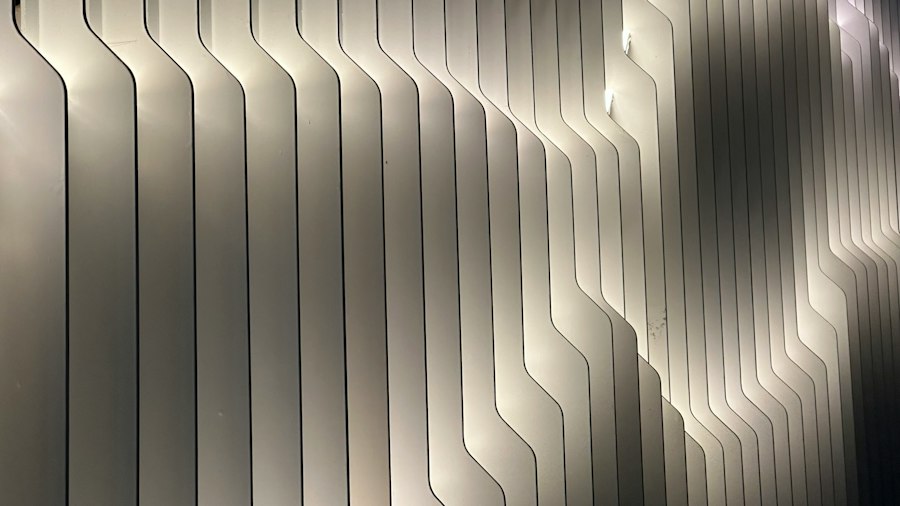
The field of engineered geometry is still in its nascent stages, with immense potential for future advancements. The synergy between computational design, advanced fabrication, and fundamental materials science will continue to drive progress.
Computational Design and Artificial Intelligence
The complexity of designing optimal geometries necessitates powerful computational tools. Finite element analysis (FEA) and molecular dynamics simulations are already essential for predicting material behavior based on their structure. The integration of artificial intelligence (AI) and machine learning (ML) is poised to accelerate this process further. AI algorithms can learn from vast datasets of material structures and properties, enabling the inverse design of materials – specifying desired properties and letting the AI propose the optimal geometry. This will dramatically reduce the time and cost associated with material discovery and optimization.
Multi-functional Materials and Integrated Systems
The ultimate goal is to create materials that can perform multiple functions simultaneously. Engineered geometry provides the framework for this integration. Imagine a structural material that is also an electrical conductor, a thermal insulator, and a sensor. By carefully designing the hierarchical architecture and the placement of different constituent materials, such multi-functional systems can be realized. This opens up possibilities for highly integrated devices and systems that are more efficient, compact, and performant.
Sustainability and Circular Economy
Engineered geometry also holds promise for advancing sustainability. By designing materials for enhanced durability and recyclability, and by developing new processes that minimize waste, this field can contribute to a more circular economy. For instance, designing materials that can be easily disassembled and reassembled, or developing novel catalysts that enable more efficient recycling processes, are areas where geometric engineering can play a key role. The ability to use less material while achieving superior performance also contributes to resource conservation.
In conclusion, engineered geometry is no longer a niche area within materials science; it is a fundamental paradigm that is reshaping how we conceive, design, and create materials. By mastering the art and science of controlling the arrangement of matter at various scales, scientists are unlocking unprecedented properties and functionalities. The continuous advancements in fabrication technologies and computational design, coupled with the ever-growing demand for high-performance, multi-functional, and sustainable materials, ensure that engineered geometry will remain at the forefront of innovation in materials science for the foreseeable future, driving progress across a vast array of scientific and technological disciplines. The precise control over form is undeniably unlocking the full potential of matter.

Pull Harder… and This Material Suddenly Gets Shorter
FAQs
What is engineered geometry in materials science?
Engineered geometry in materials science refers to the intentional design and manipulation of the shape, size, and arrangement of materials at the nanoscale level to achieve specific properties and functionalities.
How is engineered geometry used in materials science?
Engineered geometry is used in materials science to enhance mechanical, electrical, thermal, and optical properties of materials. By controlling the geometry of materials, researchers can create materials with improved performance and novel characteristics.
What are some examples of engineered geometry in materials science?
Examples of engineered geometry in materials science include nanostructures, metamaterials, photonic crystals, and microfluidic devices. These structures are designed with specific geometries to exhibit unique properties not found in natural materials.
What are the benefits of using engineered geometry in materials science?
The benefits of using engineered geometry in materials science include improved strength, flexibility, conductivity, and other desirable properties. It also allows for the development of advanced materials for various applications such as electronics, healthcare, and energy storage.
How does engineered geometry contribute to advancements in materials science?
Engineered geometry plays a crucial role in advancing materials science by enabling the creation of materials with tailored properties and functionalities. This approach opens up new possibilities for developing innovative technologies and addressing complex challenges in various industries.