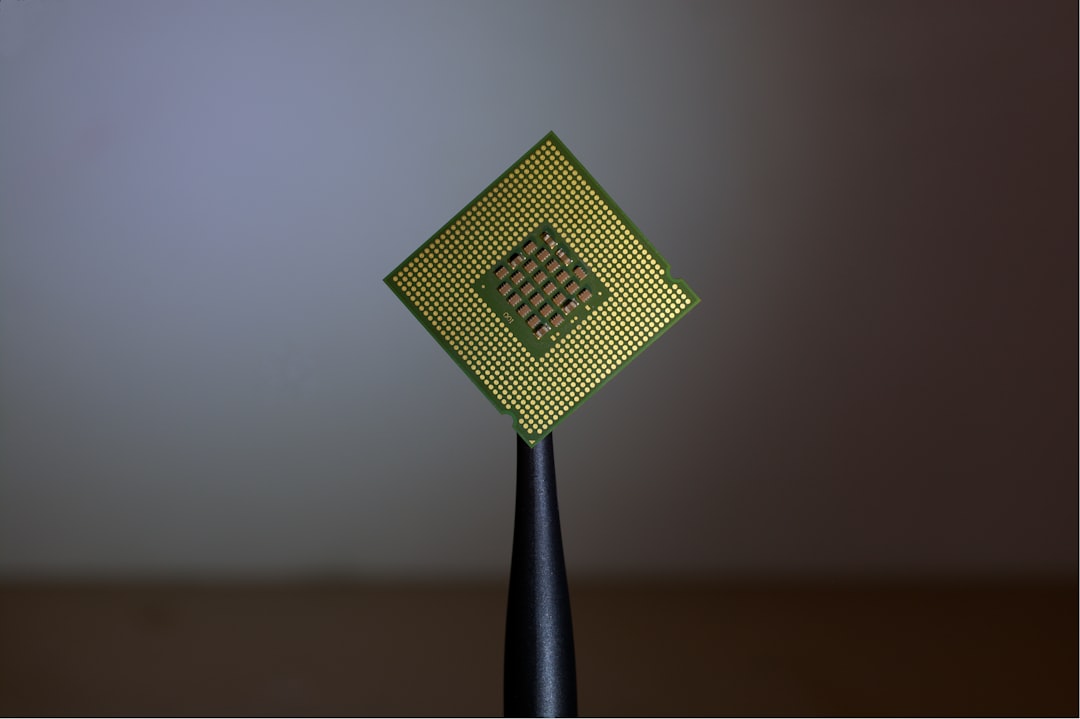
The relentless pursuit of ever-denser and more energy-efficient data storage has propelled researchers into the realm of the minuscule, specifically the fascinating world of nanomagnetic memory. At the forefront of this technological frontier lies the profound insight offered by the Landauer Principle, a fundamental concept in thermodynamics that governs the minimum energy cost associated with erasing information. Understanding and leveraging this principle is not merely an academic exercise; it is a crucial step towards unlocking the full potential of nanomagnetic memory devices, promising a future of data storage that is both incredibly dense and remarkably energy-conscious.
The Escalating Demand for Data Storage
The digital age is characterized by an exponential explosion of data. From the vast repositories of cloud services to the personal libraries of individual users, the sheer volume of information generated and stored is staggering and continues to grow at an unprecedented rate. This insatiable demand for data necessitates storage solutions that are not only capacious but also cost-effective and energy-efficient. Traditional storage technologies, such as hard disk drives (HDDs) and even flash memory, are encountering fundamental physical limitations in their ability to scale further in terms of density and power consumption. The physical dimensions of the storage elements are approaching atomic scales, and the energy required to write and read data, while already optimized, still presents a significant hurdle for large-scale deployments. This creates a critical need for novel storage paradigms that can overcome these limitations.
Nanomagnetic Memory: A Paradigm Shift
Nanomagnetic memory emerges as a compelling candidate to address these challenges. Unlike conventional magnetic storage that relies on bulk magnetic materials, nanomagnetic memory utilizes nanoscale magnetic elements, often referred to as magnetic dots or racetrack structures, to store information. The key advantage lies in the ability to create these elements with extremely small dimensions, allowing for significantly higher storage densities. Furthermore, the physics governing the magnetic behavior at the nanoscale offer unique opportunities for manipulation and control. The magnetic state of these tiny elements, typically representing a binary ‘0’ or ‘1’, can be altered by applying external stimuli such as magnetic fields or electric currents, often with remarkable precision. This allows for the potential of storing information at densities orders of magnitude greater than current technologies.
The Role of Spintronics
A significant driving force behind the advancement of nanomagnetic memory is the field of spintronics, which harnesses the intrinsic spin of electrons, in addition to their charge, for information processing and storage. In nanomagnetic memory, the spin polarization of electrons is used to control and read the magnetic state of the nanoscale elements. Technologies like Spin-Transfer Torque (STT) and Spin-Orbit Torque (SOT) have revolutionized the way magnetic moments can be manipulated. STT, for instance, utilizes a spin-polarized current to directly exert a torque on the magnetization of a nanomagnetic element, enabling efficient writing of data. SOT, on the other hand, leverages the spin Hall effect or Rashba effect to generate spin currents, offering an alternative and potentially more energy-efficient mechanism for magnetic switching. These spintronic phenomena are crucial for the practical realization of high-density and low-power nanomagnetic memory devices.
Challenges and Opportunities
Despite the immense promise, the development of practical nanomagnetic memory systems faces several challenges. These include achieving reliable and stable magnetic switching at extremely low energy levels, ensuring long-term data retention, and overcoming variability issues inherent in nanoscale fabrication. Moreover, the energy cost associated with the fundamental operations of memory devices, particularly writing and erasing data, remains a critical bottleneck. This is where the Landauer Principle enters the picture, offering a theoretical framework to understand and potentially mitigate these energy constraints.
Recent advancements in nanomagnetic memory have sparked interest in the application of the Landauer principle, which posits that information processing has a thermodynamic cost. A related article that delves deeper into the implications of this principle for the future of data storage and processing can be found at Freaky Science. This article explores how the integration of nanomagnetic technologies could revolutionize memory devices while adhering to the fundamental limits set by thermodynamics.
The Landauer Principle: The Physics of Erasure
The Birth of the Principle
The Landauer Principle, formally articulated by Rolf Landauer in 1961, is a cornerstone of information physics, bridging the gap between thermodynamics and information theory. It addresses a seemingly simple, yet profound, question: what is the minimum energy cost associated with any irreversible computation, particularly the erasure of information? Landauer’s seminal work demonstrated that the erasure of information is not a free process; it is fundamentally linked to an increase in entropy, and therefore, a dissipation of energy into the environment.
The Information-Entropy Connection
At its core, the Landauer Principle posits that erasing one bit of information requires a minimum energy dissipation of $kT \ln(2)$, where $k$ is the Boltzmann constant and $T$ is the absolute temperature of the system. This minimum energy is directly proportional to the thermodynamic work needed to increase the entropy of the environment by a corresponding amount. To illustrate, consider a system with two possible states representing a bit of information (e.g., a memory cell that can be either ‘0’ or ‘1’). When this bit is erased, its state becomes indeterminate or reset to a default state. This process is irreversible because we lose the information about the original state. According to the second law of thermodynamics, any irreversible process must increase the total entropy of the universe. Erasing a bit of information effectively reduces the entropy of the information-bearing system, and to compensate, the entropy of the environment must increase by at least the same amount. This increase in environmental entropy is achieved through the dissipation of energy.
Irreversibility and Energy Dissipation
The key concept here is irreversibility. If the erasure process were perfectly reversible, no energy would need to be dissipated. However, in any real-world memory system, the erasure process is inherently irreversible. For example, consider a magnetic bit. To erase it, one might apply a magnetic field to randomize its orientation or reset it to a default state. This process involves energy input to overcome the existing magnetic configuration, and the resulting dissipation of that energy is what makes the process irreversible. Landauer’s principle provides a fundamental lower bound on this energy dissipation, regardless of the specific physical mechanism employed for erasure. It states that even in a theoretically ideal scenario, some energy must be expended.
Implications for Computing
The implications of the Landauer Principle for computing are far-reaching. It sets a fundamental limit on how energy-efficient any computational device can be, especially those that involve information erasure. This is particularly relevant for memory technologies where writing and erasing data are integral operations. As we push towards smaller and smaller devices, the energy cost of these operations becomes increasingly significant. The Landauer limit provides a theoretical benchmark against which the energy efficiency of different memory technologies can be measured and improved. It highlights that efforts to reduce power consumption in computing must not only focus on optimizing the switching mechanisms but also on minimizing the inherent energy cost of information erasure.
Nanomagnetic Memory and the Landauer Limit

The Energy Cost of Writing vs. Erasing
In conventional memory technologies, both writing and erasing data consume energy. However, the Landauer Principle specifically focuses on the energy cost associated with erasure. Writing data involves changing the state of a memory element from one logical value to another. This can be achieved through various physical mechanisms, such as applying voltage or current pulses. Erasing data, on the other hand, typically involves resetting the memory element to a predefined state, often ‘0’, regardless of its previous state. This process of resetting and losing the previous information is where the Landauer limit becomes most relevant. For nanomagnetic memory, the operation of switching the magnetic moment of a nanoscale element from one orientation to another, which can be considered a form of writing, has a theoretical minimum energy associated with it, but it’s the erasure operation, where information is lost, that is fundamentally bound by the Landauer limit.
Reversible Computing and Beyond
The Landauer Principle has also inspired research into reversible computing. If information erasure is the source of energy dissipation, then a perfectly reversible computing system, where no information is ever erased, could theoretically operate with arbitrarily low energy consumption. While true reversible computing remains a theoretical ideal for general-purpose computation, the principles derived from it can be applied to optimize specific aspects of memory operations. Researchers are exploring ways to design nanomagnetic memory systems that minimize the number of irreversible erasure operations or to perform these operations in a more energy-efficient manner, approaching the Landauer limit. This might involve techniques that allow for partial erasure or that delay the irreversible erasure as long as possible within the data lifecycle.
The Challenge of Practical Implementation
The Landauer limit, $kT \ln(2)$, is a theoretical minimum and is extremely small at room temperature. For example, at room temperature (300 Kelvin), $kT \ln(2)$ is approximately $0.017$ electron-volts ($eV$). This is a minuscule amount of energy. However, real-world memory devices are far from this ideal. The energy consumed in practical devices is orders of magnitude higher due to various inefficiencies, such as resistive losses, thermal effects, and imperfect switching mechanisms. The challenge for nanomagnetic memory researchers is to bridge this gap between the theoretical Landauer limit and the practical energy consumption of their devices. Achieving this requires a deep understanding of the physics at play and innovative engineering solutions.
Towards Energy-Efficient Nanomagnetic Erasure
The Landauer Principle provides a crucial benchmark for evaluating the energy efficiency of nanomagnetic memory. It highlights that simply reducing the energy required for magnetic switching is not enough; minimizing the energy cost of information erasure is equally, if not more, important. This necessitates a paradigm shift in how memory operations are designed. Instead of solely focusing on faster writing and reading speeds, significant attention must be paid to the energy cost of resetting memory states. Exploring novel materials, advanced spintronic manipulation techniques, and intelligent error correction codes that minimize the need for explicit data erasure could all contribute to devices that approach the Landauer limit.
Designing for Minimal Energy Erasure

Minimizing Irreversible Operations
The most direct approach to adhering to the spirit of the Landauer Principle is to minimize the number of irreversible operations, particularly explicit data erasure, within the memory system. This could involve architectural designs that prioritize overwriting data rather than explicitly erasing it. For instance, in some applications, it might be more energy-efficient to write new data directly over old data, effectively rendering the old data inaccessible and thus “erased” in a practical sense, without necessarily undergoing a formal erasure cycle. This “in-place” updating can be achieved through specific magnetic switching protocols. Furthermore, designing algorithms that allow data to be overwritten without requiring a prior erasure step can significantly reduce the overall energy footprint.
Reversible Magnetic Switching
While true reversible magnetic switching in the thermodynamic sense is extremely challenging, researchers are exploring concepts that approximate reversibility. This could involve utilizing magnetic phenomena that can be reversed with minimal energy input, or designing switching mechanisms that are inherently less dissipative. For example, some proposed mechanisms involve carefully controlled magnetic domain wall motion or skyrmion manipulation, where the reversal process can be more akin to a controlled phase transition rather than a chaotic randomizing process. The goal is to create a switching mechanism where the energy cost to go from state A to state B is closely matched by the energy cost to go from state B back to state A, thereby minimizing the net energy dissipation over a cycle of operations.
The Role of Material Science
Material science plays a pivotal role in designing nanomagnetic memory devices that approach the Landauer limit. The choice of magnetic materials, their interfaces, and their nanoscale architecture can significantly influence the energy required for magnetic switching and erasure. For example, materials with high magnetic anisotropy (resistance to change in magnetization) are crucial for data stability, but they also require more energy to switch. Researchers are exploring materials that offer a balance between stability and switchability, such as multi-layered structures with carefully engineered magnetic properties. Furthermore, novel materials exhibiting phenomena like strain-mediated magnetoelectric coupling could enable electric-field control of magnetism, which is generally more energy-efficient than magnetic field control and might offer pathways to more reversible switching.
Device Architecture and Control Schemes
Beyond material properties, the architecture of the nanomagnetic memory device and the control schemes employed are critical. Innovations in the design of magnetic tunnel junctions (MTJs), the fundamental building blocks of many spintronic memories, can lead to lower switching energies. For instance, engineering the tunnel barrier properties and the free layer magnetization can reduce the critical switching current. Furthermore, advanced control schemes, such as pulsed read/write operations and adaptive switching protocols, can be optimized to minimize energy consumption. Developing techniques that allow for precise control over the magnetic moment without unnecessary energy expenditure is paramount. This might involve employing sophisticated feedback mechanisms or exploiting the natural dynamics of the magnetic system.
Recent advancements in nanomagnetic memory have sparked interest in the implications of the Landauer principle, which relates to the minimum energy required for information processing. A fascinating article that delves deeper into this topic can be found on Freaky Science, where the intersection of thermodynamics and information theory is explored in detail. For those looking to understand how these principles apply to modern computing technologies, the article provides valuable insights. You can read more about it here.
Nanomagnetic Memory Technologies Approaching the Limit
| Data/Metric | Value |
|---|---|
| Memory Density | Up to 10 Tb/in^2 |
| Energy Consumption | Low |
| Write Speed | Fast |
| Retention Time | Long |
Spin-Transfer Torque (STT) MRAM
Spin-Transfer Torque Magnetoresistive Random-Access Memory (STT-MRAM) is one of the most mature nanomagnetic memory technologies. In STT-MRAM, information is stored in a magnetic tunnel junction (MTJ), consisting of two ferromagnetic layers separated by a thin insulating barrier. The resistance of the MTJ depends on the relative orientation of the magnetization in the two layers. Writing data involves passing a spin-polarized current through the MTJ, which exerts a torque on the free layer’s magnetization, causing it to switch. While STT-MRAM has demonstrated high densities and speeds, the energy cost of writing and erasing data, particularly the irreversible aspects of erasure, still presents a challenge for reaching the Landauer limit. Current research focuses on reducing the critical current density required for switching and exploring materials that enable more efficient spin injection and polarization.
Domain Wall Memory and Racetrack Memory
Domain Wall Memory (DWM) and Racetrack Memory represent an exciting class of nanomagnetic memory where information is encoded in the position of magnetic domain walls along a nanowire. The movement of these domain walls can be controlled by applying magnetic fields or currents. Erasure in these systems can be achieved by shifting all domain walls to a predefined origin point. While these architectures offer potentially very high densities, the precise control of domain wall motion and the energy cost associated with manipulating multiple domain walls simultaneously remain areas of active research. The Landauer principle is relevant here in understanding the energy required to reset the domain wall positions to a baseline, effectively erasing the stored information. Researchers are investigating materials and geometries that allow for low-energy domain wall pinning and depinning, aiming to minimize the energy dissipated during these operations.
Magnetic Skyrmion Memory
Magnetic skyrmions are topologically protected, particle-like magnetic structures that are attracting significant attention for memory applications. They are nanoscale whirls of magnetization that can be created, moved, and annihilated with electric currents. The stability and controllability of skyrmions make them attractive candidates for high-density memory. Erasure in skyrmion-based memory might involve annihilating skyrmions or shifting them to specific regions. The energy cost of these operations, particularly the annihilation process which can be irreversible, is a key consideration in the context of the Landauer Principle. Research is focused on developing efficient methods for skyrmion creation and manipulation using spin-orbit torques, aiming for ultra-low energy consumption. The topological nature of skyrmions could potentially offer advantages in terms of robustness and deterministic manipulation, leading to more energy-efficient erasure.
Emerging Architectures and Hybrid Approaches
Beyond these established concepts, researchers are exploring novel nanomagnetic memory architectures and hybrid approaches. This includes integrating nanomagnetic memory with other emerging technologies like memristors or phase-change materials. The idea is to leverage the strengths of different technologies to achieve higher performance and lower energy consumption. For instance, a hybrid device might use a memristor for fast switching and a nanomagnetic element for stable, non-volatile storage. The Landauer Principle would guide the design of the energy-efficient aspects of both components and their interaction. Furthermore, new magnetic recording media, such as advanced perpendicular magnetic recording (PMR) or heat-assisted magnetic recording (HAMR) scaled down to the nanoscale, are being investigated for their potential to increase density and reduce switching energy.
The Future of Data Storage: Beyond the Landauer Limit?
The Ultimate Energy Frontier
The Landauer Principle, while establishing a fundamental lower bound on energy dissipation for information erasure, also serves as a beacon guiding future research. The ultimate goal is to design memory systems that operate as close to this limit as physically possible. This represents an “energy frontier” in data storage, pushing the boundaries of what is achievable with current and future technologies. Achieving this would have profound implications for everything from personal electronic devices to large-scale data centers, dramatically reducing energy consumption and enabling more sustainable computing.
Beyond Erasure: Information Thermodynamics
The principles elucidated by Landauer extend beyond simple erasure. The field of information thermodynamics is continuously exploring the fundamental relationships between information, energy, and computation. As our understanding deepens, new insights may emerge that allow for even more efficient manipulation of information at the nanoscale. This could involve exploring non-equilibrium thermodynamics or quantum phenomena to achieve unprecedented levels of energy efficiency. The concept of “information work” itself is being redefined, moving beyond classical thermodynamic interpretations to encompass the energetic costs of maintaining, processing, and transferring information in a quantum mechanical world.
The Role of Quantum Computing
While not directly a replacement for classical memory, quantum computing might offer insights and techniques that indirectly benefit nanomagnetic memory. Quantum entanglement and superposition, for example, are inherently non-classical phenomena. However, understanding how to manage and exploit these quantum properties for computation could lead to new paradigms for information storage and manipulation that are far more energy-efficient than classical approaches. Moreover, the development of quantum sensors could provide highly sensitive methods for reading magnetic states, potentially reducing the energy required for data retrieval.
A Vision for Sustainable Computing
The pursuit of nanomagnetic memory operating near the Landauer limit is intrinsically linked to the broader vision of sustainable computing. As the digital world continues to expand, the energy demands of its infrastructure are becoming a significant concern. By drastically reducing the energy footprint of data storage, nanomagnetic memory can play a crucial role in building a more environmentally responsible and energy-efficient future for technology. This extends beyond just memory devices to the entire computing ecosystem, where energy efficiency is a paramount concern for both economic and environmental reasons.
Conclusion: A Journey Towards Ultimate Efficiency
The journey to unlock the full potential of nanomagnetic memory is inextricably linked to a deep understanding and ingenious application of the Landauer Principle. This fundamental law of physics, which dictates the minimum energy cost of information erasure, serves as both a theoretical limit and an inspirational guide. By striving to design nanomagnetic memory systems that operate as close to this limit as possible, researchers are paving the way for data storage solutions that are not only incredibly dense and fast but also remarkably energy-efficient. The advancements in STT-MRAM, domain wall memory, skyrmion memory, and emerging hybrid architectures all represent steps in this direction. The ongoing exploration of novel materials, sophisticated control schemes, and innovative device designs, all informed by the principles of information thermodynamics, promises a future where data storage is no longer a significant energy drain, but rather an integral part of a sustainable and powerful technological landscape. The quest for ultimate efficiency in nanomagnetic memory is a testament to the power of fundamental physics in driving technological innovation, shaping the future of computing and data storage for generations to come.

Why the Universe Makes You Pay to Forget
FAQs
What is the Landauer principle in the context of nanomagnetic memory?
The Landauer principle states that there is a minimum amount of energy required to erase one bit of information in a computing device. In the context of nanomagnetic memory, this principle is important for understanding the energy efficiency and heat dissipation of the technology.
How does nanomagnetic memory utilize the Landauer principle?
Nanomagnetic memory utilizes the Landauer principle by taking advantage of the low energy required to switch the magnetic orientation of nanoscale magnets, which are used to store information. This allows for efficient and low-power operation of the memory technology.
What are the advantages of nanomagnetic memory in relation to the Landauer principle?
Nanomagnetic memory offers advantages in terms of energy efficiency and heat dissipation due to its ability to operate close to the fundamental limits set by the Landauer principle. This makes it a promising technology for future computing systems.
Are there any limitations or challenges associated with nanomagnetic memory and the Landauer principle?
One limitation is the need for precise control of the magnetic orientation of nanoscale magnets, which can be challenging at the nanoscale. Additionally, there are challenges in scaling up the technology for practical use in large-scale computing systems.
How does the Landauer principle impact the development and future of nanomagnetic memory technology?
The Landauer principle provides a fundamental framework for understanding the energy efficiency and performance limits of nanomagnetic memory technology. By adhering to these principles, researchers can continue to develop more efficient and advanced nanomagnetic memory systems for future applications.