
The question of whether autism plays a role in driving human intelligence evolution is a complex one, sparking debate and extensive research within the scientific community. While the notion of autism as a direct evolutionary advantage might seem provocative, it prompts a deeper examination of neurodiversity and its potential contributions to the tapestry of human cognition. This article delves into the multifaceted aspects of this inquiry, exploring the characteristics associated with autism and how they might offer unique perspectives and capabilities that could, in fact, contribute to the ongoing evolution of human intelligence. The journey involves dissecting the biological underpinnings, cognitive profiles, and societal implications of autistic traits, aiming for a nuanced understanding rather than simplistic pronouncements. This exploration is not about declaring autism as a superior form of intelligence, but rather acknowledging its distinctiveness and considering its potential role in a broader evolutionary context.
The autistic phenotype, characterized by a spectrum of neurological differences, presents a rich terrain for exploring its potential evolutionary implications. These differences manifest in various ways, impacting social interaction, communication, sensory processing, and cognitive styles. Rather than viewing these as deficits, a more contemporary perspective acknowledges them as variations that offer distinct advantages in specific contexts. It is crucial to move beyond outdated paradigms that focus solely on perceived impairments and embrace a neurodiversity-affirming approach.
Core Characteristics and Their Nuances
Autism Spectrum Disorder (ASD) is defined by a core set of characteristics, but it is vital to understand their inherent variability. The diagnostic criteria typically include persistent difficulties with social communication and social interaction across multiple contexts, and restricted, repetitive patterns of behavior, interests, or activities. However, the expression and intensity of these traits differ significantly from individual to individual.
Social Communication and Interaction Differences
Individuals on the autism spectrum often experience the world of social cues and interactions in a way that diverges from neurotypical expectations. This is not to say they lack social desires or emotions, but rather that their processing of social information can be fundamentally different. This might involve a different prioritization of information, a more literal interpretation of language, or a preference for direct and explicit communication.
Literal Interpretation: A Double-Edged Sword
The tendency for literal interpretation can lead to misunderstandings in social situations where nuance, sarcasm, and implied meaning are prevalent. However, this same characteristic can promote exceptional clarity and accuracy in tasks requiring precise understanding of instructions or data. In contexts demanding an unwavering adherence to facts and rules, this trait can be a significant asset, minimizing ambiguity and ensuring consistent execution.
Different Social Motivations and Engagement Styles
The motivations for social engagement can also differ. Some autistic individuals may find neurotypical social interactions draining or overwhelming due to sensory overload or the perceived inefficiency of indirect communication. Others may be highly motivated to connect but struggle with the conventional ways of navigating social hierarchies or understanding unspoken social rules. Their engagement might be characterized by deep, focused interactions with a select few, rather than broad, superficial social networks.
Restricted and Repetitive Behaviors and Interests
The other core diagnostic area for autism involves restricted, repetitive behaviors, interests, or activities. These are often misunderstood as mere eccentricities. However, they can be powerful engines for developing specialized expertise and exceptional focus.
Intense Focus and Deep Specialization
The intense focus that can accompany autistic interests, often referred to as “special interests” or “obsessions” in older terminology, is a remarkable cognitive capacity. This sustained, deep engagement allows for the development of profound knowledge and mastery in specific domains. In an increasingly complex world, the ability to dedicate oneself to mastering a particular field is invaluable.
Pattern Recognition and Systematizing
Many autistic individuals exhibit a strong aptitude for pattern recognition and systemizing. They can perceive intricate relationships and underlying structures in data, systems, and environments that others might overlook. This ability is crucial for scientific discovery, technological innovation, and understanding complex natural phenomena.
Sensory Processing Variations
Sensory experiences can be significantly different for autistic individuals. This can range from hypersensitivity (over-responsiveness) to hyposensitivity (under-responsiveness) across various sensory modalities, including sight, sound, touch, taste, and smell.
Hypersensitivity and Hyposensitivity: Navigating the World
Hypersensitivity can lead to sensory overload in stimulating environments, causing distress and anxiety. Conversely, hyposensitivity might mean a reduced awareness of certain sensory inputs, leading to a greater tolerance for intense stimuli or a need for more significant input to register a sensation.
The Double-Edged Sword of Sensory Experience
While sensory challenges can be debilitating in certain environments, they can also lead to unique sensory sensitivities that contribute to creativity and problem-solving. For instance, an enhanced sensitivity to subtle visual patterns might aid in artistic endeavors or data analysis, while a reduced sensitivity to background noise might allow for undisturbed concentration on a complex task.
The intriguing relationship between autism and the evolution of human intelligence has sparked considerable debate among researchers and enthusiasts alike. A related article that delves deeper into this topic can be found on Freaky Science, where various perspectives on the cognitive advantages associated with autism are explored. For further insights, you can read the article here: Freaky Science.
Evolutionary Potential: Theories and Hypotheses
The concept of evolutionary potential in relation to autism is not about “fixing” or “curing” but rather about appreciating how diverse cognitive profiles might have conferred advantages throughout human history and continue to do so. Evolutionary psychology offers frameworks for understanding how traits that might seem disadvantageous in some contexts could have provided survival or reproductive benefits in others.
The “Savanna Hypothesis” and Cognitive Specialization
The Savanna Hypothesis, originally proposed to explain certain human psychological adaptations, suggests that our minds are adapted to environments similar to those our ancestors inhabited on the African savanna. This hypothesis, while debated, can be broadened to consider how cognitive specializations, like those observed in autism, might have been advantageous in the diverse ecological and social niches of early human populations.
Niche Construction and Cognitive Adaptation
Individuals with cognitive profiles that differed from the norm may have successfully inhabited specific environmental niches. For example, exceptional pattern recognition skills could have been beneficial for tracking game, identifying edible plants, or understanding weather patterns. The ability to focus intensely on detailed tasks could have been crucial for tool-making or crafting intricate objects.
The Role of Cognitive Diversity in Group Survival
A cognitively diverse group would likely possess a wider range of skills and problem-solving approaches. Individuals with a propensity for focused, systematic thinking might excel at certain tasks, while those more attuned to social nuances excel at others. This division of cognitive labor could have enhanced the adaptability and resilience of early human communities.
Augmentation Theory and Human Cognitive Advancement
Another avenue of thought considers how specific traits associated with autism might have served to augment human intelligence more broadly. This is not to suggest a conscious effort for advancement, but rather the emergent properties of human variation contributing to collective cognitive leaps.
The “Extreme Male Brain” Theory: A Controversial but Influential Model
Simon Baron-Cohen’s “Extreme Male Brain” (EMB) theory, though controversial and often criticized for its gender essentialism, posits that autistic traits are an extreme version of a cognitive profile that is statistically more prevalent in males and is associated with systemizing. The theory suggests that this systemizing drive, when amplified, could lead to innovations and advancements that are crucial for societal progress. It’s crucial to acknowledge the limitations and criticisms of this theory while still recognizing the observation of enhanced systemizing abilities in many autistic individuals.
Systemizing as a Driver of Innovation
The inherent drive to understand and build systems, a hallmark of many autistic individuals, can be directly linked to technological and scientific progress. From developing early agricultural techniques to the complex algorithms that power modern technology, the ability to deconstruct, understand, and reconstruct systems has been fundamental to human advancement.
The “Outsider Perspective” and Paradigm Shifts
Individuals who process information differently may naturally adopt an “outsider perspective.” Without being fully ingrained in the dominant mental models or social conventions, they can question assumptions and identify novel solutions. This can be a catalyst for paradigm shifts in science, art, and social organization.
Potential Cognitive Advantages in Modern Society
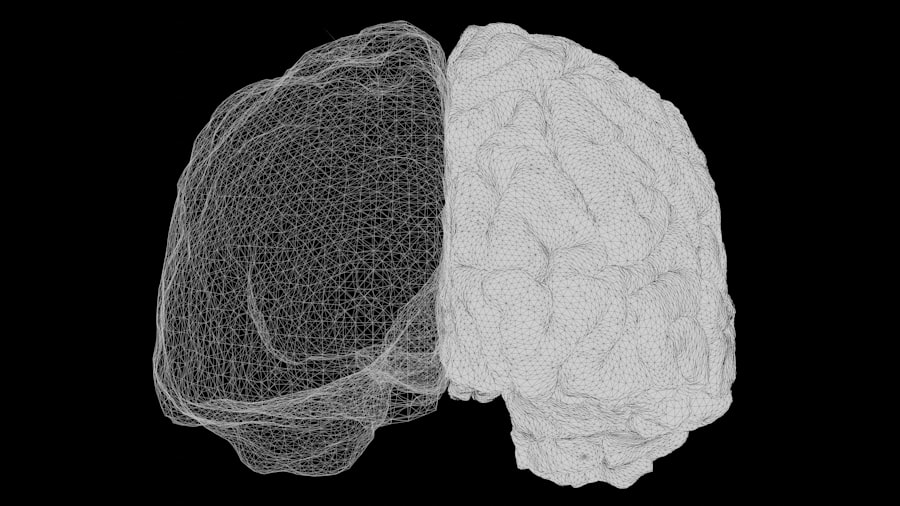
While evolutionary history provides a framework, it is also important to consider how the cognitive characteristics associated with autism might offer distinct advantages in the contemporary world, a world that is increasingly complex, data-driven, and technologically advanced.
Data Analysis and Information Processing
The modern era is characterized by an explosion of data. The ability to meticulously analyze, organize, and interpret vast datasets is a critical skill. Autistic individuals, with their propensity for detail orientation and pattern recognition, are often exceptionally well-suited for these tasks.
Precision and Accuracy in Data-Intensive Fields
Fields such as bioinformatics, data science, artificial intelligence, and cybersecurity rely heavily on individuals who can process information with extreme precision and accuracy. The tendency for autistic individuals to focus on factual accuracy and logical consistency can make them invaluable in these domains, minimizing errors and ensuring robust outcomes.
Identifying Anomalies and Outliers
The ability to spot deviations from established patterns or anomalies within datasets is crucial for identifying potential problems, discovering new insights, or even detecting criminal activity. This heightened sensitivity to detail can be a significant advantage.
Innovation and Problem-Solving
The unique cognitive styles associated with autism can foster innovative thinking and novel approaches to problem-solving. By not always adhering to conventional pathways, autistic individuals can arrive at solutions that neurotypical individuals might miss.
Divergent Thinking and Creative Solutions
The difference in thought processes can lead to divergent thinking, where multiple solutions are explored in unconventional ways. This can be instrumental in breaking through established barriers and developing groundbreaking innovations.
Rethinking Existing Systems and Processes
Individuals who perceive systems differently may naturally identify inefficiencies or limitations in existing structures. This can lead to the development of more effective and streamlined processes, whether in business, technology, or social services.
Artistic and Creative Expression
Beyond scientific and technical fields, the distinct perspectives of autistic individuals can contribute significantly to artistic and creative expression. Their unique sensory experiences and focused attention can translate into powerful and original works of art.
Unique Sensory Palettes and Aesthetic Sensibilities
A heightened or different sensory experience can inform artistic creation in profound ways. This can manifest in novel uses of color, texture, sound, or narrative that offer fresh aesthetic experiences to audiences.
Deep Thematic Exploration
The ability to delve deeply into a chosen subject matter can result in art that explores themes with unparalleled depth and nuance, offering new interpretations of human experience.
The Social and Societal Implications of Neurodiversity
The consideration of autism’s role in intelligence evolution is inextricably linked to how society perceives and integrates neurodiversity. Moving from a deficit-based model to one that celebrates the strengths and contributions of all individuals is paramount.
Embracing Neurodiversity as a Societal Asset
Recognizing autism as a form of human variation, rather than a disorder to be eradicated, is a crucial shift. This perspective acknowledges that a diverse range of cognitive abilities enriches society and fuels innovation.
Redefining “Normal” and “Ability”
The concept of “normal” intelligence is often narrowly defined by neurotypical standards. Embracing neurodiversity requires a re-evaluation of these definitions to encompass a broader spectrum of cognitive strengths and ways of thinking.
Creating Inclusive Environments
To unlock the full potential of autistic individuals, societies must create environments that are inclusive and accommodating. This includes adapting educational systems, workplaces, and public spaces to meet diverse needs.
The Future of Human Cognition and Evolutionary Trajectory
As humanity faces increasingly complex global challenges, the diversity of human intelligence becomes not just beneficial, but potentially essential for survival and progress.
The Role of Cognitive Augmentation and Collaboration
The future may see increased collaboration between individuals with different cognitive strengths, leading to synergistic problem-solving. Technologies that augment cognitive abilities, developed in collaboration with neurodiverse individuals, could also play a significant role.
A More Resilient and Adaptable Humanity
By embracing and fostering cognitive diversity, humanity can become more resilient and adaptable to the challenges of the future. This includes leveraging unique perspectives to address issues such as climate change, technological disruption, and social inequality.
In exploring the intriguing connection between autism and the evolution of human intelligence, one might find it beneficial to read a related article that delves deeper into the nuances of this topic. The article discusses various theories surrounding cognitive diversity and how traits associated with autism may have contributed to advancements in human creativity and problem-solving skills. For further insights, you can check out this fascinating piece that expands on these ideas and presents compelling arguments for the role of neurodiversity in our evolutionary journey.
Challenges and Considerations in the Evolutionary Framework
| Metrics | Data |
|---|---|
| Autism prevalence | 1 in 54 children in the United States |
| Genetic factors | Several genes associated with autism have also been linked to higher cognitive ability |
| Evolutionary perspective | Some researchers suggest that the traits associated with autism may have played a role in human evolution, contributing to the development of intelligence |
| Brain connectivity | Studies have shown that individuals with autism may have altered patterns of brain connectivity, which could be related to enhanced cognitive abilities |
While exploring the evolutionary potential of autism is intellectually stimulating, it is imperative to approach this discourse with caution and to address potential challenges and ethical considerations.
Avoiding Essentialism and Oversimplification
It is crucial to avoid essentializing autism or reducing complex individuals to a set of predetermined traits. The spectrum of autistic experience is vast, and generalizations can be misleading and harmful.
The Danger of “Medicalizing” Neurodiversity
The drive to find evolutionary advantages should not lead to the medicalization of a natural variation in human cognition. The focus should remain on understanding and fostering potential, not on defining individuals by a diagnostic label.
The Importance of Individual Agency and Lived Experience
The stories and experiences of autistic individuals themselves are the most valuable source of understanding. Their voices must be at the forefront of any discussion about their cognitive profiles and potential.
Ethical Implications of Evolutionary Narratives
The framing of autism within an evolutionary context can raise ethical questions, particularly regarding perceptions of “progress” and “desirability” of certain traits.
Preventing the Misappropriation of Evolutionary Concepts
Evolutionary narratives can be, and have been, misappropriated to justify social inequalities or discriminatory practices. It is essential to ensure that discussions about autism and evolution are grounded in respect for human dignity and equality.
The Focus on Support and Flourishing
Ultimately, the most significant implication of understanding the potential of autistic cognition lies in ensuring that autistic individuals have the support and opportunities they need to flourish. This involves creating a society that values and accommodates neurodiversity, allowing every individual to contribute their unique talents. The evolutionary perspective, therefore, serves as a catalyst for fostering a more inclusive and understanding world, where the full spectrum of human intelligence is recognized as a vital asset for the future.
FAQs
What is autism?
Autism, or autism spectrum disorder (ASD), refers to a range of conditions characterized by challenges with social skills, repetitive behaviors, speech and nonverbal communication, as well as by unique strengths and differences.
What is human intelligence evolution?
Human intelligence evolution refers to the development and advancement of human cognitive abilities over time, leading to increased problem-solving skills, language development, and overall intellectual capacity.
Is there a link between autism and human intelligence evolution?
Some researchers have proposed the idea that certain traits associated with autism, such as enhanced pattern recognition and attention to detail, may have played a role in the evolution of human intelligence.
How does autism potentially contribute to human intelligence evolution?
Some theories suggest that individuals with autism may have contributed to human intelligence evolution by possessing unique cognitive abilities that were advantageous in certain environments, leading to the preservation and spread of these traits in the human population.
What are some potential implications of the link between autism and human intelligence evolution?
Understanding the potential link between autism and human intelligence evolution could lead to new insights into the nature of intelligence and cognitive diversity, as well as inform approaches to supporting individuals with autism in society.