
You stand before a golden field, a sea of stalks swaying gently in the breeze. This is wheat, a staple that has sustained humanity for millennia. But have you ever paused to truly consider the intricate dance happening beneath your feet, the silent, vital process that allows these plants to grow so tall and produce the grain that feeds the world? You’re about to unlock a profound mystery: how wheat, this seemingly simple crop, masterfully acquires the nitrogen it desperately needs.
Imagine your body suddenly deprived of protein. That’s akin to what wheat faces without adequate nitrogen. Nitrogen is not just another nutrient; it’s the fundamental building block of life. For you, it’s essential for cell growth, repair, and the very structure of your DNA. For wheat, it’s equally indispensable, underpinning its entire existence.
Building the Green Machine: Protein and Photosynthesis
Your wheat plants are like miniature factories, and nitrogen is the raw material for their most crucial components. Primarily, nitrogen is a core element of amino acids, the building blocks of proteins. Think of proteins as the workhorses of the plant cell. They form enzymes that catalyze all biochemical reactions, structural components that give cells their shape and integrity, and transport molecules that move vital substances. Without a steady supply of nitrogen, the wheat plant cannot synthesize enough proteins to sustain its growth and development.
Furthermore, nitrogen is a critical component of chlorophyll, the green pigment that captures sunlight for photosynthesis. Chlorophyll is the engine of the plant’s energy production. The more chlorophyll your wheat has, the more efficiently it can convert light energy into sugars, fueling its growth. When nitrogen is scarce, chlorophyll production plummets, leading to yellowing leaves – a visible sign of distress and a stark indicator of reduced photosynthetic capacity. This directly impacts the plant’s ability to produce carbohydrates, the very essence of the grain you will eventually harvest.
The Growth Engine: Vegetative and Reproductive Stages
Nitrogen’s demand isn’t static; it fluctuates significantly throughout the wheat plant’s life cycle. During the early vegetative stages, the plant is focused on building its foundational structure: roots, stems, and leaves. This is a period of rapid growth, and consequently, a period of high nitrogen demand. You need to ensure ample nitrogen is available to support the vigorous development of these tissues.
As the plant transitions to its reproductive phase, the focus shifts. Now, it needs nitrogen to form flowers and subsequently, the grains. While the demand might seem to decrease compared to the peak vegetative growth, the quality of the nitrogen supply becomes paramount. Adequate nitrogen during grain filling is crucial for protein synthesis within the grain, directly influencing yield and the nutritional quality of the harvested wheat. Insufficient nitrogen at this stage can lead to smaller grains, lower protein content, and ultimately, a disappointing harvest.
Wheat, like many other plants, relies on nitrogen for optimal growth and development. It primarily acquires nitrogen through a process called nitrogen fixation, where certain bacteria in the soil convert atmospheric nitrogen into a form that plants can absorb. For a deeper understanding of how wheat gets nitrogen and the role of soil health in this process, you can read a related article at Freaky Science. This resource provides valuable insights into the interactions between wheat and its environment, highlighting the importance of sustainable agricultural practices.
The Soil’s Nitrogen Pantry: Forms and Availability
Your wheat plants don’t just find nitrogen floating in the air; they must extract it from the soil. However, the soil’s nitrogen pantry is a complex ecosystem, and not all forms of nitrogen are readily available to plants. Understanding these forms is key to comprehending the acquisition process.
Organic Nitrogen: The Stored Treasure
The vast majority of nitrogen in most soils exists in organic matter – the decomposed remains of plants, animals, and microorganisms. This is a significant reservoir, a long-term storehouse of nitrogen. However, plants cannot directly absorb organic nitrogen. It must first undergo a transformation.
Mineralization: The Slow Release
This transformation is a biological process called mineralization. Microorganisms in the soil, acting as tiny decomposers, break down organic matter, releasing inorganic nitrogen compounds. The primary inorganic forms that plants can absorb are ammonium (NH₄⁺) and nitrate (NO₃⁻). This process is slow and dependent on factors like soil temperature, moisture, and the activity of microbial communities. Think of it as a slow-release fertilizer, steadily replenishing the soil’s available nitrogen.
Inorganic Nitrogen: The Plant’s Feast
The inorganic forms, ammonium and nitrate, are the readily digestible nutrients that your wheat plants crave. These are the forms that are dissolved in the soil water and are therefore accessible to the plant’s roots.
Ammonium (NH₄⁺): A Cationic Preference
Ammonium is a positively charged ion. It binds to negatively charged soil particles (clay and organic matter). While this binding can temporarily reduce its availability in the soil solution, it also prevents it from being easily leached away by water. Wheat plants can absorb ammonium, and it’s particularly important in certain soil conditions and for specific plant processes.
Nitrate (NO₃⁻): The Mobile and Preferred Form
Nitrate is a negatively charged ion. Unlike ammonium, it does not readily bind to soil particles and therefore remains dissolved in the soil water. This mobility is a double-edged sword. While it makes nitrate highly available to plant roots, it also makes it susceptible to leaching by heavy rainfall or excessive irrigation, potentially washing it out of the root zone and into groundwater. For most wheat varieties, nitrate is the preferred form of nitrogen, and its uptake is often more rapid and efficient.
The Root’s Ingenuity: Pathways of Acquisition

The roots of your wheat plants are not passive entities; they are dynamic and ingenious organs actively seeking out and absorbing the vital nitrogen they need. This acquisition is a carefully orchestrated process involving specific transport mechanisms.
Diffusion: The Passive Journey
For nitrate, which is abundant in the soil solution, diffusion plays a significant role. The concentration of nitrate is typically higher in the soil solution surrounding the roots than inside the root cells. This concentration gradient drives the movement of nitrate from an area of high concentration to an area of low concentration, effectively diffusing across the root cell membranes. It’s like a crowd of people naturally moving from a packed room into an empty one.
Active Transport: The Energy-Driven Uptake
While diffusion accounts for some nitrate uptake, the plant also employs active transport mechanisms to efficiently scavenge for nitrogen, especially when concentrations are low. These are specialized protein pumps embedded within the root cell membranes.
Nitrate Transporters: The Gatekeepers
These transporters act like cellular gatekeepers, actively binding to nitrate ions and using energy (in the form of ATP) to move them across the membrane into the root cells. There are different types of nitrate transporters, each with varying affinities for nitrate and playing a role in its uptake under different soil conditions. This active process allows the plant to accumulate nitrogen even when it’s present in low concentrations in the soil.
Ammonium Transporters: A Similar Mechanism
Similar active transport mechanisms exist for ammonium. While ammonium binding to soil particles can limit its immediate availability in solution, specific ammonium transporters ensure that when it is present, the plant can efficiently absorb it. These transporters are crucial for ammonium uptake, particularly in waterlogged soils or under specific pH conditions where ammonium might be more prevalent.
Root Architecture and Exploration: The Search Party
Beyond the cellular mechanisms, the very structure and growth of your wheat’s root system are crucial for nitrogen acquisition. A well-developed and extensive root system increases the surface area for nutrient absorption and allows the plant to explore a larger volume of soil.
Root Hairs: The Fine-Tuned Fingers
Root hairs, tiny outgrowths from epidermal cells of the root, dramatically increase the surface area of the root. They act like fine-tuned fingers, reaching into the soil pores and coming into intimate contact with soil particles and the soil solution, maximizing the chances of encountering and absorbing nitrogen.
Branching and Depth: Reaching for Resources
The branching pattern and depth of your wheat’s root system are also critical. A more branched root system can explore more soil volume, while deeper roots can access nitrogen that might have leached deeper into the soil profile. Optimal root architecture is influenced by soil structure, water availability, and nutrient distribution, highlighting the interconnectedness of these factors.
The Symbiotic Advantage: Nature’s Nitrogen Fixers
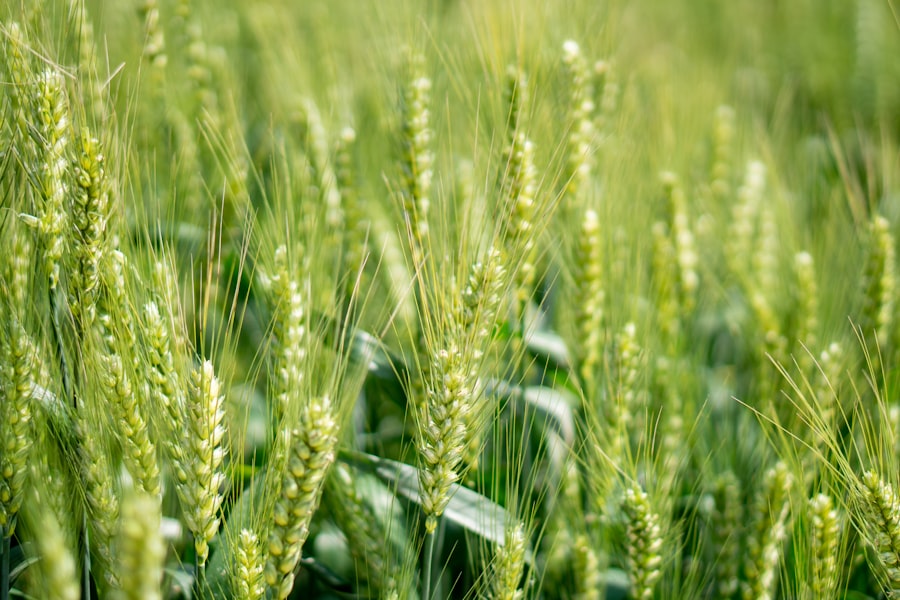
While your wheat plants are adept at acquiring nitrogen from the soil, they are not entirely reliant on their own efforts. In some cases, they can form remarkable partnerships with other organisms that can literally conjure nitrogen from thin air.
The Magic of Microbes: Nitrogen Fixation
The atmosphere is rich in nitrogen gas (N₂), which constitutes about 78% of the air you breathe. However, this N₂ is in a very stable form and is unusable by most plants, including wheat. Nitrogen fixation is the process by which atmospheric nitrogen is converted into ammonia (NH₃), a form that can be used by plants.
Free-Living Nitrogen Fixers: The Unseen Helpers
Certain free-living bacteria in the soil possess the enzyme nitrogenase, which is capable of breaking the strong triple bond in N₂ and converting it into ammonia. These bacteria, though not directly associated with wheat roots, contribute to the soil’s nitrogen pool through their metabolic activities.
Symbiotic Nitrogen Fixation: The Ultimate Partnership
The most significant source of biologically fixed nitrogen for many plants comes from symbiotic relationships with specific bacteria. While wheat itself doesn’t form direct symbiotic nodules like legumes, the broader agricultural ecosystem often benefits from the presence of nitrogen-fixing organisms. Understanding these microbial communities and promoting their activity can be a powerful strategy for sustainable wheat production.
Wheat, like many other plants, relies on nitrogen to thrive, and understanding how it acquires this essential nutrient is crucial for improving crop yields. One fascinating aspect of this process involves the symbiotic relationship between wheat roots and nitrogen-fixing bacteria in the soil. These bacteria convert atmospheric nitrogen into a form that plants can absorb, significantly enhancing their growth. For more insights into the fascinating world of plant nutrition and the role of nitrogen in agriculture, you can read a related article on this topic at Freaky Science.
Enhancing Wheat’s Nitrogen Arsenal: From Fertilizers to Future Innovations
“`html
| Stage | Nitrogen Application | Amount |
|---|---|---|
| Pre-planting | Soil application | Variable based on soil test |
| Tillering | Top-dressing | 30-60 lbs/acre |
| Jointing | Top-dressing | 30-60 lbs/acre |
| Heading | Top-dressing | 30-60 lbs/acre |
“`
Recognizing the critical importance of nitrogen and understanding its acquisition pathways empowers you to make informed decisions for optimizing wheat growth and yield. This involves both traditional agricultural practices and emerging biotechnological approaches.
The Role of Fertilizers: Supplementing the Soil’s Bounty
Synthetic nitrogen fertilizers are a cornerstone of modern agriculture, providing a readily available source of nitrogen to supplement what the soil naturally provides. These fertilizers are typically manufactured through processes like the Haber-Bosch process, which synthesizes ammonia from nitrogen gas and hydrogen.
Types of Nitrogen Fertilizers: Urea, Ammonium Nitrate, and More
You’ll encounter various forms of nitrogen fertilizers, each with its own properties and application recommendations. Urea is a common choice, which releases nitrogen as it mineralizes in the soil. Ammonium nitrate provides nitrogen in both ammonium and nitrate forms. Other forms like diammonium phosphate (DAP) and monoammonium phosphate (MAP) also supply phosphorus along with nitrogen.
Application Strategies: Timing and Placement
The effectiveness of nitrogen fertilizers hinges on proper application. Timing is crucial; applying nitrogen when the plant has the highest demand ensures efficient uptake and minimizes losses. Placement is also important, with methods like banding fertilizers near the seed or injecting them into the soil helping to concentrate the nutrients where the roots can access them, reducing volatilization and leaching.
Precision Agriculture: Smart Nutrient Management
In today’s world, you have the tools to be more precise in your approach to nitrogen management. Precision agriculture utilizes technologies like GPS, sensors, and data analysis to tailor nutrient applications to the specific needs of different areas within your field.
Soil Testing and Plant Analysis: Knowing Your Needs
Regular soil testing is fundamental. It provides insights into the existing levels of available nitrogen and other nutrients in your soil. Plant tissue analysis, conducted during the growing season, can reveal if the wheat is actually absorbing the applied nitrogen and if deficiencies are developing.
Variable Rate Application: Targeted Nourishment
Based on soil and plant data, variable rate application allows you to apply different amounts of nitrogen fertilizer to different zones within your field. This ensures that areas with lower inherent fertility or higher crop needs receive more nitrogen, while areas with adequate supply are not over-fertilized, leading to both economic and environmental benefits.
Future Frontiers: Genetic Enhancement and Microbial Solutions
The mystery of wheat’s nitrogen acquisition is far from fully solved. Researchers are continuously exploring new avenues to enhance the plant’s own capabilities and leverage natural processes.
Breeding for Improved Nitrogen Use Efficiency: The Plant’s Own Potential
Scientists are actively breeding wheat varieties that are more efficient at acquiring and utilizing nitrogen. This involves identifying genes associated with enhanced root development, improved transporter activity, and more effective internal nitrogen metabolism. The goal is to develop wheat that can produce high yields with less fertilizer input.
Microbial Inoculants: Harnessing the Power of Beneficial Bacteria
The development of microbial inoculants that can enhance nitrogen fixation or improve nutrient availability is another exciting area of research. These inoculants introduce beneficial microorganisms to the soil, potentially stimulating plant growth and reducing reliance on synthetic fertilizers. This approach aligns with the principles of sustainable agriculture and can contribute to a healthier soil ecosystem.
You now possess a deeper understanding of the complex and fascinating journey of nitrogen from the soil to the grain in your wheat field. This knowledge empowers you to cultivate healthier, more productive crops, contributing to the sustained nourishment of your community and the world. The golden stalks you see are not just plants; they are testament to nature’s intricate design and your own growing understanding of its profound mysteries.

We Figured Out How to Turn Air Into Food
FAQs
1. What is the role of nitrogen in wheat production?
Nitrogen is an essential nutrient for wheat as it plays a crucial role in the plant’s growth and development. It is a key component of chlorophyll, which is necessary for photosynthesis, and also contributes to the overall protein content of the wheat grain.
2. How do wheat plants obtain nitrogen?
Wheat plants obtain nitrogen primarily from the soil. They absorb nitrogen in the form of nitrate (NO3-) and ammonium (NH4+) through their root system. Additionally, some nitrogen can also be obtained from atmospheric nitrogen through a process called nitrogen fixation, which is carried out by certain bacteria in the soil.
3. What are common methods of applying nitrogen to wheat fields?
Common methods of applying nitrogen to wheat fields include the use of synthetic fertilizers, organic fertilizers (such as manure or compost), and crop rotation with nitrogen-fixing legumes (such as soybeans or clover). The application of nitrogen can be done through broadcasting, side-dressing, or fertigation.
4. What are the potential environmental impacts of nitrogen use in wheat production?
Excessive use of nitrogen fertilizers can lead to environmental issues such as water pollution, soil acidification, and greenhouse gas emissions. Nitrogen runoff from fields can contaminate water sources, leading to eutrophication and harmful algal blooms. It is important for farmers to carefully manage nitrogen application to minimize these impacts.
5. How does nitrogen availability affect wheat yield and quality?
Nitrogen availability directly impacts wheat yield and quality. Insufficient nitrogen can lead to stunted growth, reduced grain yield, and lower protein content in the grain. On the other hand, excessive nitrogen can result in lodging (falling over of plants), delayed maturity, and decreased grain quality. Proper nitrogen management is crucial for optimizing wheat production.