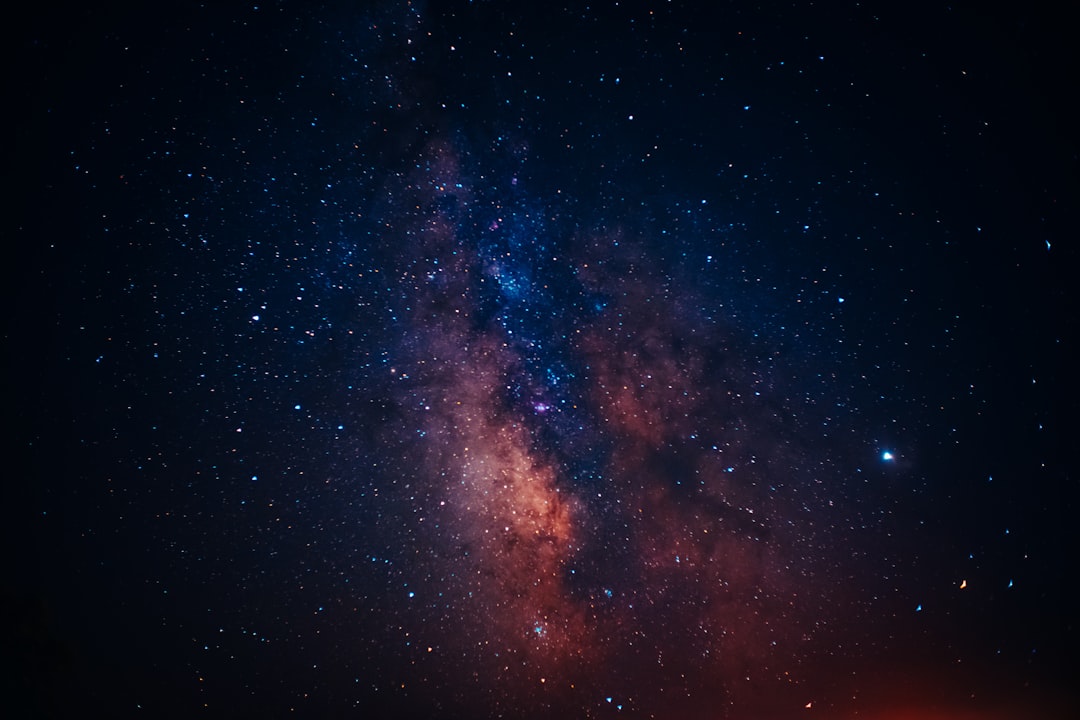
You stand at the precipice of an idea, a concept that hums beneath the surface of everyday experience, a silent, pervasive truth: the Universal Now. It’s not just your present moment, a fleeting sensation of ‘right now.’ It’s something far grander, a shared tapestry woven from the simultaneous unfolding of existence. You’ve likely felt it, perhaps in a moment of profound connection or during an instance of overwhelming peace, a sense that everything is happening, precisely as it should, all at once. This article is your key to unlocking that mystery, to understanding the pervasive reality of the Universal Now.
You’ve been conditioned to perceive time as a relentless, forward-marching river. From the tick-tock of a clock to the narrative arcs of your favorite stories, your consciousness is built upon a foundation of past, present, and future. But what if this perception is a masterful illusion, a necessary construct for navigating your individual experience, rather than the fundamental nature of reality itself?
The Brain as a Timekeeper
Your brain is a phenomenal instrument, and its role in creating your sense of temporal flow is undeniable. It stitches together sensory input, memories, and predictions into a coherent narrative. This process, while essential for survival and interaction, creates a localized and subjective experience of time.
The Role of Memory in Shaping Your Present
Think about it. Your ‘now’ is intrinsically linked to your past. Without memories of yesterday, or even the last few seconds, your current experience would be utterly formless. Your brain constantly references past events, imbuing your present with meaning and context. This creates a continuous stream, where the ‘now’ is always a product of what has been.
Predictive Processing: The Future as a Constant Companion
Similarly, your brain is a prediction engine. It’s constantly forecasting what’s coming next, based on past experiences and current stimuli. This anticipation, this mental projection into the future, is woven into the fabric of your perceived ‘now.’ You don’t just experience the present; you’re already anticipating the next microsecond.
The Social Contract of Time
Beyond your internal mechanisms, society has reinforced the idea of linear time through calendars, schedules, and deadlines. You agree, collectively, to mark time in specific ways. This shared understanding, while practical, further solidifies the illusion of a universally uniform temporal progression.
The Clock: A Universal Benchmark?
The clock, a seemingly objective measure, is actually a human invention, a way to synchronize our individual experiences. While it provides a useful framework for society, it doesn’t necessarily reflect the true nature of time’s passage. Is the second you experience identical to the second someone else is experiencing, even if synchronized to the same clock?
The Tyranny of Deadlines and Schedules
Your daily life is often dictated by the demands of linear time. Appointments, work shifts, and social engagements all impose a rigid structure. This constant pressure can make it difficult to question the very nature of the time you’re trying to manage.
The concept of a “universal now” raises intriguing questions about the nature of time and our perception of reality. For those interested in exploring this topic further, a related article can be found on Freaky Science, which delves into the philosophical and scientific implications of time perception across different contexts. You can read more about it in their article here: Freaky Science.
The Quantum Unraveling: Time at the Planck Scale
When you delve into the realm of quantum physics, the seemingly solid edifice of linear time begins to crumble. At the smallest scales of existence, the conventional understanding of ‘before’ and ‘after’ becomes remarkably fluid, even meaningless.
Entanglement: Spooky Action at a Distance
Quantum entanglement is perhaps the most compelling evidence against a strictly linear and localized temporal experience. Two entangled particles, no matter how far apart, remain interconnected. Measuring the state of one instantaneously influences the state of the other, seemingly defying the speed of light and the conventional notion of cause and effect operating through time.
The Non-Local Connection
Imagine two coins, flipped simultaneously, but separated by vast distances. If you see one land on heads, the other instantly lands on tails, regardless of the miles between them. This is the essence of entanglement. It suggests a connection that transcends spatial separation and, by extension, the temporal intervals we typically perceive.
Implication for the Universal Now
If entangled particles can influence each other instantaneously, it hints at a deeper interconnectedness of reality that isn’t bound by the sequential ticking of clocks. This interconnectedness suggests a fundamental ‘sameness’ of existence that operates beyond your individual temporal bubble.
Quantum Indeterminacy: The Future is Not Yet Written
At the quantum level, events are not predetermined. Until a measurement is made, a particle can exist in a superposition of multiple states simultaneously. This inherent uncertainty challenges the deterministic view of time, where every future event is already set in motion.
The Observer Effect
The act of observation itself can collapse a quantum wave function, forcing a particle into a definite state. This means that your interaction with reality, your conscious awareness, plays a role in shaping what ‘is.’ This suggests a more participatory universe than one simply unfolding linearly.
The Paradox of Potentiality
Before a measurement, a particle holds the potential for multiple outcomes. This state of pure potentiality exists outside of a fixed timeline, suggesting that the future is not a preordained path but a constantly unfolding landscape of possibilities.
The Cosmic Perspective: A Universe Beyond Your Clock

When you zoom out, beyond your personal experience and even the quantum realm, to the vastness of the cosmos, the concept of a singular, linear timeline becomes even more problematic. The universe operates on scales of time that dwarf human comprehension.
Relativity and the Fluidity of Time
Albert Einstein’s theory of relativity revolutionized our understanding of space and time. It revealed that time is not absolute but relative, influenced by gravity and speed. Time passes differently for observers in different frames of reference.
Time Dilation Due to Gravity
The stronger the gravitational field, the slower time passes. This means that time on Earth passes ever so slightly slower than time in deep space, far from any significant gravitational influence. Your ‘now’ is not universally the same as someone else’s ‘now’ if they are in a different gravitational environment.
Time Dilation Due to Velocity
Similarly, the faster you move, the slower time passes for you relative to a stationary observer. This phenomenon, famously illustrated by the twin paradox, highlights the malleability of temporal experience.
The Big Bang and the Illusion of a Beginning
While the Big Bang is often described as the ‘beginning’ of time, this concept itself is a point of philosophical and scientific debate. If time began with the Big Bang, then what existed ‘before’ it? This question pushes against the very limits of our linear understanding.
The Expanding Universe and Simultaneity
As the universe expands, light from distant galaxies takes billions of years to reach you. When you observe a star that is 10 billion light-years away, you are seeing it as it was 10 billion years ago. Yet, in the cosmic sense, that star, and your present moment, exist concurrently. The light is merely traveling through the intervening space.
The Edge of Observation
Your ability to observe the universe is limited by the speed of light. You can only see as far back as the light has had time to travel. This creates a horizon of observable existence, but it doesn’t necessarily dictate the temporal reality of what lies beyond.
Experiencing the Universal Now: Practical Pathways

If the Universal Now is a fundamental aspect of reality, how can you, an individual bound by a human lifespan and a biological clock, begin to access or even perceive it? It’s not about discarding your personal timeline, but rather about expanding your awareness to encompass a broader temporal perspective.
Mindfulness and Present Moment Awareness
The practice of mindfulness, focusing on your present experience without judgment, is a direct pathway to experiencing a more profound sense of ‘now.’ By gently bringing your attention to your breath, your senses, or your thoughts as they arise, you begin to detach from the relentless churn of past regrets and future anxieties.
Deepening Your Sensory Input
When you are truly present, you engage with your senses more fully. You notice the subtle textures, the nuanced sounds, the fleeting scents. This heightened sensory awareness anchors you in the immediate experience, dissolving the perceived distance between moments.
Observing Thoughts Without Attachment
A key aspect of mindfulness is observing your thoughts as passing phenomena, not as defining truths. By recognizing that thoughts are transient mental events, you can begin to loosen their grip on your perception of time. You are not your thoughts; you are the awareness that witnesses them.
Meditation and Altered States of Consciousness
Meditation, in its various forms, is designed to quiet the discursive mind and cultivate a state of deep awareness. This can lead to experiences where the boundaries of linear time blur, and a sense of timelessness emerges.
The Stillness of Deep Meditation
In deep states of meditation, the internal monologue often quiets down. With the mind at rest, the constant narration of past and future recedes, allowing a more direct experience of the present moment to emerge, a ‘now’ that feels expansive and all-encompassing.
The Hypnagogic and Hypnopompic States
The transitional states between wakefulness and sleep, known as hypnagogic (falling asleep) and hypnopompic (waking up), are fertile ground for experiencing non-linear time. Dreams themselves often disregard temporal logic, offering glimpses into a reality where cause and effect are less rigidly defined.
Synchronicity and Meaningful Coincidences
Carl Jung’s concept of synchronicity offers a compelling glimpse into the interconnectedness of events that appear to be causally unrelated but are meaningfully linked. These occurrences often feel like the universe is speaking directly to you, a whisper of the Universal Now.
Recognizing Patterns Beyond Causality
Synchronicity involves the simultaneous occurrence of two or more events that are not causally linked but have a meaningful connection for the observer. You might be thinking of an old friend, and then they call. This isn’t random; it’s a nudge from the underlying coherence of existence.
The Flow State and Timelessness
When you are fully immersed in an activity you enjoy, a state known as ‘flow’ can occur. In this state, your sense of time often disappears. Hours can feel like minutes, and you are completely present, absorbed in the unfolding action. This is a micro-experience of the Universal Now.
The concept of a universal “now” in the universe raises intriguing questions about the nature of time and perception. Many scientists and philosophers debate whether time is experienced uniformly across the cosmos or if it varies based on relative motion and gravitational fields. For those interested in exploring this topic further, a related article discusses the implications of time perception in different contexts and can be found here. This exploration can deepen our understanding of how we perceive the passage of time in relation to the vastness of the universe.
The Implications: Living in the Eternal Present
| Question | Answer |
|---|---|
| Does the universe have a universal now? | There is no consensus among physicists and cosmologists on whether the universe has a universal “now” or a simultaneous present moment across all of space. |
| Relativity | According to the theory of relativity, simultaneity is relative and depends on the observer’s reference frame, making it challenging to define a universal now. |
| Quantum Mechanics | Quantum mechanics introduces further complexity, as it allows for non-local interactions and entanglement, which may also impact the concept of a universal now. |
| Debate | The debate about the existence of a universal now is ongoing and is an active area of research in theoretical physics and cosmology. |
Understanding and beginning to experience the Universal Now doesn’t negate the practicalities of your life. You still need to plan, to remember, and to engage with the world as you know it. However, this deeper understanding can profoundly shift your perspective and your experience of life.
Releasing the Burden of the Past
If the past is not a fixed, immutable entity that dictates your present, but rather a construct that you can re-interpret and learn from, then the burden of regret and past mistakes can begin to lift. You can see past events not as chains, but as lessons.
Reframing Your Personal History
The narrative of your life is not set in stone. By accessing a broader temporal awareness, you can begin to re-frame your personal history, extracting wisdom and growth rather than dwelling on perceived failures.
The Power of Forgiveness
Forgiveness, both of yourself and others, becomes more potent when you understand that past actions, while impactful, do not define an unchangeable present. You can choose to move forward, unburdened by the weight of what has been.
Embracing the Uncertainty of the Future
Instead of fearing an unknown future, you can begin to embrace its inherent uncertainty as a space of infinite possibility. The future is not a pre-written script to be passively consumed, but a canvas upon which you can co-create.
Cultivating Resilience
When you understand that the future is not a fixed destination, but a constantly unfolding reality, you can develop greater resilience in the face of challenges. You learn to adapt, to flow with the changes, rather than resisting them.
The Joy of Spontaneity
The Universal Now invites spontaneity. When you are not rigidly bound by linear expectations, you open yourself up to unexpected joys, serendipitous encounters, and the beauty of the unplanned.
Cultivating a Deeper Sense of Connection
Recognizing the Universal Now as a shared reality fosters a profound sense of connection with all of existence. You are not an isolated entity moving through time, but a participant in a grand, interconnected tapestry.
Empathy and Compassion
When you perceive the interconnectedness of all beings, empathy and compassion naturally arise. You understand that others are also navigating their own temporal experiences, and that their struggles are, in a way, your struggles.
A Spiritual Awakening
For many, the exploration of the Universal Now leads to a profound spiritual awakening. It’s a realization that there is something far greater at play than your individual life, a divine or cosmic order that transcends the limitations of your perception.
You are not merely an observer of time; you are an integral part of its unfolding. By looking beyond the confines of your personal clock, by delving into the mysteries of quantum physics and the vastness of the cosmos, you can begin to unlock the profound truth of the Universal Now. It’s a journey of awareness, a path to a richer, more connected, and ultimately, more liberated experience of existence. The present moment, when truly embraced, is not fleeting; it is eternal.

Einstein Says There Is No Universal “Now” in the Universe
FAQs
What is the concept of a “universal now” in the universe?
The concept of a “universal now” refers to the idea that there is a single, simultaneous moment that applies to the entire universe, regardless of the observer’s location or motion.
Is there evidence to support the existence of a universal now in the universe?
Currently, there is no empirical evidence to definitively prove or disprove the existence of a universal now in the universe. The concept remains a topic of debate and speculation among physicists and cosmologists.
How does the theory of relativity impact the concept of a universal now?
According to the theory of relativity, time is relative and can be experienced differently by observers in different frames of reference. This challenges the idea of a universal now, as it suggests that the concept of simultaneity may not be absolute.
What are some proposed theories about the existence of a universal now in the universe?
Some physicists and cosmologists have proposed theories such as “block universe” or “eternalism,” which suggest that past, present, and future all exist simultaneously, supporting the idea of a universal now. However, these theories are still speculative and not universally accepted.
How does the concept of a universal now impact our understanding of the nature of time and the universe?
The concept of a universal now challenges traditional notions of time and raises fundamental questions about the nature of the universe. Exploring this concept may lead to new insights into the nature of time, space, and the fundamental structure of the universe.