You’ve probably seen it, maybe even toggled it on yourself countless times. Airplane mode. That ubiquitous little icon on your phone, tablet, or laptop, promising a digital detox during your flights. But have you ever stopped to wonder what’s really going on when you activate it? It’s more than just a simple switch; it’s a complex interplay of technology and regulations designed to ensure your safety and the smooth operation of aviation. Buckle up, because you’re about to unlock the surprising facts behind this seemingly mundane feature.
You likely understand the basic premise: turn on airplane mode to avoid interfering with the aircraft’s navigation and communication systems. But the “why” is rooted in a history of technological evolution and a healthy dose of caution. The early days of air travel, and indeed early electronics, were a very different landscape.
The Dawn of Digital and the Fear of Interference
In the nascent years of personal electronic devices, particularly those that emitted radio waves, airlines and aviation authorities harbored a genuine concern about potential interference. Imagine a world where your walkie-talkie could inadvertently disrupt a pilot’s communication with air traffic control, or your early mobile phone’s signal could throw off the sensitive radar systems. While modern aviation technology is incredibly robust, the principle of minimizing potential disruption remains paramount.
Early Anecdotes and Speculation
While definitive, widely publicized incidents of passenger electronics causing major flight disruptions are rare, there have been anecdotal reports and persistent worries. These often involved older, less shielded devices that emitted stronger and less controlled radio signals. The fear was that a confluence of many devices emitting at once could create a cumulative effect, leading to spurious signals or noise on critical communication channels. This anxiety, coupled with the precautionary principle, led to the initial regulations.
The Evolution of Device Technology
It’s important to acknowledge that your smartphone today is a far cry from the clunky devices of decades past. Modern electronics are designed with better shielding and more efficient signal management. However, the sheer volume of devices now carried by passengers, and the increasing complexity of aircraft systems, means that the potential for interference, however small, is something that still needs to be managed. Airplane mode is a proactive measure, a simple way to eliminate one variable from the equation.
The Regulatory Framework: A Global Consensus
The decision to require airplane mode isn’t a spontaneous one by each airline. It’s governed by a framework of international and national aviation regulations. These regulations are developed by bodies like the International Civil Aviation Organization (ICAO) and enforced by national aviation authorities such as the Federal Aviation Administration (FAA) in the United States and the European Union Aviation Safety Agency (EASA).
International Standards and Recommendations
ICAO, as the UN agency responsible for civil aviation, sets global standards and recommendations. While ICAO guidelines don’t always mandate specific actions like “airplane mode,” they emphasize the need for aircraft to be protected from electromagnetic interference (EMI). Airlines then translate these recommendations into their own operational procedures and passenger advisances.
National Aviation Authority Mandates
National aviation authorities are the ultimate arbiters of safety within their airspace. They conduct rigorous testing and risk assessments to determine what is permissible. The FAA, for example, has long had regulations in place regarding the use of portable electronic devices (PEDs) during flight. These regulations have evolved over time, reflecting advancements in both aircraft and PED technology.
The “Why Now?” Question: Technology’s Pace vs. Regulation’s Caution
You might wonder why, if devices are safer, we still need airplane mode. The answer lies in the inherent caution of aviation safety. While technology advances rapidly, the process of certifying new aircraft systems and validating the safety of new electronic devices within the aviation environment is a slow and meticulous one.
The Rigor of Aircraft Certification
Aircraft are subjected to incredibly stringent testing and certification processes. Introducing any new technology or allowing the use of any device that could potentially emit signals requires extensive evaluation to ensure it doesn’t compromise safety-critical systems. This includes testing for electromagnetic compatibility (EMC), ensuring that devices don’t interfere with each other or with the aircraft’s own systems.
The “Better Safe Than Sorry” Approach
In the realm of aviation, the “better safe than sorry” approach is not just a platitude; it’s a fundamental principle. The consequences of a major aviation incident are catastrophic, so regulatory bodies and airlines err on the side of caution. Airplane mode is a straightforward and universally applicable measure that effectively mitigates a potential, albeit often small, risk.
Many people are unaware of the various benefits and functionalities of airplane mode beyond simply disabling cellular connectivity. For instance, did you know that activating airplane mode can help conserve battery life and improve device performance? To learn more intriguing facts about airplane mode that you may not know, check out this related article on Freaky Science: Airplane Mode Facts You Did Not Know.
What Airplane Mode Actually Does: A Digital Shutdown
So, when you tap that little airplane icon, what exactly is happening inside your device? It’s not just a simple power-off; it’s a targeted disabling of specific communication functions. Understanding these functions reveals the nuanced nature of airplane mode.
The Disabling of Radio Transmitters
The primary function of airplane mode is to disable the radio transmitters within your device. This includes the cellular radio, Wi-Fi, and Bluetooth. These are the components that send and receive signals over radio frequencies, and thus have the potential to interfere with aircraft systems.
Cellular Network Communication
This is perhaps the most obvious function disabled. Your phone’s ability to connect to cell towers for calls, texts, and mobile data is shut down. This is crucial because the radio frequencies used by cellular networks could, in theory, interfere with the sensitive radio altimeters or other navigation equipment on an aircraft.
Wi-Fi and Bluetooth Connectivity
While often allowed on flights in more recent times, Wi-Fi and Bluetooth were historically also disabled by airplane mode. These technologies, while generally lower power, still operate on radio frequencies. The decision to allow them now is a testament to the confidence airlines and regulators have in their reduced risk and the increasing shielding of modern aircraft.
GPS: A Special Case
Interestingly, GPS (Global Positioning System) is often not disabled by airplane mode. GPS receivers are passive devices; they only listen for signals from satellites. They do not transmit any signals themselves, making them inherently incapable of causing interference. This is why you can often still use GPS-enabled maps or location services when in airplane mode, especially on the ground before takeoff or after landing.
Many people are unaware of the various benefits and functionalities of airplane mode on their devices. For instance, it not only disables wireless communications but can also help save battery life and improve device performance in certain situations. If you’re curious to learn more about these lesser-known aspects, you can check out a related article that delves deeper into airplane mode facts you did not know. This informative piece can be found at this link.
The Persistence of Non-Communicative Functions
Not everything on your device goes dark when you enter airplane mode. Many essential functions, those that don’t rely on external radio transmission, remain fully operational. This is what allows you to still enjoy your device during your flight.
Offline Media and Content
Your downloaded music, movies, e-books, and games are all accessible. Since these are stored locally on your device, they don’t require any external communication to function. This is why pre-downloading content before your flight is such a popular strategy for in-flight entertainment.
Productivity Apps and Games
Many productivity apps, such as note-taking apps, calendar applications, and even word processors, can be used offline. Similarly, a vast number of games are designed to be played without an internet connection.
Local Device Functionality
The basic functions of your device, like the camera, calculator, and alarm clock, are also unaffected. These operate entirely within the device itself and do not transmit any signals.
The “On-Demand” Re-enabling of Wi-Fi and Bluetooth
A significant development in recent years has been the ability for airlines to permit the re-enabling of Wi-Fi and Bluetooth after the aircraft has reached a certain altitude and speed. This is a direct result of technological advancements and rigorous testing.
Technological Advancements in Aircraft and Devices
Modern aircraft are designed with enhanced shielding to mitigate electromagnetic interference. Furthermore, the Wi-Fi and Bluetooth technologies themselves have become more sophisticated, with better signal management and less propensity to cause spurious emissions.
Airline-Specific Policies and Testing
Each airline conducts its own rigorous testing to determine when and if it is safe to allow passengers to use Wi-Fi and Bluetooth. This often involves complex studies and evaluations of the aircraft’s specific systems. Once confident, they will issue an operational directive allowing the re-enabling of these functions, often with specific instructions for passengers.
Beyond Interference: Other Surprising Benefits of Airplane Mode
While preventing interference is the primary driver, airplane mode offers several other practical advantages that you might not have considered. These benefits extend beyond the confines of the aircraft.
Conserving Battery Life
One of the most immediate and noticeable benefits of airplane mode is its impact on your device’s battery life. By shutting down the power-hungry cellular radio, and often Wi-Fi and Bluetooth radios, your device consumes significantly less energy.
The Power Drain of Cellular Radios
Your phone is constantly searching for and maintaining a connection to cellular towers. This process, especially in areas with weak signal, can be a major battery drain. Imagine it trying to shout its signal across a vast distance – it needs a lot of power.
Reduced Signal Searching Overhead
Even when you’re not actively using your phone for calls or data, the cellular radio is still working in the background to maintain its connection. Airplane mode eliminates this constant, energy-intensive background activity, leading to a substantial increase in battery longevity. This is particularly valuable on long flights where power outlets might be scarce.
The Wi-Fi and Bluetooth Factor
While generally less power-hungry than cellular radios, Wi-Fi and Bluetooth transmitters also consume battery power when active. Disabling them in airplane mode further contributes to overall battery conservation.
Avoiding Unwanted Roaming Charges
If you’ve ever forgotten to disable your cellular data before boarding a flight, you might have experienced the unpleasant surprise of hefty roaming charges. Airplane mode is your foolproof defense against this financial pitfall.
Automatic Network Roaming
When your phone detects it’s in a new geographic area (like the air above a foreign country), its cellular radio will automatically attempt to connect to the nearest available network. This can happen even at cruising altitude if you’re flying over a region with strong cellular signals near the coast or over land.
The Cost of International Data
International roaming rates for data can be astronomically high. Even a small amount of background data usage can result in a bill that makes your eyes water. Airplane mode prevents your phone from even attempting to connect to these networks, safeguarding your wallet.
A Simple Preventive Measure
It’s a simple yet incredibly effective way to avoid potentially significant and unexpected expenses. Think of it as an automatic insurance policy against roaming fees.
Enhancing Focus and Productivity
In today’s hyper-connected world, constant notifications can be a significant distraction. Airplane mode offers a welcome respite, allowing you to reclaim your focus and be more productive.
The Siren Song of Notifications
The ping of an incoming email, the buzz of a social media update, or the alert of a breaking news story can easily pull you away from your task at hand. These digital interruptions can break your concentration and make it harder to get into a flow state.
Creating a Digital Sanctuary
By silencing all incoming notifications, airplane mode creates a digital sanctuary. This allows you to dedicate your attention to the task you’ve chosen, whether it’s reading a book, working on a presentation, or simply enjoying a moment of quiet contemplation.
Strategic Use Beyond Flights
While primarily associated with flying, the principles of airplane mode can be applied more broadly. You can use it at home or in the office during periods when you need to concentrate intensely without digital distractions. It’s a powerful tool for managing your attention in a world that constantly vies for it.
The Psychology of a Digital Break
There’s a psychological benefit to consciously disconnecting. Airplane mode encourages a break from the constant influx of information and social interaction, allowing for mental rest and rejuvenation.
Reducing Cognitive Load
Our brains are constantly processing information. The sheer volume of digital communication can contribute to cognitive overload, leading to mental fatigue. A period of disconnection allows your brain to rest and reset.
Fostering Mindfulness and Presence
When you’re not constantly checking your phone, you become more present in your physical surroundings. You can better appreciate the flight experience, engage in conversations with travel companions, or simply observe the world from your window seat.
A Planned Disconnection
Unlike an unexpected dead battery, airplane mode is a deliberate act of disconnecting. This sense of control can be empowering and contribute to a more relaxed and enjoyable travel experience.
The Future of Airplane Mode: Evolving Technology and Passenger Experience
The story of airplane mode is far from over. As technology continues to advance and our understanding of electromagnetic interference evolves, the way we interact with our devices on planes is likely to change.
The Rise of In-Flight Connectivity
The demand for in-flight Wi-Fi has skyrocketed, and airlines are increasingly offering robust internet access. This has led to a re-evaluation of traditional airplane mode protocols.
Global Wi-Fi Networks and Satellite Technology
The development of global Wi-Fi networks, often powered by satellite technology, has made in-flight internet a reality for many passengers. These systems are designed to operate in conjunction with aircraft systems, with fail-safes in place to prevent interference.
Evolving Regulatory Approvals
As these in-flight connectivity systems have been proven safe through rigorous testing, regulatory bodies have granted approvals for their use. This has, in turn, led to more liberal policies regarding the use of Wi-Fi and Bluetooth.
The Potential for “Smart” Airplane Modes
Imagine a future where airplane mode is not a blunt instrument but a more intelligent system.
Adaptive Signal Management
Future devices might incorporate adaptive signal management, where they can intelligently adjust their transmission power and frequency based on the aircraft’s environment. This could allow for more robust communication while still maintaining safety.
Device-Specific Certifications
We might see a future where individual devices undergo rigorous testing and certification for in-flight use, similar to how some airlines currently certify specific models of laptops for use during all phases of flight. This would allow for greater flexibility and potentially eliminate the need for a universal “airplane mode.”
Integrated Aircraft Systems
Aircraft themselves are becoming more sophisticated. Future designs might incorporate enhanced shielding and sophisticated signal management systems that are inherently more resistant to interference, further reducing the need for strict device restrictions.
The Passenger Experience: Balancing Connectivity and Safety
The ultimate goal is to strike a balance between passenger convenience and the paramount importance of aviation safety.
Seamless Transition Between Modes
The ideal scenario is a seamless transition. Perhaps your device will automatically detect when it’s safe to re-enable Wi-Fi and Bluetooth, or when the aircraft is on the ground, allowing for full functionality without manual intervention.
Continued Education and Awareness
Even as technology evolves, passenger education about the importance of following crew instructions and understanding the purpose of various flight rules will remain crucial. This ensures a shared understanding of safety protocols.
The Enduring Principle of Caution
While technology advances, the fundamental principle of ensuring the safety of air travel will always remain. Airplane mode, in its current or future iterations, will always serve as a tangible manifestation of that commitment. You’ve now unlocked a deeper understanding of this seemingly simple feature, revealing a fascinating intersection of technology, regulation, and safety that keeps you connected, and keeps you safe, high above the clouds.
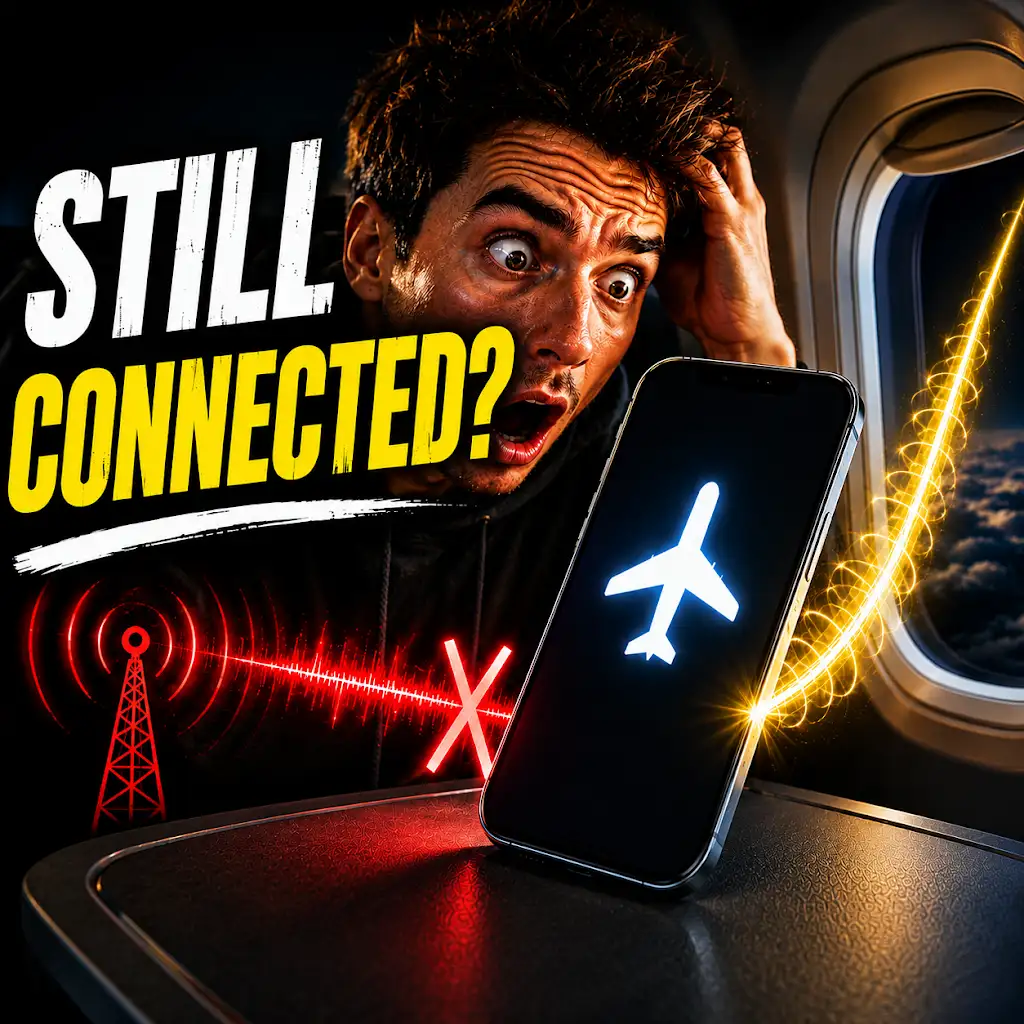
Your Phone Can Still Know Where You Are in Airplane Mode
FAQs
What is airplane mode and how does it work?
Airplane mode is a setting on mobile devices that disables the device’s ability to send or receive calls, texts, and data. It also turns off the device’s wireless signals, such as Wi-Fi and Bluetooth. This is done to comply with airline regulations and to prevent interference with aircraft communication and navigation systems.
Can I use Wi-Fi and Bluetooth while in airplane mode?
While in airplane mode, you can manually enable Wi-Fi and Bluetooth on most devices. This allows you to connect to Wi-Fi networks and use Bluetooth accessories, such as headphones or keyboards, without enabling cellular or data connections.
Why is it important to use airplane mode during flights?
Using airplane mode during flights is important because it prevents the device from emitting signals that could potentially interfere with the aircraft’s communication and navigation systems. This helps ensure the safety and smooth operation of the flight.
Can I use my phone’s camera while in airplane mode?
Yes, you can use your phone’s camera while in airplane mode. Airplane mode only disables the device’s ability to send or receive calls, texts, and data, as well as its wireless signals. The camera function is not affected by airplane mode.
Are there any other benefits to using airplane mode besides during flights?
Yes, there are other benefits to using airplane mode besides during flights. It can help conserve battery life, reduce distractions, and limit exposure to potentially harmful electromagnetic radiation. Additionally, it can be useful in areas with poor cellular reception to prevent the device from constantly searching for a signal.