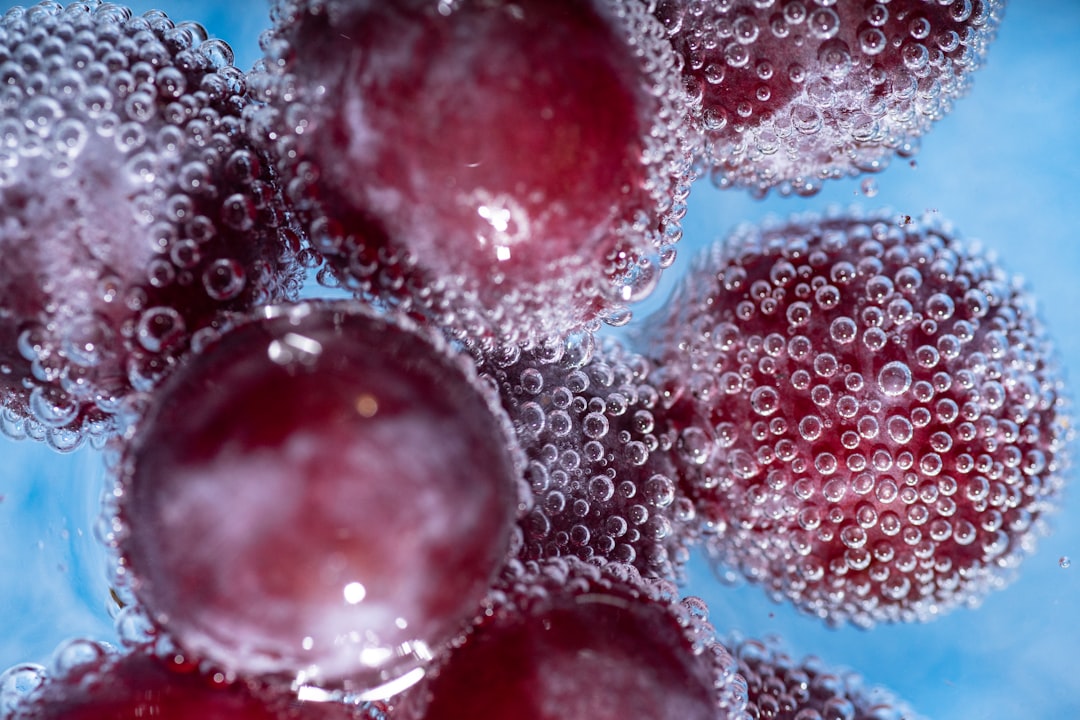
You’ve always enjoyed a good glass of wine, the crispness of a white or the robust depth of a red. Perhaps you’ve even found yourself marveling at the vibrant colors of fresh grapes at the market, their skins glistening. But have you ever stopped to consider the invisible symphony happening within those very grapes, the remarkable process that contributes to their very existence and, in turn, the beverages you savor? This is the story of how your grapes, through an incredibly nuanced biological dance, engage in a form of “metal-free plasma production.” It sounds like something out of a science fiction novel, doesn’t it? Yet, it’s a tangible reality, a fundamental aspect of plant biology that scientists are only now beginning to fully unravel.
This isn’t about generating electricity or creating glowing orbs. Instead, it’s about the intricate electrochemical processes that occur within living plant cells, specifically within your grapes, where the absence of catalytic metals plays a crucial role in enabling these vital reactions. Understanding this phenomenon is not just an academic pursuit; it opens doors to new agricultural practices, enhances our understanding of plant health, and could even lead to more sustainable methods of food production. So, prepare to delve into the microscopic world of your grapes, a world where chemistry and biology intertwine to create something truly extraordinary, all without the need for heavy metals.
The Elusive Nature of Biological Plasma
The term “plasma” often conjures images of lightning, stars, or futuristic weaponry. In the realm of physics, plasma is the fourth state of matter, an ionized gas where electrons are stripped from atoms. However, the concept of “biological plasma” is a more recent and nuanced exploration. It refers to the electrically charged environments and ion fluxes within living organisms, particularly within cells. These charged states are not necessarily fully ionized gases in the traditional sense, but rather dynamic collections of ions and charged molecules that exhibit plasma-like properties, influencing everything from cellular communication to energy transfer.
Defining Biological Plasma
You might be wondering how a grape cell, a seemingly stable and contained entity, can be associated with the concept of plasma. The key lies in understanding the ionic gradients that exist across cell membranes. Cells constantly pump ions like sodium (Na+), potassium (K+), calcium (Ca2+), and chloride (Cl-) in and out of their structures. These movements create electrical potentials, essentially tiny batteries powering cellular processes. In certain localized areas, particularly within specialized organelles or at the interface of different cellular compartments, these ion fluxes can become highly concentrated and dynamic, leading to the formation of what researchers are terming “biological plasmas.”
The Role of Ion Gradients
Imagine a crowded concert hall. The people (ions) are moving around, creating pockets of high density and lower density. In a cell, these movements are far more regulated, but the principle of creating localized differences in charge density is similar. Your grapes rely on these ion gradients for a multitude of functions. For instance, the opening and closing of stomata, the tiny pores on grape leaves that regulate gas exchange and transpiration, are driven by the movement of ions. Similarly, nutrient uptake and waste removal are all facilitated by these controlled electrical processes.
Recent research has unveiled fascinating insights into how grapes can contribute to plasma generation without the need for metals. This innovative approach highlights the potential of organic materials in advanced technologies. For a deeper understanding of this topic, you can explore a related article that discusses the science behind this phenomenon and its implications for future applications. To read more, visit this article.
The Unseen Architects: How Grapes Create Their Charged Environments
The remarkable ability of grapes to generate these charged environments is not a random event. It’s a sophisticated biological machinery at work, honed over millions of years of evolution. This machinery involves specific proteins, membranes, and a constant interplay of chemical and electrical forces.
Membrane Proteins: The Gatekeepers of Charge
At the forefront of this charge generation are the protein channels and pumps embedded within the grape cell membranes. These proteins act as highly selective gates, controlling which ions can pass through and in what direction. Think of them as highly specialized security checkpoints, allowing only specific individuals (ions) to enter or leave a restricted area (the cell or an organelle).
Ion Channels: Passive Passage
Ion channels are like open doorways, allowing ions to flow down their electrochemical gradient – from an area of high concentration to an area of low concentration. These are crucial for rapid changes in membrane potential. For example, during photosynthesis, the movement of protons (H+) across the thylakoid membranes in chloroplasts creates a strong electrochemical gradient that drives ATP synthesis, the energy currency of the cell.
Ion Pumps: Active Movers
Ion pumps, on the other hand, are more like conveyor belts. They use energy, often derived from ATP, to actively transport ions against their electrochemical gradient. This is essential for maintaining the concentration differences that ion channels rely on. A classic example is the sodium-potassium pump in animal cells, but plants have their own equivalents, diligently working to maintain specific ionic balances within their cells.
Electrochemical Gradients: The Driving Force
The combined effect of these ion channels and pumps is the creation of electrochemical gradients across membranes. This means there’s not only a difference in the concentration of ions but also a difference in electrical charge. This gradient represents stored potential energy, much like a compressed spring, which can then be harnessed to power other cellular processes.
The Significance of “Metal-Free”: A Crucial Distinction
The term “metal-free” in this context is not about the absence of all metals. Grapes, like all living organisms, require certain metal ions as cofactors for many enzymes. However, the “metal-free plasma production” refers to the primary mechanisms of establishing and manipulating these charged environments, which are often independent of the catalytic activity of transition metals. This distinction is vital for understanding the intrinsic biological processes.
Avoiding Unwanted Catalysis
Transition metals, while essential for many biological functions, can also be highly reactive. In certain biological contexts, their presence could lead to unwanted side reactions or catalyze processes that are not intended, potentially disrupting the delicate electrochemical balance within the cell. By relying on protein machinery and inherent electrochemical forces, the grape’s system can maintain a more controlled and specific manipulation of charge.
The Role of Organic Molecules
Instead of metal-dependent enzymes mediating the primary charge separation, the grape’s system leverages the inherent properties of organic molecules and their interactions with water and ions. The polarity of water molecules and the charged nature of organic functional groups play a significant role in organizing ions and creating these charged microenvironments.
Unveiling the Mechanisms: How Charge is Generated and Maintained
The process of generating and maintaining these charged environments within grape cells is a continuous and dynamic one. It involves a sophisticated interplay of various cellular components working in concert.
The Contribution of Photosynthesis
Photosynthesis is a prime example of metal-free plasma generation in action. Within the chloroplasts, the light-dependent reactions involve the splitting of water molecules to release electrons and protons. These protons accumulate in the thylakoid lumen, creating a significant proton gradient across the thylakoid membrane. This gradient drives ATP synthase, an enzyme that uses this proton flow to produce ATP. Importantly, this proton pumping and gradient formation is largely mediated by protein complexes and the inherent electrochemical properties of the membrane, with minimal direct involvement of transition metals in the primary charge separation.
Light-Dependent Reactions
The initial capture of light energy by chlorophyll molecules excites electrons. These electrons then embark on a journey through an electron transport chain, embedded within the thylakoid membrane. As electrons move, energy is released and used to pump protons from the stroma into the thylakoid lumen.
Proton Motive Force
The accumulation of protons inside the thylakoid lumen creates a concentration gradient and an electrical potential difference across the membrane – the proton motive force. This force is the driving energy for ATP synthesis.
Respiration and Energy Transfer
While photosynthesis is a key contributor, cellular respiration also plays a role in maintaining ionic gradients and energy transfer, indirectly supporting the charged environments. The electron transport chain in mitochondria, responsible for generating ATP through the oxidation of glucose, also involves the pumping of protons across the inner mitochondrial membrane, creating a similar electrochemical gradient.
Electron Transport Chain
Similar to photosynthesis, the electron transport chain in mitochondria utilizes a series of protein complexes to shuttle electrons, releasing energy used to pump protons from the mitochondrial matrix to the intermembrane space.
ATP Synthesis via Chemiosmosis
This proton gradient across the inner mitochondrial membrane then drives ATP synthesis through ATP synthase, a process known as chemiosmosis.
The Role of Vacuoles: Ionic Reservoirs
The large central vacuole in plant cells acts as a crucial reservoir for ions and molecules, playing a significant role in maintaining osmotic balance and turgor pressure. It also contributes to the overall ionic landscape of the cell, influencing the electrochemical gradients across the tonoplast (the membrane surrounding the vacuole).
Maintaining Turgor Pressure
The vacuole’s ability to accumulate ions and water helps maintain turgor pressure, which provides structural support to the plant.
Ionic Homeostasis
The vacuole helps regulate the concentration of various ions within the cytoplasm, contributing to cellular homeostasis and influencing the activity of enzymes and other cellular processes.
Recent research has uncovered fascinating insights into how grapes can produce plasma without the need for metal, showcasing the incredible potential of natural materials in scientific applications. This innovative process not only highlights the versatility of organic substances but also opens up new avenues for exploring alternative energy sources. For a deeper understanding of this topic, you can read more in this related article on Freaky Science, which delves into the mechanisms behind this phenomenon and its implications for future technologies.
Implications and Future Directions: What This Means for You and Your Grapes
The ongoing research into metal-free plasma production in grapes has far-reaching implications, from improving grape cultivation to enhancing our understanding of plant resilience and nutritional value.
Enhanced Grape Cultivation
By understanding how grapes naturally generate and regulate their internal electrical environments, we can begin to develop more targeted and efficient agricultural practices. This could involve optimizing irrigation, nutrient delivery, and even exposure to specific light conditions to promote healthier and more robust grape growth.
Optimizing Nutrient Uptake
Knowledge of ion transporters and their activity can lead to strategies for more efficient nutrient uptake by grapevines, reducing the need for excessive fertilizer application and minimizing environmental impact.
Stress Tolerance
Understanding how grapes maintain their internal ionic balance could reveal mechanisms for improving their tolerance to environmental stresses like drought, salinity, and extreme temperatures. This could lead to the development of grape varieties that are more resilient in challenging climates.
Improved Wine Quality
The intricate biochemical processes within grapes directly influence the final composition of the grapes, and consequently, the quality of the wine produced. Factors like sugar content, acidity, and the development of flavor compounds are all influenced by cellular metabolism and ionic balance.
Flavor Development
The precise regulation of ion fluxes can impact the synthesis and accumulation of key compounds responsible for the aroma and flavor profile of grapes and wine.
Acidity Regulation
The balance of organic acids in grapes is crucial for wine quality. Understanding how ion gradients influence acid transport and metabolism could lead to better management of grape acidity.
Sustainable Agriculture and Beyond
The principles uncovered in grape cells could have broader applications in sustainable agriculture and even in fields like bio-electronics.
Reducing Reliance on Artificial Stimuli
If we can harness and mimic the natural electrical signaling in plants, we might reduce the need for artificial stimuli in controlled environment agriculture.
Biomimetic Technologies
The study of biological plasma production could inspire the development of new biomimetic technologies for energy storage or sensing applications, mimicking nature’s efficient and sustainable solutions.
You see, the humble grape is far more than just a source of delicious juice or wine. It’s a testament to the incredible complexity and elegance of life at its most fundamental level. By unlocking the mysteries of its metal-free plasma production, we are not only gaining a deeper appreciation for the natural world but also paving the way for a more sustainable and fruitful future. The next time you enjoy a grape, take a moment to consider the invisible, electrically charged world within – a world that is constantly working to bring you that burst of flavor and vitality.

A Fork and a Spoon React Differently in a Microwave. Why?
FAQs

What is the process of grapes making plasma without metal?
Grapes can create plasma when microwaved due to the high sugar and water content in the fruit. When the grapes are cut in half and placed in the microwave, the electromagnetic field causes the free electrons in the grapes to move, creating a plasma.
Why do grapes create plasma without metal?
Grapes have a high water content, which allows them to conduct electricity. When the grapes are cut in half and placed in the microwave, the water and sugar content create a conductive path for the electricity to flow, resulting in the creation of plasma.
Is it safe to create plasma with grapes in a microwave?
While the process of creating plasma with grapes in a microwave is generally safe, it is important to exercise caution. The high voltage and potential for arcing can cause damage to the microwave and pose a risk of fire. It is recommended to only attempt this experiment in a controlled environment and under adult supervision.
What are the potential applications of grapes creating plasma without metal?
The phenomenon of grapes creating plasma without metal has potential applications in the field of science education and outreach. It can be used as a visual demonstration to explain concepts such as plasma, electromagnetic fields, and conductivity.
Are there other fruits or substances that can create plasma in a similar way?
While grapes are commonly used to create plasma in a microwave, other fruits with high water and sugar content, such as cherry tomatoes or even marshmallows, can also exhibit similar plasma-producing behavior when subjected to microwave radiation.