You’ve probably experienced it. That moment when time seems to fly by, a blur of activity with hours vanishing like smoke. Then there are the other times, the dull stretches where a minute feels like an eternity, each tick of the clock a tiny torment. You’ve surely wondered: why does time feel so different? The answer lies not in some cosmic clockwork, but within the intricate workings of your own mind. Time perception isn’t a passive reception of chronological reality; it’s an active, subjective construction, a fascinating dance between internal states and external stimuli. This article aims to unlock these mysteries, delving into the psychological mechanisms that govern your experience of time. Get ready to explore how your brain turns seconds into lifetimes, and lifetimes into fleeting moments, all without ever leaving the confines of your skull.
Imagine your brain as a meticulously crafted orchestra, its various sections playing in harmony to create the symphony of your consciousness. Within this grand performance lies a vital, yet often overlooked, conductor: your internal clock. This isn’t a physical object with gears and springs, but rather a complex network of neural processes that allows you to estimate duration and sequence events. Understanding this inner clock is the first step in grasping the subjective nature of time perception.
How Does Your Brain Measure Time?
The exact mechanisms are still a subject of intense scientific inquiry, but several compelling theories exist. One prominent idea is the accumulator model. Picture this as a mental counter that’s constantly ticking. When you focus on an event, this counter starts accumulating pulses. The more pulses it accumulates, the longer you perceive the event to have lasted. The speed of this counter, however, is not constant. It can be influenced by your attention, your emotional state, and even the novelty of the stimuli you’re encountering.
Another theory suggests that time is perceived through the processing of sensory information. Your brain doesn’t just register that something happened; it registers the rate at which information is arriving. When a lot of new information floods your brain, it feels like time is moving quickly. Conversely, when there’s little new information, the process feels slower.
The Role of Dopamine in Time Distortion
Think about times when you’re deeply engaged in something enjoyable – playing a video game, lost in a captivating book, or even just in a lively conversation. Time often seems to melt away. This feeling is closely linked to the neurotransmitter dopamine. Dopamine plays a crucial role in reward pathways and motivation. When you experience pleasure or anticipation, your brain releases dopamine. Research suggests that higher levels of dopamine can actually speed up your internal clock, making time appear to pass more quickly. This is why exciting and rewarding experiences can feel so short, while mundane ones drag on.
Neural Oscillations and Temporal Binding
Beyond the accumulator models, scientists are exploring the role of neural oscillations. These are rhythmic patterns of electrical activity in the brain, like tiny waves of neural communication. Different brain regions exhibit oscillations at different frequencies. It’s theorized that the synchronization and interaction of these oscillations, particularly in areas involved in memory and sensory processing, might play a key role in “binding” together discrete moments into a continuous stream of experience. The specific frequencies and patterns of these oscillations could be what your brain uses to represent durations and order events.
Time perception is a fascinating area of psychology that explores how individuals perceive the passage of time, which can vary significantly based on various factors such as attention, emotion, and age. For those interested in delving deeper into this topic, a related article can be found at Freaky Science, where you can explore the intricate ways our minds interpret time and the implications this has on our daily lives.
Attention: The Spotlight on Time
Your attention acts like a powerful spotlight, illuminating certain aspects of your experience while leaving others in the shadows. This spotlight doesn’t just highlight what you see and hear; it profoundly influences how you perceive the passage of time. When your attention is fully engaged, your internal clock often seems to accelerate, making time feel like it’s sprinting. Conversely, when your attention wanders, or you’re bored, time can feel like it’s trudging along.
Focused Attention and Time Compression
When you are actively paying attention to an event or task, your brain is processing a significant amount of information related to that activity. This intense cognitive engagement can lead to perceived time compression. Imagine you’re working on a challenging puzzle. You’re so engrossed in identifying patterns, fitting pieces, and strategizing, that hours can pass by without you realizing it. Your internal clock, in a sense, is busy accumulating the details of the puzzle, and the rapid accumulation can lead to the feeling that time has flown. This isn’t because time itself sped up; it’s because your brain’s processing resources were so dedicated to the task that it didn’t have the bandwidth to constantly monitor the objective passage of time.
Divided Attention and Temporal Expansion
The opposite is true when your attention is divided or scattered. If you’re trying to do multiple things at once, or if your mind is constantly flitting from one thought to another without settling, your perception of time can expand. Think about waiting in a long, boring line. You’re not actively engaged in anything, and your attention is likely to drift to the clock, your surroundings, or your own thoughts. This constant monitoring and the lack of engaging stimuli can make each passing second feel protracted. It’s as if your internal clock is now less focused on accumulating meaningful information and more focused on the slow, agonizing march of seconds, creating a sense of temporal expansion.
The Role of Prospect and Retrospection
Your perception of time is also shaped by whether you are looking forward or looking back. When you are anticipating an event, especially something exciting, time can feel like it’s moving in slow motion. This is prospective time distortion. You’re constantly checking to see if the event has arrived yet, which makes the duration feel longer. On the other hand, when you look back on a period of time, particularly one filled with exciting or memorable events, it often feels like it passed by very quickly. This is retrospective time distortion. The sheer volume of memories you can recall from that period makes it seem compressed. It’s as if your brain only fully registers the passage of time once the events have concluded and can be reviewed.
Emotion: The Colors of Time
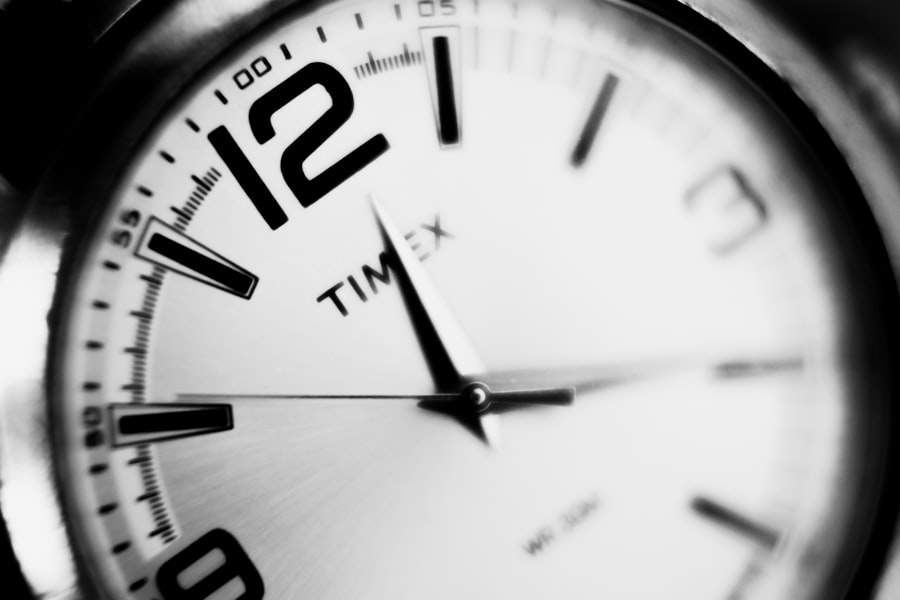
Time is not a neutral observer; it is deeply colored by your emotional state. Joy, fear, sadness, boredom – each emotion has the power to warp your perception of duration, painting time with its unique hue. Your brain’s emotional centers are closely intertwined with the neural networks responsible for timekeeping, creating a potent feedback loop that dictates how time feels.
How Fear and Anxiety Stretch Time
The experience of intense fear or anxiety is a classic example of temporal expansion. When you’re in a dangerous situation, your brain shifts into a “fight or flight” mode. This heightened state of arousal triggers the release of adrenaline and cortisol, hormones that prepare your body for immediate action. This physiological response also impacts your perception of time, making it feel as though everything is happening in slow motion. This is a survival mechanism; the extended perception of threat allows you to process more information and react more effectively. Each second feels protracted, giving you the sensation of having more time to assess your surroundings and make decisions, even though objectively, the timeframe hasn’t changed.
The Briefness of Joy and Excitement
Conversely, moments of intense joy, excitement, or deep engagement are often characterized by a feeling of temporal compression. When you’re experiencing positive emotions, your brain, as mentioned earlier, releases dopamine. This surge in dopamine is associated with a faster internal clock. Furthermore, when you’re happy and engaged, your attention is often focused on the present moment, and you’re less likely to be internally monitoring the passage of time. The sheer pleasure of the experience overrides your awareness of duration, making time seem to fly by. You are so absorbed in the positive stimulus that the objective passage of seconds becomes less relevant.
Boredom and the Endless Wait
Boredom is the arch-nemesis of a pleasant temporal experience. When you are bored, you are understimulated, and your brain actively seeks engagement. Since it’s not receiving any, your attention is often directed inward, focusing on the very fact of waiting. This intense self-awareness of the passage of time, coupled with the lack of stimulating external events, causes your internal clock to feel like it’s ticking exceptionally slowly. Imagine the agony of waiting for something you’re dreading or simply for an event to end. Each minute feels agonizingly long, an extreme form of temporal expansion driven by the absence of engagement and the heightened awareness of each passing unit of time.
Memory: The Architects of Past Time
Your memories are not simply stored records of events; they are the very fabric out of which you reconstruct your past experience of time. The way you encode, store, and retrieve memories profoundly influences how long you perceive past periods to have lasted. It’s a powerful testament to the subjective nature of time that your recollection of a day can warp based on the richness and emotional significance of the events within it.
The “Holiday Paradox” and Memory Density
The “holiday paradox” is a common phenomenon: a vacation often feels like it flew by while you were on it, but when you look back on it, it seems like it lasted a very long time. This happens because during a vacation, you are often experiencing many novel and engaging events. Your brain is busy creating new memories at a rapid pace. When you later recall this period, the density of these rich, novel memories makes it feel like a longer duration. Conversely, a routine week where little new happens might feel uneventful and perhaps even short in retrospect, despite having the same objective number of days. It’s the quality and quantity of memorable moments that shape retrospective time.
The Role of Retrieval Cues in Temporal Estimation
When you’re asked to estimate how long ago a particular event occurred, your brain doesn’t access a precise timestamp. Instead, it relies on retrieval cues. These are fragments of information, emotions, or sensory details associated with the memory that help you reconstruct the timeline. For instance, if you remember the specific song that was playing when you had a significant conversation, that song becomes a strong retrieval cue. The more retrieval cues you can access, and the more vivid those cues are, the more accurately you can estimate the temporal distance. Conversely, if a memory is vague and lacks strong associations, it can be difficult to place in time.
Forgetting and the Shrunk Past
The process of forgetting also plays a role in how we perceive past time. As memories fade, our perception of the duration of those periods can shrink. If you can’t recall many details from a particular month, it’s likely to feel shorter in retrospect than a month filled with vivid recollections. This isn’t necessarily a conscious act; it’s a consequence of how our memory systems operate. Without the richness of recall, the temporal landscape of our past becomes less detailed and can feel compressed.
Time perception is a fascinating area of psychology that explores how individuals experience and interpret the passage of time. Research in this field reveals that our perception of time can be influenced by various factors, including attention, emotion, and even age. For those interested in delving deeper into this topic, a related article can be found at Freaky Science, which discusses the intriguing ways our minds perceive time and the implications of these perceptions on our daily lives. Understanding these concepts can enhance our awareness of how we experience time in different contexts.
Biological and External Influences: The Timeless Dance
| Time Perception Psychology Metrics | Description |
|---|---|
| Time Estimation | The ability to accurately estimate the duration of a specific time interval. |
| Time Production | The ability to accurately produce a specific time interval without the use of external timekeeping devices. |
| Time Reproduction | The ability to accurately reproduce a specific time interval after it has been experienced. |
| Time Perspective | The way individuals perceive and experience time, which can vary based on cultural, social, and personal factors. |
| Time Horizons | The range of time over which individuals and groups make decisions and plans, which can impact behavior and decision-making processes. |
While your mind is the primary conductor of your temporal experience, it’s not operating in a vacuum. A multitude of biological factors and external influences can subtly, or sometimes dramatically, sway your perception of time. From the rhythm of your heartbeat to the ambient light in your environment, your temporal compass is constantly being adjusted by forces both within and without.
Circadian Rhythms and the Body’s Internal Clock
Your circadian rhythms are your body’s natural, approximately 24-hour cycle of biological processes. These rhythms govern everything from your sleep-wake patterns to your hormone release. They are anchored by a master clock in your brain, the suprachiasmatic nucleus (SCN), which is influenced by light. While circadian rhythms are primarily about regulating physiological functions over a day, they can also subtly influence your perception of time. For example, studies have shown that people tend to perceive time as passing more slowly during periods of peak alertness in their circadian cycle and more quickly during periods of lower alertness. This suggests that the underlying biological rhythm can influence the speed of your internal clock.
Age and the Acceleration of Perceived Time
As you age, a common observation is that time seems to speed up. A childhood summer felt endless, but now years seem to vanish in a blink. Several theories attempt to explain this phenomenon. One is the proportionality theory: each year represents a smaller fraction of your total life experience as you get older. A year to a five-year-old is 20% of their life, while a year to a 50-year-old is only 2%. This makes each unit of time feel proportionally shorter. Another possibility is related to the decrease in novel experiences as we age. The brain, once constantly bombarded with new information and stimuli in youth, becomes more efficient at processing familiar situations. This reduced novelty can lead to less memory encoding, and as we’ve seen, less detailed memory can lead to a perception of time passing more quickly in retrospect.
Environmental Factors: Light, Sound, and Space
The external world can also exert influence on your time perception. Light exposure, for instance, plays a crucial role in regulating your circadian rhythms. Brighter light can lead to increased alertness and potentially a perceived acceleration of time. Conversely, dim environments might contribute to a sense of sluggishness. Auditory stimuli can also play a role. Consistent, rhythmic sounds can synchronize with your internal clock, while unpredictable or jarring sounds can disrupt it. The amount of space you are in can also have a subtle effect. Some studies suggest that larger, more expansive environments can lead to a perception of time passing more quickly, possibly due to the increased sensory breadth and perceived freedom.
The Impact of Drugs and Medications
It’s also important to acknowledge that certain substances, including drugs and some medications, can significantly alter your perception of time. Stimulants, for example, can speed up your internal clock, making time feel like it’s flying. Conversely, depressants or certain hallucinogens can drastically slow down or distort your sense of temporal flow. These effects are usually tied to how these substances interact with neurotransmitter systems in the brain, particularly those involved in dopamine and serotonin pathways, which are crucial for regulating brain activity and, consequently, time perception.
Unlocking the mysteries of time perception psychology reveals a world far richer and more complex than simply watching a clock tick. You are not a passive observer of time, but an active architect of your temporal experience. Your brain, your emotions, your memories, and the very world around you are all players in this intricate dance. By understanding these influences, you gain a deeper appreciation for the subjective nature of your reality and the remarkable capacity of your mind to shape, stretch, and compress the moments that make up your life. The next time time seems to be playing tricks on you, remember that it’s your own fascinating psychology at work.

You’ve Never Experienced the Present
FAQs
What is time perception psychology?
Time perception psychology is the study of how individuals perceive and experience the passage of time. It explores how people estimate the duration of events, the factors that influence their perception of time, and the cognitive processes involved in time perception.
What factors influence time perception?
Several factors can influence an individual’s perception of time, including attention, arousal, emotions, and the level of engagement in an activity. Additionally, external factors such as the presence of clocks, environmental cues, and cultural influences can also impact how time is perceived.
How does time perception change with age?
Research has shown that time perception tends to change as individuals age. Younger individuals often perceive time as passing more slowly, while older individuals may perceive time as passing more quickly. This shift in time perception is thought to be related to changes in cognitive processing and attention as people age.
What are the different theories of time perception?
There are several theories of time perception, including the pacemaker-accumulator model, the attentional gate model, and the scalar expectancy theory. These theories propose different mechanisms for how the brain processes and represents time, taking into account factors such as attention, memory, and the internal clock.
How does time perception impact daily life?
Time perception plays a crucial role in various aspects of daily life, including decision-making, planning, and overall well-being. Individuals’ perception of time can influence their ability to manage tasks, their sense of urgency, and their overall satisfaction with their experiences. Understanding time perception can also have implications for fields such as psychology, neuroscience, and human-computer interaction.