
Neuroscience has long grappled with the fundamental nature of reality, and recent advancements in understanding brain function have begun to provide compelling insights into the philosophical concept of simulation theory. This theory posits that our perceived reality, including consciousness itself, might be an artificial construct, a sophisticated simulation. While the idea has traditionally resided in the realm of philosophy and science fiction, neuroscientific research is increasingly offering empirical evidence that aligns with its core tenets, suggesting that the brain might not just be interpreting reality, but actively creating it.
The human brain, a marvel of biological engineering, operates less like a passive receiver of sensory input and more like an active, predictive engine. Instead of merely processing raw data from the environment, the brain continuously constructs internal models of the world, testing them against incoming sensory information and refining them as needed. This predictive coding framework, a cornerstone of modern neuroscience, offers a foundational perspective for understanding how a simulated reality might operate.
Predictive Coding: A Core Principle
Predictive coding suggests that the brain actively predicts what it expects to perceive, generating “top-down” predictions that are then compared with “bottom-up” sensory signals. Any discrepancies, known as “prediction errors,” are then propagated through neural hierarchies, leading to updates in the internal model. This constant cycle of prediction and error correction creates a dynamic and efficient system for interpreting the world, minimizing the need to process every single piece of incoming data. Consider it like a skilled editor, constantly refining a story based on new information, rather than a blank slate passively recording events.
Hallucinations and Dreams: Internal Simulations
The very existence of hallucinations and dreams provides powerful evidence for the brain’s capacity to generate vivid, immersive realities entirely from within. During these states, the brain is actively constructing complex sensory experiences without direct external input. Neuroimaging studies have revealed that the same brain regions involved in perceiving the external world are often activated during dreams and hallucinations, suggesting an internal simulation mechanism. This demonstrates the brain’s inherent ability to project a reality, even when that reality doesn’t align with external stimuli.
The Brain’s Default Mode Network
The default mode network (DMN), a set of interconnected brain regions that are active when an individual is not focused on the outside world, plays a crucial role in self-referential thought, memory retrieval, and future planning. Curiously, activation of the DMN is also associated with states of internal mentation and the construction of subjective experiences. Its persistent activity, even in the absence of explicit tasks, suggests a continuous internal simulation that underpins our sense of self and our perceived reality, constantly weaving the tapestry of our existence.
Simulation theory has gained traction in recent years, particularly within the realms of neuroscience and philosophy, as researchers explore the implications of our perceived reality. A related article that delves into the intersection of simulation theory and neuroscience can be found at Freaky Science, where the author discusses various experiments and findings that suggest our consciousness may be a construct of a simulated environment. This exploration raises intriguing questions about the nature of existence and the mechanisms of the brain, prompting further investigation into how our perceptions shape our understanding of reality.
The Illusion of Continuity
Our subjective experience of a seamless, continuous reality is itself a carefully curated construct. Neuroscience reveals that our perception is not a direct, real-time feed but rather a composite, stitched together from discrete sensory inputs and influenced by memory, expectation, and emotion. This inherent discontinuity at the neurological level presents a fascinating parallel to the segmented nature of a digital simulation.
Perceptual Blinks and Saccades
The eye, often considered a window to the soul, is far from a passive camera. We constantly make rapid, involuntary eye movements called saccades, brief moments during which visual perception is suppressed. Yet, we experience a continuous visual field. The brain actively fills in these perceptual “blanks,” creating the illusion of smooth motion and uninterrupted vision. This “filling-in” mechanism is a prime example of the brain’s capacity to construct continuity from discontinuous data points, analogous to how a computer renders frames to create a fluid animation.
The Construction of Time
Our perception of time, a seemingly objective dimension, is demonstrably subjective and pliable. Neuroscientific research has shown that the brain actively constructs our experience of past, present, and future. Different brain regions are involved in processing various temporal aspects, and factors like emotion, attention, and memory can significantly alter our subjective experience of how quickly time passes. This fluid and malleable nature of time, as perceived by the brain, aligns with the concept of a simulation where temporal progression could be manipulated or rendered according to computational demands.
Memory as Reconstruction, Not Recall
Memory, often thought of as a precise recording device, is in fact a highly reconstructive process. Each time an individual recalls a memory, the brain actively reassembles it, and this process can introduce alterations and distortions. Memories are not immutable files but rather dynamic narratives, constantly being edited and updated. This reconstructive nature of memory mirrors how data in a simulation might be retrieved and rendered, not as static archives but as dynamic reconstructions based on available parameters.
The Brain’s Interpretive Framework
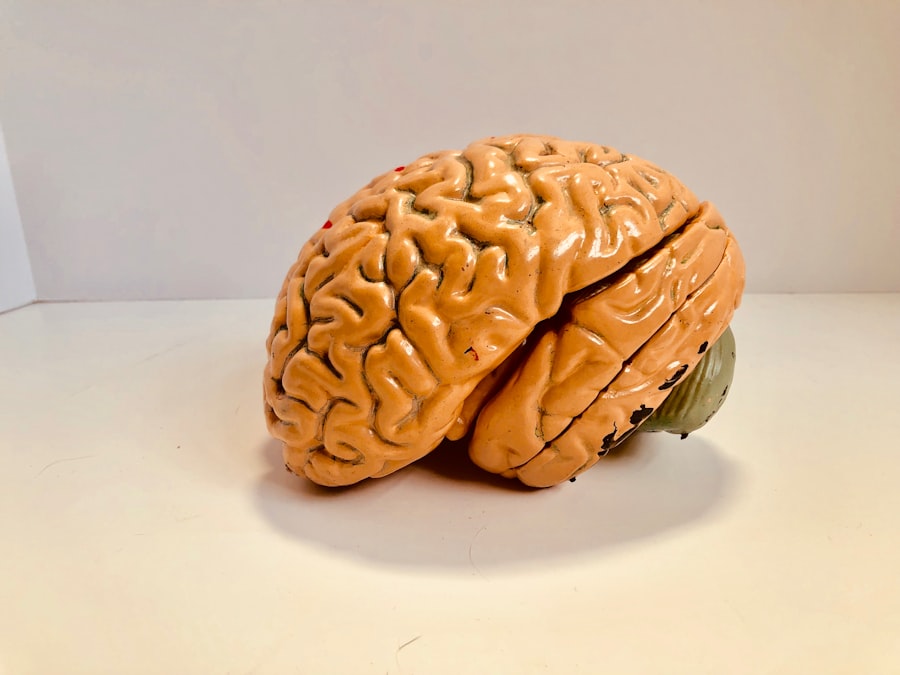
The brain’s primary function is not just to receive information, but to interpret it within a pre-existing framework of assumptions, beliefs, and learned experiences. This interpretive lens profoundly shapes our perceived reality, suggesting that what we experience is not a raw, objective truth, but rather a subjective rendition tailored by our individual cognitive architecture.
Placebo and Nocebo Effects
The extraordinary power of the placebo and nocebo effects stands as a testament to the brain’s ability to shape reality based on belief and expectation. In the placebo effect, an inert substance can produce genuine physiological improvements simply because an individual believes it will. Conversely, the nocebo effect demonstrates that negative expectations can induce adverse physiological responses. These phenomena highlight the profound influence of the brain’s internal interpretive framework on an individual’s physical and mental state, showcasing its capacity to literally manifest changes in response to expectations, even without direct external stimuli.
Top-Down Processing and Cognitive Biases
Cognitive biases, systematic errors in thinking, demonstrate how the brain’s pre-existing interpretive tendencies can distort perception and decision-making. Confirmation bias, for instance, leads individuals to prioritize information that confirms their existing beliefs, while ignoring contradictory evidence. These biases illustrate how the brain filters and interprets information through a subjective lens, effectively creating a personalized version of reality, much like a simulation designed to prioritize certain outcomes or perspectives.
The Role of Language and Culture
Language and culture play a profound role in shaping our cognitive framework and, consequently, our perception of reality. Different languages offer distinct ways of categorizing and conceptualizing the world, influencing how individuals think and perceive. Cultural norms and values also filter our experiences, guiding our interpretations and shaping our understanding of what is “real” or “normal.” This inherent subjectivity, influenced by external societal constructs, further suggests that our reality is not a purely objective experience but rather a deeply contextualized interpretation.
Neurological Plasticity and Adaptive Realities
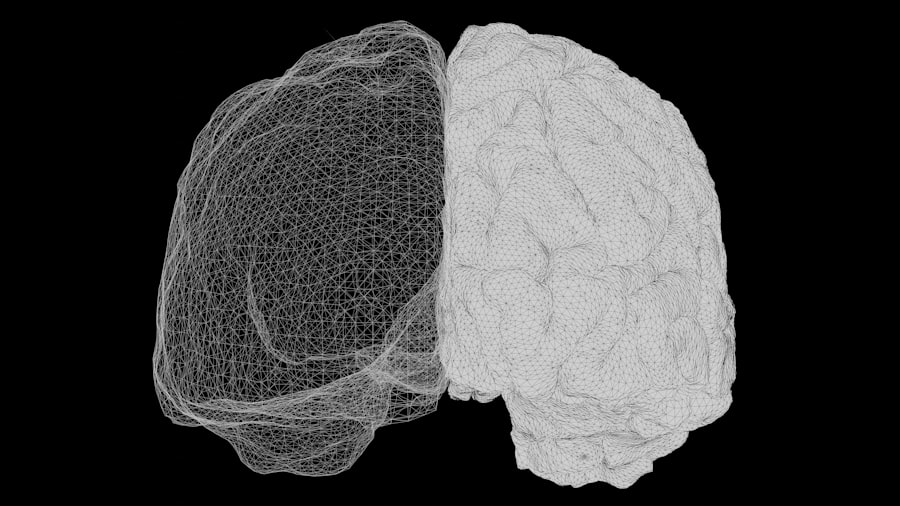
The brain’s remarkable capacity for plasticity – its ability to rewire and reorganize itself in response to experience – further supports the idea of an adaptive and potentially simulated reality. This dynamic adaptability allows for learning, memory formation, and recovery from injury, suggesting that the underlying “code” of our reality is not fixed but continuously evolving.
Synaptic Plasticity and Learning
Learning, at its core, involves changes in the strength and connectivity of synapses, the junctions between neurons. This synaptic plasticity allows the brain to form new neural pathways and strengthen existing ones, essentially rewriting its own internal programming. This continuous restructuring of neural networks, driven by experience, mirrors the dynamic and adaptable nature of a sophisticated simulation that can learn and evolve within its own parameters.
Neurogenesis and Brain Repair
The fascinating discovery of neurogenesis, the birth of new neurons in the adult brain, particularly in areas like the hippocampus, highlights the brain’s capacity for self-renewal and structural adaptation. This continuous generation of new computational units, alongside the brain’s ability to reroute functions after injury (functional plasticity), showcases a system designed for ongoing reconfiguration and resilience, much like a robust simulation capable of self-healing and evolving its internal architecture.
Sensory Substitution and Perceptual Reorganization
In cases of sensory loss, such as blindness, the brain often reorganizes itself to utilize other senses more effectively. For example, individuals who are blind from an early age may show enhanced auditory or tactile processing, with certain visual cortex areas being repurposed for these other sensory modalities. This phenomenon of sensory substitution and perceptual reorganization vividly illustrates the brain’s profound adaptability and its capacity to reconfigure its “hardware” and “software” to interpret the world through alternative channels, pointing towards a system capable of adapting its input methods, a feature inherent in advanced simulations.
Recent discussions in neuroscience have sparked interest in the implications of simulation theory, particularly regarding how our perceptions of reality might be constructed by our brains. A fascinating article that delves into this topic can be found at Freaky Science, where the author explores various experiments that suggest our consciousness may be more of a simulated experience than we realize. This perspective opens up new avenues for understanding the relationship between brain function and the nature of reality itself.
The Limits of Conscious Access
| Metric | Description | Relevance to Simulation Theory | Neuroscience Evidence | Current Status |
|---|---|---|---|---|
| Neural Correlates of Consciousness (NCC) | Brain activity patterns linked to conscious experience | Suggests brain processes could be interpreted as computational simulations | Identified specific brain regions and networks active during conscious states | Well-established but not definitive proof of simulation |
| Quantum Brain Hypothesis | Proposes quantum processes in neurons contribute to consciousness | Supports idea of underlying computational substrate akin to simulation | Mixed experimental support; remains controversial | Speculative with ongoing research |
| Perceptual Anomalies and Glitches | Instances of sensory or cognitive errors resembling ‘simulation glitches’ | Used as anecdotal evidence for simulation-like properties of reality | Explained by known neurological phenomena (e.g., illusions, hallucinations) | No conclusive link to simulation theory |
| Information Processing Limits | Constraints on brain’s computational capacity and speed | Analogous to limits in simulated environments | Measured via cognitive tests and neuroimaging | Consistent with biological constraints, not necessarily simulation |
| Brain-Computer Interface (BCI) Feedback | Direct interaction between neural activity and digital systems | Demonstrates brain’s compatibility with computational frameworks | Successful BCI implementations show neural data can be decoded and influenced | Supports computational models but not proof of simulation |
A crucial aspect of neuroscience that resonates with simulation theory is the understanding that conscious awareness represents only a fraction of the brain’s total activity. Much of what informs our perception and behavior operates outside conscious access, suggesting a hidden layer of processing that shapes our reality without our direct knowledge.
Unconscious Processing and Subliminal Perception
Numerous studies have demonstrated the profound influence of unconscious processes on our thoughts, feelings, and actions. Subliminal messages, though consciously undetected, can still influence preferences and behaviors. This vast realm of unconscious processing highlights a significant disconnect between what the brain is doing and what an individual is consciously aware of. In the context of a simulation, this unconscious processing could represent the “background operations” or “rendering processes” that are essential for the simulation to function but are not directly presented to the simulated consciousness.
Cognitive Dissonance and Self-Deception
The phenomenon of cognitive dissonance, where one holds conflicting beliefs or attitudes, often leads to psychological discomfort and a subsequent drive to reduce this tension. This frequently involves rationalizing or self-deception, altering one’s interpretation of reality to maintain internal consistency. This internal “editing” of perceived reality to suit an individual’s psychological needs exemplifies how the brain actively constructs a narrative that may not align with objective facts but serves to maintain the integrity of its internal model, a characteristic feature of a well-maintained simulation designed to preserve coherence.
The Binding Problem and Integrated Perception
The “binding problem” in neuroscience refers to the question of how the brain integrates disparate sensory attributes – color, shape, motion, sound – into a unified, coherent perception of an object or event. While no definitive answer exists, the intricate coordination required points to a complex, perhaps computationally intensive, process of integration that generates our seamless perceptual experience. This intricate integration of diverse data streams into a singular perceived reality mirrors the rendering process of a sophisticated simulation, where individual data points are combined to form a cohesive visual and experiential output.
In conclusion, while direct proof of simulation theory remains elusive within the confines of our perceived reality, the accumulating evidence from neuroscience offers compelling insights that align remarkably well with its premises. The brain’s predictive nature, its capacity for internal simulation, the constructed and adaptive nature of our perceived reality, the interpretive framework it applies, and the limitations of our conscious access to its operations all point to a system that could very plausibly be generating a simulated experience. Think of it not as a definitive answer, but as a series of well-researched clues, each hinting at a deeper, more profound truth about the very fabric of our being. The implications of these findings extend beyond mere philosophical speculation, prompting us to reconsider the fundamental nature of consciousness, reality, and our place within a potentially grand, simulated design.
FAQs
What is simulation theory in the context of neuroscience?
Simulation theory in neuroscience suggests that the brain creates internal models or simulations of the external world to predict and interpret sensory information, enabling perception, decision-making, and motor control.
Is there scientific evidence supporting simulation theory in neuroscience?
Yes, various studies in neuroscience provide evidence that the brain uses predictive coding and internal simulations to process information, such as mirror neuron activity and mental imagery, supporting aspects of simulation theory.
How do mirror neurons relate to simulation theory?
Mirror neurons activate both when an individual performs an action and when they observe the same action performed by others, indicating that the brain simulates others’ actions internally, which aligns with simulation theory principles.
Can simulation theory explain consciousness or reality itself?
While simulation theory in neuroscience explains brain processes related to perception and cognition, it does not provide proof that reality itself is a simulation; such claims belong more to philosophical or speculative discussions rather than empirical neuroscience.
What are the practical implications of simulation theory in neuroscience?
Understanding how the brain simulates experiences can improve artificial intelligence, enhance virtual reality technologies, and aid in treating neurological disorders by targeting predictive and simulation mechanisms in the brain.