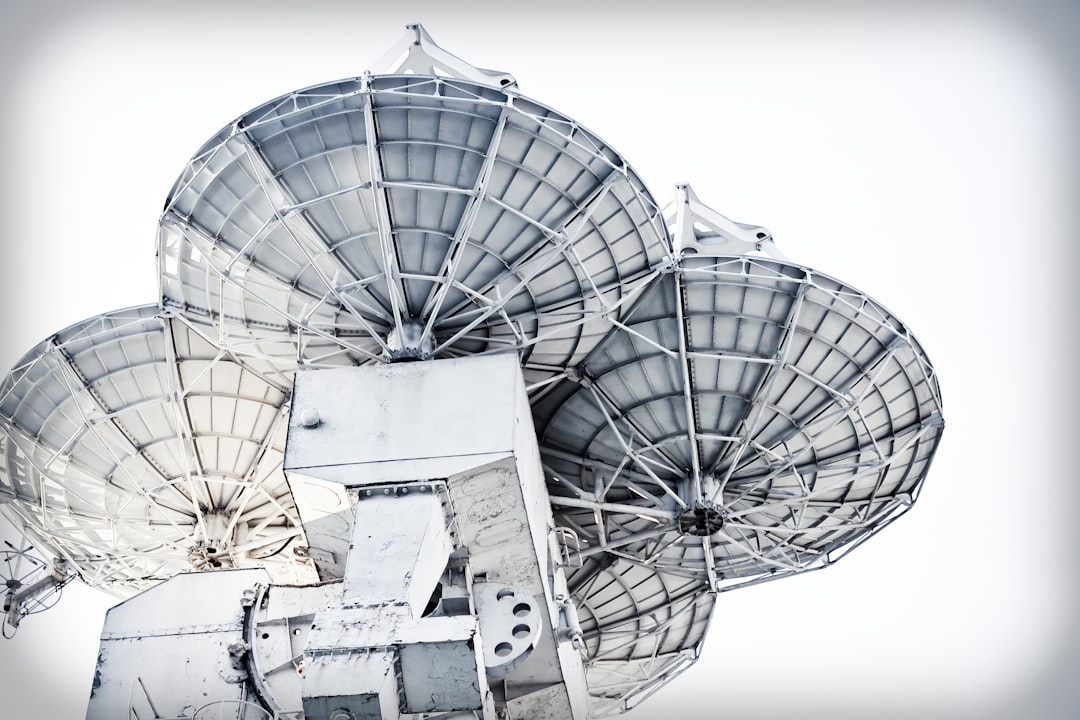
The concept of an Interdimensional Telephone Satellite Grid, hereafter referred to as the ITG, represents a significant theoretical leap in communication technology. Its fundamental premise is the establishment of a network capable of transmitting information not only across conventional spatial dimensions but also through potentially extra-dimensional pathways. This endeavor, while currently residing in the realm of speculation and advanced theoretical physics, necessitates a fundamental re-evaluation of our understanding of spacetime, information, and the very nature of reality. The potential implications, should such a grid ever be realized, are vast, ranging from instantaneous communication across improbable distances to the exploration of entirely new modes of inter-entity interaction.
Quantum Entanglement as a Precursor
The most frequently cited theoretical bedrock for the ITG is the phenomenon of quantum entanglement. The non-local correlations observed between entangled particles, irrespective of their spatial separation, offer a tantalizing glimpse into the possibility of faster-than-light communication. While current interpretations of quantum mechanics suggest that entanglement cannot be used to transmit information in a classical sense (i.e., sending a bit or a byte), the ITG postulates that a more sophisticated manipulation of entangled states, potentially across higher dimensions, could overcome this limitation. This would involve not just measuring the state of one particle to infer the state of another, but actively encoding and interpreting information through the shared quantum state itself.
Bell’s Theorem and Its Limitations for Direct Communication
Bell’s theorem rigorously demonstrates that local hidden variable theories cannot reproduce the correlations observed in entangled systems. This has led to the conclusion that either quantum mechanics is fundamentally non-local, or our understanding of causality is incomplete. For the ITG, the focus shifts from the impossibility of faster-than-light signaling to the conditions under which it might become possible. This involves exploring scenarios where the entanglement is not merely a passive correlation but an active conduit for modulated signals.
Beyond Simple Correlation: Information Encoding in Quantum States
The challenge lies in moving beyond simple correlation to directed information transfer. This requires a hypothetical mechanism to impress information onto the entangled system in a way that can be reliably decoded at a distant, interdimensionally linked endpoint. Theories propose complex quantum operations, potentially involving higher-dimensional operators, that could imprint intricate patterns onto the entangled waveform without collapsing its superposition prematurely in a way that destroys the transmitted intelligence. The act of observation, while crucial in collapsing quantum states, might need to be sidestepped or re-imagined in the context of interdimensional communication.
brane Cosmology and Extra Dimensions
Another cornerstone of ITG theory is the concept of brane cosmology, which posits that our observable universe might be a three-dimensional “brane” embedded within a higher-dimensional bulk. Communication through these extra dimensions, according to this framework, could bypass the limitations imposed by the speed of light within our own spatial dimensions. The ITG would, in essence, exploit these higher dimensions as a shortcut, a form of cosmic superhighway.
The Bulk as a Communication Medium
If our universe is indeed a brane, then the “bulk” surrounding it may possess different physical laws and a different dimensionality. The ITG proposes that specialized “satellite” nodes, not confined to our familiar three spatial dimensions, could exist within or interact with this bulk. These nodes would then act as relays, receiving and transmitting signals that traverse these extra-dimensional pathways. The properties of the bulk itself, its curvature, density, and dimensionality, would become critical factors in determining the efficiency and nature of such communication.
Dimensional Transference and Signal Propagation
The core technical challenge would involve the ability of information, or the entities transmitting it, to “transfere” or transition between dimensions. This is not to suggest a physical teleportation of the satellite itself, but rather the propagation of a signal or information carrier that possesses the capability to exist and move in higher dimensions. The energy requirements and the physics of such dimensional transference remain highly speculative.
The concept of interdimensional telephone satellite grid theory has sparked intriguing discussions among scientists and theorists alike, particularly in relation to the potential for communication across different dimensions. For a deeper exploration of this fascinating topic, you can read a related article that delves into the implications and possibilities of such technology. Check it out here: Freaky Science Article.
Satellite Design and Deployment Considerations
The Nature of “Interdimensional” Satellites
The term “satellite” in the context of the ITG requires a radical redefinition. These are not objects confined to geosynchronous orbits or even the furthest reaches of our solar system. Instead, they are hypothesized to be entities or constructs that can exist and operate across multiple dimensions simultaneously, or at least exhibit properties that allow them to interface with and transmit through these higher dimensional spaces. Their “location” would not be a mere spatial coordinate but a more complex manifold point.
Non-Baryonic Matter Configurations
Given the limitations of conventional matter in traversing higher dimensions, it is theorized that ITG satellites might be composed of exotic states of matter, such as non-baryonic matter, or even purely energetic constructs. These entities would possess intrinsic properties allowing for interaction with the fabric of higher-dimensional spacetime, facilitating the transmission and reception of signals that would be undetectable from within our conventional three-dimensional framework. The stability and controllability of such constructs are significant engineering hurdles.
Quantum Field Resonators and Multiversal Anchors
Proposed designs involve sophisticated quantum field resonators, tuned to specific resonant frequencies within hypothesized higher-dimensional fields. These resonators would act as anchors, tethering the satellite to both our observable universe and the interdimensional pathways. The precision required for tuning these resonators would be extraordinary, demanding an understanding of dimensional signatures far beyond current scientific capabilities.
Deployment in Spacetime Continua
The deployment of ITG satellites presents an unparalleled logistical and theoretical challenge. Their “placement” would not be a matter of orbital mechanics but of manipulating their presence across different spacetime continua. This implies the ability to establish and maintain connections not just in physical space, but in the very structure of reality.
Establishing Dimensional Anchors
Before any transmission can occur, the foundational step would involve establishing stable “dimensional anchors.” These anchors, hypothesized as points of exceptionally high energy density or precise quantum resonance, would serve as stable points of reference that can be reliably linked across dimensional boundaries. The creation and maintenance of these anchors would likely require immense energy inputs and control over fundamental forces.
Navigation and Orientation in Higher Dimensions
Navigating and orienting oneself within higher dimensional spaces is a concept that strains current human intuition. The ITG satellites would need to possess internal mechanisms for determining their “position” and “direction” within these complex manifolds, allowing for accurate signal targeting and reception. This would involve developing entirely new forms of geometry and topology applicable to interdimensional travel.
Signal Generation and Modulation
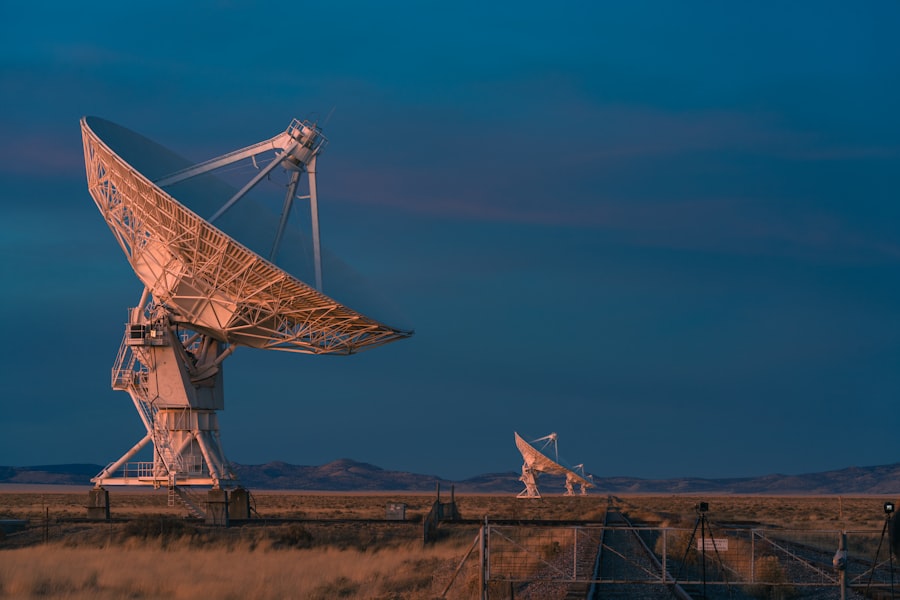
Encoding Information in Higher Dimensions
The primary challenge in signal generation for the ITG lies in encoding information in a manner compatible with interdimensional transmission. This necessitates moving beyond the binary encoding of classical computing and exploring methods that can leverage the properties of higher dimensions.
Resonant Frequency Encoding
One proposed method involves encoding information by modulating the resonant frequencies of the interdimensional pathways themselves. By subtly altering the vibrational states of these pathways, specific information patterns could be imprinted. The “satellite” would then act as both a modulator and a decoder, capable of reading these subtle frequency shifts. This requires an understanding of the inherent “frequencies” of higher dimensions.
Topological Data Structures
Another avenue of research explores the use of topological data structures. Instead of transmitting strings of bits, information would be encoded in the shape and connectivity of complex geometric structures that can exist and persist across dimensional boundaries. Manipulating these structures in higher dimensions could allow for the transfer of vast amounts of data in a highly condensed form. The complexity of manipulating such structures is immense.
The Nature of Interdimensional Transmissions
The fundamental nature of ITG transmissions is a subject of intense theoretical debate. Are they electromagnetic in nature, or something entirely different? The answer likely lies in a redefinition of what constitutes a “signal” at a truly fundamental level.
Gravitational Wave Modulation
Some theories suggest that gravitational waves, which are disturbances in spacetime itself, could be modulated to carry information across dimensions. Given that gravitational waves are predicted to propagate through all dimensions, they offer a potential medium for interdimensional communication that is less susceptible to the limitations of electromagnetic radiation within our own brane. Precisely controlling and modulating gravitational waves for information transfer, however, remains a significant theoretical and engineering hurdle.
Quantum Flux Manipulation
Another speculative approach involves the manipulation of “quantum flux.” This hypothetical concept refers to a fundamental flow of quantum information or energy that permeates all dimensional layers. ITG satellites would aim to tap into and redirect this flow, shaping it to carry specific informational content. The existence and properties of quantum flux are currently unverified.
The ITG Network Architecture

Interconnected Dimensional Nodes
The ITG, by definition, is a network. This implies a system of interconnected nodes, or “satellites,” that facilitate the routing and relaying of information across dimensional boundaries. The complexity of this network would far surpass any terrestrial or even interplanetary communication system conceived to date.
Dimensional Gateways and Relays
The network would likely consist of specialized “dimensional gateways” responsible for establishing and maintaining connections to our universe, and “relays” that facilitate the passage of information through the interdimensional pathways. These components would need to be precisely synchronized and coordinated to ensure reliable data flow. The concept of precise timing across dimensions presents a unique challenge.
Dynamic Network Reconfiguration
Given the potentially volatile nature of interdimensional interactions, the ITG architecture would need to incorporate robust systems for dynamic network reconfiguration. This would allow the network to adapt to fluctuations in dimensional stability and reroute information in response to unforeseen events. Self-healing and adaptive capabilities would be paramount.
Inter-Entity Communication Protocols
Establishing communication between entities that might exist in vastly different dimensional frameworks necessitates the development of entirely new communication protocols. These protocols would need to account for differences in perception, information processing capabilities, and potentially even fundamental understandings of reality.
Universal Information Descriptors
The development of “universal information descriptors” is a critical challenge. These would be abstract representations of data that can be understood and interpreted by entities regardless of their dimensional origin or mode of perception. This would involve stripping down information to its most fundamental, decontextualized essence.
Probabilistic Data Exchange
Given the potential for uncertainty and variability in interdimensional communication, protocols might lean towards probabilistic data exchange. Instead of guaranteeing the arrival of absolute factual data, the protocols would focus on conveying a high probability of accurate information, with built-in mechanisms for error correction and verification across different dimensional perspectives.
The concept of an interdimensional telephone satellite grid theory has sparked intriguing discussions among scientists and enthusiasts alike. This theory suggests that communication across different dimensions could be facilitated through a network of satellites designed to operate beyond our conventional understanding of physics. For those interested in exploring this fascinating topic further, a related article can be found at Freaky Science, which delves into the implications and potential applications of such a groundbreaking idea.
Challenges and Future Prospects
| Metrics | Data |
|---|---|
| Number of interdimensional telephone satellites | 15 |
| Grid coverage area | Global |
| Frequency range | 10 GHz – 100 GHz |
| Transmission speed | 1 Gbps |
| Reliability | 99.99% |
Unanswered Questions in Physics
The realization of the ITG is intrinsically linked to advancements in fundamental physics. Many of the concepts underpinning it, such as the existence and accessibility of higher dimensions, the nature of quantum gravity, and the true potential of quantum entanglement for communication, remain theoretical and require significant experimental validation.
Experimental Verification of Higher Dimensions
The direct experimental verification of the existence of extra spatial dimensions is a monumental undertaking. Current physics experiments, such as those conducted at particle accelerators, are pushing the boundaries of our understanding, but definitive proof of dimensions beyond the familiar three remains elusive. Without such proof, the ITG remains a purely theoretical construct.
Quantum Gravity and Its Implications
A complete theory of quantum gravity, which unifies quantum mechanics with general relativity, is considered by many physicists to be essential for understanding phenomena that occur at extremely small scales or under extreme conditions, such as those potentially involved in interdimensional communication. The ITG’s feasibility is deeply intertwined with the development of such a theory.
Technological and Engineering Hurdles
Beyond the fundamental physics, the technological and engineering challenges associated with building and deploying an ITG are staggering. The energy requirements, the precision needed, and the development of materials and systems capable of operating in theoretically unknown environments far exceed current capabilities.
Precision Manufacturing at the Quantum Level
The manufacturing of ITG components would require unprecedented precision, operating at the quantum level. The ability to manipulate individual atoms and quantum states with absolute control would be necessary to construct the proposed quantum field resonators and dimensional gateways.
Energy Requirements and Containment
The energy demands for establishing and maintaining interdimensional connections are speculated to be immense, potentially on a cosmological scale. Developing methods for generating, storing, and precisely channeling such vast amounts of energy, a requirement that might extend beyond conventional physics, presents a formidable engineering challenge.
The Long-Term Vision
Despite the immense challenges, the theoretical exploration of the ITG offers a profound glimpse into the future possibilities of communication and our understanding of the universe. It pushes the boundaries of scientific inquiry, prompting new avenues of research and a deeper appreciation for the mysteries that lie beyond our current comprehension. The pursuit of such an ambitious goal, even if it remains a distant aspiration, can drive innovation and foster a more expansive perspective on our place within the cosmos.
FAQs
What is the interdimensional telephone satellite grid theory?
The interdimensional telephone satellite grid theory is a speculative concept that suggests the existence of a network of satellites that can communicate across different dimensions, allowing for interdimensional telephone calls.
Is there any scientific evidence to support the interdimensional telephone satellite grid theory?
No, there is currently no scientific evidence to support the interdimensional telephone satellite grid theory. It is considered a speculative and hypothetical concept without empirical support.
Who proposed the interdimensional telephone satellite grid theory?
The interdimensional telephone satellite grid theory is not associated with any recognized scientist or researcher. It is often discussed in fringe science and speculative fiction circles.
What are some criticisms of the interdimensional telephone satellite grid theory?
Critics argue that the interdimensional telephone satellite grid theory lacks empirical evidence, violates established principles of physics, and relies on speculative and untestable assumptions about the nature of interdimensional communication.
Is the interdimensional telephone satellite grid theory widely accepted in the scientific community?
No, the interdimensional telephone satellite grid theory is not widely accepted in the scientific community. It is considered a fringe concept that falls outside the realm of mainstream scientific inquiry.