
The universe operates as an intricate and all-encompassing user interface, presenting the fundamental elements and conditions that enable life to not only emerge but also to persist, adapt, and diversify. This perspective frames the cosmos not as an inert backdrop, but as an active system of information and interaction, one whose very structure and laws are the operating system upon which existence is built. Think of it as the ultimate operating system, with the laws of physics as its core programming and the celestial bodies and phenomena as its visual elements and interactive tools.
The universe, in its capacity as a user interface, offers a foundational palette of raw materials and energetic forces upon which all subsequent complexity is built. These are the pixels and the power source of existence, meticulously configured to allow for the assembly of everything from the simplest atom to the most complex biological organism.
The Periodic Table as a Toolkit
The fundamental building blocks of the universe, as codified in the periodic table of elements, are the essential components provided by the cosmic interface. These elements, governed by predictable quantum mechanical rules, are the Lego bricks of reality. Hydrogen and helium, forged in the early universe, are the primary components, acting as the bedrock upon which heavier elements are synthesized.
The Alchemy of Stars: Nucleosynthesis
Stars are the prime artisans in this cosmic workshop, acting as natural fusion reactors. Within their cores, under immense pressure and temperature, lighter elements are fused into heavier ones, a process known as nucleosynthesis. This stellar alchemy is responsible for generating the carbon, oxygen, nitrogen, and other elements that are critical for organic chemistry and, consequently, for life as we understand it. Without these stellar forges, the universe would be largely limited to a hydrogen-helium soup, incapable of supporting the intricate molecular structures necessary for life.
The Role of Gravity: Orchestrating Matter
Gravity, a fundamental force of interaction, plays a crucial role in organizing these elemental building blocks. It acts as the cosmic assembler, drawing matter together to form stars, planets, and galaxies. Without gravity, the distributed elements would remain largely dispersed, preventing the concentration of matter needed for the formation of habitable environments. Gravity directs the flow of cosmic matter, much like a cursor guides selection in a graphical user interface.
Energy: The Lifeblood of the System
Energy, in its various forms, is the power that drives the cosmic user interface. It is the electricity that fuels the computational processes of existence. Without a constant influx and transformation of energy, the universe would be a static and lifeless realm.
Stellar Radiance: The Primary Energy Source
The light and heat emitted by stars, particularly our Sun, are the most significant energy inputs for planetary systems. This radiant energy provides the necessary fuel for photosynthesis, the process by which plants convert light energy into chemical energy, forming the base of most terrestrial food webs. It also drives weather patterns, regulates planetary temperatures, and makes liquid water possible on surfaces.
Geothermal Energy: Internal Power
On some celestial bodies, internal heat generated by radioactive decay, remnants of planetary formation, or tidal forces provides a secondary energy source. Geothermal energy can support subsurface ecosystems, particularly in environments where surface conditions are harsh, such as beneath the ice shells of moons like Europa. This internal heat acts as a backup power supply, ensuring continued operation even when external sources are diminished.
The concept of the universe as a user interface is intriguing and has been explored in various contexts. A related article that delves deeper into this idea can be found at Freaky Science. This article discusses how our perception of reality and the underlying principles of physics can be interpreted as a complex interface that allows us to interact with the cosmos. By examining the ways in which we engage with the universe, it becomes evident that our understanding of existence may be shaped by the very frameworks we use to perceive and interpret the world around us.
The Laws of Physics: The Operating System’s Code
The fundamental laws of physics are the underlying code of the universe, dictating how matter and energy interact. These laws are immutable and universally applicable, providing a consistent and predictable framework within which life can emerge and evolve. They are the algorithms that govern every interaction, from the subatomic to the cosmic scale.
Electromagnetism: The Binding Force
Electromagnetism governs the interactions between electrically charged particles. This force is responsible for holding atoms and molecules together, forming the chemical bonds that are the foundation of all matter. Without electromagnetism, atoms would not cohere, and complex molecules, including DNA and proteins, would be impossible.
Chemical Bonding: The Language of Molecules
The principles of electromagnetism directly translate into the rules of chemical bonding. Covalent, ionic, and metallic bonds, all explained by electrostatic attractions and repulsions, enable the formation of a vast array of compounds. This ability to form and break bonds with relative ease is essential for the dynamic processes of life, such as metabolism and reproduction.
Light and Information Transfer
Electromagnetism also encompasses the electromagnetic spectrum, including visible light, radio waves, and X-rays. Light, a crucial carrier of information and energy, is fundamental to vision and photosynthesis. The ability to detect and interpret electromagnetic radiation allows organisms to perceive their environment and to harness energy.
Thermodynamics: Energy Flow and Stability
The laws of thermodynamics govern the flow and transformation of energy. The first law states that energy cannot be created or destroyed, only converted from one form to another. The second law, entropy, dictates that in any isolated system, disorder tends to increase.
Dissipative Structures: Life as an Entropy Exporter
Life itself can be viewed as a complex dissipative structure. Organisms maintain their low entropy (order) by consuming energy and exporting entropy to their surroundings, typically in the form of heat. This thermodynamic imperative drives the need for ongoing energy acquisition and waste expulsion, manifesting in processes like metabolism and respiration.
Equilibrium and Disequilibrium: The Conditions for Change
While the universe tends towards equilibrium, life thrives in states of disequilibrium. The constant flow of energy and matter across the boundary of a living organism maintains this dynamic balance, allowing for complex processes to occur. This ability to resist complete thermodynamic equilibrium is a hallmark of living systems.
Celestial Architectures: Habitats and Environments

The universe provides a diverse range of celestial bodies and environments, offering potential cradles for life. These are the different software environments and application windows within the cosmic interface, each with its unique characteristics and limitations.
Planets: Diverse Platforms for Life
Planets are perhaps the most readily envisioned habitats for life. Their size, composition, and orbital characteristics determine their potential habitability. The presence of liquid water, a stable atmosphere, and a suitable temperature range are key factors.
The Habitable Zone: The Sweet Spot
The concept of the habitable zone, also known as the Goldilocks zone, describes the region around a star where temperatures are suitable for liquid water to exist on a planet’s surface. This zone is not static and can vary depending on the type and age of the star. It represents a specific configuration of parameters within the celestial interface that is particularly conducive to life.
Planetary Atmospheres: Shields and Stabilizers
A planet’s atmosphere plays a vital role in regulating its climate, protecting it from harmful radiation, and providing essential gases. An atmosphere can act as a greenhouse, trapping heat and maintaining a stable temperature, or it can shield the surface from the sterilizing effects of stellar flares and cosmic rays. The composition of an atmosphere is a critical setting within the planetary interface.
Moons: Potential Subsurface Havens
Beyond planets, certain moons orbiting gas giants are considered promising candidates for harboring life, particularly in subsurface oceans. These environments are shielded from harsh surface radiation and can be warmed by tidal forces or geothermal activity.
Tidal Heating: An Internal Energy Source
The gravitational pull of a massive planet can cause tidal flexing within its moons, generating internal heat. This tidal heating can maintain liquid water oceans beneath icy crusts, creating environments isolated from the direct influence of stellar radiation but still powered by internal processes.
Subsurface Oceans: Protected Ecosystems
Subsurface oceans offer a stable and protected environment, shielded from the vagaries of surface conditions. Hydrothermal vents at the ocean floor could provide chemical energy and nutrients, similar to those found in Earth’s deep-sea ecosystems, suggesting that life could arise and persist in these hidden realms.
The Emergence of Complexity: Information and Replication
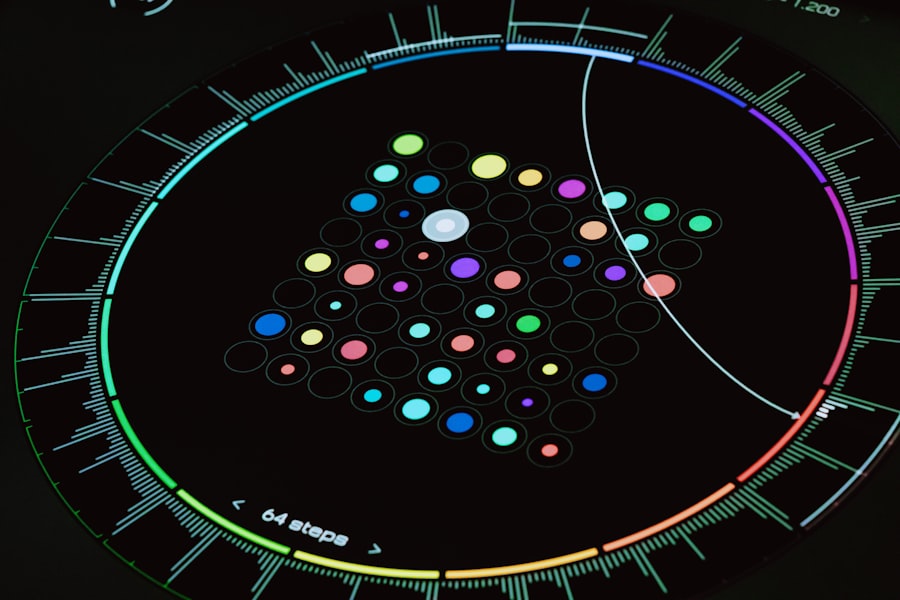
The universe’s interface facilitates the emergence of complexity through the fundamental property of information storage and replication. This is akin to the development of intricate software and the ability of that software to be copied and passed on, allowing for both development and propagation.
Organic Chemistry: The Language of Life
Organic chemistry, the study of carbon-based compounds, is a direct consequence of the universe’s ability to arrange elements in complex ways. Carbon’s unique ability to form stable bonds with itself and other elements allows for the creation of the vast diversity of molecules necessary for life.
Polymers: The Building Blocks of Life
The formation of long chains of molecules, such as proteins and nucleic acids (DNA and RNA), is crucial for life. These polymers carry out essential functions, from catalysis and structural support to the storage and transmission of genetic information. The ability to form these specific polymer structures is a feature of the cosmic interface.
Self-Assembly: The Spontaneous Organization of Matter
Under certain conditions, molecules can spontaneously self-assemble into more complex structures, a phenomenon observed in the formation of lipid bilayers that form cell membranes. This inherent tendency towards organized structures is a fundamental aspect of the universe’s underlying principles.
Genetics and Evolution: Information Transfer and Adaptation
The development of genetic systems, such as DNA, allows for the accurate replication and transmission of information across generations. This information carries the blueprints for an organism’s structure and function, and its variation through mutation provides the raw material for evolutionary adaptation.
Mutation: The Source of Variation
Random mutations in genetic material introduce variations within a population. These variations are the grist for the evolutionary mill, providing different traits that can be favored or disfavored by natural selection. This is like introducing random bugs or new features into software.
Natural Selection: The Editing Process
Natural selection is the process by which individuals with traits that are better suited to their environment are more likely to survive and reproduce, passing on those advantageous traits. This iterative process drives adaptation and the diversification of life, effectively refining the efficiency and functionality of the biological “software.”
The concept of the universe as a user interface is a fascinating perspective that invites us to explore the deeper connections between reality and our perception of it. This idea is further elaborated in a related article that discusses how our understanding of the cosmos can be likened to navigating a complex software program. For those interested in delving deeper into this intriguing topic, you can read more about it in this insightful piece on Freaky Science, which examines the implications of viewing the universe through the lens of technology and interface design.
The Evolution of Intelligence: Information Processing and Problem Solving
| Aspect | Explanation | Metric/Example |
|---|---|---|
| Information Display | The universe presents information through sensory inputs similar to a UI displaying data. | Human senses process ~11 million bits of information per second |
| Interactivity | Users interact with the universe via actions and receive feedback, akin to UI interaction. | Reaction time averages 250 milliseconds to stimuli |
| Feedback Loops | Actions in the universe cause changes that provide feedback, similar to UI responses. | Neural feedback cycles occur within 100-200 ms |
| Complexity & Layers | The universe has multiple layers of complexity, like nested UI elements. | Observable universe contains ~2 trillion galaxies |
| Navigation | Humans navigate space and time, similar to navigating UI menus or pages. | Light travels 299,792 km/s enabling cosmic navigation |
| Customization | Perception of the universe can be altered by technology or mindset, like UI customization. | Augmented reality devices modify sensory input in real-time |
While the emergence of life is a significant achievement of the cosmic interface, the subsequent evolution of intelligence represents a higher level of information processing and problem-solving capability. This is analogous to the development of sophisticated AI and its capacity for complex computation.
Information Networks: Communication and Collaboration
The development of sophisticated communication systems, from chemical signaling in simple organisms to complex language in humans, allows for the efficient transfer of information within and between groups. This interconnectedness fosters collaboration and the collective advancement of knowledge.
Neural Networks: Biological Computation
The evolution of nervous systems, particularly complex brains, allows for advanced information processing, learning, and decision-making. These biological neural networks process sensory input, integrate information, and generate behavioral responses, enabling organisms to interact with their environment in increasingly sophisticated ways.
Tool Use and Technology: Extending Capabilities
The ability to create and use tools, and subsequently to develop technology, represents a significant extension of biological capabilities. This allows organisms, particularly humans, to manipulate their environment, overcome physical limitations, and to gather and process information at scales far beyond their inherent biological capacity.
Abstract Thought and Prediction: Advanced Problem Solving
The development of abstract thought and the capacity for prediction allow for complex problem-solving and strategic planning. This enables intelligent agents to anticipate future outcomes, adapt to changing circumstances, and to innovate, further enhancing their ability to thrive and evolve within the cosmic framework.
The universe, therefore, is not merely a passive stage upon which life plays out. It is an active, dynamic system that provides the very foundations, rules, and resources for existence. By understanding the universe as a sophisticated interface, we can better appreciate the intricate interplay of fundamental forces, elements, and physical laws that have made life possible and continue to shape its trajectory. The challenges and opportunities presented by this cosmic operating system are vast, and our continued exploration and understanding of its intricacies will undoubtedly reveal further possibilities for life and consciousness within its boundless expanse.

WATCH NOW ▶️ The Universe Is A False State: Is Reality a Simulation?
FAQs
What does it mean to say the universe is a user interface?
Saying the universe is a user interface suggests that the way we perceive and interact with reality can be understood similarly to how we interact with a computer interface. It implies that the universe presents information and experiences in a structured, accessible way that users (humans) can navigate and interpret.
Is the idea that the universe is a user interface a scientific theory?
No, the concept is more philosophical or metaphorical rather than a formal scientific theory. It draws on ideas from physics, information theory, and cognitive science to explore how reality might be represented or experienced, but it is not an empirically tested scientific model.
How does the concept relate to human perception?
The concept highlights that human perception acts like an interface, filtering and organizing sensory data into a coherent experience. Just as a user interface simplifies complex data for users, our senses and brain simplify the vast complexity of the universe into understandable forms.
Are there any scientific fields that support this idea?
Fields like quantum physics, information theory, and cognitive science provide insights that can be related to this idea. For example, some interpretations of quantum mechanics suggest reality is information-based, and cognitive science studies how the brain constructs reality from sensory input, both of which resonate with the user interface analogy.
What practical implications does viewing the universe as a user interface have?
This perspective can influence how we think about consciousness, reality, and technology. It encourages exploring new ways to interact with information and reality, potentially inspiring advances in virtual reality, artificial intelligence, and our understanding of the mind and universe.