
Whispers from the Void: Unexplained Space Oddities
The cosmos, vast and enigmatic, has always been a canvas for humanity’s deepest questions and most profound curiosities. While science has illuminated much of its grandeur, countless phenomena continue to baffle even the most seasoned astronomers and physicists. These are the unexplained space oddities, the bizarre occurrences that challenge our understanding of the universe and hint at possibilities far beyond our current comprehension. From flickering lights in the distant darkness to celestial bodies exhibiting inexplicable behaviors, these mysteries serve as potent reminders of how much we still have to learn.
If you’re fascinated by strange space phenomena, you might find the article on Freaky Science particularly intriguing. It delves into the mysteries of dark matter and its elusive nature, exploring how it influences the universe’s structure and behavior. To read more about this captivating topic, check out the article here: Freaky Science.
Cosmic Illusions and Anomalous Signals
The sheer scale of the universe often plays tricks on our perception, but sometimes, what we observe transcends mere optical illusions. The detection of signals and the observation of celestial objects that defy conventional explanations fuel ongoing scientific debate and ignite the public imagination. These anomalies, whether fleeting or persistent, push the boundaries of our astrophysical models and force us to consider the exotic.
The Unsettling Hum of the Universe: Fast Radio Bursts
Among the most perplexing of recent astronomical discoveries are Fast Radio Bursts (FRBs). These are millisecond-duration, intense bursts of radio waves originating from extragalactic sources. First detected in 2007, their transient nature and immense energy output have made them a significant puzzle. While some FRBs have been observed to repeat, providing valuable opportunities for localization and study, many are single, enigmatic events. The origin of these powerful signals remains a topic of intense speculation. Theories range from the highly energetic phenomena associated with magnetars – neutron stars with extremely powerful magnetic fields – to more exotic possibilities like the behavior of black holes or even speculative, non-natural origins. The precise mechanism that can generate such concentrated bursts of energy in such a short timeframe is still not fully understood, and their galactic distribution adds another layer of complexity. The sheer distances from which these bursts arrive imply immense power, and pinpointing their exact sources has proven a formidable challenge.
Ghostly Lights in the Celestial Seas: Transient Luminous Events
While not strictly “space” in the interstellar sense, Transient Luminous Events (TLEs) are atmospheric electrical phenomena that occur high above thunderstorms. These include sprites, elves, and blue jets, and they represent a bridge between our planet’s weather and the space environment. Though largely explained as forms of lightning discharge, their bizarre appearance and transient nature – appearing as ephemeral glows, flashes, or jets of light – have long captivated observers and continue to be studied for their interactions with the ionosphere and beyond. Their visual spectacle, fleeting and ethereal, underscores the dynamic and often surprising electrical nature of planetary atmospheres and their connection to the near-space environment.
The Enigma of the Oort Cloud’s Influence: Distant Anomalies
The Oort Cloud, a hypothetical spherical shell of icy bodies surrounding the Sun, is thought to be the source of long-period comets. Its immense distance, estimated to be as far as a light-year from the Sun, makes direct observation impossible. However, astronomers have hypothesized that gravitational perturbations from unseen objects within or near the Oort Cloud could be responsible for anomalies in the orbits of distant comets and Kuiper Belt Objects. The hypothetical “Planet Nine,” a potential large planet lurking in the outer solar system, is one such proposed explanation for these orbital curiosities. While not a direct observation of a bizarre phenomenon, the implications of these orbital patterns suggest the presence of unseen mass and potentially undiscovered celestial bodies that significantly influence the dynamics of our solar system’s outer reaches.
Celestial Bodies Behaving Badly

The predictable dance of planets, stars, and galaxies is a cornerstone of our astronomical understanding. Yet, the universe occasionally throws curveballs, presenting celestial bodies that deviate from expected norms, exhibiting behaviors that defy established physical laws or raise questions about their very nature.
The Unseen Giant: The Case of Planet Nine
The concept of Planet Nine emerged from observations of a cluster of trans-Neptunian objects (TNOs) exhibiting peculiar orbital alignments. These TNOs, which orbit far beyond Neptune, appear to be gravitationally shepherded by a massive, unseen planet. The gravitational influence required to explain these orbits suggests a planet with a mass several times that of Earth, residing in the far outer reaches of our solar system, perhaps hundreds of AU from the Sun. The absence of direct observation, despite numerous searches, adds to the mystique. Is it there, cloaked by distance and darkness, or is there another, more subtle explanation for the observed TNO orbits? The pursuit of Planet Nine embodies the scientific endeavor to explain anomalies, even in the absence of direct evidence, by proposing plausible, albeit currently unproven, entities.
The Peculiar Pulses of Pulsars: Beyond the Expected Rhythm
Pulsars, rapidly rotating neutron stars, are known for their incredibly precise and regular pulses of radiation. These celestial clocks are so accurate that they have been proposed as components of a galactic positioning system. However, some pulsars exhibit unusual behaviors that have puzzled scientists. These include glitches – sudden, small increases in their rotation rate – and quasi-periodic oscillations (QPOs), which are variations in their emitted radiation that don’t fit simple models. While some glitches are attributed to internal stellar processes, the exact mechanisms are not fully understood. QPOs, particularly in accreting pulsars, are thought to be related to the superheated accretion disk surrounding the neutron star, but the precise relationship and the various frequencies observed remain a complex area of study, hinting at dynamic and perhaps turbulent processes occurring in these extreme environments.
The Unexplained Dimming of Tabby’s Star: A Cosmic Enigma
The star KIC 8462852, affectionately known as Tabby’s Star, became famous in 2015 for its unusual and dramatic dimming events. Unlike the regular dips in brightness seen with transiting planets, Tabby’s Star experienced irregular and significant reductions in its light output, sometimes by as much as 20%. Initial theories proposed a swarm of comets or even a massive alien megastructure. While the cometary hypothesis has gained some traction, the sheer scale and irregularity of the dimming events continue to intrigue. The precise composition and behavior of whatever is causing these dips remain a subject of intense research, highlighting the potential for unexpected phenomena to occur around even seemingly ordinary stars.
The Unseen Architects: Dark Matter and Dark Energy
Perhaps the most profound unexplained phenomena in cosmology are the invisible forces that appear to govern the universe on its grandest scales: dark matter and dark energy. These are not directly observed but are inferred from their gravitational effects and the expansion of the universe. Their existence has revolutionized our understanding of the cosmos, yet their true nature remains one of science’s most significant unsolved mysteries.
The Invisible Scaffold: The Case for Dark Matter
Dark matter constitutes approximately 85% of the matter in the universe. Its presence is inferred from its gravitational influence on visible matter, such as the rotation speeds of galaxies and the bending of light (gravitational lensing). Galaxies rotate much faster than the visible matter within them would suggest, indicating the presence of a massive, invisible halo of dark matter providing the extra gravitational pull. Similarly, the gravitational lensing observed around galaxy clusters is far stronger than accounted for by visible matter alone. Despite decades of searching, no particles definitively identified as dark matter have been detected. Various candidates, such as WIMPs (Weakly Interacting Massive Particles) and axions, are being investigated, but conclusive evidence remains elusive. The search for dark matter is a quest for the fundamental building blocks of the universe that lie hidden from our current observational capabilities.
The Accelerating Expansion: The Puzzle of Dark Energy
Observations of distant supernovae in the late 1990s revealed a startling truth: the expansion of the universe is not slowing down, as would be expected due to gravity, but is actually accelerating. This acceleration is attributed to a mysterious force known as dark energy, which appears to permeate all of space and exerts a repulsive gravitational effect. Dark energy is estimated to make up about 68% of the total energy density of the universe. Its nature is even less understood than dark matter. Leading candidates include a cosmological constant (a form of energy inherent to space itself, as proposed by Einstein) or a dynamic field that changes over time. Understanding dark energy is crucial for comprehending the ultimate fate of the universe, determining whether it will expand forever or eventually collapse.
Recent discoveries in the realm of astrophysics have shed light on various strange space phenomena, captivating both scientists and enthusiasts alike. One particularly intriguing aspect is the behavior of dark matter and its influence on galaxy formation. For those interested in exploring this topic further, you can read a related article that delves into the mysteries of the universe and the peculiarities of cosmic structures. Check it out here: strange space phenomena and uncover the secrets that lie beyond our planet.
Anomalous Structures and Energetic Outbursts
| Phenomenon | Description | Location | Frequency | Notable Observations |
|---|---|---|---|---|
| Fast Radio Bursts (FRBs) | Brief, intense bursts of radio waves from distant galaxies | Extragalactic | Several per day detected | Some repeat from same source; origin still uncertain |
| Gamma-Ray Bursts (GRBs) | Extremely energetic explosions emitting gamma rays | Throughout the universe | About once per day detected | Linked to supernovae and neutron star mergers |
| Dark Matter Halos | Invisible matter influencing galaxy formation and rotation | Surrounding galaxies | Constant presence | Detected via gravitational effects |
| Quasars | Extremely luminous active galactic nuclei powered by black holes | Distant galaxies | Thousands known | Emit across electromagnetic spectrum |
| Cosmic Microwave Background (CMB) Anomalies | Unexpected temperature fluctuations in CMB radiation | Observable universe | One-time observation (since Big Bang) | May hint at new physics or multiverse theories |
Beyond individual celestial bodies and overarching cosmic forces, the universe also presents us with baffling structural formations and sudden, colossal releases of energy that defy easy explanation, hinting at processes far more energetic and perhaps more complex than we currently model.
The Great Attractor: A Gravitational Siren
The Great Attractor is a region of gravitational anomaly in intergalactic space, located in the direction of the constellation Centaurus. Our Milky Way galaxy, along with hundreds of thousands of other galaxies, is being pulled towards this immense concentration of mass. While it has been identified as a large-scale gravitational hub, the exact nature and extent of the structure responsible for this powerful pull are still being mapped. It’s not a single galaxy but rather a complex distribution of matter, likely involving massive galaxy clusters, that is exerting this dominant gravitational influence. The sheer scale of this cosmic “pull” and the ongoing effort to fully delineate its boundaries highlight the complex interplay of gravity on vast cosmic scales.
Gamma-Ray Bursts: Cosmic Firestorms
Gamma-ray bursts (GRBs) are the most luminous electromagnetic events known in the universe, releasing an immense amount of energy in the form of gamma rays over periods ranging from milliseconds to several minutes. They are thought to originate from the collapse of massive stars into black holes (long-duration GRBs) or the merger of neutron stars or a neutron star and a black hole (short-duration GRBs). While the broad categories are understood, the precise mechanisms that generate such focused beams of energy, and why some are more energetic than others, are still subjects of active research. The afterglows of these bursts, observable across the electromagnetic spectrum, provide crucial data for understanding these cataclysmic events and the extreme physics at play.
Fast Radio Bursts Revisited: Intergalactic Beacons or Something More?
As mentioned earlier, Fast Radio Bursts (FRBs) continue to be a significant enigma. While some progress has been made in identifying their host galaxies, the fundamental question of what powers these incredibly energetic, millisecond-long signals remains. The variety observed in FRBs, from repeating bursts to single events, suggests that there might be multiple sources or mechanisms responsible. The ongoing effort to detect and localize more FRBs, and to study their polarization and spectral properties, is crucial for unlocking their secrets. The possibility that these are natural phenomena of extreme astrophysics is the leading hypothesis, but the sheer power and transience of these signals continue to invite speculation about their true origins.
The Frontiers of the Unknown: Speculation and Future Exploration
The universe, in its boundless expanse, consistently reminds us of the limits of our current knowledge. The unexplained space oddities are not merely scientific curiosities; they are invitations to explore, to question, and to imagine. They fuel the drive for more advanced observational technologies, more sophisticated theoretical models, and a deeper understanding of the fundamental laws that govern reality.
The Quest for Extraterrestrial Intelligence: SETI’s Enduring Mission
The search for extraterrestrial intelligence (SETI) is a testament to humanity’s enduring curiosity about whether we are alone in the cosmos. While no definitive signals from alien civilizations have been detected, the vastness of the universe and the sheer number of stars and exoplanets suggest that life, and potentially intelligent life, could exist elsewhere. SETI projects employ radio telescopes and other instruments to listen for artificial signals that might betray the presence of advanced alien civilizations. The absence of a confirmed signal so far does not diminish the possibility; it simply underscores the immense challenge of detection across cosmic distances and the need for continued vigilance and technological advancement. The ongoing silence, while profound, doesn’t preclude the eventual discovery of a cosmic conversation.
Theoretical Frontiers: Unifying the Cosmos
The unexplained phenomena in space often point towards gaps in our fundamental theories of physics. The ongoing quest to unify quantum mechanics and general relativity, for instance, is a major driver in theoretical physics. Phenomena like the extreme gravity near black holes or the very early universe might require a more complete understanding of gravity at its most fundamental level. Similarly, the nature of dark matter and dark energy pushes the boundaries of particle physics and cosmology, hinting at undiscovered particles or forces that play a crucial role in the universe’s structure and evolution. The pursuit of these theoretical frontiers is essential for making sense of the bizarre observations we are increasingly making.
The Next Generation of Observatories: Peering Deeper into the Void
The continuous advancement of astronomical instrumentation is our primary tool for unraveling cosmic mysteries. The next generation of telescopes, such as the James Webb Space Telescope and future ground-based observatories, are designed to observe the universe with unprecedented sensitivity and resolution. These powerful instruments will be able to probe deeper into space and time, detect fainter signals, and analyze the composition of exoplanet atmospheres with greater precision. Such capabilities are essential for addressing the current anomalies and for uncovering new, perhaps even more perplexing, phenomena that lie beyond our current horizons. Each new observation, each refinement of our instruments, brings us a step closer to understanding the truly bizarre and wondrous nature of the universe. The unexplained space oddities are not endpoints of our scientific inquiry but rather the compelling signposts that guide us toward a more complete and awe-inspiring understanding of reality.
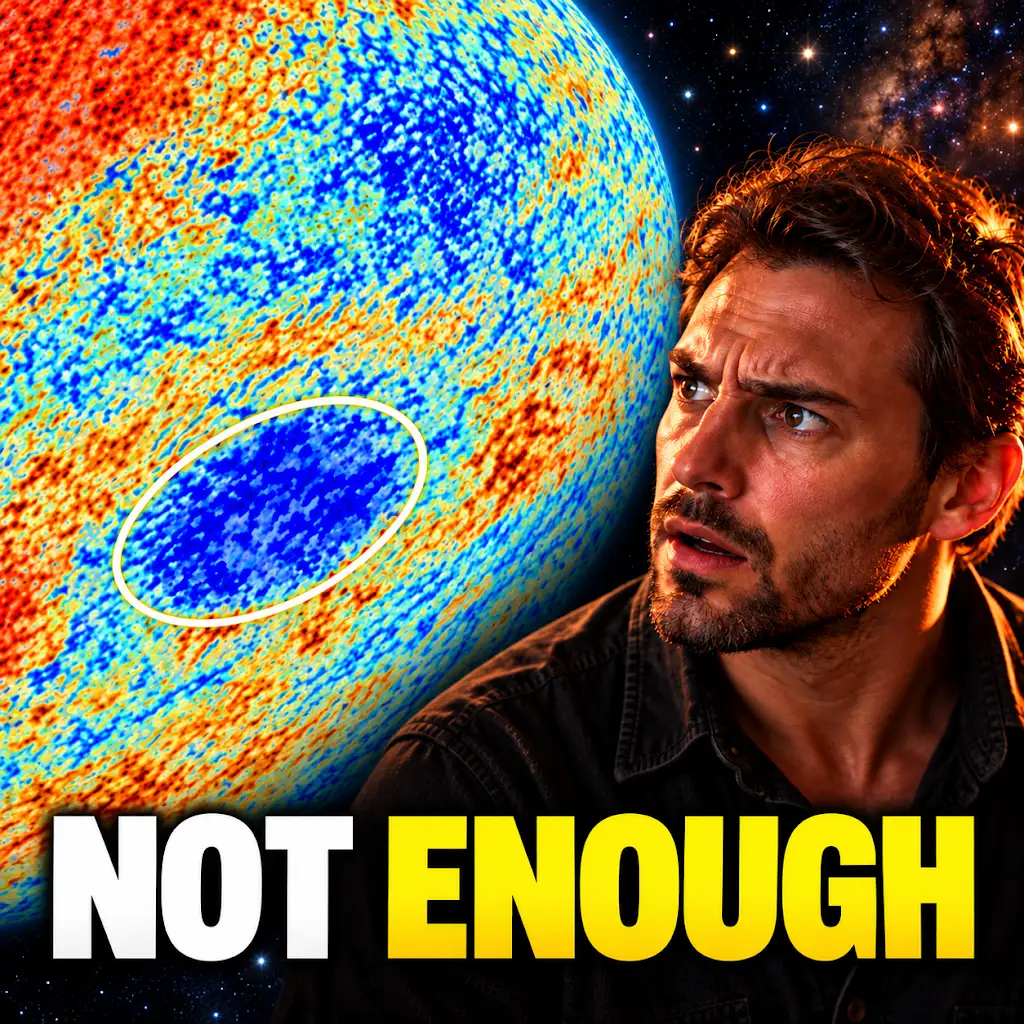
The Universe’s Cold Spot Has an Explanation. It’s Not Enough.
FAQs
What are some examples of strange space phenomena?
Some examples of strange space phenomena include black holes, gamma-ray bursts, pulsars, and quasars.
How do black holes form?
Black holes form when a massive star collapses under its own gravity after running out of fuel. This collapse causes the star to become extremely dense, creating a gravitational pull so strong that not even light can escape.
What are gamma-ray bursts?
Gamma-ray bursts are short bursts of high-energy gamma rays that are the brightest electromagnetic events known in the universe. They are thought to be produced by the collapse of massive stars or the merger of neutron stars.
What are pulsars?
Pulsars are highly magnetized, rotating neutron stars that emit beams of electromagnetic radiation from their magnetic poles. These beams are only visible when they are pointed towards Earth, creating a pulsing or flashing effect.
What are quasars?
Quasars are extremely bright and distant active galactic nuclei powered by supermassive black holes. They emit massive amounts of energy and are some of the most luminous objects in the universe.