
The universe, a vast and enigmatic expanse, holds many secrets that continue to elude human understanding. Among the most profound of these cosmic puzzles is the Cosmic Microwave Background (CMB) radiation, a faint afterglow from the Big Bang that bathes the entire sky. While the CMB has been instrumental in shaping our cosmological models, certain persistent anomalies within its seemingly uniform temperature distribution challenge our current understanding of the universe’s origins and evolution. These unexplained deviations, often referred to as “unexplained anomalies,” are not mere statistical flukes but rather intriguing patterns that hint at physics beyond the Standard Model, or perhaps even a deeper, more complex reality than we currently perceive. Scientists have meticulously studied the CMB for decades, mapping its subtle temperature variations with ever-increasing precision. These maps, derived from missions like COBE, WMAP, and Planck, reveal a near-perfect uniformity, a testament to the Big Bang’s initial conditions. However, embedded within this cosmic tapestry are features that defy easy explanation, sparking intense debate and driving new avenues of research.
The Echoes of Creation: Understanding the Cosmic Microwave Background
The Cosmic Microwave Background (CMB) is a cornerstone of modern cosmology, providing an unparalleled snapshot of the universe when it was a mere 380,000 years old. Before this epoch, the universe was a hot, dense plasma, opaque to light. As it expanded and cooled, protons and electrons combined to form neutral atoms, a process known as recombination. This event allowed photons, which had been constantly interacting with charged particles, to travel freely through space. The light from this era, stretched by billions of years of cosmic expansion, has redshifted into the microwave portion of the electromagnetic spectrum, arriving at Earth as the CMB.
Deciphering the Relic Radiation
The discovery of the CMB in 1964 by Arno Penzias and Robert Wilson was a pivotal moment, providing strong evidence for the Big Bang theory. Its nearly uniform temperature of approximately 2.725 Kelvin across the entire sky indicates that the early universe was remarkably homogeneous. However, it is the subtle temperature fluctuations, or anisotropies, within this background radiation that hold the key to understanding the universe’s subsequent evolution. These tiny variations, on the order of parts per 100,000, represent density differences in the primordial plasma. Gravitational forces then amplified these initial overdensities, eventually leading to the formation of the galaxies, stars, and other structures we observe today.
The Standard Cosmological Model and its Predictions
The standard cosmological model, known as Lambda-CDM (Lambda-Cold Dark Matter), successfully explains many of the observed features of the CMB. This model posits that the universe is composed of ordinary matter, dark matter, and dark energy, with the latter driving its accelerated expansion. Based on the predictions of Lambda-CDM, the fluctuations in the CMB should exhibit a statistical isotropy, meaning they should be randomly distributed and exhibit no preferred direction or alignment on large scales. The power spectrum of the CMB, which describes the amplitude of temperature fluctuations as a function of angular size, is a crucial tool for testing these predictions. The observed power spectrum closely matches the predictions of Lambda-CDM, providing strong support for its validity.
Recent discussions surrounding cosmic microwave background (CMB) anomalies have sparked interest in various scientific communities, particularly regarding their implications for our understanding of the universe. An intriguing article that delves into these unexplained anomalies can be found at Freaky Science. This article explores the potential reasons behind these anomalies and their significance in the broader context of cosmology, making it a valuable resource for anyone interested in the mysteries of the cosmos.
Unveiling the Cosmic Oddities: The Anomalies in Detail

Despite the remarkable success of the Lambda-CDM model in explaining the broad features of the CMB, several anomalies have emerged from precise measurements, persistently challenging its completeness. These deviations from expected statistical behavior are not easily dismissed and have fueled a great deal of theoretical and observational investigation. They represent areas where our current understanding may be incomplete, hinting at the possibility of new physics at play in the early universe or even fundamental limitations in our observational capabilities.
The Cold Spot: A Region of Unexpected Chill
One of the most prominent anomalies is the “CMB Cold Spot,” a region of exceptionally low temperature spanning several degrees across the sky. While statistical fluctuations can indeed produce such cold regions, the Cold Spot appears to be larger and colder than predicted by the standard Lambda-CDM model. Its sheer size and the improbability of its existence within a purely random distribution have led to speculation about its origin. Some hypotheses suggest it could be the imprint of a supervoid, a vast, underdense region of space, or perhaps even the result of exotic physics, such as interactions with other universes or topological defects in spacetime. The statistical significance of the Cold Spot, though debated, remains a compelling puzzle.
The Quadrupole and Octopole Alignment: A Cosmic Conspiracy?
Another intriguing anomaly is the apparent alignment of the quadrupole and octopole moments of the CMB temperature fluctuations. The quadrupole represents the largest-scale anisotropies (differences in temperature across the sky), and the octopole represents the next largest scale. In a statistically isotropic universe, these moments should be randomly oriented with respect to each other and to the large-scale structure of the universe. However, observational data from missions like WMAP and Planck suggest a statistically significant alignment between the quadrupole and octopole, as well as with the ecliptic plane of our solar system. This alignment has been dubbed the “Axis of Evil” by some cosmologists, due to its unsettling implication of a preferred direction in the universe. While some argue it might be a statistical fluke, its persistence across different datasets keeps it firmly on the anomaly list.
Recent studies have delved into the intriguing anomalies observed in the Cosmic Microwave Background (CMB), sparking debates among astrophysicists regarding their implications for our understanding of the universe. One particularly fascinating article discusses these unexplained CMB anomalies and their potential connections to theories beyond the standard model of cosmology. For more insights on this topic, you can read the article on Freaky Science, where the complexities of these phenomena are explored in detail.
Hemispherical Power Asymmetry: A Tilted Universe?
Further investigation into the CMB power spectrum has revealed a hemispherical power asymmetry. This means that the amplitude of temperature fluctuations in one hemisphere of the sky appears to be slightly different from the amplitude in the opposite hemisphere. This asymmetry, though small, is also difficult to reconcile with the assumptions of statistical isotropy inherent in the standard cosmological model. It suggests a possible large-scale anisotropy in the universe that is not accounted for by current theories. Explanations range from unusual configurations of the early universe to potential issues with our understanding of how cosmic inflation might have operated.
Seeking Explanations: Theoretical Frameworks and Potential Solutions

The persistent nature of these CMB anomalies has spurred a flurry of theoretical work aimed at finding explanations that extend or modify the standard cosmological model. These efforts range from subtle tweaks to established theories to more radical proposals that could fundamentally alter our understanding of the universe. The challenge lies in finding a framework that can explain these specific anomalies without disrupting the overwhelming success of Lambda-CDM in other areas of cosmology.
Modified Cosmological Models: Beyond Lambda-CDM
Many theoretical approaches focus on modifying the Lambda-CDM model itself. These modifications might involve altering the nature of dark matter or dark energy, introducing new fundamental fields, or reconsidering the inflationary epoch. For instance, some theories propose the existence of a cosmic string network, remnants from the early universe, which could leave imprints on the CMB. Others explore modifications to gravity on cosmic scales, suggesting that Einstein’s general relativity might not fully describe the universe’s behavior at its largest distances. The complexity of these models requires careful observation to disentangle their potential effects from those of the standard model.
The Multiverse Hypothesis: Brane Collisions and Cosmic Seeds
More speculative, yet intriguing, explanations involve the multiverse hypothesis. One popular idea is that our universe might have collided with another universe in the distant past. Such a collision could have left a “bruise” on the CMB, manifesting as a cold spot or other unusual patterns. Another variant of the multiverse idea suggests that the initial conditions for our universe were set by some overarching cosmic process, and the CMB anomalies could be remnants of this process, perhaps related to the “seeds” of cosmic structure. While highly theoretical, these ideas offer fascinating possibilities for understanding the unexpected features of the CMB.
Statistical Interpretation and Observational Refinements
It is also crucial to acknowledge that some anomalies might be the result of statistical fluctuations that are simply rare but not impossible within the standard model. As observational data becomes more precise and extensive, scientists can better assess the statistical significance of these anomalies. Furthermore, systematic errors in data collection and analysis can sometimes mimic real physical effects. Ongoing efforts to refine observational techniques and improve data processing are essential for definitively distinguishing between genuine cosmic puzzles and observational artifacts. The Planck satellite’s final data releases have provided the most comprehensive and precise CMB maps to date, offering new insights into these anomalies.
The Road Ahead: Future Observations and Theoretical Pursuits
The study of CMB anomalies is an active and evolving field. The quest to understand these cosmic puzzles continues to drive technological innovation in observational astronomy and inspire new theoretical frameworks. The ultimate goal is to develop a coherent and comprehensive cosmological model that can explain both the remarkable uniformity and the subtle, yet significant, deviations observed in the Cosmic Microwave Background.
Next-Generation Observatories and Data Analysis
Future CMB experiments, such as the Simons Observatory and CMB-S4, are being designed with enhanced sensitivity and resolution, aiming to probe the CMB with unprecedented detail. These next-generation observatories will provide more precise measurements of the CMB power spectrum, search for fainter anomalies, and potentially detect primordial gravitational waves, which would offer further insights into the inflationary epoch. Sophisticated data analysis techniques, including advanced statistical methods and machine learning algorithms, will be crucial for extracting meaningful information from these vast datasets and for robustly assessing the statistical significance of any observed deviations.
Theoretical Frontiers and the Search for Evidence
The theoretical landscape is equally dynamic. Cosmologists are actively developing and refining models that can accommodate the observed anomalies. This involves exploring new particle physics beyond the Standard Model, investigating alternative theories of gravity, and delving into the complexities of early universe cosmology. The challenge for theorists is to propose models that are not only mathematically consistent but also make testable predictions that can be verified or falsified by future observations. The ongoing dialogue between observational cosmologists and theoretical physicists is essential for progress in this field.
Unifying Cosmology: A Quest for a Complete Picture
Ultimately, the pursuit of understanding CMB anomalies is part of a larger scientific endeavor: the quest for a complete and unified picture of the universe. These anomalies, though perplexing, are valuable signposts guiding us toward a deeper comprehension of cosmic origins, evolution, and the fundamental laws that govern our reality. Whether they point to subtle extensions of existing theories or necessitate a paradigm shift, the unexplained features of the Cosmic Microwave Background promise to keep cosmologists captivated and the universe itself one step closer to revealing its deepest secrets. The journey to unravel the mystery of the CMB is far from over, and the universe, in its silent, ancient glow, continues to pose questions that push the boundaries of human knowledge.
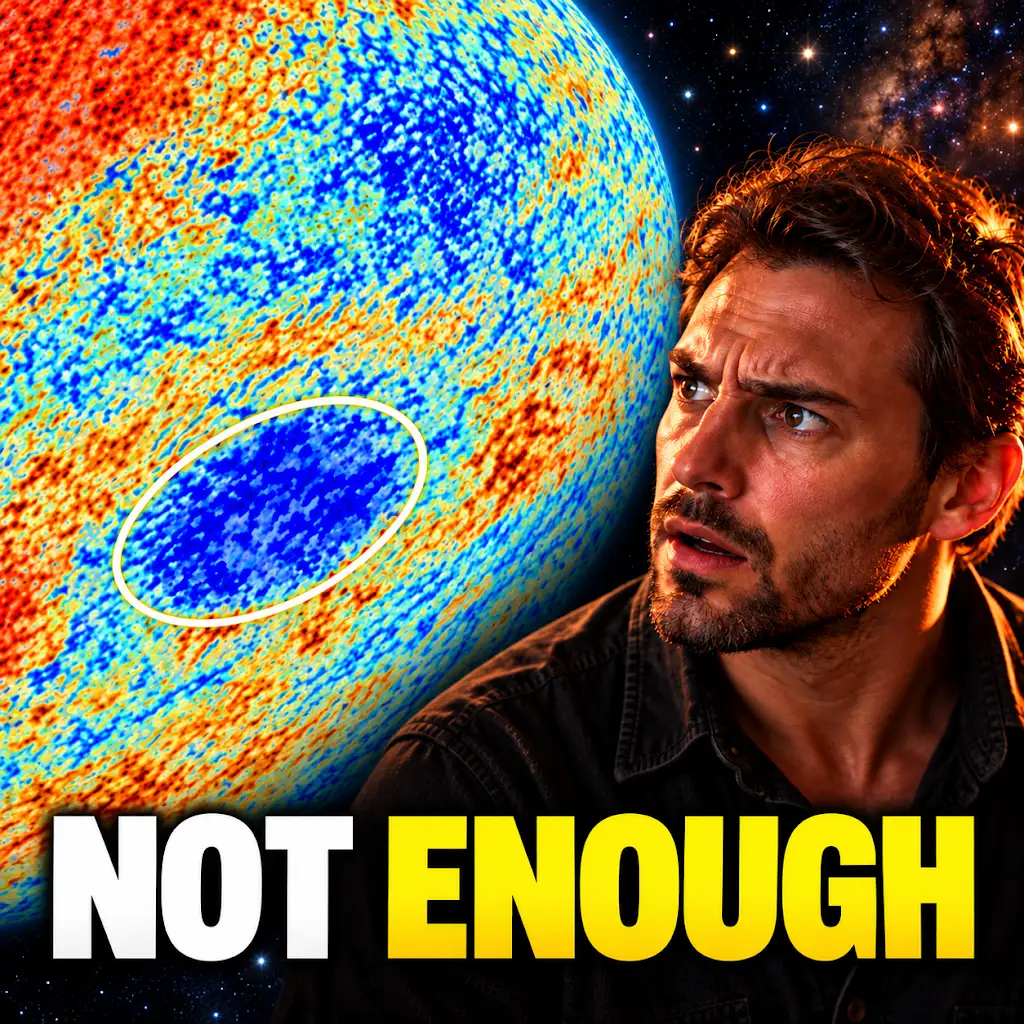
The Universe’s Cold Spot Has an Explanation. It’s Not Enough.
FAQs
What are CMB anomalies?
CMB anomalies refer to unusual patterns or inconsistencies found in the Cosmic Microwave Background (CMB) radiation, which is the afterglow of the Big Bang.
What are some examples of CMB anomalies?
Some examples of CMB anomalies include the Cold Spot, the Axis of Evil, and the lack of large-angle correlations in the CMB temperature fluctuations.
Why are CMB anomalies considered unexplained?
CMB anomalies are considered unexplained because they do not fit the predictions of the standard cosmological model, known as the Lambda-Cold Dark Matter (ΛCDM) model. Scientists are still investigating possible explanations for these anomalies.
What are some proposed explanations for CMB anomalies?
Some proposed explanations for CMB anomalies include instrumental or observational errors, foreground contamination, cosmic variance, or the presence of new physics beyond the standard model.
How do CMB anomalies impact our understanding of the universe?
CMB anomalies challenge our current understanding of the universe and may lead to revisions in the standard cosmological model. By studying these anomalies, scientists hope to gain new insights into the early universe and the fundamental laws of physics.