The seemingly empty spaces within matter, commonly referred to as voids, exert a profound and often counter-intuitive influence on the behavior of light. While intuitively we might associate light with the solid or dense components of a material, the presence and nature of these unoccupied regions significantly alter how light propagates, interacts, and is perceived. Understanding these impacts is crucial across a diverse range of scientific and technological fields, from astrophysics and material science to medical imaging and optical engineering. This exploration delves into the multifaceted ways voids shape the journey of light, revealing that emptiness, in this context, is anything but inert.
The Nature of Voids and Their Light-Scattering Properties
Voids, in the context of light interaction, are not simply vacant expanses. They can represent a spectrum of non-continuous structures, from microscopic pores within a solid matrix to vast intergalactic spaces. The physical characteristics of these voids – their size, shape, distribution, and the nature of their boundaries – dictate their interaction with photons. The primary mechanism by which voids affect light is through scattering. When light encounters the boundary of a void, or particles within or surrounding the void, it can be deflected from its original path. The extent and nature of this scattering depend heavily on the relative size of the void and the wavelength of the light.
Rayleigh Scattering and Small Voids
When the characteristic dimension of a void is significantly smaller than the wavelength of incident light, Rayleigh scattering becomes the dominant phenomenon. This type of scattering is responsible for the blue color of the sky, where small air molecules scatter sunlight. In materials, microscopic pores or tiny gas bubbles can act similarly. Rayleigh scattering is highly sensitive to wavelength, with shorter wavelengths (like blue and violet light) being scattered much more effectively than longer wavelengths (like red light). This can lead to color shifts or diffuse scattering in materials containing a high density of such small voids. For instance, a white powder might appear slightly bluish when viewed under certain lighting conditions due to the collective Rayleigh scattering from its internal void structure.
Mie Scattering and Larger Voids
As the size of the void approaches or exceeds the wavelength of light, Mie scattering takes over. This type of scattering is more complex and less dependent on wavelength than Rayleigh scattering. It results in a broader angular distribution of scattered light and can lead to phenomena like iridescence or a general reduction in transparency. Examples include light scattering by larger pores in porous materials, or by dust particles and gas molecules in the interstellar medium. The shape of larger voids also plays a significant role in Mie scattering, potentially leading to anisotropic scattering patterns where light is deflected preferentially in certain directions. This can influence how light penetrates or reflects off a material.
Absorption and Emission at Void Boundaries
While scattering is a primary interaction, voids can also influence light through absorption and emission processes. If the boundaries of the void are composed of materials that absorb specific wavelengths of light, then the void structure can act as a filter, selectively removing certain colors from transmitted light. Conversely, if the void contains luminescent particles or molecules, it can act as a source of emitted light. This is particularly relevant in materials used for lighting or display technologies, where controlled void structures can be engineered to enhance or modify luminescence. The interfaces of voids, particularly in porous media, can also host surface states that influence radiative transitions.
The phenomenon of how voids affect light is a fascinating topic that delves into the interplay between space and electromagnetic radiation. For a deeper understanding of this subject, you can explore the article on Freaky Science, which discusses various aspects of light behavior in different environments. This resource provides insights into how voids can influence the propagation of light and the implications for our understanding of the universe. To read more, visit Freaky Science.
The Impact of Voids on Light Propagation and Transmission
The presence of voids within a material fundamentally alters the path light takes as it travels through that medium. Instead of a smooth, continuous propagation through a homogeneous substance, light encounters a complex network of interfaces, leading to phenomena such as increased path length, diffuse transmission, and reduced overall transmission efficiency.
Increased Path Length and Effective Refractive Index
When light enters a medium with internal voids, it is forced to navigate around these empty spaces. This means the actual path length of light within the material is significantly longer than the geometric thickness of the material. This phenomenon is analogous to a person taking a winding path through a park rather than a straight line. This increased path length can have several consequences. For instance, it can lead to a higher effective refractive index for the material, as light takes longer to traverse the same geometric distance. This is a critical factor in designing optical components where precise control over light bending is required. Moreover, the increased path length can enhance interactions with any absorbing components within the material, leading to greater attenuation of light.
Diffuse Transmission and Scattering Networks
In many materials, voids are not isolated but form interconnected networks. This is particularly common in porous solids like sponges, ceramics, or aerogels. As light enters such a material, it undergoes multiple scattering events at the numerous void boundaries and the surrounding solid matrix. This results in diffuse transmission, where light emerges from the material not in a coherent beam, but spread out in various directions. This diffusion can reduce the sharpness of images transmitted through such materials, but it can also be harnessed to create scattering screens or to homogenize light. The density and connectivity of the void network are key determinants of the degree of diffusion.
Attenuation and Reduced Transparency
The combined effects of scattering and absorption at void boundaries invariably lead to a reduction in the total amount of light that can be transmitted through a material. This attenuation can be significant, especially in materials with a high void fraction or with void boundaries that strongly absorb light. For many applications, such as window panes or optical filters, minimizing void content is crucial to maximize transparency. However, in other applications, such as insulation or light diffusion, some degree of controlled void formation is desired to achieve specific optical properties. The spectral dependence of attenuation is also important; some void structures might scatter visible light strongly while being more transparent to infrared radiation, or vice versa.
Voids in Astrophysical Contexts: The Cosmic Web and Light

The influence of voids on light is not confined to terrestrial materials; it plays a pivotal role in the vast expanse of the universe. The large-scale structure of the cosmos is characterized by a cosmic web, a filamentary network of galaxies and dark matter surrounding immense, nearly empty regions known as cosmic voids. These voids, while appearing as emptiness, are far from passive in their interaction with light originating from distant celestial objects.
Intergalactic Voids and Light Propagation
The light from distant quasars and galaxies must traverse these enormous intergalactic voids to reach Earth. While these voids are relatively devoid of matter compared to galaxy clusters, they are not perfectly empty. They contain a tenuous plasma of hydrogen and helium, as well as trace amounts of heavier elements and dust. Photons traveling through these voids can interact with this diffuse gas, leading to subtle scattering and absorption effects. These interactions can redshift the light, a phenomenon that is primarily attributed to the expansion of the universe but can be slightly modified by the intervening plasma.
The Cosmic Microwave Background and Voids
The Cosmic Microwave Background (CMB) radiation, the afterglow of the Big Bang, provides a snapshot of the early universe. While the CMB appears remarkably uniform, it exhibits tiny temperature fluctuations. The propagation of CMB photons from the early universe to us today has been influenced by the large-scale structure, including the presence of voids. Gravitational potentials associated with voids can cause the CMB photons to gain or lose energy as they pass through them, a phenomenon known as the Rees-Sciama effect. While these effects are generally very small, their detection and analysis can provide valuable information about the distribution of matter and the nature of dark energy in the universe.
Absorption and Emission in Interstellar and Intergalactic Medium
Within galaxies and even in the intergalactic medium, dust grains and gas clouds are often found within or surrounding regions that could be considered voids relative to denser stellar populations. These entities can absorb and scatter starlight, affecting the colors and brightness of distant objects. Emission lines from ionized gases within these void-like regions can also contribute to the overall spectral signature observed from distant sources. Studying these absorption and emission features allows astronomers to probe the composition and physical conditions of the diffuse matter that fills the seemingly empty spaces of the universe.
Engineering Materials with Controlled Void Structures for Optical Applications
The understanding of how voids impact light has paved the way for the deliberate engineering of materials with specific void architectures to achieve desired optical functionalities. This involves manipulating the size, shape, distribution, and connectivity of voids during material synthesis and processing.
Porous Optics and Low-Index Materials
The creation of materials with high porosity, meaning a large volume fraction of voids, is a key strategy for producing low refractive index materials. By replacing a dense material with air or vacuum within pores, the effective refractive index of the composite material is reduced. This is critical in applications like anti-reflective coatings, where a low-index layer helps to minimize Fresnel reflections at interfaces. Nanoporous silica and polymers are examples of materials engineered with controlled pore sizes and densities for such purposes. The uniform distribution of pores is essential to avoid scattering and maintain transparency.
Photonic Crystals and Band Gaps
Photonic crystals are periodic nanostructures that manipulate the flow of light in a manner analogous to how semiconductor crystals control electrons. By creating periodic arrangements of voids within a dielectric material, engineers can create photonic band gaps – ranges of frequencies for which light cannot propagate through the material. These band gaps arise from the constructive and destructive interference of light scattered by the periodic structure. The precise design of void size, shape, and lattice arrangement allows for the tailoring of these band gaps, enabling applications such as highly efficient lasers, optical filters, and optical waveguides.
Diffusers and Scattering Media
Conversely, materials with intentionally introduced, randomly distributed voids are employed as diffusers. These materials scatter light in a highly uniform and controlled manner, creating a soft, shadowless illumination. Examples include frosted glass, translucent plastics, and certain types of films. The size and density of the voids in these materials determine the degree of scattering, ranging from subtle diffusion to complete opacity. Applications include lighting fixtures, screens for projectors, and privacy glass. The ability to control the angular distribution of scattered light is a key aspect of designing effective diffusers.
The fascinating interplay between voids and light has been the subject of extensive research, revealing how these empty spaces can influence the propagation of light waves. For a deeper understanding of this phenomenon, you can explore an insightful article that delves into the intricacies of light behavior in various mediums. This exploration highlights the significance of voids in shaping our perception of light and its applications in technology. To read more about this topic, check out the article here: insightful article.
Voids in Biological and Medical Imaging
| Metric | Description | Effect of Voids on Light | Example Values |
|---|---|---|---|
| Refractive Index | Measure of how much light bends when entering a material | Voids lower the effective refractive index, causing less bending | Solid material: 1.5; With 10% voids: ~1.35 |
| Light Scattering | Degree to which light is diffused by irregularities | Voids increase scattering, reducing transparency | Scattering coefficient increases by 20-50% with 5% voids |
| Transmission (%) | Percentage of light passing through a material | Voids reduce transmission due to scattering and reflection | 90% (no voids) vs 75% (with 8% voids) |
| Absorption Coefficient | Rate at which light intensity decreases due to absorption | Voids generally do not affect absorption directly | 0.1 cm⁻¹ (constant) |
| Light Speed in Material (m/s) | Speed of light traveling through the material | Voids increase speed by lowering refractive index | 2.0 x 10⁸ m/s (solid) vs 2.2 x 10⁸ m/s (with voids) |
The principles of how voids interact with light are also fundamental to understanding and developing techniques for imaging biological tissues. Biological tissues are inherently heterogeneous, containing numerous voids in the form of cells, organelles, intercellular spaces, and blood vessels. These structures significantly influence how light propagates and scatters within the body, which is both a challenge and an opportunity for medical imaging.
Light Scattering in Biological Tissues
Biological tissues are highly scattering media due to the presence of numerous sub-wavelength and larger voids (e.g., cell membranes, organelles). This scattering leads to a rapid attenuation of light as it penetrates the tissue, limiting the depth to which optical imaging techniques can reliably probe. The Mie scattering regime often dominates in biological tissues, with the complex internal structure leading to diffuse reflection and transmission. Understanding this scattering is crucial for developing effective light delivery and detection strategies for techniques like optical coherence tomography (OCT) and diffuse optical tomography (DOT).
Optical Clearing and Void Manipulation
To overcome the limitations imposed by scattering, researchers are developing methods for “optical clearing” of tissues. This often involves manipulating the refractive index of the tissue to reduce the scattering contrast. One approach is to fill void spaces with substances that have a refractive index closer to that of the tissue matrix, thereby reducing the scattering at interfaces. For example, osmotic agents can be used to shrink cells and reduce the volume of intracellular voids, or to fill interstitial spaces with index-matching fluids. This enhanced transparency allows for deeper penetration of light and improved imaging resolution.
Void Detection and Characterization for Diagnosis
Conversely, the presence and characteristics of certain voids can be diagnostically significant. For instance, the formation of air pockets in lungs can be indicative of disease. Medical imaging techniques that rely on light, such as OCT, can detect and characterize the size and distribution of these voids, providing valuable diagnostic information. Ultrasound imaging, while not directly light-based, shares similar principles of wave interaction with heterogeneous structures, where voids can significantly alter wave propagation. The ability to differentiate between different types of voids – for example, fluid-filled cysts versus solid tumors – is a key aspect of advanced imaging.
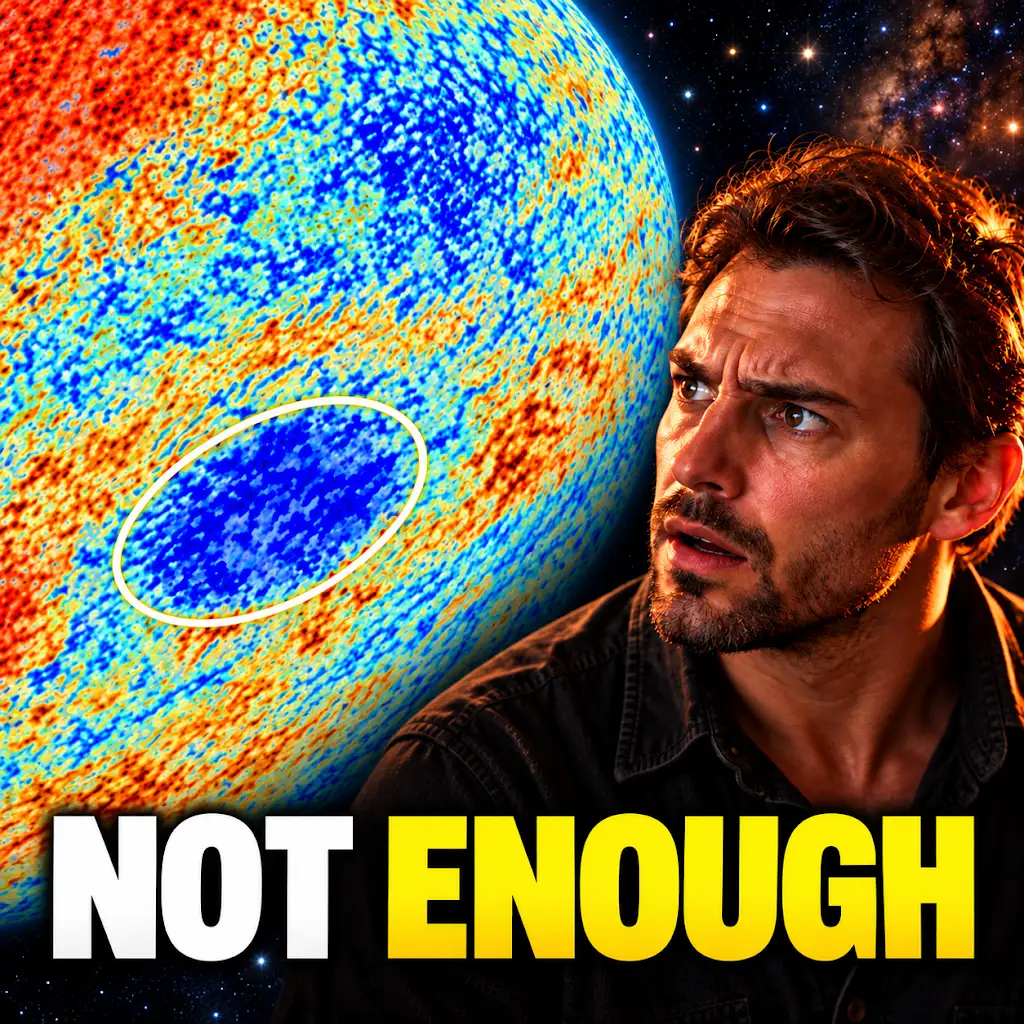
The Universe’s Cold Spot Has an Explanation. It’s Not Enough.
FAQs
What are voids in relation to light?
Voids are areas in a medium where there is a lack of particles or matter, causing light to pass through with less obstruction.
How do voids affect the speed of light?
In voids, the speed of light is typically faster compared to when light travels through a medium with particles, as there are fewer interactions that slow down the light.
Do voids affect the direction of light?
Yes, voids can cause light to refract or bend as it passes through different mediums with varying densities, leading to changes in the direction of the light.
Can voids impact the intensity of light?
Voids can affect the intensity of light by either allowing more light to pass through without absorption or by causing some light to be scattered or reflected, reducing the overall intensity.
How do voids influence the color of light?
Voids can alter the color of light by selectively absorbing certain wavelengths or by changing the path of light, leading to shifts in the perceived color of objects or the light itself.