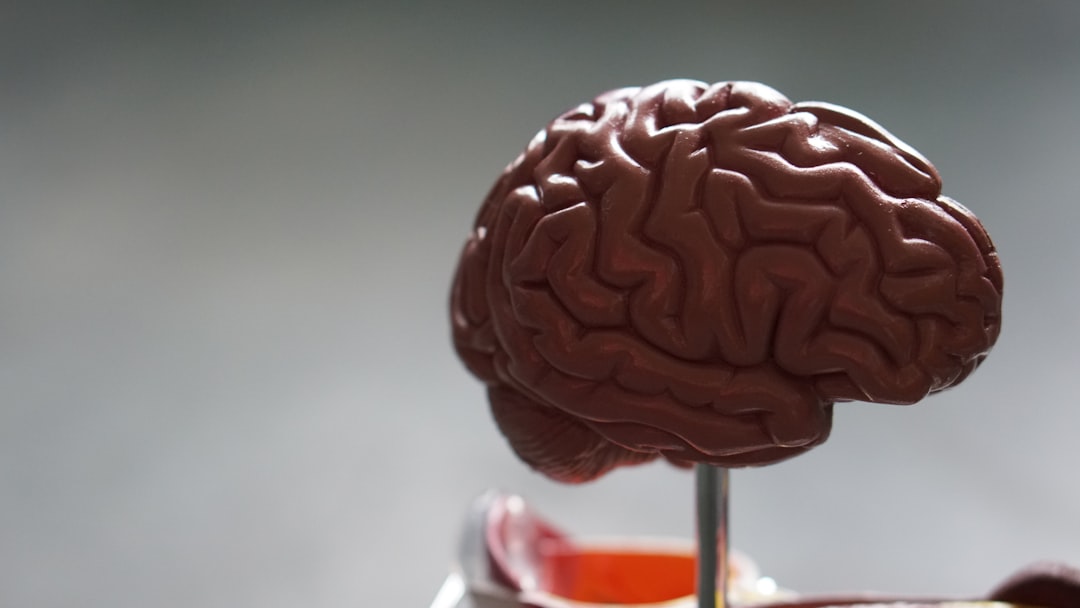
You stand at the precipice of your own consciousness, a realm of subjective experience that you often take for granted. You perceive the world around you – the vibrant colors of a sunset, the comforting warmth of a loved one’s hand, the intricate melody of a symphony – as objective truths, immutable and universally accessible. Yet, this is a profound illusion. Your reality, the very fabric of what you believe to be real, is a meticulously crafted construct, a sophisticated interpretation by the most extraordinary organ known to humankind: your brain. To truly understand the human brain’s perception of reality is to embark on a journey into the labyrinth of your own mind, a quest to unravel how billions of neurons, firing in a symphony of electrochemical signals, conjure the world you experience.
Your brain isn’t a passive receiver of sensory information, a mirror reflecting the external world. Instead, you can think of it as a highly advanced predictive engine. It’s constantly making an educated guess about what’s happening, using your past experiences and existing knowledge to anticipate future sensory input. This predictive processing is a fundamental principle that governs how you perceive reality.
The Role of Prior Knowledge and Expectations
Imagine walking into a dimly lit room. You don’t suddenly have to re-learn what a chair is. Your brain instantly accesses its stored information about chairs, their typical shapes, and their function, and readily categorizes the shadowy form you see. This pre-existing knowledge, often referred to as prior knowledge or prior expectations, acts as a powerful filter and interpreter for incoming sensory data.
Schema and Mental Models
You operate using mental frameworks, or schemas, that organize your understanding of the world. These schemas are like blueprints for common situations. When you encounter something that fits a schema, like a restaurant, your brain activates the associated expectations: the likelihood of waiters, menus, and food. This allows for rapid processing, but it can also lead to biases. If you walk into a coffee shop expecting a barista, and instead find someone serving tea, your brain might momentarily struggle to reconcile the discrepancy. Your mental model of a coffee shop is being challenged.
Top-Down vs. Bottom-Up Processing
This interplay between expectation and incoming data highlights the distinction between top-down and bottom-down processing.
- Top-down processing is driven by your existing knowledge and expectations. It’s your brain influencing what it expects to perceive.
- Bottom-up processing, on the other hand, is driven by the raw sensory data: the light hitting your retinas, the vibrations of sound waves.
Your perception is a dynamic interplay between these two. Your brain uses bottom-up information to confirm or update its top-down predictions. When there’s a significant mismatch, like seeing a face in a cloud, your brain might experience a brief moment of confusion before either adjusting its prediction or recognizing it as pareidolia – a phenomenon where you perceive patterns in random stimuli.
The Unconscious Computation Underlying Perception
Much of this predictive work happens below the level of your conscious awareness. Think about the immense amount of visual information your eyes are bombarded with every second. If you had to consciously process every pixel, every shadow, every subtle shift in light, your conscious mind would be overwhelmed. Your brain performs complex computations unconsciously to distill this raw data into a coherent and meaningful perception.
Filling in the Blanks: Perceptual Constancy
Your brain is incredibly adept at maintaining perceptual constancy, ensuring that you perceive objects as stable and unchanging despite variations in sensory input.
- Size constancy: You know a car is the same size whether it’s parked in front of you or a mile away, even though its image on your retina is drastically different. Your brain uses contextual cues, like distance, to adjust your perception of its size.
- Color constancy: The red of an apple appears red under various lighting conditions – bright sunlight, artificial light, even dim twilight – because your brain compensates for the color of the light source.
- Shape constancy: A door looks like a rectangle when it’s open, but a trapezoid when it’s closed. You perceive it as a rectangle because your brain infers its true shape based on your knowledge of doors and the angle of your view.
This unconscious ability to “fill in the blanks” and maintain constancy allows you to navigate the world with confidence, free from the constant need to adjust your perception based on fleeting sensory changes.
Understanding how the human brain perceives reality is a fascinating topic that delves into the intricacies of cognition and perception. A related article that explores this subject in depth can be found at Freaky Science, where various aspects of sensory processing and the brain’s interpretation of stimuli are discussed. This resource provides valuable insights into the mechanisms that shape our understanding of the world around us.
The Construction of Sensory Experience: More Than Meets the Eye
You often think of your senses as direct pipelines to reality. Your eyes see, your ears hear, your skin feels – and that’s that. However, your brain actively constructs each sensory experience, translating raw physical stimuli into the rich tapestry of sensations you know.
Visual Perception: A Symphony of Light and Interpretation
Your sense of sight, arguably your dominant sense, is a prime example of this constructive process. The light that enters your eyes is just electromagnetic radiation. It’s your brain that interprets the wavelengths of this radiation as color, the patterns of light and shadow as depth and form, and the movement of light across your retina as motion.
Photoreceptors and Neural Pathways
Your retinas are lined with photoreceptor cells – rods and cones – that convert light into electrical signals. These signals then travel through a complex network of neurons, undergoing various stages of processing.
- Rods are responsible for vision in low light and detect black and white.
- Cones are responsible for color vision and sharp detail in bright light.
These signals are processed in different areas of the visual cortex, each specialized for specific aspects of visual information, such as edges, motion, and color.
The Role of the Occipital Lobe
The occipital lobe, located at the back of your brain, is the primary visual processing center. Here, raw visual data is transformed into recognizable objects, faces, and scenes. This process isn’t instantaneous; it involves the integration of information from various visual pathways and the constant comparison with stored memories.
Auditory Perception: Decoding the World of Sound
Similarly, your hearing isn’t simply about receiving sound waves. It’s about your brain decoding these vibrations into meaningful sounds. The outer ear collects sound waves, which travel down the ear canal and vibrate the eardrum. These vibrations are then amplified by tiny bones in the middle ear and transmitted to the cochlea in the inner ear.
The Cochlea and the Auditory Nerve
Within the cochlea, specialized hair cells convert these mechanical vibrations into electrical signals. These signals are then transmitted to the auditory nerve and sent to the auditory cortex in your temporal lobe for processing.
Pitch, Timbre, and Sound Localization
Your brain interprets variations in the frequency of sound waves as pitch, the complexity of these waves as timbre (what makes a violin sound different from a piano), and the slight differences in the sound reaching your two ears as sound localization, allowing you to pinpoint where a sound is coming from. It also can infer meaning from speech, recognizing words and sentences.
Other Senses: Olfaction, Gustation, and Somatosensation
While vision and hearing often dominate discussions, your other senses play crucial roles in shaping your reality.
- Olfaction (smell): The molecules that trigger your sense of smell are directly linked to the limbic system, the part of your brain associated with memory and emotion, explaining why certain scents can evoke powerful feelings and memories.
- Gustation (taste): Taste is a complex interplay of the five basic tastes – sweet, sour, salty, bitter, and umami – combined with texture, smell, and temperature to create the full flavor experience.
- Somatosensation (touch, temperature, pain): These sensations are received by receptors throughout your body and transmitted to the somatosensory cortex in your parietal lobe. Pain, for example, is not just a physical sensation but a complex emotional and cognitive experience modulated by your brain.
The Influence of Emotion and Attention on Perception

Your subjective experience of reality is not solely dictated by sensory input and neural processing. Your emotional state and what you choose to focus your attention on profoundly shape what you perceive and how you perceive it.
The Power of Emotion: Coloring Your World
Emotions act as powerful filters, influencing how you interpret events and stimuli. When you’re happy, the world often seems brighter and more inviting. When you’re anxious, potential threats might appear more salient.
Fear and Threat Detection
Your amygdala, a key region for processing emotions, plays a significant role in threat detection. When it’s activated, your brain prioritizes information related to potential danger, making you more attuned to threatening cues in your environment. This evolutionary mechanism helps you survive but can also lead to biased perceptions when a threat is perceived but not actually present.
Positive Emotions and Broadened Perception
Conversely, positive emotions can lead to a broadening of your attention and perception. When you’re feeling good, you might be more open to new experiences and information, seeing possibilities where you might otherwise see limitations.
Attention: The Spotlight of Consciousness
Attention is the mechanism by which your brain selects certain information for deeper processing while ignoring the rest. You can’t possibly attend to everything happening around you, so your brain prioritizes what it deems most important.
Selective Attention
This selective attention allows you to focus on a conversation in a noisy room, filtering out the surrounding chatter. However, it also means that you can miss things that are happening right in front of you if you’re not attending to them. The famous “invisible gorilla” experiment vividly demonstrates this phenomenon, where participants engrossed in counting basketball passes often fail to notice someone walking through the scene in a gorilla costume.
Divided Attention
While you can selectively attend to one thing, attempting to divide your attention between multiple tasks typically leads to a decline in performance for all tasks. Your brain essentially rapidly switches its focus between them, rather than truly multitasking. This highlights the limits of your attentional resources.
Memory: The Foundation of Your Perceived Reality
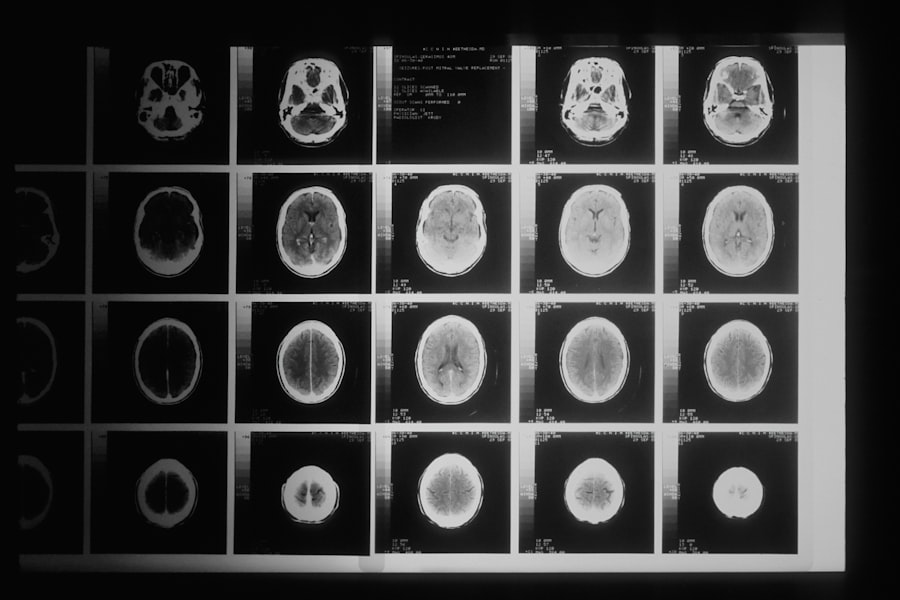
The reality you experience today is inextricably linked to your past. Your memories are not just stored records; they are actively recalled and reconstructed, providing the context and meaning for your present perceptions.
The Malleable Nature of Memory
It’s crucial to understand that your memories are not perfect recordings. They are reconstructive and can be influenced by a variety of factors, including your current emotional state, subsequent experiences, and even suggestions from others. This malleability means that your recollection of an event can change over time.
Reconstructive Memory
When you recall a memory, you’re not merely retrieving a file from storage. Instead, your brain pieces together fragments of information, filling in gaps and sometimes even creating new details to form a coherent narrative. This is why eyewitness testimony, while valuable, can be unreliable.
The Impact of Suggestion and Misinformation
If you are exposed to misinformation after an event, your memory of that event can be altered. This is known as the misinformation effect. Your brain may incorporate the false information into its reconstruction of the memory, making it seem like a genuine recollection.
The Role of the Hippocampus and Temporal Lobes
The hippocampus, a structure deep within your temporal lobes, is vital for forming new long-term memories. The temporal lobes themselves are instrumental in storing and retrieving a vast array of memories, from factual knowledge to personal experiences.
Implicit vs. Explicit Memory
You have different types of memory that contribute to your perception of reality:
- Explicit memory refers to conscious recollection of facts and events (e.g., remembering your birthday).
- Implicit memory refers to unconscious memories that influence your behavior and perception without conscious recall (e.g., riding a bicycle without consciously thinking about how to do it). These implicit memories often contribute to your automatic responses and learned skills that shape your interaction with the world.
The way the human brain perceives reality is a fascinating topic that intertwines neuroscience and psychology, revealing how our senses shape our understanding of the world. For those interested in exploring this subject further, an insightful article on this theme can be found at Freaky Science, which delves into the mechanisms behind perception and how they influence our daily experiences. Understanding these processes not only enhances our knowledge of the brain but also sheds light on the complexities of human behavior and cognition.
The Subjectivity of Experience: Why Your Reality is Uniquely Yours
| Aspect | Details |
|---|---|
| Sensory Input | The brain receives information from the five senses: sight, hearing, taste, smell, and touch. |
| Perception | The brain processes sensory input to create a perception of reality, which can be influenced by past experiences and beliefs. |
| Illusions | The brain can be tricked by optical illusions and other sensory manipulations, leading to a distorted perception of reality. |
| Neuroplasticity | The brain’s ability to reorganize itself and form new neural connections allows for adaptation to changes in perception and reality. |
| Emotions | The brain’s processing of emotions can influence how reality is perceived, leading to subjective interpretations of the world. |
Ultimately, the most profound aspect of the human brain’s perception of reality is its inherent subjectivity. While we share a common physical world, the way each individual brain interprets and constructs that world is unique.
Individual Differences in Sensory Processing
Even with the same sensory input, your brain might process it differently from someone else’s. Genetic predispositions, unique life experiences, and even subtle variations in neural wiring can lead to differences in how you perceive colors, sounds, tastes, and textures. For instance, some individuals may have a rare genetic mutation that allows them to see a wider spectrum of colors than the average person.
Neuroplasticity and Personal Experience
Your brain is constantly changing and adapting – a phenomenon known as neuroplasticity. Each experience you have, each fact you learn, each emotion you feel, reshapes your neural connections. This ongoing process means that your understanding of reality is dynamic and continuously evolving, influenced by the cumulative effect of your personal journey.
The Illusion of a Shared Objective Reality
The shared understanding that allows humans to communicate and cooperate is built on a remarkable degree of overlap in our perceptual systems and cognitive processes. However, this shared understanding doesn’t equate to a single, objective reality. It’s more like multiple individuals looking at the same painting and agreeing on its colors and shapes, but having vastly different emotional responses and interpretations of its meaning.
The Limits of Language and Communication
Language itself is a form of interpretation. When you describe a feeling or an experience, you are translating your internal, subjective state into words that others can (ideally) understand. However, nuances can be lost, and the precise experience can never be fully conveyed. Your brain’s construction of reality is a deeply personal, internal phenomenon.
Embracing the Subjectivity of Your World
Understanding that your perception of reality is a construct, a product of your brain’s intricate workings, can be both humbling and empowering. It encourages critical thinking about your own beliefs and biases, and fosters a deeper appreciation for the diverse experiences of others. You are not simply a passive observer of the world; you are an active participant in its creation, a magnificent artist painting your own unique reality with the brushstrokes of perception, memory, emotion, and attention. The journey into understanding your brain’s perception of reality is, in essence, a journey into the very core of who you are.

You’ve Never Experienced the Present
FAQs
What is the human brain’s role in perceiving reality?
The human brain plays a crucial role in perceiving reality as it processes sensory information from the environment and interprets it to create our perception of the world around us.
How does the brain process sensory information to perceive reality?
The brain processes sensory information through a complex network of neurons and synapses. Different regions of the brain are responsible for processing different types of sensory input, such as visual, auditory, olfactory, and tactile information.
What factors can influence the brain’s perception of reality?
Various factors can influence the brain’s perception of reality, including past experiences, emotions, beliefs, and cognitive biases. These factors can shape how the brain interprets sensory information and constructs our perception of reality.
Can the brain’s perception of reality be altered or manipulated?
Yes, the brain’s perception of reality can be altered or manipulated through various means, such as optical illusions, virtual reality technology, psychoactive substances, and cognitive behavioral therapy. These methods can temporarily or permanently change how the brain perceives reality.
How does the brain’s perception of reality impact human behavior and decision-making?
The brain’s perception of reality influences human behavior and decision-making by shaping our thoughts, emotions, and actions. Our perception of reality can affect how we interpret and respond to the world around us, leading to different behaviors and choices.